Best Cooking Classes in Osaka
Osaka wears the title of Japan’s kitchen with genuine pride. The city has built an identity around eating — kuidaore, the local maxim, roughly means “eat yourself bankrupt” — and its food culture is unusually democratic. The dishes Osaka is famous for are not the refined productions of haute cuisine or the precision art of Edo-style sushi. They are street food: grilled, fried, battered, and eaten standing up in a busy market lane. Taking a cooking class here means getting your hands on the food everyone in this city actually eats, made the way locals actually make it.
| At a glance | |
|---|---|
| Where | Concentrated around Dotonbori, Shinsaibashi, Namba, and Kuromon Ichiba Market |
| Cost | Around 5,000-14,000 yen per person depending on dish and format |
| Time needed | 90 minutes to 4 hours depending on class type |
| Getting there | Most schools are a short walk from Namba, Shinsaibashi, or Nipponbashi stations |
| Best time | Any season; book 3-4 weeks ahead for Golden Week and summer holidays |
The class scene in Osaka is dominated by takoyaki and okonomiyaki — the two dishes that define the city internationally — but serious instruction in sushi, ramen, bento, and traditional home cooking is widely available. Most classes are conducted in English, run for two to three hours, and deliver a meal you eat yourself at the end. Prices sit between 6,000 and 14,000 yen per person depending on the class format and whether a market visit is included. This guide covers every major category of Osaka cooking class, with practical advice for booking the right experience.
Takoyaki Classes
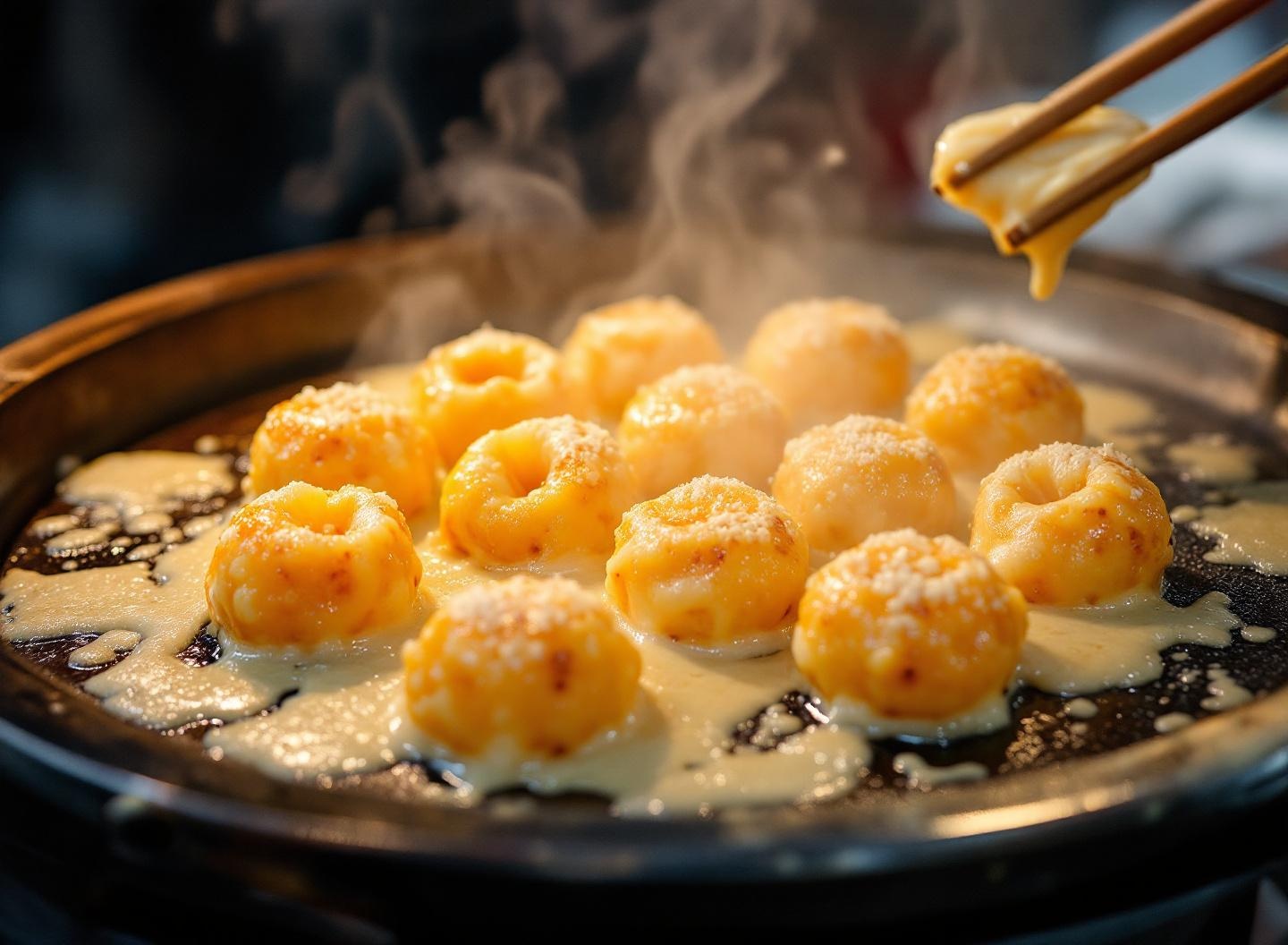
Takoyaki — octopus-filled batter balls cooked in a cast-iron griddle pan — are Osaka’s signature snack, and the cooking class version of this dish is one of the most enjoyable food experiences available to visitors anywhere in Japan. The technique looks simple until you try it, and the gap between watching a street vendor flip a hundred perfect rounds in two minutes and your own first fumbling attempt provides the central drama of every takoyaki class.
The technique. The batter is poured into the griddle’s hemispherical molds while the pan is hot and oiled. A piece of octopus, some tenkasu (fried tempura scraps), diced green onion, and pickled ginger go into each mold. As the bottom sets, you rotate each ball 90 degrees with a thin pick, letting the liquid batter pour out and form a new shell. A second rotation completes the sphere. The finished ball is crisp outside, molten inside, and topped with okonomiyaki sauce, mayonnaise, dried bonito flakes, and aonori seaweed. The bonito flakes move in the steam, which disconcerts people until it is explained.
What you learn. The most valuable part of a takoyaki class is learning to manage the griddle: oil quantity, heat consistency, timing, and the rotation technique. A good instructor will explain why certain batters produce crisp exteriors versus dense ones, and how to adjust when the heat is uneven. You will also learn the importance of the toppings — the sauce-to-mayo ratio, why Worcestershire-based sauce is used rather than soy, what bonito flakes bring beyond visual theater.
Class formats. Most Osaka takoyaki classes are standalone sessions of 90 minutes to two hours. You typically make two full rounds of takoyaki — roughly 16 to 20 balls per person — with guidance on the first round and independence on the second. The session ends with you eating your own production, usually with cold beer or green tea available.
Some classes package takoyaki with okonomiyaki in a single two-and-a-half-hour session covering both Osaka signatures in sequence. These combination classes are slightly less deep on each dish but give a broader picture of Osaka’s cooking identity and are the most popular format among visitors with limited time.
Price range. Standalone takoyaki classes: approximately 5,000 to 8,000 yen per person. Takoyaki and okonomiyaki combination: approximately 7,000 to 10,000 yen per person.
Best areas. The Dotonbori and Shinsaibashi areas have the highest concentration of takoyaki cooking schools. Some operators run classes from Kuromon Market or the Namba area, combining a market walk with the cooking session. Classes near Dotonbori allow you to compare your results against the professional street vendors immediately afterward — a useful calibration.
Okonomiyaki Classes
Okonomiyaki translates loosely as “whatever you like, grilled” — a batter-based savory pancake cooked on a griddle with cabbage, egg, and your choice of protein, finished with a thick sauce and various toppings. It is one of the most satisfying dishes in Japanese cooking to make yourself, and a cooking class is genuinely the best way to learn it.
Osaka-style versus Hiroshima-style. Osaka’s version of okonomiyaki mixes all ingredients into the batter before griddling. Hiroshima’s version layers the ingredients separately — crepe, noodles, cabbage, meat — in a construction method that requires a different set of skills. Osaka cooking classes teach the Osaka method, which is approachable for beginners and faster to execute. If you visit Hiroshima separately, you will encounter the layered style there.
The batter and build. A proper okonomiyaki batter is made from wheat flour, dashi stock, grated nagaimo (mountain yam), and egg. The nagaimo is what gives Osaka-style okonomiyaki its characteristic soft interior — it acts as a leavening agent and moisture trap that prevents the pancake from becoming dense. Finely shredded cabbage goes in next, then protein: pork belly is traditional, but shrimp, squid, or cheese are common variations. The whole mixture is poured onto a hot, oiled griddle and pressed flat.
Cooking and finishing. After three to four minutes, the underside is cooked and you flip the pancake in a single confident movement — the moment everyone in the class watches everyone else attempt. After another three to four minutes, the okonomiyaki is finished with okonomiyaki sauce (thick, slightly sweet, fermented), Japanese mayonnaise in a crosshatch pattern, dried bonito flakes, and aonori. A good instructor explains why each topping is used and how to balance them.
Class formats. Okonomiyaki classes run approximately two to two and a half hours as standalone sessions. Many Osaka schools combine them with takoyaki in a single session. Some operators offer market combination classes that begin at Kuromon Market, where you select your own protein and fresh ingredients before moving to the kitchen.
Price range. Standalone okonomiyaki: approximately 5,500 to 8,500 yen per person. Combination takoyaki and okonomiyaki class with Dotonbori area market walk: approximately 8,000 to 11,000 yen per person.
Dotonbori and Shinsekai Food Tour with Cooking
The most comprehensive introduction to Osaka’s food culture combines a guided walk through two of the city’s most celebrated food neighborhoods with a hands-on cooking component — typically an okonomiyaki session in Dotonbori or a kushikatsu frying demo in Shinsekai. This format works well because it puts the food you are learning to make in its actual urban context.
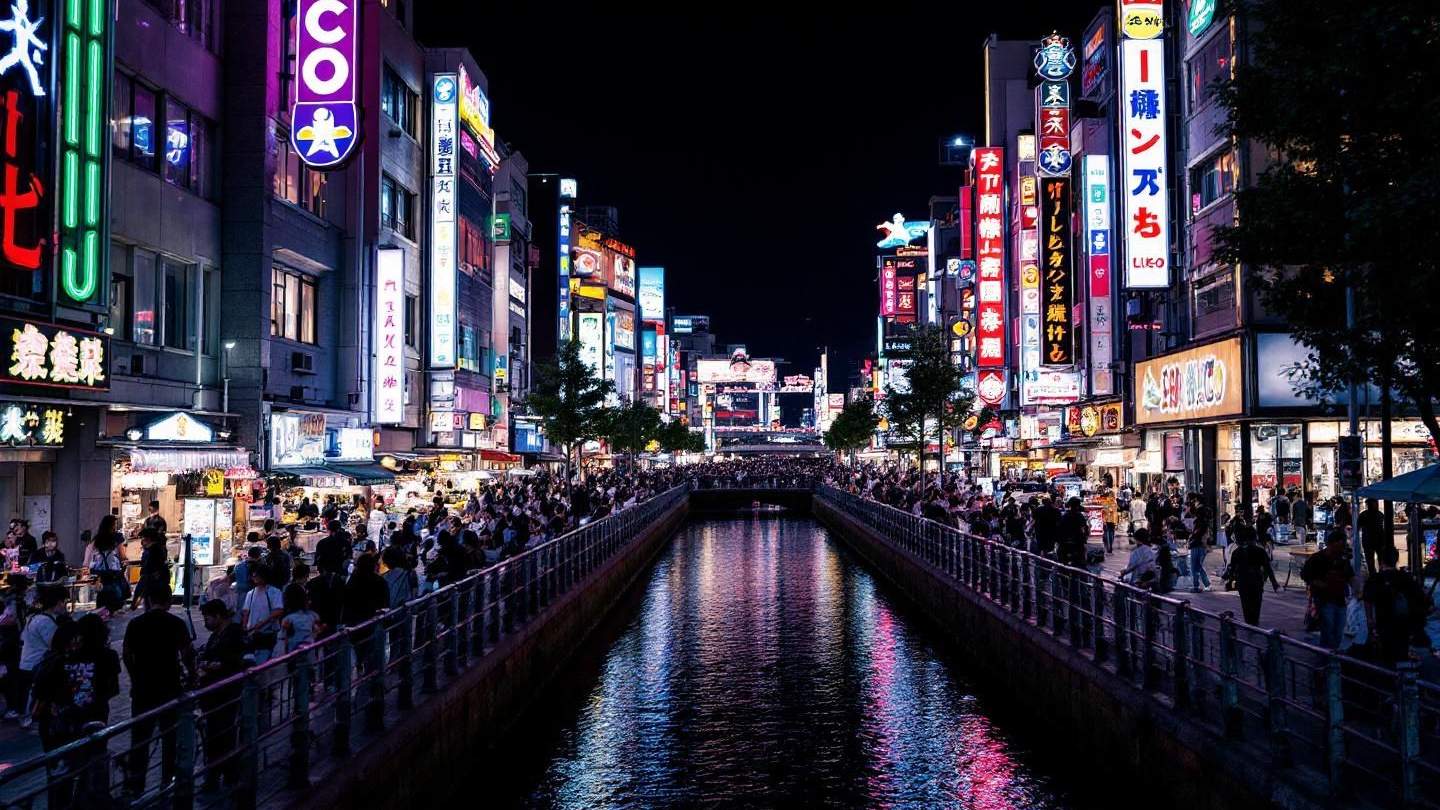
Dotonbori, the canal-side entertainment strip running through Namba, is where Osaka’s street food identity is most concentrated: takoyaki stalls, crab signage, the Glico Running Man billboard, and permanent queues for the city’s most storied okonomiyaki restaurants. A guided tour of Dotonbori decodes what you are seeing — why the canal matters, what the signage competition is about, which stalls have been in family hands for three generations.
Shinsekai is the older, rougher counterpart: a working-class neighborhood built around the Tsutenkaku Tower that is the definitive home of kushikatsu (skewered, deep-fried meat and vegetables). The food here is hearty, cheap, and specific to this district — the rule against double-dipping in the communal sauce is a Shinsekai invention, and every proper tour of the neighborhood explains it.
Dotonbori and Shinsekai Foodie Tour
A 3-hour guided food tour through two iconic Osaka food neighborhoods. Try kushikatsu, cook okonomiyaki, and taste the best takoyaki.
Sushi Making in Osaka
Osaka has its own sushi tradition that long predates Tokyo-style nigiri: oshizushi (pressed sushi) is the regional form, with vinegared fish and rice packed into a wooden mold under weight and then sliced into rectangular pieces. This style is less well-known internationally than Edo-style sushi but historically predates it by several centuries. A handful of Osaka cooking schools teach oshizushi as a distinct experience — worth seeking out for visitors who want to understand sushi as a regional food rather than a generic Japanese category.
More common are Osaka sushi classes that teach standard nigiri and maki alongside oshizushi, giving a comparative view of both traditions. These classes run two to three hours and typically produce eight to twelve pieces of sushi in multiple styles. The instruction covers sushi rice preparation (the vinegar, sugar, and salt balance specific to Osaka-style rice differs slightly from Tokyo’s), fish handling, and shaping technique.
Kuromon Market sourcing. The best Osaka sushi classes begin at Kuromon Ichiba Market — the city’s main covered market, operating for over two centuries — where you walk the stalls with your instructor and select fish and produce for the class. Kuromon vendors sell directly to the public at prices that reflect actual market rates rather than tourist markup, and the range of fresh seafood is exceptional. This market-to-table structure is one of the more authentic cooking experiences available in Osaka.
Price range. Standard Osaka sushi class: approximately 7,000 to 11,000 yen per person. Kuromon Market sourcing plus sushi class: approximately 9,000 to 14,000 yen per person. Oshizushi-focused classes: approximately 6,500 to 9,000 yen per person.
Ramen from Scratch
Osaka is not the primary ramen city of the Kansai region — Kyoto’s rich chicken-and-soy tonkotsu hybrid and Nara’s own local style are regional competitors — but Osaka has a thriving ramen scene, and several cooking schools offer ramen-from-scratch classes that cover broth construction, hand-made noodles, and tare.
The most common style taught in Osaka cooking classes is shoyu ramen — clear, soy-seasoned broth with thin noodles, chashu pork, and a marinated soft-boiled egg. Some schools offer shio ramen (lighter, salt-based broth) or a hybrid Osaka-style version that incorporates local seafood dashi alongside the standard chicken stock.
The noodle-making component. Classes that include hand-made noodles from scratch are more time-intensive — expect three and a half to four hours — but deliver significantly more understanding of what ramen actually is as a dish. The noodle dough requires kansui (alkaline water) to achieve the characteristic chew and slight yellow color; you will mix, knead, rest, roll, and cut the dough yourself. The physical activity makes the class memorable in a way that assembling pre-made components does not.
The broth and toppings. Broth is pre-started before the class to allow for the hours of simmering required, but you work on the tare and aromatics during the session and understand how they contribute to the final flavor. Chashu pork preparation, ajitama egg marination, and bamboo shoot seasoning are covered as supplementary techniques. If you want a shorter session close to the food district, this ramen and gyoza class in Dotonbori covers both dishes in one sitting.
Price range. Osaka ramen cooking class: approximately 8,000 to 12,000 yen per person for a three to four hour session. Classes with market visit: approximately 10,000 to 14,000 yen per person.
Bento and Traditional Home Cooking
The bento — Japan’s compartmentalized packed lunch — is one of the most instructive formats in Japanese cooking because it requires balance across color, nutrition, and flavor in a constrained space. A bento-making class teaches tamagoyaki (the layered rolled egg omelette that anchors most bento boxes), karaage chicken, seasoned rice, pickled vegetables, and seasonal sides, all assembled with the attention to visual arrangement that Japanese food culture demands.
Osaka home cooking classes that go beyond a single dish typically follow the ichiju sansai structure — one soup, three sides, and rice — which is the template for Japanese daily eating. These sessions often take place in small, locally run kitchens rather than purpose-built cooking schools, giving them an intimacy and authenticity that larger operations cannot provide.
What these classes cover. A typical Osaka home cooking class of this format might include: dashi from scratch using kombu and katsuobushi, miso soup with seasonal vegetables and tofu, a main protein dish (grilled fish, braised pork belly, or soy-simmered chicken), and two vegetable sides using techniques like ohitashi (blanched greens dressed with dashi and soy) or kinpira (stir-fried root vegetables with sesame). You eat the full meal at the end, often with cold mugicha or green tea.
Duration and price. Bento-making classes: approximately 1.5 to 2.5 hours, 5,500 to 8,000 yen per person. Full home cooking classes: approximately 2.5 to 3.5 hours, 8,000 to 12,000 yen per person.
Tips for Choosing an Osaka Cooking Class
Book ahead, especially in summer. Osaka cooking classes near Dotonbori and Kuromon Market sell out faster than equivalent Tokyo operations because the city has a higher ratio of food-focused visitors relative to the number of available cooking school spots. During Golden Week (late April to early May) and summer holidays (late July through August), the best classes can fill three to four weeks in advance.
Distinguish between school-based and home-kitchen classes. Osaka has both purpose-built cooking schools with professional equipment and smaller home-kitchen operations run by individual local cooks. Schools are more consistent in production quality and equipment; home kitchens are more intimate and often more instructive about everyday Japanese life. Both are worth the time — choose based on what you want from the experience.
Confirm English instruction. Most classes listed on international booking platforms are conducted in English. Some well-reviewed local operations operate primarily in Japanese with printed English handouts; these can still work well for visual learners, but confirm the instruction format before booking if live English explanation is important to you.
Consider the neighborhood as part of the experience. A class that begins at Kuromon Market gives you context that a purely kitchen-based experience cannot. Similarly, a class near Dotonbori allows you to walk the neighborhood’s food stalls before or after your session and understand the spectrum from street food to home cooking within a single afternoon.
Dietary requirements. Takoyaki and okonomiyaki contain shellfish and pork by default. Communicate vegetarian, vegan, or shellfish-free requirements at booking, not on arrival. Most Osaka schools can accommodate these modifications with sufficient advance notice; some cannot modify their standard menus without a private booking, so check before you commit.
For more context on Osaka’s food culture and the dishes you will encounter before and after a cooking class, the Osaka street food guide and the best food tours in Osaka provide comprehensive coverage of the city’s eating landscape.
Osaka vs Tokyo and Kyoto Cooking Classes
| Osaka | Tokyo | Kyoto | |
|---|---|---|---|
| Signature dishes | Takoyaki, okonomiyaki, oshizushi | Sushi, ramen, wagashi | Kaiseki, tea ceremony, obanzai home cooking |
| Character | Casual, street-food focused, hands-on | Wide variety, more formal sushi instruction | Refined, seasonal, tradition-focused |
| Typical price | 5,000–14,000 yen | 6,000–15,000 yen | 6,500–16,000 yen |
| Best for | Visitors who want the classic Osaka street snacks | Visitors wanting broad culinary variety | Visitors wanting a formal, traditional experience |
Travelers splitting time between cities often take a takoyaki or okonomiyaki class in Osaka and save sushi or kaiseki instruction for Tokyo or Kyoto, where those traditions run deeper.
Fitting a Class into Your Osaka Trip
A cooking class works best as a anchor for one half-day rather than something squeezed between sightseeing stops. If you only have a short stay, the two-day Osaka itinerary shows where a class slots in without crowding out the castle, the canal district, or the evening street food. A morning class that starts at the market leaves the afternoon free, while an evening class doubles as dinner.
Where you sleep also shapes the choice. Staying near Namba or Shinsaibashi puts most schools within a short walk, which is why the guide to where to stay in Osaka is worth a look before you book accommodation and class on the same trip. Being close means you can go back to your room after the meal instead of carrying leftovers across the city.
Cooking in the afternoon pairs naturally with an evening out. After you have made the food yourself, the Osaka nightlife guide is a good next step for deciding where to continue, and the broader things to do in Osaka page helps you balance the day with sights that need no booking.
Families can also join in. Takoyaki and okonomiyaki are hands-on and forgiving, so they suit children who like to get involved; the Osaka family guide covers how to plan the rest of a day around younger travelers. Confirm with the operator before booking whether children are welcome in the class you choose.
If cooking becomes the highlight of your trip, you may want to compare the options across the country. The overview of the best cooking classes in Japan places Osaka alongside other cities, and the Japanese food guide explains the dishes you will meet at the table, so the ingredients and names feel familiar before you start.
Osaka also makes a good base for further eating. Pair a class with a day trip from Osaka to taste regional specialties elsewhere, or compare the city’s character with the capital in Tokyo vs Osaka.
Frequently Asked Questions about Cooking Classes in Osaka
Do I need any cooking experience to take an Osaka cooking class? No. Nearly all classes listed here are designed for complete beginners, with instructors guiding each step in English. Takoyaki and okonomiyaki classes in particular require no prior kitchen skill — the techniques are taught from scratch.
Can I take a cooking class as a solo traveler? Yes. Most Osaka cooking schools, including the home-kitchen operations, accept solo bookings, and small class sizes make it easy to interact with the instructor and other participants. Solo travelers often find cooking classes one of the more social experiences available in the city.
More tours on Viator
Top-rated experiences with verified reviews, bookable on Viator (a Tripadvisor company).
 Viator
Samurai Training Experience KENDO in Osaka
FromUSD 126Check availability → Viator
Osaka Sake Tasting & Takoyaki Cooking Experience
FromUSD 70Check availability → Viator
Private Osaka Tour from Your Hotel with Local Guide
FromUSD 108Check availability → Viator
Ramen Cooking Class in Osaka Dotonbori with Sushi or Gyoza Option
FromUSD 69Check availability → Viator
Kimono experience and Japanese home-cooking lesson Osaka Umeda
FromUSD 77Check availability → Viator