Best Food Tours in Osaka
Last updated: August 2026
Osaka has a stronger claim to the title of Japan’s food capital than any other city in the country. The defining local concept — kuidaore, which translates roughly as “eat until you drop” or “ruin yourself eating” — is not a joke or a marketing slogan. It is a genuine description of how Osaka residents relate to food: as the primary pleasure of daily life, more important than fashion, entertainment, or status. The city spends more on food per household than anywhere else in Japan, and the results are visible on every street corner, in every covered arcade, and in the extraordinary density of vendors, stalls, restaurants, and izakayas that pack the Namba, Dotonbori, and Shinsekai neighborhoods.
A food tour through Osaka is one of the most concentrated and rewarding ways to spend half a day here. The city rewards structured exploration: the neighborhoods that matter are close together, the dishes are made to be eaten standing up or on the move, and the variety across a three-hour walk — from freshly poured takoyaki batter to deep-fried kushikatsu skewers to raw oysters shucked to order — is genuinely staggering. This guide covers what to expect from guided tours, which tour operators are worth your money, and practical advice to make the most of any food experience in Osaka.
At a glance
| Where | Dotonbori, Shinsekai, Kuromon Ichiba Market (all within central Osaka) |
| Cost | Around 7,000–9,000 yen per person guided; 3,000–5,000 yen self-guided in food costs |
| Time needed | Around 3 hours for a standard tour; 2–4 hours per neighborhood self-guided |
| Getting there | Namba Station for Dotonbori; Nipponbashi Station for Kuromon; Shin-Imamiya for Shinsekai |
| Best time | Late morning (11am–1pm) or evening (7pm onward) for Dotonbori; before 9am for Kuromon |
Why Take a Food Tour in Osaka
The case for a guided food tour is stronger in Osaka than almost anywhere else in Japan. The core reason is density and decision paralysis. Dotonbori alone concentrates hundreds of food options into 400 meters of canal-side arcade. Kuromon Market has 170 vendors. Without local knowledge or a structured plan, the abundance becomes overwhelming — most visitors end up eating at the loudest stall, the most photogenic sign, or the restaurant with the longest tourist queue, and miss the specific dishes and operators that represent the genuine best of each area.
A good guide solves this in three ways. First, selection: choosing the takoyaki stall that has operated since the 1940s over the branded chain two stalls down, knowing which oyster vendor at Kuromon receives their delivery at 6am versus which one sold out of fresh stock by 9am. Second, access: taking you into the narrow backstreet alleys running parallel to the main tourist circuits, where Osaka residents actually eat, and into the kinds of unmarked standing bars that have no English signage and no menu translation.
Third, context: explaining the history behind kuidaore culture, the social role of kushikatsu in Shinsekai’s working-class history, why Osaka takoyaki differs from the version sold in Tokyo, and why the communal dipping sauce at every kushikatsu restaurant has a no-double-dipping rule.
Beyond the practical benefits, a food tour compresses experience efficiently. In three hours with a guide, you will taste more variety, cover more ground, and understand more about what you are eating than most visitors achieve in three full days of solo exploration.
Dotonbori Food Tours
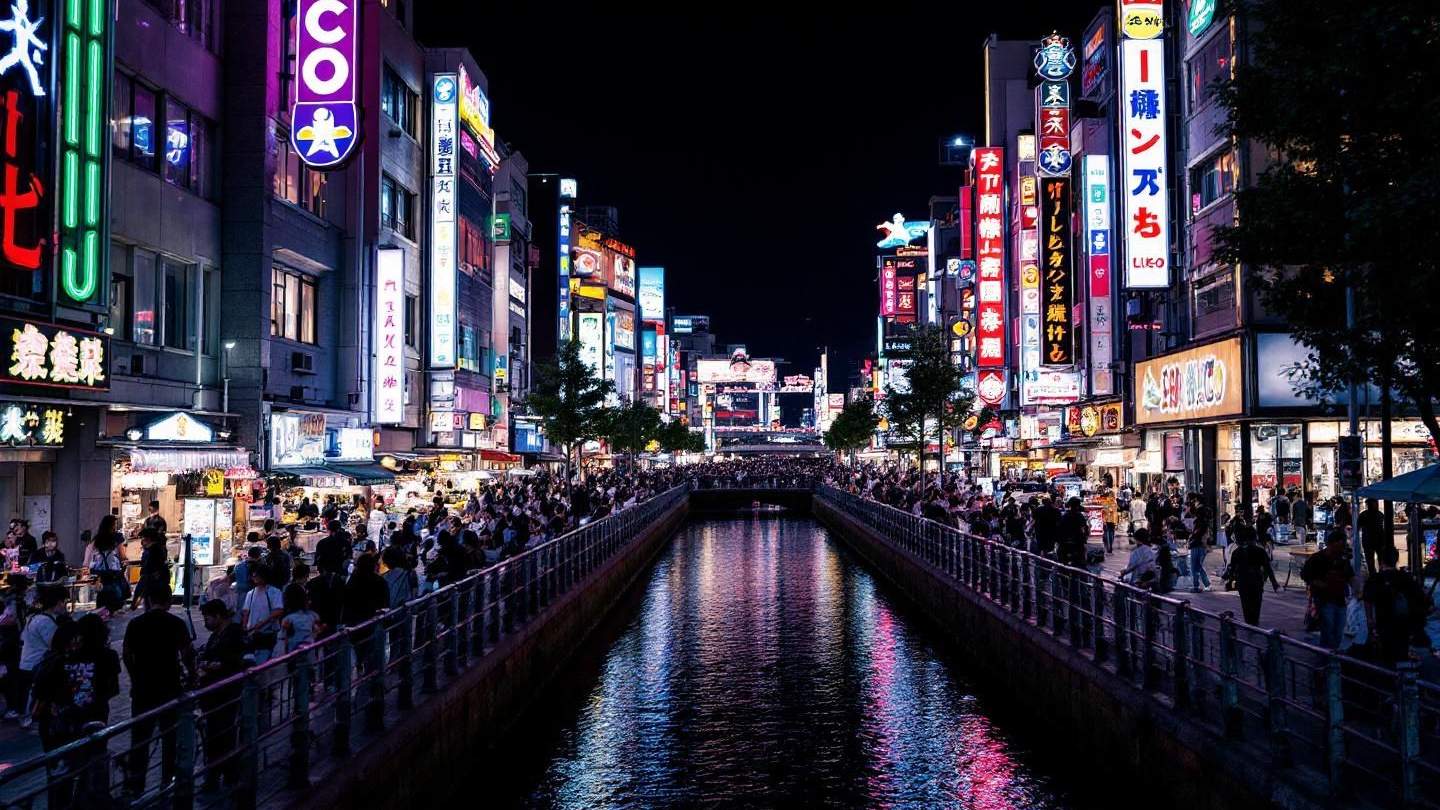
Dotonbori is the starting point for almost every Osaka food tour and with good reason. The canal district in Namba concentrates the city’s most famous dishes, its most theatrical eating environments, and its densest food infrastructure into a compact, walkable strip. The neon signs, the mechanical crab above Kani Doraku, the Glico Running Man illuminated above the canal — all of it exists because this is where Osaka’s food culture first became visible to the outside world.
The dishes that define a Dotonbori food tour are the three pillars of Osaka street food:
Takoyaki — round batter balls filled with octopus (tako), cooked in a cast-iron mold until the exterior is crisp and the interior remains liquid and intensely savory. A portion of eight balls costs 600–800 yen. Osaka-style takoyaki uses a thinner, more eggy batter than variations found elsewhere, and the dashi stock in the filling is noticeably stronger. The best Dotonbori operators have been perfecting the same recipe for decades and it shows.
Okonomiyaki — Osaka’s savory pancake, made with shredded cabbage, egg, flour batter, and a choice of pork, seafood, or mixed fillings, cooked on a teppan griddle and topped with okonomiyaki sauce, Japanese mayonnaise, dried bonito flakes, and green seaweed powder. Osaka-style okonomiyaki (known as Namba-yaki or Kansai-style) mixes all ingredients together before cooking, distinguishing it from the layered Hiroshima version. A single serving runs 1,000–1,500 yen.
Kushikatsu — deep-fried skewers of meat, seafood, and vegetables coated in panko breadcrumbs, served alongside shredded cabbage and the communal dipping sauce. The no-double-dipping rule is absolute and enforced at every establishment. Individual skewers cost 120–200 yen each; a set of eight to ten runs 1,200–2,000 yen.
A Dotonbori food tour typically spends 90 to 120 minutes in the canal area, hitting four to six food stops. The best times are late morning (11am to 1pm) for lunch crowds and quality, or evening from 7pm onward for the full illuminated atmosphere.
Shinsekai Food Tours
Shinsekai — translated as “New World” — was built in 1912 as Osaka’s vision of an ideal modern city, modeled partly on Paris and partly on New York’s Coney Island. The district fell into economic decline in the postwar decades and became one of the city’s rougher neighborhoods, but has since transformed into a celebrated destination precisely because it retained an authenticity that the more polished areas lost. The retro signage, the vintage pachinko halls, the Tsutenkaku Tower rising above narrow streets lined with small kushikatsu restaurants — Shinsekai feels genuinely different from any other part of Osaka.
The defining dish of Shinsekai is kushikatsu, and the culture around it here is older and more serious than the kushikatsu found in Dotonbori. Shinsekai’s kushikatsu restaurants are not tourist operations — they are the working-class lunch spots they have always been, staffed by families who have run the same establishment for two or three generations. The atmosphere is informal to the point of being rowdy at peak lunch service, which is entirely appropriate. This is food eaten standing at a counter or on low stools, accompanied by draft beer (nama biru, 500–600 yen) or a shochu highball (400–500 yen).
A Shinsekai food tour typically starts at Shin-Imamiya Station and works north toward the Tsutenkaku Tower. Stops include a full kushikatsu sitting (10 to 15 skewers, 2,000–3,000 yen), a fugu (pufferfish) tasting if offered — Shinsekai has more fugu restaurants per square meter than anywhere else in Osaka — and seasonal street snacks like fresh fruit on sticks (400–800 yen) or taiyaki from arcade vendors (200–300 yen). Some tour operators combine Dotonbori and Shinsekai in a single three-hour route, which is an efficient way to experience both neighborhoods’ distinct food characters in one session.
Kuromon Market Food Tours
Kuromon Ichiba Market is Osaka’s professional food market, a 580-meter covered arcade that has supplied the city’s restaurants and households with fresh produce for nearly 200 years. Its nickname — “Osaka’s Kitchen” — is not marketing. The vendors here sell to chefs, to families, and to the wholesale trade. The quality standards are higher than tourist-facing food streets because the primary customer is professional.
A Kuromon food tour operates on different rhythms from Dotonbori or Shinsekai. The market is at its best in the morning — arrive by 8:30 or 9am to find the freshest seafood, the largest selection, and the vendors who have just received their deliveries. By 11am the crowds build considerably; by noon several stalls have sold through their best stock.
What a Kuromon food tour covers:
Fresh oysters, shucked to order at the seafood counters around the market’s midpoint — Osaka Bay oysters served with ponzu or lemon, 200–400 yen each. Eating four or five in sequence here is one of the defining Osaka food experiences.
Wagyu beef skewers from charcoal-grill vendors — look for the smoke rising from the open grills. A single wagyu skewer costs 400–700 yen and the quality difference from standard beef is immediately apparent in both flavor and texture.
Unagi (eel) grilled over charcoal in the open air, sold by the portion. The vendors with visible charcoal setups are the signal — the smoke is the advertisement. A half-portion over rice runs 800–1,200 yen and is among the most satisfying savory foods the market offers.
Tamagoyaki rolled fresh from long rectangular pans — sweet or savory versions, 300–500 yen per piece.
Premium Japanese melon by the slice — musk melon priced at 500–800 yen per slice, the sweetness of which is genuinely extraordinary if you have not encountered it before.
A guided Kuromon tour adds value here primarily through navigation and timing knowledge — which vendors have the best stock that day, which counters have the freshest oysters, and which stalls are worth the queue versus which are optimized for tourist throughput at the expense of quality.
What Food Tours Typically Include
A standard three-hour Osaka food tour includes eight to twelve individual tastings across four to six stops. The structure varies by operator but most follow a progression that moves between neighborhoods, alternating savory dishes with lighter palate cleansers and pacing the eating to avoid arriving at the final stop already full.
Typical tasting components:
- Takoyaki — 6 to 8 pieces, usually the first stop
- Kushikatsu — a seated mini-set of 4 to 6 skewers with salted cabbage and communal sauce
- Okonomiyaki — either a tasting portion or a full serving split across the group
- Seafood — fresh oysters, sashimi pieces, or grilled seafood depending on the route and season
- Wagyu beef — a grilled skewer or two, occasionally a small tasting cut
- Ramen or udon — sometimes included as a lighter mid-point dish rather than as a full bowl
- Sweet finish — matcha soft serve (450–650 yen if purchased independently), mochi, or taiyaki
Most tours include a drink at one stop — typically a small beer, a cold tea, or a sake sample. Walking distance is typically two to four kilometers across the three hours, spread across short legs between stops. Comfortable walking shoes matter; you will be standing for most of the eating.
Guided tours that cost 7,000–9,000 yen per person typically include all food consumed during the tour and provide the context and curation that turns eating into something more educational. Self-guided walking covers the same ground for 3,000–5,000 yen in food costs but without the guidance — see the Osaka street food guide for detailed self-guided routes.
Book an Osaka Food Tour
Dotonbori Daytime Food Tour
Explore Dotonbori's vibrant streets and taste the best of Osaka's street food — from kushikatsu to takoyaki.
Dotonbori and Shinsekai Foodie Tour
A 3-hour journey through two iconic food neighborhoods. Try kushikatsu and cook your own okonomiyaki.
Must-Visit Local Food Tour
Taste the essential Osaka street foods — takoyaki, okonomiyaki, kushikatsu — while learning about the food culture.
Day Trip: Kyoto Highlights and Nara Deer Park
Combine your Osaka food experience with a day trip to Kyoto's temples and Nara's deer park. Pickup from your Osaka hotel.
Tips for Food Tours in Osaka
Arrive hungry. This sounds obvious but needs repeating. A large breakfast before a food tour is a waste of both money and appetite. Eat lightly the morning of the tour — coffee and a piece of fruit at most — and let the tour do the work.
Dietary restrictions require advance notice. Vegetarian and vegan travelers need to inform their guide ahead of time. Osaka street food is heavily meat and seafood-focused; the classic trio of takoyaki, kushikatsu, and okonomiyaki all contain animal products in their standard forms. Most experienced tour operators can offer modified stops, but they need to know in advance. For shellfish allergies specifically: takoyaki contains octopus (not shellfish, but worth noting), and many dashi stocks used throughout Osaka cuisine contain shrimp or scallop. Always confirm with vendors when in doubt.
Wear comfortable, heat-resistant clothing. You will be eating near open flames, charcoal grills, and hot oil. Loose natural fibers are preferable to synthetic fabrics near deep fryers and griddles.
Tipping is not customary in Japan. Do not tip your food tour guide in cash — it will cause awkwardness. If you want to express appreciation, a verbal thank you is correct and sufficient. Some guides accept five-star reviews on the booking platform as the most useful form of positive feedback.
Book in advance for peak seasons. Cherry blossom season (late March to early April) and Golden Week (late April to early May) see tour availability disappear two to three weeks ahead. Even outside these windows, the best-reviewed small-group tours fill several days in advance. Book as soon as your dates are confirmed.
Evening tours differ from daytime tours. The morning Kuromon experience and the evening Dotonbori experience are genuinely different. If you have two evenings in Osaka, consider a morning market tour on one day and an evening Dotonbori tour on the other — the contrast between the two atmospheres is part of what makes Osaka’s food scene remarkable.
Group size matters. Prioritize tours capped at ten to twelve people maximum. Smaller groups (six to eight) allow more flexibility at each stop, more personal attention from the guide, and easier movement through crowded areas. Avoid large group tours that move in a block — the eating becomes rushed and the stops predetermined regardless of what is actually good that day.
Self-Guided Food Walking Routes
Travelers who prefer to explore independently can cover the same ground as a guided tour with the right preparation. The Osaka street food guide provides full self-guided walking routes through Dotonbori, Shinsekai, and Kuromon with specific vendor recommendations, timings, and price expectations. The core principles:
Dotonbori self-guided walk — start at the eastern end of the canal at Nipponbashi, walk west along the canal promenade to get your bearings, then move through the arcade hitting takoyaki (Aizuya on the Dotonbori arcade, open since 1945, six pieces for 600 yen), standing sashimi or fresh oysters at one of the seafood counters in the covered arcade, kushikatsu at the original Daruma branch one block south of the main strip, and a matcha soft serve at one of the specialist shops near Shinsaibashi. Allow 3 to 4 hours. Budget 3,000–4,500 yen for food.
Shinsekai self-guided walk — start at Shin-Imamiya Station, walk north toward Tsutenkaku Tower, find a kushikatsu restaurant with handwritten menus and no English signage (these are the originals, not the tourist-facing chains), eat a full set of ten to twelve skewers with beer (2,000–2,500 yen), then explore the retro arcade south of the tower for fruit stalls and taiyaki. Allow 2 to 3 hours.
Kuromon self-guided walk — arrive before 9am from Nippombashi Station, walk the full 580-meter arcade once to orient yourself before buying anything, then circle back to the best oyster counter (midpoint of the market), the wagyu skewer vendor with the most visible charcoal smoke, and the unagi stall. Allow 90 minutes. Budget 2,000–3,000 yen for a thorough market breakfast.
For full context on Osaka’s food culture, the broader things to do in Osaka guide covers how food fits into the city’s wider character, and the where to stay in Osaka guide identifies which neighborhoods put you closest to the best eating areas.
Which Neighborhood Tour Should You Pick
If you only have time for one guided food route, the three areas differ enough in character that the choice matters. This is the quick comparison:
| Neighborhood | Best for | Typical cost | Pace |
|---|---|---|---|
| Dotonbori | First-timers, evening atmosphere, the classic trio (takoyaki, okonomiyaki, kushikatsu) | 7,000–9,000 yen guided | Moderate, 90–120 minutes |
| Shinsekai | Adventurous eaters, working-class kushikatsu history, fugu tasting | 7,000–9,000 yen guided | Relaxed, sit-down heavy |
| Kuromon Market | Morning people, fresh seafood, market-style grazing | 7,000–9,000 yen guided, or 2,000–3,000 yen self-guided | Fast, best before 11am |
Travelers with only one evening in Osaka should default to Dotonbori — it delivers the widest cross-section of dishes and the strongest atmosphere. Those staying two or more nights get better value pairing a morning Kuromon walk with an evening Dotonbori or Shinsekai tour, since the two halves of the day never compete for the same food or crowd.
Combining a Food Tour With the Rest of Your Trip
A single food tour rarely needs to stand alone in an Osaka itinerary. Most visitors build it into a wider 2-day Osaka plan alongside Osaka Castle and a day trip option, or pair it with an evening exploring Osaka’s nightlife — Dotonbori’s bars and standing izakayas pick up exactly where a food tour leaves off. Travelers who prefer a more hands-on angle instead of (or in addition to) a walking tour should look at Osaka’s cooking classes, which teach the mechanics behind dishes like tempura and okonomiyaki rather than just tasting them.
Frequently asked questions
Do I need to book an Osaka food tour in advance? Yes, especially for popular small-group tours during cherry blossom season (late March–early April) or Golden Week (late April–early May), when availability can disappear two to three weeks ahead. Outside peak season, booking a few days in advance is usually enough.
Is a food tour worth it if I am only in Osaka for one day? For a single day, a guided food tour is one of the most time-efficient ways to see Dotonbori and taste a representative range of dishes without wasted decisions — see the Osaka in 2 days itinerary for how to build a full day or two around it.
More tours on Viator
Top-rated experiences with verified reviews, bookable on Viator (a Tripadvisor company).
 Viator
Samurai Training Experience KENDO in Osaka
FromUSD 126Check availability → Viator
Osaka Sake Tasting & Takoyaki Cooking Experience
FromUSD 70Check availability → Viator
Private Osaka Tour from Your Hotel with Local Guide
FromUSD 108Check availability → Viator
Ramen Cooking Class in Osaka Dotonbori with Sushi or Gyoza Option
FromUSD 69Check availability → Viator
Kimono experience and Japanese home-cooking lesson Osaka Umeda
FromUSD 77Check availability → Viator