Osaka in 2 Days
Is 2 days enough for Osaka?
Two days is enough to eat your way through Osaka properly and see the main non-food sights. Dotonbori, Osaka Castle, Kuromon Market, and Shinsekai all fit comfortably in 2 days. Osaka is Japan's most food-focused city — the itinerary should reflect that.
Osaka is not Tokyo. It is louder, more food-obsessed, less polished, and entirely itself. Two days here should be built around eating — not as a side activity, but as the main event. The history and sights fit around the meals.
At a glance
| Where | Namba, Dotonbori, Shinsekai, Umeda — all within central Osaka |
| Cost | Around 3,000–5,000 yen/day on food; hotel budget from 6,000 yen/night in Namba |
| Time needed | 2 full days is comfortable; add a half-day if you want a Nara or Kyoto side trip |
| Getting there | Osaka’s Midosuji subway line links Umeda, Shinsaibashi, Namba, and Tennoji |
| Best time | Year-round; avoid Golden Week and Obon if you want shorter queues |
Day-by-day summary
| Day | Morning | Afternoon | Evening |
|---|---|---|---|
| Day 1 | Kuromon Ichiba Market | Osaka Castle and park | Shinsekai, then Dotonbori |
| Day 2 | Japanese cooking class | Umeda, or day trip to Nara/Kyoto | Bar hopping or a final Dotonbori dinner |
Day 1: Dotonbori, Shinsekai, Namba Nightlife
Morning: Kuromon Ichiba Market (9:00–11:00)
Kuromon Ichiba is Osaka’s best food market — a covered market street stretching 580 meters through the Nipponbashi area, running since 1822. It is called “Osaka’s Kitchen” and feeds the city’s restaurants with fresh seafood, Wagyu beef, and vegetables. For tourists, it is a walk-and-eat experience: seafood on skewers cooked at the stall, giant Wagyu beef sliders, fresh oysters (300–600 yen each), scallops grilled right in front of you.
Arrive at 9 am before the lunch rush. Walk end to end, then go back and buy what you want. Budget 1,500–2,500 yen for a market breakfast/brunch. From Namba, take the subway to Nipponbashi (Sennichimae Line, 2 stops, 5 minutes).
Afternoon: Osaka Castle and the Park (11:30–15:00)
Osaka Castle is the most visited site in the city that is not Dotonbori. The current castle keep is a 1931 ferro-concrete reconstruction (the originals were destroyed in various historical sieges), but the grounds and outer moat are genuinely impressive — one of Japan’s largest stone wall constructions surrounds the tower.
The castle museum inside runs to 8 floors with exhibits on Hideyoshi (the warlord who built it) and the 1615 siege that ended the Toyotomi family. The view from the top floor is excellent. Entry 600 yen. Allow 90 minutes.
The castle park surrounding it is large, free, and worth a walk even if you skip the interior museum.
From Kuromon Market: take the subway to Tanimachi 4-chome (5 minutes).
Osaka Castle Guided Tour — 3 Hours
Expert-guided tour of Osaka Castle and the Osaka Museum of History — covering the Sengoku period, Hideyoshi's story, and the castle's destruction and reconstruction in proper historical context.
Late Afternoon: Shinsekai (15:30–17:30)
Shinsekai is Osaka’s most eccentric neighborhood — a 1910s district designed to look like Paris and New York simultaneously, rebuilt after World War II into a slightly run-down entertainment area and now gentrifying again while retaining its old-school character. The area’s symbol is Tsutenkaku Tower (entry 1,200 yen for the observation deck, skip it unless you love towers).
The real reason to come is food. Shinsekai is the home of the original kushikatsu — breaded and deep-fried skewers of meat, vegetables, and seafood served at standing bars. The golden rule: never double-dip in the communal sauce. Pick up skewers one by one (80–200 yen each) and eat them standing. The standing bars along Jan Jan Yokocho alley are the most atmospheric venues.
This is also a good place for a late afternoon Asahi or Sapporo at one of the old-school beer halls. Very local, very Osaka.
Evening: Dotonbori (18:00–late)
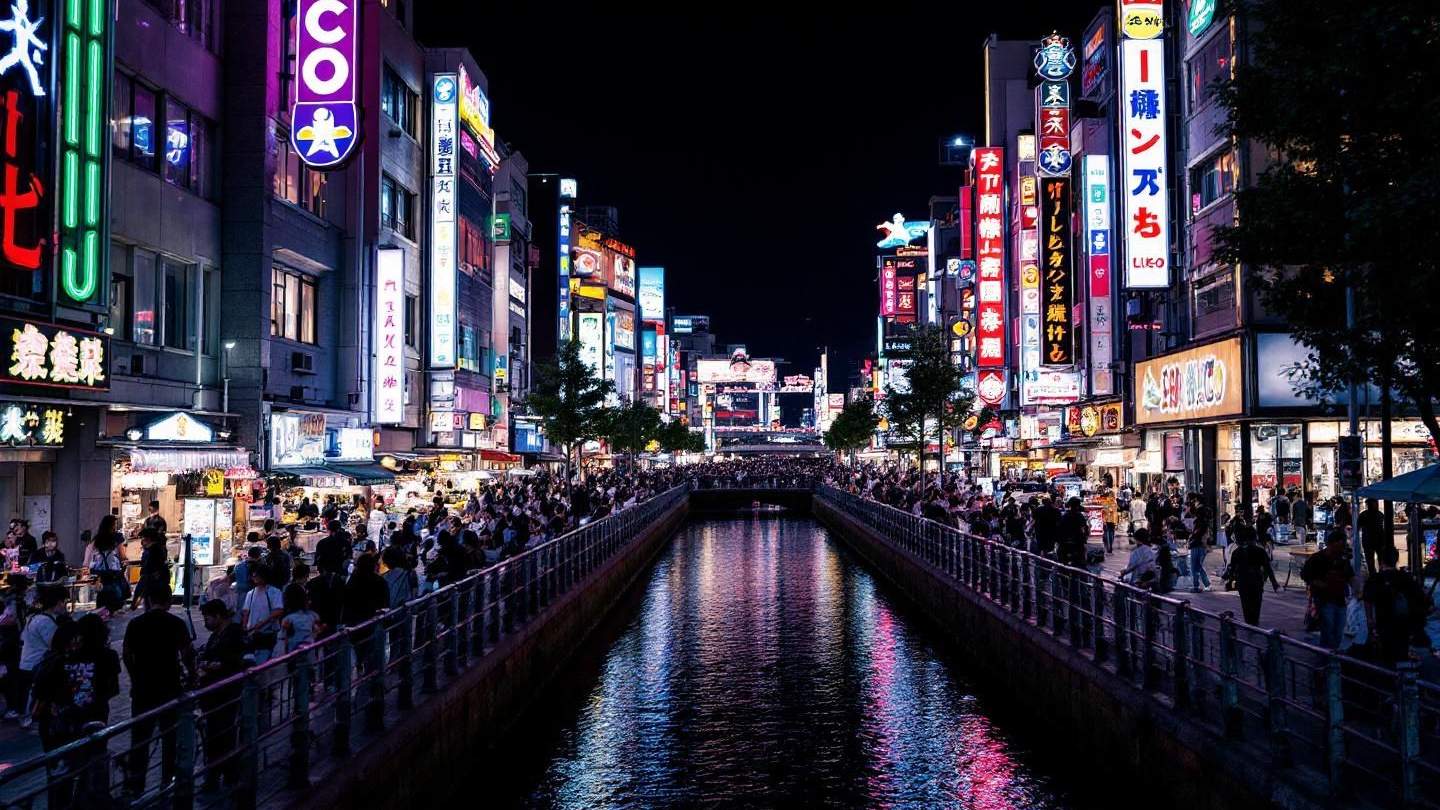
Walk to Dotonbori from Shinsekai (about 20 minutes) or take the subway (2 stops, Midosuji Line). Dotonbori in the evening is the definitive Osaka experience — the giant illuminated signs, the Glico Running Man, the canal, the crowds, the takoyaki smell.
Stand on Ebisu Bridge for the classic canal photograph. Walk both sides of Dotonbori-dori. Try everything: takoyaki from a street stall (400–700 yen for 8 pieces), the best okonomiyaki you can find (900–1,400 yen at a sit-down restaurant), and a plate of kushikatsu to follow.
The covered Shinsaibashi-suji arcade (the longest covered shopping street in Japan) runs north from Dotonbori — worth a walk through even if you are not shopping.
Dotonbori Evening Food Tour
3-hour guided evening walk through Dotonbori and Namba — takoyaki, kushikatsu, okonomiyaki, yakitori, and the hidden izakayas most tourists never find. The best single evening in Osaka.
Day 2: Cooking Class, Umeda, Day Trip Option
Morning: Japanese Cooking Class (9:00–12:00)
Osaka’s cooking culture is participatory. A 2–3 hour cooking class in the morning — tempura, miso soup, and Japanese side dishes — gives you skills to bring home and context for everything you have been eating. The tempura-focused class is particularly well-suited to Osaka’s frying culture.
Osaka Japanese Cooking Class — Tempura & Miso
Hands-on 2.5-hour cooking class in Osaka — make authentic tempura, miso soup, and Japanese staples with an English-speaking instructor. Small group, take-home recipes.
Afternoon: Umeda and Osaka’s Modern Face (12:30–17:00)
Umeda is Osaka’s other major center — north of the city, more business-oriented, with the best modern architecture and the Dojima district. The area around Osaka Station is a study in contemporary Japanese commercial architecture.
Highlights:
- Umeda Sky Building — twin towers with a “floating garden” observation deck connected by a mid-air bridge (1,500 yen). Better view than Tsutenkaku with significantly more drama. Go at dusk for the city lit up below.
- Hep Five Ferris Wheel — the giant red Ferris wheel on top of the Hep Five shopping mall (600 yen). Good for photos, 15 minutes, oddly fun.
- America-mura — Osaka’s streetwear and counter-culture district, a 15-minute walk from Shinsaibashi station. Small independent shops, street art, very different atmosphere from Dotonbori.
Lunch in Umeda runs 1,000–2,500 yen at any of the department store restaurant floors.
Optional: Day Trip to Nara or Kyoto (Full Afternoon)
If Osaka is your base and you have not yet visited Nara or Kyoto, the afternoon is a viable time for a quick excursion:
- Nara is 40 minutes from Osaka Namba by Kintetsu (680 yen). The deer park and Todai-ji fit comfortably into a 3-hour afternoon visit.
- Kyoto is 29 minutes from Osaka by JR Special Rapid (580 yen). If you have only seen Osaka, a Kyoto afternoon gives you the historical contrast. Do Fushimi Inari or Gion in the late afternoon.
Evening: Osaka Bar Hopping or Final Dinner
Osaka’s drinking culture is just as distinctive as its food culture. The bar-hopping tour covers sake, whisky highballs, shochu, and craft beer across multiple venues in Namba and beyond — a good last evening if you want to explore what you cannot find solo.
Otherwise: dinner in Dotonbori again (no shame in returning) or one of the covered arcade izakayas for a final standing meal.
Where to Stay
Namba is the best base for 2 days in Osaka. Walking distance from Dotonbori, Kuromon Market, and Shinsekai. Direct subway and JR connections to everywhere else. Budget hotels from 6,000 yen/night; mid-range doubles 10,000–16,000 yen.
Shinsaibashi (adjacent to Namba) if you want a slightly quieter base with better shopping and the same restaurant access. Same price range.
Umeda/Shin-Osaka if you are arriving by Shinkansen or prioritizing easy transit over Dotonbori proximity. Five minutes to Dotonbori by subway.
Getting Around
Osaka’s subway system is excellent. The Midosuji Line (red) runs north-south connecting Umeda, Shinsaibashi, Namba, and Tennoji. The Sennichimae Line connects Namba to Nipponbashi (Kuromon Market). IC card covers everything.
Walking between Namba, Dotonbori, Shinsaibashi, and Kuromon is entirely feasible — these neighborhoods are clustered in a 1-kilometer radius.
Osaka to Kyoto: JR Special Rapid from Osaka Station, 29 minutes, 580 yen. Or Hankyu from Umeda, similar price and time. Osaka to Nara: Kintetsu from Osaka Namba, 40 minutes, 680 yen.
What to Skip in 2 Days
Universal Studios Japan. A full day, expensive (8,000–12,000 yen entry), and delivers nothing specifically Japanese. Save for a dedicated family trip.
Aquarium Kaiyukan. One of the world’s best aquariums — and also a full half-day that competes directly with Kuromon Market and Osaka Castle. On 2 days, skip it.
The full Umeda Sky Building visit AND the Ferris wheel. Pick one observation point per city. Umeda Sky Building is the better choice for views; the Ferris wheel is better for photos.
Tips for a 2-Day Osaka Trip
- Osaka people are louder and more outgoing than Tokyo. Talk to people at izakayas. The culture of direct conversation with strangers is more common here.
- Never double-dip in kushikatsu sauce. It is a genuine rule, not a suggestion.
- Takoyaki quality varies enormously. Eat at stalls with visible cooking and a queue. The 150-yen version in a covered arcade is not the same as the 500-yen fresh version from a specialist stall.
- Breakfast in Japan is often skipped or minimal. Kuromon Market does the best morning eating in Osaka — build your Day 1 around it.
- Osaka to Kyoto by JR is 29 minutes. If you have a morning to spare and have not seen Kyoto, it is an obvious and easy addition.
- Budget 3,000–5,000 yen per day just for food. Osaka rewards generous eating.
Extending Beyond 2 Days
If you can stretch the trip to three days, the extra time is best spent on either a guided Osaka food tour that goes deeper into Kuromon and Shinsekai than a self-planned itinerary allows, or a proper evening exploring Osaka’s nightlife beyond the single bar-hopping stop above — Kitashinchi for a quieter, more upscale contrast to Namba, or Amerika-mura if you want live music and clubs. Families or travelers who want to cook rather than just eat should also look at Osaka’s cooking classes, which pair well with either extra day. For the full context on what makes each Osaka neighborhood worth visiting, see the Osaka things to do guide.
More tours on Viator
Top-rated experiences with verified reviews, bookable on Viator (a Tripadvisor company).
 Viator
Samurai Training Experience KENDO in Osaka
FromUSD 126Check availability → Viator
Osaka Sake Tasting & Takoyaki Cooking Experience
FromUSD 70Check availability → Viator
Private Osaka Tour from Your Hotel with Local Guide
FromUSD 108Check availability → Viator
Ramen Cooking Class in Osaka Dotonbori with Sushi or Gyoza Option
FromUSD 69Check availability → Viator
Kimono experience and Japanese home-cooking lesson Osaka Umeda
FromUSD 77Check availability → Viator