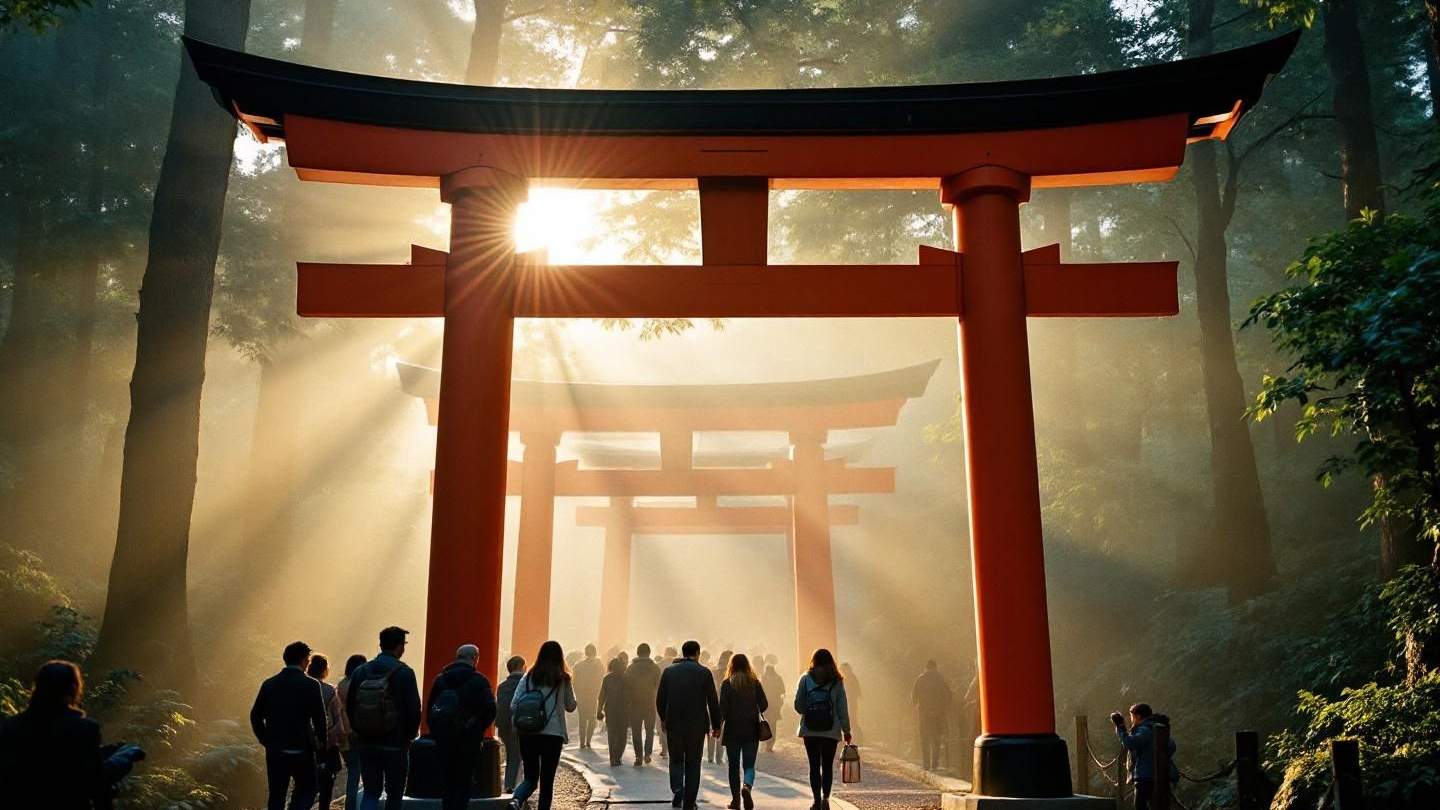
Kyoto in 2 Days
Is 2 days enough for Kyoto?
Two days covers Kyoto's headline experiences — Fushimi Inari, Gion, Kinkaku-ji, Arashiyama, and Nishiki Market — but requires early starts and clear priorities. You will leave wanting more, which is by design. Two days gives you the essential Kyoto; three days gives you the comfortable one.
Two days in Kyoto is a highlights tour — and Kyoto’s highlights are world-class. Get up early both mornings, set your priorities before you arrive, and you will see more of the ancient capital than most people manage in three. Here is the route.
| At a glance | |
|---|---|
| Where to base yourself | Central Kyoto near Shijo or Sanjo station |
| Cost per person / day | Around 6,000–10,000 yen (temple entries, transport, food, excluding hotel) |
| Getting there | Shinkansen from Tokyo (around 2h15) into Kyoto Station, or JR from Osaka/Kansai Airport |
| Getting around | Kyoto City Bus Day Pass (700 yen) plus the JR Sagano Line |
| Best time | May and October for weather and crowds; late March–early April and mid-November are beautiful but packed |
| Pace | Tight — two early starts (before 7:30 am) are required to see the headline sights without crowds |
Day-by-Day Summary
| Day | Morning | Afternoon | Evening |
|---|---|---|---|
| Day 1 | Fushimi Inari (7:00) | Nishiki Market, then Kinkaku-ji + Ryoan-ji | Gion at dusk, dinner in Pontocho |
| Day 2 | Arashiyama Bamboo Grove + Tenryu-ji (7:30) | Okochi Sanso, riverside, Nijo Castle | Philosopher’s Path, return to Gion or Pontocho |
Day 1: Fushimi Inari, Nishiki Market, Gion
Early Morning: Fushimi Inari Taisha (7:00–9:30)
Fushimi Inari is non-negotiable, and the timing is critical. Arrive before 7:30 am.
By 10 am, the famous Senbon Torii (the two parallel corridors of vermillion torii gates) is packed with tour groups and the photographs are impossible without strangers in them. At 7 am, it is just you, a few early Japanese worshippers, and the sound of birds in the bamboo overhead.
Walk the full Senbon Torii corridor to the first shrine precinct (15 minutes), then continue up the mountain. The Yotsutsuji intersection — about 45 minutes of gentle climbing from the base — has a panoramic view of southern Kyoto through a frame of gates. This is the right turnaround point for a 2-day visit. The full summit takes 2–3 hours and the upper portion has fewer gates.
Fushimi Inari is free and open 24 hours. From Kyoto Station, take the JR Nara Line to Inari Station (5 minutes, 150 yen).
Fushimi Inari Guided Walking Tour
Kyoto's most iconic site with a local guide — learn the history of the 10,000 torii gates, the fox deity, and the mountain's significance in Shinto. Worth it for the early-morning atmosphere and context.
Mid-Morning: Nishiki Market (10:00–11:30)
Return to central Kyoto. Nishiki Market — called “Kyoto’s Kitchen” — is a narrow covered market street running parallel to Shijo Street. It is 400 meters of stalls selling Kyoto pickles (tsukemono), fresh tofu, grilled skewers, matcha sweets, and seafood being prepared in front of you.
Walk it once end to end, stop for whatever looks interesting. Grilled skewers of quail egg, octopus, or beef are 150–300 yen each. Kyoto pickles in small containers make good gifts (vacuum-sealed for travel, 500–1,000 yen).
Stalls start closing around 5–6 pm, so a morning or afternoon visit is best.
Afternoon: Kinkaku-ji and Ryoan-ji (12:30–15:30)
Take bus 101 or 205 from central Kyoto toward the northwest (about 40 minutes, 230 yen with day pass). Kinkaku-ji, the Golden Pavilion, is Kyoto’s most visited site and genuinely deserves it. The three-storied gold-leaf structure reflected in its mirror pond is exactly as extraordinary as in photographs. Entry 500 yen. The visit is a prescribed loop around the pond — allow 30–40 minutes.
Walk 10 minutes to Ryoan-ji. The karesansui rock garden here — fifteen rocks in raked gravel, arranged so one rock is always hidden from wherever you stand — is Japan’s most famous dry landscape garden. Entry 600 yen. Allow 20 minutes. The meaning is debated and the setting is quieter than Kinkaku-ji.
Late Afternoon: Gion at Dusk (16:00–19:00)
Return to central Kyoto and walk through Gion. The best Gion timing is 5–7 pm: light is golden, tour groups have thinned, and there is a chance of seeing a maiko (apprentice geisha) hurrying to an appointment along Hanamikoji Street.
Hanamikoji is the main street — lined with traditional machiya townhouses, preserved teahouses, and a few high-end restaurants. Walk slowly. Do not follow or photograph anyone who looks like they are in a hurry. The east end of the street near Kenninji Temple is the quietest stretch.
Geisha and Maiko Cultural Walk through Gion
Evening guided walk through Gion's most atmospheric streets — history of the geisha district, maiko training, and what actually happens behind the teahouse doors.
Evening: Dinner in Gion or Pontocho (19:00–21:00)
Pontocho Alley — parallel to the Kamo River, between Sanjo and Shijo — is one of Kyoto’s best dining streets. Narrow, atmospheric, lined with restaurants from casual to fine dining. Budget 2,500–5,000 yen per person for dinner here.
Alternatively, the Gion Nishiki food tour covers the Gion and Pontocho neighborhoods with a guide, stopping at 13 different dishes across the evening. If food is a priority, this is the best single evening activity in Kyoto.
Gion & Pontocho Food Tour — 13 Tastings
Evening food walk through Gion and Pontocho with a local guide — kaiseki small plates, Kyoto tofu, street food, and sake pairings across 13 different stops. The essential Kyoto food evening.
Day 2: Arashiyama, Kinkakuji (if skipped), Nijo Castle
Early Morning: Arashiyama Bamboo Grove (7:30–9:00)
Same principle as Fushimi Inari: arrive early. The Arashiyama Bamboo Grove is a 500-meter corridor of towering bamboo that is genuinely stunning at 7:30 am — and genuinely awful at 11 am when tour groups are queuing for photographs.
From central Kyoto, take the Hankyu Line to Katsura, transfer to the Arashiyama Line (about 30 minutes total). Or take the JR Sagano Line to Saga-Arashiyama Station (15 minutes from Kyoto Station).
Walk through the bamboo grove (15 minutes end to end), then immediately continue to the Tenryu-ji garden behind it. Tenryu-ji is a UNESCO World Heritage Zen temple with a 14th-century pond garden — entry 500 yen (garden only) or 800 yen including the main hall. The garden is one of Japan’s finest.
Morning: Arashiyama Continued (9:00–11:30)
With the early start, you have time to see more of Arashiyama properly:
Okochi Sanso — the hilltop villa of a 1920s film star, with layered gardens and views over the Oi River valley. Entry 1,000 yen, includes matcha and a wagashi sweet in the tea room. Worth it. Allow 45 minutes.
Arashiyama riverside — the Togetsu-kyo bridge framed by forested hillsides is the main scenic view of the area. Walk across and back. Row boats are available to rent on the Oi River (about 1,500 yen/hour) if you want to spend an hour on the water.
Lunch in Arashiyama at one of the cafes near the station: 1,000–2,000 yen.
Afternoon: Nijo Castle (13:30–15:30)
Return to central Kyoto (JR Sagano Line to Kyoto Station, then subway or bus to Nijo). Nijo-jo Castle is the former shogun’s residence in Kyoto — a UNESCO World Heritage Site and worth 90 minutes. The Ninomaru Palace interior has the original “nightingale floors” (designed to squeak when walked upon, as an anti-ninja security measure). Entry 1,300 yen (castle + gardens). The garden with the restored tea house is excellent in autumn.
This is a more interesting site than Kinkaku-ji from a historical perspective, with far fewer crowds.
Late Afternoon: Philosopher’s Path (16:00–17:30)
Philosopher’s Path is a 2-kilometer canal-side walkway lined with cherry trees (spectacular in spring) running between Ginkaku-ji in the north and Nanzenji temple complex in the south. Walk it slowly in the late afternoon when the light comes through the trees. Nanzenji at the southern end has a dramatic stone aqueduct running through its grounds and the Hojo garden (entry 600 yen) — worth the detour.
Evening: Return to Gion
Same recommendation as Day 1 evening if you did not take the food tour. Pontocho or the streets around Kiyamachi-dori for dinner. Kyoto closes early compared to Tokyo or Osaka — plan dinner by 7 pm.
Where to Stay
Central Kyoto near Shijo or Sanjo is the best base for 2 days. You are within 30 minutes of everything on this itinerary, walking distance from Nishiki Market and Gion, and the area has the widest range of mid-range hotels and ryokan.
Near Kyoto Station is a practical alternative with excellent transit connections and many hotel options at all price points. Slightly less atmospheric but useful if you are arriving from Tokyo or leaving early the next morning.
One night at a ryokan (traditional inn) is strongly recommended if your budget allows it — budget 20,000–40,000 yen per person including dinner and breakfast. The experience of sleeping on a futon, wearing a yukata robe, and eating a morning kaiseki breakfast is unlike anything else in Japan and more achievable in Kyoto than almost anywhere.
Getting Around
Kyoto’s bus network is the main option for tourist sights. The Kyoto City Bus Day Pass (700 yen) covers unlimited rides on all city buses and is worth buying if you plan 3+ bus journeys per day. Buy at Kyoto Station or on the bus.
The JR Sagano Line (from Kyoto Station) covers Fushimi Inari and Arashiyama efficiently. The subway covers central Kyoto, Nijo Castle, and east Kyoto temples.
Taxis are expensive and mostly unnecessary with the bus network. Walking between Gion, Nishiki, and the Kamo River area is entirely feasible.
What to Skip in 2 Days
The full Fushimi Inari summit. The upper mountain takes 2–3 hours and is less dramatic than the first section. Turn back at Yotsutsuji intersection.
Day trips to Nara or Osaka. Both are 45–60 minutes away by train, but adding a day trip to a 2-day Kyoto visit means sacrificing Arashiyama or the Philosopher’s Path. Do Kyoto properly; see Nara and Osaka separately.
Kiyomizudera. The famous wooden stage temple is one of Kyoto’s most iconic sights — and one of its most crowded. On a 2-day trip, it competes with Fushimi Inari for the same “famous temple” slot and loses on crowd-to-payoff ratio. Add it on a 3-day visit.
Multiple tea ceremonies. One tea ceremony in Kyoto is a meaningful cultural experience. Two in 2 days is repetitive. Book one or zero.
Tips for a 2-Day Kyoto Trip
- Buy the bus day pass on arrival at Kyoto Station. It pays off immediately.
- Fushimi Inari before 7:30 am, Arashiyama Bamboo Grove before 8:30 am. No exceptions for a crowd-free experience.
- Kyoto food (kaiseki, tofu, matcha) is completely different from Tokyo food. Seek it out rather than defaulting to ramen.
- Most Kyoto temples close by 5 pm. Plan afternoon arrivals carefully.
- Kyoto in cherry blossom season (late March–mid April) and autumn foliage (mid November) is extraordinarily beautiful. Book accommodation 3–4 months ahead.
- Gion at dusk: walk slowly, do not rush, look in the windows of the teahouses. The atmosphere is the point.
Should You Extend to 3 Days Instead?
If your schedule has any flexibility, a third day is the single best upgrade you can make to this trip. Two days forces you to cut Kiyomizu-dera and one tea ceremony, and both early starts (Fushimi Inari, then Arashiyama) are non-negotiable rather than optional. Kyoto in 3 days keeps the same core route but adds Kiyomizu-dera, Nijo Castle without the rush, and room for a Nara or Fushimi sake day trip. If you are combining Kyoto with the rest of the country, check where it fits in a longer 7-day Japan itinerary before deciding.
Getting to Kyoto also affects how much of your first day survives. Arriving on the Shinkansen from Tokyo costs about 2 hours 15 minutes — see the Tokyo to Kyoto guide for timing and whether the JR Pass is worth it for your route, and load a Suica or Pasmo IC card before you arrive so buses and trains work without buying paper tickets.
More tours on Viator
Top-rated experiences with verified reviews, bookable on Viator (a Tripadvisor company).
 Viator
Private Tea Ceremony and Sake Tasting in Kyoto Samurai House
FromUSD 102Check availability → Viator
Kyoto: Zen Garden, Zen Mind (Private)
FromUSD 380Check availability → Viator
Private car tour in Kyoto (up to 4)
FromUSD 287Check availability → Viator
Become a Samurai Movie Star in Kyoto by Filming with a Real Actor
FromUSD 126Check availability → Viator
Near Fushimiinari: Kyoto Home Cooking Class & Supermarket tour
FromUSD 121Check availability → Viator