Best Things to Do in Kobe
Last updated: August 2026
Kobe: Japan’s Most Cosmopolitan City
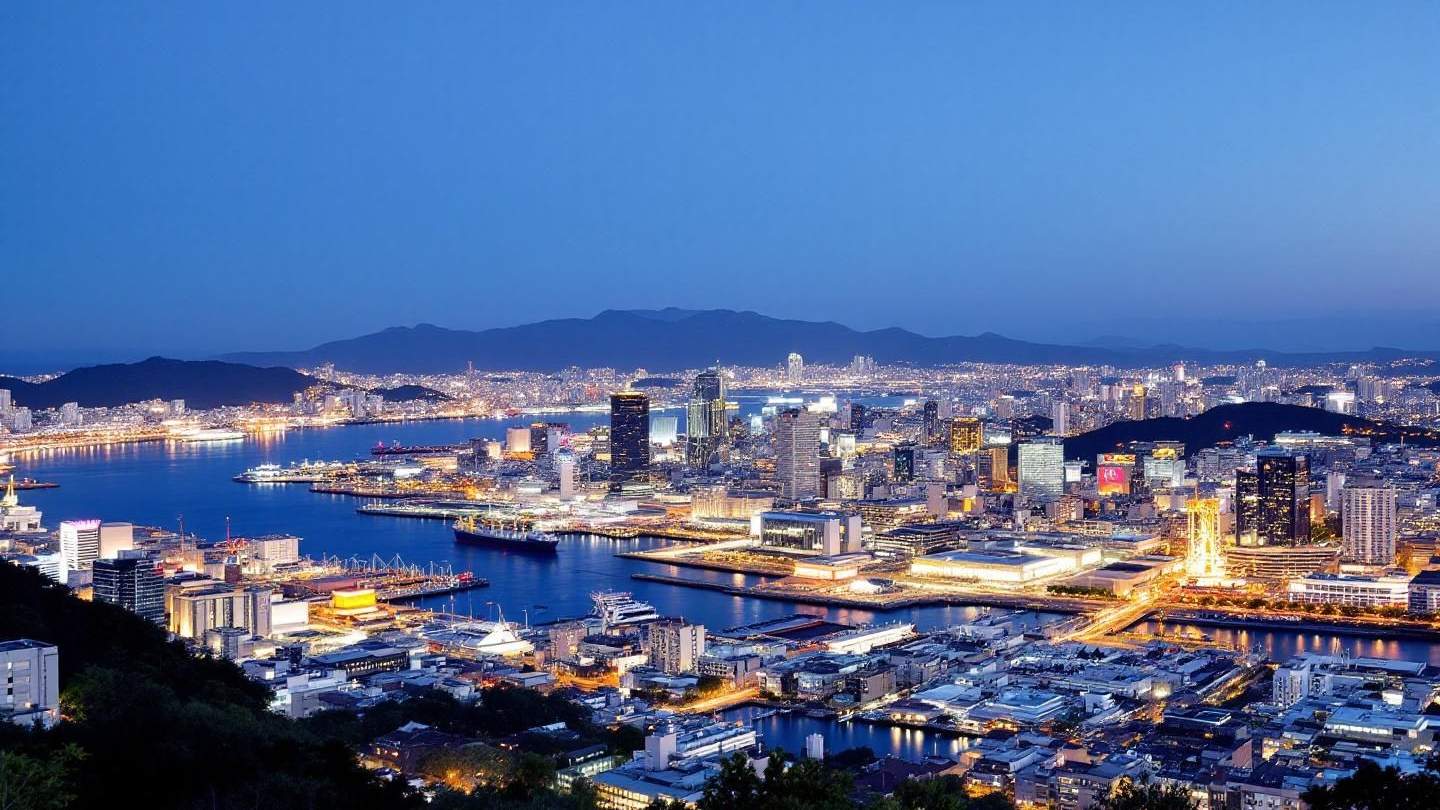
Kobe sits between the Rokko Mountains and Osaka Bay — a narrow coastal city that has been one of Japan’s primary international ports since it opened to foreign trade in 1868. That history of openness to the outside world shaped everything about the place: its architecture, its food culture, its relative cosmopolitanism compared to more insular Japanese cities of similar size. The foreign merchant houses of Kitano-cho, the oldest Chinatown in Japan, and a beef tradition born from imported Wagyu breeding stock all trace their origins to those decades of contact with the outside world.
Today Kobe is a highly livable mid-sized city of around 1.5 million. It handles its tourist attractions without the crowds or intensity of Kyoto or Osaka, which makes it a genuinely pleasant day trip or short stay. Most of what the city offers is walkable or reachable by local rail once you’re in the center.
At a glance
| Where | Hyogo Prefecture, around 30 minutes from Osaka, 30 minutes by Shinkansen from Kyoto |
| Cost | Free to walk the harbor and Kitano-cho streets; a Kobe beef lunch runs around 5,000–8,000 yen, dinner 15,000 yen and up |
| Time needed | Half a day minimum; a full day covers the harbor, Kitano-cho, Nankinmachi, and a sake brewery |
| Getting there | JR, Hankyu, or Hanshin trains from Osaka to Sannomiya Station (20–40 minutes); Shinkansen to Shin-Kobe from Kyoto or Tokyo |
| Best time | Any season; spring (Nunobiki roses) and clear winter days (best night views) are especially good |
This guide covers Kobe’s food and history in depth, plus how to combine the city with a day trip from Osaka or Kyoto — see also Day Trips from Osaka and the best day trips in Japan for wider options.
Kobe Beef
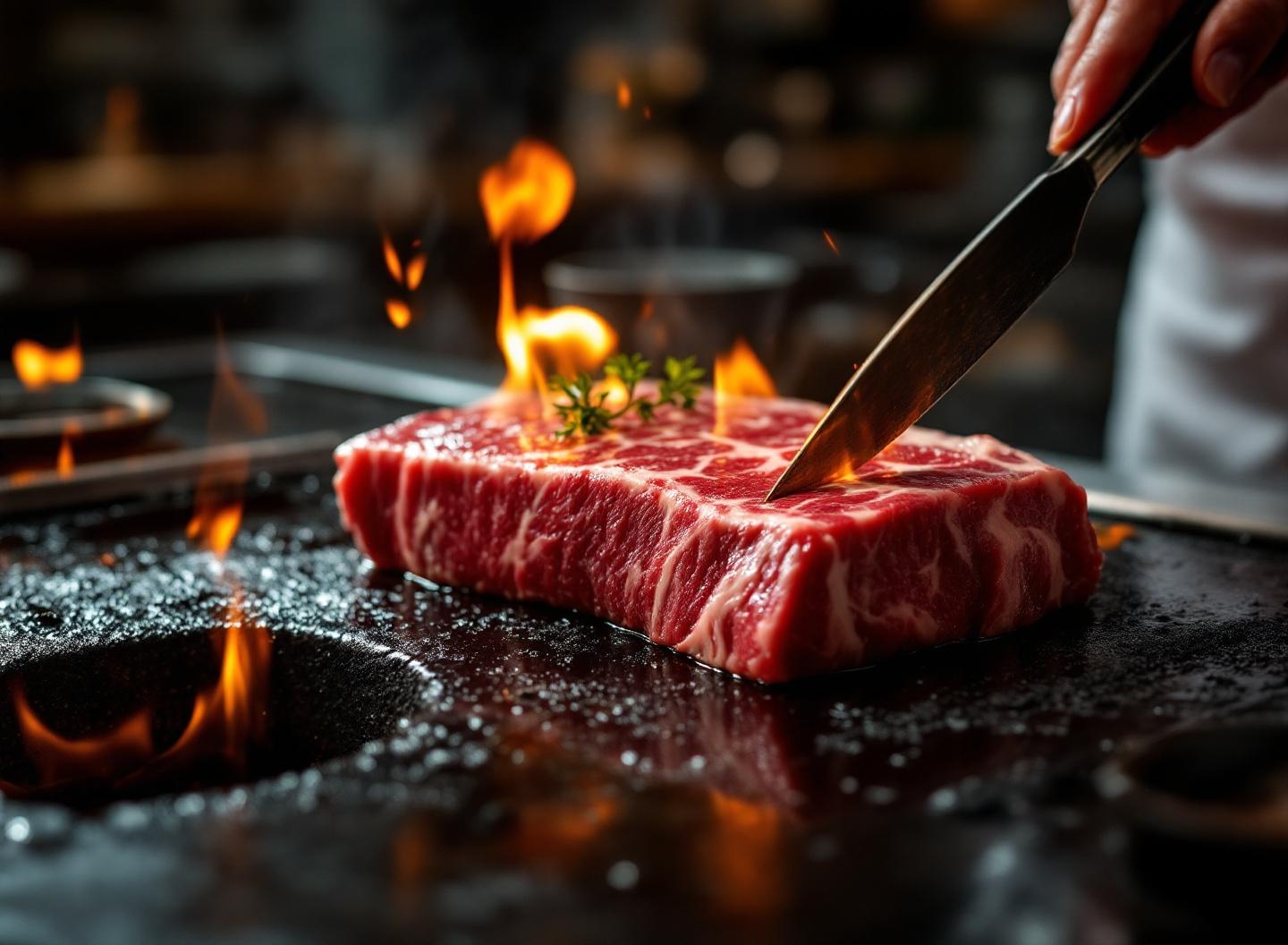
Kobe beef is the most famous brand of Wagyu in the world, and the real thing is available here and almost nowhere else. Authentic Kobe beef must come from Tajima-strain Wagyu cattle raised in Hyogo Prefecture to strict standards: the cattle must be born in Hyogo, fed on grain in Hyogo, slaughtered at one of six certified abattoirs, and achieve a marble score of A4 or A5 with additional sensory quality standards. Only a few thousand certified Kobe beef cattle are produced each year, which is why the name commands such premium prices.
What to order: Kobe beef is most commonly served teppanyaki-style, cooked on a flat iron griddle by a chef at your table, or as shabu-shabu (thin-sliced beef briefly dipped in hot broth). Some higher-end restaurants also serve it as steak. A teppanyaki course menu covering salad, soup, vegetable, and a 100–150g Kobe beef sirloin typically runs 15,000–25,000 yen per person. Lunch sets at many of the same restaurants offer smaller portions (around 80g) for 5,000–8,000 yen — the most accessible entry point.
Where to eat it:
Mouriya (three locations: Kitano, Kitanozaka, and Motomachi) is Kobe’s oldest Kobe beef teppanyaki restaurant, operating since 1885. The service is formal without being intimidating. Lunch sets from around 6,000 yen; dinner courses from 15,000 yen. Reservations strongly recommended for dinner.
Wakkoqu near Kitano is one of the top-rated teppanyaki restaurants in the city, known for theatrical presentation and consistently high-grade meat. Dinner courses run 18,000–30,000 yen; the lunch menu offers better value at around 7,000–10,000 yen.
Steakland Kobe, near Sannomiya Station, is one of the most accessible options — an open teppanyaki counter with no reservations required, serving Kobe beef sets from around 5,000 yen at lunch. The quality is genuine if not the highest available.
A note on beef grades: the A5 designation indicates the highest possible yield and marbling score under Japan’s official grading system. Kobe beef is always at least A4. The price premium between A4 and A5 is significant; both are extraordinary. Budget travelers can also try certified Wagyu from neighboring regions (Matsusaka, Omi) at lower prices in Kobe’s restaurants.
Kitano-cho
The Kitano-cho district, on the hillside above central Kobe, contains the largest concentration of Western-style historical residences (ijinkan) in Japan. When foreign merchants, diplomats, and engineers settled in Kobe after 1868, many chose to live in this breezy uphill neighborhood, constructing homes in their home countries’ architectural styles — English Tudor, French colonial, American Victorian, German Wilhelmine. Around twenty of these houses survive today as heritage sites.
Several are open to the public. The Kazamidori (Weathercock House), built in 1909 for a German merchant and topped with a distinctive iron rooster weathervane, is the neighborhood’s symbol. Admission: 500 yen. The Moegi no Yakata (a double-gabled American colonial-style house) and Rhine no Yakata (German-style) are also worth entering. A combination ticket for multiple ijinkan runs 1,200–1,500 yen.
The neighborhood itself is pleasant to walk through even without paying admissions — the brick lanes, European-style gardens, and hilltop views over the harbor make for a good afternoon. A short walk uphill from Sannomiya Station; the main streets begin about 15 minutes on foot.
Meriken Park and the Harbor Area
Kobe’s waterfront was largely rebuilt after the devastating 1995 Great Hanshin Earthquake and now serves as the city’s primary public open space on the bay.
Meriken Park (the name is a Japanization of “American”) was built on reclaimed land and centers on the Kobe Port Tower — a red lattice tower opened in 1963 and renovated with an observation deck in 2023. Admission to the observation deck: 700 yen. Views extend across the bay to Osaka and, on clear days, to Awaji Island and the Akashi Kaikyo Bridge (the world’s longest suspension bridge, visible 10 km to the west).
The BE KOBE white letter monument at the south end of the park is Kobe’s most-photographed landmark — five giant letters that become a backdrop for every local Instagram account. It was installed in 2017 on the 150th anniversary of the port’s opening.
The adjacent Kobe Maritime Museum (admission 900 yen) covers the city’s port history with models of historic ships and exhibits on the port’s development and the 1995 earthquake’s impact on the waterfront. A preserved section of the earthquake-damaged quay wall has been left in place as a memorial.
Harborland, the shopping and dining district immediately west of Meriken Park, has restaurants and cafes with bay views, a small amusement area, and the Umie shopping complex. It is best in the evening when the harbor lights reflect on the water.
Nankinmachi (Kobe Chinatown)
Nankinmachi is Japan’s second-largest Chinatown (after Yokohama) and, by some measures, the most vibrant. It covers three short blocks near Motomachi Station and centers on a large gateway plaza where vendors sell steamed buns (nikuman), beef skewers, and sesame balls from sidewalk stalls.
The food is the point. Pork nikuman (steamed pork buns) run 150–300 yen each and are the standard snack. Restaurants around the central plaza serve Cantonese, Szechuan, and occasionally Taiwanese cooking at accessible prices — lunch sets run 1,000–1,800 yen at most establishments. The more serious Chinese restaurants are on the back streets rather than on the central tourist row.
Nankinmachi is busiest on weekends and during Chinese New Year (late January/early February), when the entire district fills for lion dance performances and lantern displays.
Nada Sake District
The Nada-ku district east of central Kobe (about 15 minutes by train from Sannomiya on the Hanshin or JR lines) produces more premium sake than any other area in Japan — roughly 30% of the national total. The combination of hard Miyamizu water from the Rokko Mountains, high-quality Yamada Nishiki rice from nearby Hyogo fields, and cool winter temperatures creates ideal sake-brewing conditions.
Several major breweries in the area operate museums and free tasting facilities.
Hakutsuru Sake Brewery Museum (Hanshin Sumiyoshi Station, 5 min walk) is the most comprehensive, covering the history of sake production with life-sized wax dioramas showing traditional brewing methods. Free entry; tastings of 3–4 products included. Open Tuesday–Sunday, 9:30 am–4:30 pm.
Kiku-Masamune Sake Brewery Museum (Hanshin Uozaki Station) focuses more on the technical aspects of brewing and includes a large sake sales floor. Free entry and tastings. Open daily.
Sawanotsuru Museum (near Hanshin Oishi Station) is smaller but well-curated, with an emphasis on the visual history of sake production. Free.
The tasting portions at each are modest (about 30–60 ml per product), but visiting two or three breweries in sequence is completely reasonable and free of charge. The retail shops at each sell their full range, including premium aged varieties not widely available elsewhere, at brewery prices.
Mount Rokko
The Rokko mountain range forms the dramatic backdrop to Kobe, rising sharply from the coast to peaks around 930 meters. Mount Rokko itself is the most accessible high point, reachable by the Rokko Cable Car from Rokko Cable Shita Station (itself accessible by bus from Hankyu Rokko Station). Cable car round trip: 1,060 yen. Journey time: 10 minutes.
The mountain’s summit area contains the Rokko Garden Terrace, a collection of observation decks and restaurants with panoramic views over the Kobe-Osaka coastal plain. On a clear day the view extends from the Akashi Kaikyo Bridge to Osaka’s skyscraper cluster. Night views here are among the best in the Kansai region — Kobe is listed as one of Japan’s “Three Great Night Views” alongside Nagasaki and Hakodate.
Nunobiki Herb Gardens, between central Kobe and the Rokko range, is accessible by ropeway (round trip 1,800 yen from Shin-Kobe Station, itself directly above the Shinkansen station). Opened in 1992 on a steep hillside, the gardens cover 20 themed sections with around 200 plant varieties. The upper section overlooks the city from an impressive angle. Best in spring (May) for roses and early summer for lavender.
Arima Onsen
Arima Onsen, in a narrow valley on the north slope of the Rokko Mountains, is one of Japan’s oldest hot spring resorts — records of its use date back over 1,300 years. The springs produce two distinct water types: Kinsen (golden water), rich in iron, sodium chloride, and calcium, which turns rust-colored on contact with air; and Ginsen (silver water), radioactive with radon and carbon dioxide, which stays colorless.
Arima is well set up for day visitors. Taiko-no-Yu and Kin no Yu are public bath houses charging 650–1,550 yen for entry. The main street of the onsen town (about 300 meters of traditional ryokan, sweets shops, and souvenir stores) is pleasant to walk even without bathing.
Getting there from Kobe: take the subway from Sannomiya to Tanigami (around 600 yen), then the Kobe Dentetsu line to Arima Onsen (around 370 yen). Total journey: 35–45 minutes. Alternatively, direct bus from Sannomiya (around 810 yen, 40 minutes).
Getting to Kobe from Osaka
Kobe is one of the easiest day trips from Osaka, with multiple fast rail options.
JR: Sannomiya Station (central Kobe) to Osaka Station via the JR Kobe Line takes 20 minutes and costs 420 yen. Trains run every few minutes throughout the day.
Hankyu: From Hankyu Kobe-Sannomiya to Umeda (Osaka) takes 27–32 minutes and costs 330 yen. The Hankyu terminal is adjacent to JR Sannomiya.
Hanshin: Cheaper and slightly slower (around 40 minutes), connecting to Namba (820 yen with transfers) and Umeda. The Hanshin line is useful if you plan to visit the Nada sake district, as its stations are spaced along the eastern coastal ward.
From Kyoto, take the Shinkansen to Shin-Kobe Station (direct, 30 minutes, 3,220 yen) or the private Hankyu-Hanshin express combination (roughly 80 minutes, 690 yen) for a budget option.
Practical Tips
How much time: Kobe is very doable as a half-day from Osaka, though a full day allows the harbor, Kitano-cho, Nankinmachi, and at least one sake brewery visit. Adding Arima Onsen converts it to a full day trip.
Best area to base: Sannomiya is the central hub with the most transport connections. Most of the city’s attractions radiate outward from here on foot or by short taxi ride.
Kobe City Loop Bus: A sightseeing loop bus (210 yen per ride, or 700 yen day pass) covers most tourist spots including Meriken Park, Kitano-cho, and Harborland. Useful if you don’t want to navigate the subway.
Kobe vs Osaka vs Nara for a Day Trip from Kyoto
Travelers deciding between Kansai’s classic day-trip options often weigh Kobe against Osaka or Nara. Each offers a different pace and focus.
| Kobe | Osaka | Nara | |
|---|---|---|---|
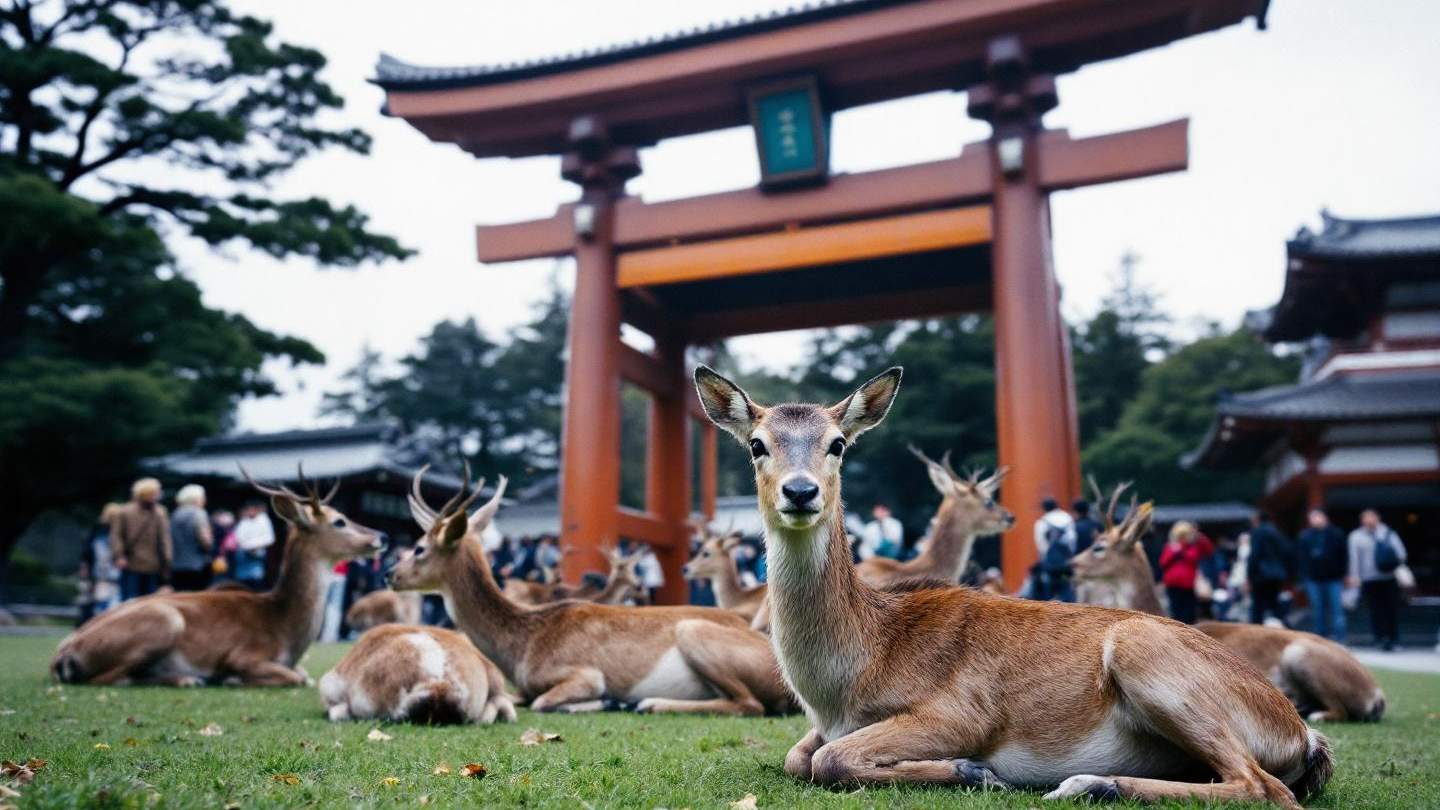
| Main draw | Kobe beef, harbor views, foreign heritage architecture | Street food, nightlife, Osaka Castle | Free-roaming deer, Todai-ji’s Great Buddha |
| Crowds | Light to moderate | Heavy, especially Dotonbori | Heavy at the park, lighter elsewhere |
| Half-day feasible? | Yes — harbor and Kitano-cho | Tight — Osaka rewards a full day | Yes — Nara Park and Todai-ji |
| Travel time from Kyoto | Around 70–80 minutes (Shinkansen or private rail) | Around 30–50 minutes | Around 45 minutes |
| Best for | Food-focused travelers, quieter pace | First-time visitors wanting energy and variety | Families, wildlife, a shorter half-day trip |
If you’re building a longer Kansai itinerary, see Day Trips from Osaka for how Kobe, Nara, and other options combine, and Kyoto in 3 Days for how a Kobe excursion fits around a Kyoto base.
Kobe on a Budget
Kobe beef gets the headlines, but the city is easy on a modest budget too. The Nada sake breweries offer free tastings, Nankinmachi’s steamed buns cost a few hundred yen each, Kitano-cho’s brick lanes and hilltop views cost nothing to walk, and Meriken Park’s BE KOBE monument and harbor promenade are free. A traveler skipping the teppanyaki splurge can still spend a full, satisfying day in Kobe for the cost of transport, a few Chinatown snacks, and one or two museum tickets under 1,000 yen each. For a genuine Kobe beef taste without the full course price, the lunch sets at Steakland Kobe or the lunch menus at Mouriya and Wakkoqu are the most efficient route.
More tours on Viator
Top-rated experiences with verified reviews, bookable on Viator (a Tripadvisor company).
 Viator
Peaceful Hiroshima & Miyajima UNESCO 1 Day Bus Tour
FromUSD 124Check availability → Viator
World Heritage Shirakawa-go and Experience Tours from Kanazawa
FromUSD 118Check availability → Viator
World Heritage Kyoto & Nara Uji Authentic Matcha Experience
FromUSD 124Check availability → Viator
Nara Half Day Trip Walking Tour (Private Option Available)
FromUSD 101Check availability → Viator
Hiroshima Peace (Heiwa) Walking Tour at World Heritage Sites
FromUSD 91Check availability → Viator