Best Day Trips from Osaka
Last updated: August 2026
Osaka’s position at the heart of the Kansai region makes it the finest base for day trips in Japan. The train infrastructure radiating from Osaka Station, Namba, and Shin-Osaka reaches some of the country’s most important destinations in under 90 minutes. Within that radius: the ancient temples and imperial legacy of Kyoto, the free-roaming sacred deer and Great Buddha of Nara, Kobe’s harbor and world-famous beef, one of Japan’s only intact original feudal castles at Himeji, the mountain monastery complex of Koya-san, and the Hiroshima Peace Memorial by Shinkansen. Few cities in the world sit at the intersection of so much history within such easy reach.
This guide covers the six best day trips from Osaka in practical detail — with transport options, costs, journey times, what to prioritize on arrival, and honest advice on how much time each place genuinely deserves.
At a glance
| Where | Kyoto, Nara, Kobe, Himeji, Koya-san, and Hiroshima/Miyajima, all reachable from Osaka Station, Namba, or Shin-Osaka |
| Cost | Around 580–1,520 yen one way by regular JR/private rail for Kyoto, Nara, and Kobe; around 3,180–9,870 yen by Shinkansen for Himeji and Hiroshima |
| Time needed | Half day for Nara or Kobe; a full day for Kyoto, Himeji, Koya-san, or Hiroshima/Miyajima |
| Getting there | JR, Hankyu, Kintetsu, and Nankai lines radiate directly from central Osaka stations; no need to change cities first |
| Best time | Depart before 8am for temple and shrine destinations to beat tour groups; check the last cable car time before going to Koya-san |
Nara
Nara was Japan’s first permanent capital (710–794 CE), and the scale of what was built during this period of peak imperial patronage remains staggering over 1,200 years later. Todai-ji’s Great Buddha Hall is the largest wooden structure in the world. The bronze daibutsu inside — 15 meters tall, cast in 752 CE — is one of the most powerful religious artworks in Asia. Kasuga Taisha shrine has over 3,000 stone and bronze lanterns lining its forest approaches. And roaming freely through the park that connects these monuments are over 1,200 sika deer, considered sacred messengers of the Kasuga deity, utterly unafraid of people.
The deer are the experience that sets Nara apart from every other Japanese city. They bow in anticipation of the shika senbei deer crackers sold by vendors at 200 yen per pack, follow visitors with friendly persistence, and occasionally assert themselves. They are wild animals with mild temperaments — keep food concealed if you want to walk without an escort.
What to See in Nara
Todai-ji is essential and deserves at least 60 minutes. Admission to the Great Buddha Hall is 600 yen. The path from Nandaimon Gate through the deer park to the main hall is one of the finest architectural approaches in Japan — allow the walk to take as long as it needs to.
Kasuga Taisha is a 20-minute walk east through the park from Todai-ji. The outer precincts are free; the inner sanctuary costs 500 yen. The forest setting, the lanterns, and the approach corridors are extraordinary at any time of day, but particularly atmospheric in the early morning or at dusk.
Naramachi is the preserved merchant quarter south of the central park. An hour in its lanes past sake breweries, traditional craft shops, and machiya townhouses adds depth to the ancient monuments and gives a picture of Nara beyond its imperial peak.
Isuien Garden (1,200 yen admission) uses the roofline of Todai-ji as borrowed scenery in one of the most precisely composed garden designs in Japan. Worth the entrance fee if you have time after the main sights.
Transport from Osaka
Kintetsu Limited Express: Osaka Namba (Kintetsu-Osaka-Namba Station) to Kintetsu-Nara Station, 33–40 minutes, approximately 1,160 yen including the limited express surcharge. The most direct and comfortable option. Kintetsu Nara Station deposits you immediately at the edge of the park.
JR Yamatoji Rapid: Osaka Station (or JR Namba) to JR Nara Station, 50 minutes, 820 yen. Covered by the JR Pass. JR Nara Station is a 10-minute bus ride or 20-minute walk from the main park.
Recommended time: Half day (4–5 hours) covers the main circuit at a comfortable pace. A full day allows Naramachi, Isuien Garden, and a slower pace that better suits the town.
Kyoto
Kyoto is the most obvious day trip from Osaka and the most difficult to do justice in a single day. The former imperial capital has more UNESCO World Heritage Sites than most countries — 17 sites on the list, over 2,000 temples and shrines, intact historic districts with stone-paved lanes and wooden machiya townhouses that have operated continuously for centuries. A day is enough to see the essential highlights; it is not enough to understand Kyoto.
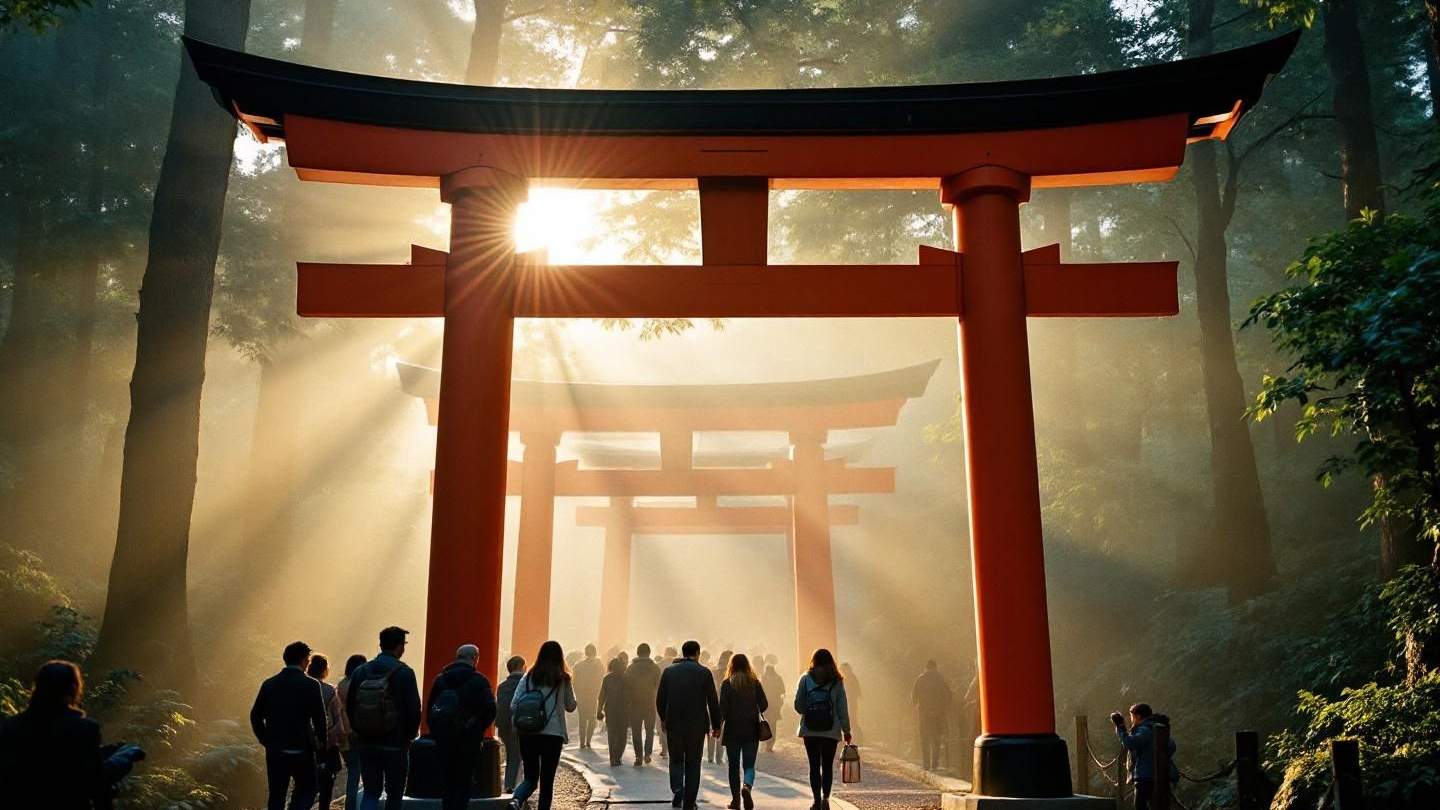
The most coherent single-day circuit focuses on the eastern Higashiyama district: Fushimi Inari Taisha first (at the southern end of Kyoto, closest to Osaka), followed by the Ninenzaka and Sannenzaka stone lanes, Kiyomizu-dera, and the Gion canal and Hanamikoji Street at dusk.
Suggested Kyoto Day Trip Itinerary
7:45am — Depart Osaka Station on JR Shinkaisoku Special Rapid to Kyoto (29 minutes, 580 yen).
8:15am — Arrive Kyoto Station. Transfer to JR Nara Line, two stops to Inari Station.
8:30am–10:30am — Fushimi Inari Taisha. The lower gates and first main viewing platform take 45 minutes. The full mountain circuit takes 2–2.5 hours. The shrine is free and significantly less crowded before 9am than after 10am — arriving early matters here more than almost anywhere in Kyoto.
11:00am–1:00pm — Travel to Higashiyama by bus or taxi. Walk the Ninenzaka and Sannenzaka stone lanes. Lunch at one of the tofu kaiseki restaurants in the area (budget 1,500–3,000 yen per person).
1:30pm–3:30pm — Kiyomizu-dera (500 yen admission) and the view platform over the valley below. Walk downhill through Sannen-zaka toward Gion.
4:00pm–6:00pm — Hanamikoji Street and the Shirakawa canal area in Gion in the late afternoon light. Tour groups have thinned and the atmosphere is at its best.
Evening — Return to Osaka from Kyoto Station. JR Shinkaisoku runs until after midnight; the 29-minute journey means no pressure on timing.
Transport from Osaka
JR Shinkaisoku: Osaka Station to Kyoto Station, 29 minutes, 580 yen. Covered by JR Pass. Trains run every 15–30 minutes throughout the day.
Hankyu Kyoto Line: Osaka Umeda to Kyoto Kawaramachi, 47 minutes on limited express, 430 yen. Not covered by JR Pass, but arrives at Kawaramachi Station in the heart of the Gion/Shijo area — more convenient than Kyoto Station if your priority is the Higashiyama circuit.
Recommended time: Full day (9–10 hours). A rushed half-day misses the atmosphere that makes Kyoto worth visiting.
Kobe
Kobe is Japan’s most cosmopolitan port city, and a half-day here is one of the most pleasant breaks from temple-focused sightseeing in the Kansai region. The city became an international trading hub after Japan opened to foreign trade in 1868, and the accumulated legacy of that history — a hillside neighborhood of European-style merchant houses, a working harbor, a Chinese quarter, and an exceptional beef tradition — gives it a character distinct from anywhere else in Japan.
Kobe beef is the city’s defining culinary contribution: Tajima-goshi cattle raised in Hyogo Prefecture to strict certification standards, marbled with intramuscular fat to an exceptional degree. A certified Kobe beef teppanyaki lunch at one of the Sannomiya or Kitano-area restaurants runs 8,000–20,000 yen per person for a multi-course set. The cost is significant but the experience is worth it precisely once.
What to Do in Kobe
Kitano-cho is the historic foreign settlement district — a hillside neighborhood 15 minutes uphill from Sannomiya Station where around 20 original 19th-century Western merchant houses (ijinkan) remain open to visitors. Entrance fees are 200–500 yen per building; the French, English, and German houses are the most detailed. The neighborhood itself, with its European architectural scale against a backdrop of the Rokko mountains and Osaka Bay, justifies the walk regardless of entering any building.
Nankinmachi is Kobe’s compact Chinatown — one of three official Chinese quarters in Japan, alongside Yokohama and Nagasaki — with street food stalls, Chinese restaurants, and busy weekend crowds. The kakuni man braised pork bun (350–500 yen) is the correct street food choice.
Kobe Port and Meriken Park offer a harbor waterfront with the Kobe Port Tower (observation deck 700 yen), the Kobe Maritime Museum, and views across the bay. The walk from Meriken Park to the old pier warehouse district takes 20 minutes and is pleasant and uncrowded.
Nada sake district east of central Kobe produces some of Japan’s most important sake. The Hakutsuru Sake Brewery Museum and Kikumasamune Sake Museum both offer free admission and free tastings, accessible by Hanshin or JR lines from Sannomiya.
Transport from Osaka
JR Kobe Line Special Rapid: Osaka Station to Kobe Sannomiya, 24 minutes, 420 yen. Covered by JR Pass.
Hankyu Kobe Line: Osaka Umeda to Kobe Sannomiya, 27 minutes, 330 yen. Not covered by JR Pass but cheaper without one.
Recommended time: Half day (4–5 hours). Full day if combining Kitano-cho, Nankinmachi, the harbor, and a Kobe beef lunch.
Himeji Castle
Himeji Castle is the most compelling single-day destination reachable from Osaka and one of the most important historical sites in Japan. Of the hundreds of feudal castles that once stood across the country, Himeji is among the handful that survived intact into the modern era — never burned, never demolished during the post-feudal reforms, and untouched during the Allied bombing of Himeji city in 1945 despite bombs falling within the surrounding area. It is a UNESCO World Heritage Site and a National Treasure.
The six-story main tenshu and its three smaller turrets date to 1601–1609 and are entirely original timber construction. The white lime-plaster exterior gives it the name Hakuro-jo — White Heron Castle. The approach through successive walled gates and baileys takes 20 minutes before reaching the main tower entrance; the climb through the interior (gunports, stone-dropping hatches, original wooden beams) takes 60–90 minutes, and the views from the top floor over the city plain are excellent.
Admission to the castle complex including Koko-en Garden is 1,050 yen. Koko-en is a nine-garden complex adjacent to the western moat with reconstructed samurai residence gardens, tea houses, and a restaurant serving seasonal Himeji cuisine. Allow a full day — the journey takes 50–90 minutes each way and the castle deserves 3–4 hours.
Transport from Osaka
JR Shinkansen (Hikari or Sakura): Shin-Osaka to Himeji, 28–35 minutes, 3,180 yen. Covered by JR Pass. Do not take the Nozomi — faster, but not covered by the JR Pass.
JR Shinkaisoku Special Rapid: Osaka Station to Himeji, 60–80 minutes, 1,520 yen. Covered by JR Pass. The practical choice without a pass; the slower journey is still comfortable.
From Himeji Station, the castle is a 15-minute walk north along a straight boulevard, or a 5-minute ride on the 100-yen loop bus.
Recommended time: Full day (8–9 hours from Osaka) to do the castle and gardens justice and allow time for the city center.
Mount Koya (Koya-san)
Koya-san is among the most extraordinary places in Japan. A mountain plateau at 900 meters elevation in the Kii Peninsula, it has been a living monastic community since 816 CE when the monk Kukai — Kobo Daishi — established the Shingon Buddhist headquarters here. Today 117 temples remain, along with a community of monks who wake before dawn for fire rituals and sutra chanting, and one of the most otherworldly graveyard landscapes in Asia.
Okunoin is the essential experience: Japan’s largest cemetery, with around 200,000 tomb monuments arranged along a 2-kilometer path under ancient cryptomeria cedar trees, lit by thousands of stone lanterns. At the far end, the inner sanctuary where Kobo Daishi is said to sit in eternal meditation. The atmosphere at dawn or after dark — lanterns glowing through the cedar canopy, the scent of incense from the sanctuary, almost no tourists — is unlike anything else in Japan.
The Garan temple complex, the ritual center of the mountain with the Konpon Daito pagoda and Kondo main hall, is the second essential site. Allow 45–60 minutes. Staying overnight at a shukubo (temple accommodation) is the way to fully experience Koya-san — waking at 6am for the morning goma fire ritual, eating shojin ryori Buddhist vegetarian cuisine, walking Okunoin at night when tourists have departed. If doing it as a day trip, depart Osaka by 7:30am to arrive before 10am and maximize time before the last cable car.
Transport from Osaka
Nankai Line from Namba: Nankai Namba Station to Gokurakubashi Station, then cable car up to Koya-san. The Nankai Koya Limited Express runs twice per hour; the journey takes approximately 80 minutes (1,900 yen one way including limited express surcharge; standard express is 1,310 yen and about 10 minutes longer). The cable car adds 390 yen return. The Koyasan World Heritage Ticket (2,860 yen) covers round-trip Nankai travel plus unlimited bus rides on the mountain and is the best value option.
From the cable car summit station, route buses serve the Okunoin entrance, the Garan complex, and the Koya-san town center.
Last cable car: Check departure times in advance — the last cable car typically descends at 8:30–9:30pm depending on season. Work backward from this when planning your departure from the mountain.
Recommended time: Full day minimum (10–11 hours round trip from Osaka). An overnight stay at a shukubo is strongly recommended for anyone with the flexibility.
Hiroshima and Miyajima
Hiroshima is the most ambitious day trip from Osaka and the one that most requires an early start. The Shinkansen covers the distance in just over 45 minutes from Shin-Osaka, making the day logistically viable, but the city warrants serious time and combining Hiroshima and Miyajima Island in a single day is demanding.
The Hiroshima Peace Memorial Museum and surrounding Peace Memorial Park, centered on the preserved A-Bomb Dome (Genbaku Dome), are among the most important sites in the world. The museum documents the events of August 6, 1945 with unflinching detail and clarity. Allow at least 2 hours; many visitors spend longer. The Dome itself — the only structure left standing near the hypocenter, now a UNESCO World Heritage Site — is a 5-minute walk from the museum entrance.
Miyajima Island (officially Itsukushima) sits 30 minutes from Hiroshima’s Hiroden tram terminus by ferry. The famous floating torii gate of Itsukushima Shrine appears at high tide to rise from the sea; at low tide you can walk out to it across the sand. The forested mountain behind the shrine, the five-story pagoda, and the island’s free-roaming deer make it a genuinely beautiful destination. Allow 2–3 hours.
To combine both in a day from Osaka: depart Shin-Osaka by 7:00am, spend the morning at the Peace Memorial Museum and Park, take the Hiroden tram and ferry to Miyajima for the afternoon, and return to Osaka by 9:00pm. It is a full day but achievable.
Transport from Osaka
JR Shinkansen (Hikari or Sakura): Shin-Osaka to Hiroshima, 45–55 minutes, 9,870 yen. Covered by JR Pass. This journey alone makes a JR Pass worthwhile for many visitors.
To Miyajima: From Hiroshima Station, take the Hiroden tram (Line 2 or 6) to Hiroden-Miyajimaguchi, then the JR Ferry to the island. Total 50–60 minutes from central Hiroshima, approximately 460 yen for the tram plus 200 yen for the ferry. The JR Ferry is covered by the JR Pass.
Recommended time: Full day (10–12 hours). If visiting both Hiroshima and Miyajima, an overnight stay in Hiroshima makes the experience significantly less rushed and more deserving of both sites.
Guided Day Trips from Osaka
Kyoto Highlights and Nara Day Trip
Visit Kiyomizu-dera, Fushimi Inari, and Nara's deer park in one full day from Osaka.
Kyoto and Nara Deer Sighting Day Trip
Stroll through Kiyomizu-dera and Fushimi Inari, then meet Nara's friendly deer at the famous park.
Hiroshima and Miyajima Bus Tour
Full-day tour from Osaka to Hiroshima Peace Memorial and Miyajima Island with guide.
Private Day Trip: Kyoto and Nara
Private car tour from Osaka with an English-speaking driver. Customize your Kyoto and Nara itinerary to visit exactly what interests you.
Which Day Trip Should You Pick?
| Destination | Best for | Time from Osaka | Full or half day |
|---|---|---|---|
| Kyoto | Temples, history, first-timers | 29–47 min | Full day |
| Nara | Deer park, families | 33–60 min | Half day |
| Kobe | Food, port views, a break from temples | 24–27 min | Half day |
| Himeji | A single spectacular castle | 28–80 min | Full day |
| Koya-san | Monastic atmosphere, quiet | 80 min + cable car | Full day (overnight better) |
| Hiroshima/Miyajima | History and one iconic torii gate | 45–55 min by Shinkansen | Full day |
If you only have one day trip in your Osaka itinerary, choose Kyoto for depth or Nara for an easy half-day with children — see our Osaka with kids guide if traveling with young children. For couples wanting a slower pace with less crowding, Kobe or Koya-san are the stronger picks over Kyoto’s tour-bus traffic.
Booking Rail Tickets in Advance
Shinkansen seats to Himeji and Hiroshima can be bought same-day at Shin-Osaka without trouble outside peak holiday weeks (Golden Week, Obon, New Year), when reserving a seat online or at a JR ticket machine a day ahead avoids standing in the aisle. Regular JR, Hankyu, Kintetsu, and Nankai trains to Kyoto, Nara, and Kobe run frequently enough that advance booking is unnecessary — simply tap an IC card or buy a ticket at the station on the day. For a broader look at rail costs across a longer Japan trip, see our JR Pass guide and Japan passes and deals comparison.
Planning Tips
IC cards and transport passes. Load a Suica, Pasmo, or ICOCA IC card before exploring — they work on every train and bus network in Kansai and eliminate the need to buy individual tickets for shorter journeys. For JR-heavy itineraries covering Kyoto, Nara, Kobe, and Himeji, the JR Kansai Area Pass (1-day from 2,400 yen, available in 1, 2, 3, and 4-day increments) provides strong value. It does not cover Nankai (needed for Koya-san) or Kintetsu (the faster Nara connection from Namba). The Kintetsu Rail Pass (2-day from 3,000 yen) covers the Kintetsu network including the faster Nara service.
Start early. Fushimi Inari at 8am and Nara Park at 9am are categorically different experiences from arriving at 11am when tour buses have filled both sites. An early departure is the single most effective thing you can do to improve any day trip from Osaka.
Return flexibility. JR trains from Kyoto, Nara, Kobe, and Himeji back to Osaka run frequently until well after midnight. There is no meaningful last-train pressure for most destinations. Koya-san is the exception — the last cable car descent is typically 8:30–9:30pm depending on season. Check schedules the day before and leave the mountain with a buffer.
Combining destinations strategically. Kyoto and Nara are often paired in a single day, but Kyoto genuinely deserves more time. A better approach: give Kyoto a full day and Nara a separate half-day. For an effective combination day, Kobe and Himeji pair well — depart Osaka by 8am for Himeji (45–80 minutes), spend 3 hours at the castle and Koko-en Garden, then take the 40-minute JR train west to Kobe Sannomiya for the afternoon and a Kobe beef dinner before the 24-minute return to Osaka.
Best order across multiple days. If you have three or more days based in Osaka and plan several day trips, prioritize Kyoto first (most demanding and most rewarding), follow with Nara or Kobe, and reserve Himeji or Koya-san for a day when you want a change of pace from temple circuits. Hiroshima is best saved for a day you can depart early and return late — or, better still, overnight in the city to give it the time it deserves.
Frequently asked questions
Can I visit Kyoto and Nara from Osaka in the same day? It’s possible but rushed — most visitors are better served giving Kyoto a full day on its own and Nara a separate half-day, since Kyoto alone easily fills 9–10 hours of worthwhile sightseeing.
Is Osaka or Kyoto the better base for day trips? Osaka has faster, cheaper connections to Kobe, Himeji, Koya-san, and Universal Studios, while Kyoto is more central for temple-focused day trips within the Kansai region itself. Many travelers base in Osaka for the transport hub and food scene, then spend a separate few nights in Kyoto.
More tours on Viator
Top-rated experiences with verified reviews, bookable on Viator (a Tripadvisor company).
 Viator
Samurai Training Experience KENDO in Osaka
FromUSD 126Check availability → Viator
Osaka Sake Tasting & Takoyaki Cooking Experience
FromUSD 70Check availability → Viator
Private Osaka Tour from Your Hotel with Local Guide
FromUSD 108Check availability → Viator
Ramen Cooking Class in Osaka Dotonbori with Sushi or Gyoza Option
FromUSD 69Check availability → Viator
Kimono experience and Japanese home-cooking lesson Osaka Umeda
FromUSD 77Check availability → Viator