Best Temples and Shrines in Tokyo
Last updated: August 2026
Tokyo is far more than neon lights and bullet trains. Beneath the urban surface lies a city deeply rooted in centuries of spiritual tradition. More than 800 shrines and temples are scattered across the 23 wards alone — from vast forested complexes to narrow neighborhood altars tucked between convenience stores. This guide covers the best sacred sites in the capital, including when to visit, how to get there, and what makes each one worth your time.
At a Glance
| Where | Scattered across Tokyo’s 23 wards; Asakusa, Harajuku, and Yanaka have the highest concentration |
| Cost | Most main grounds are free; inner gardens, museums, and side halls typically run 200–1,000 yen |
| Time needed | 30–90 minutes per site; a half-day covers 2–3 sites in the same neighborhood |
| Getting there | Tokyo Metro or Toei Subway — nearly every site is within a 10-minute walk of a station |
| Best time | Early morning (before 9:00) for calm; late March–early April for cherry blossoms at Zojo-ji and Yasukuni |
Temples vs Shrines — What’s the Difference
Japan’s temples (o-tera, often ending in -ji or -in) are Buddhist; shrines (jinja, often ending in -jingu or -jinja) are Shinto. The two traditions coexisted for over a thousand years and the physical cues are easy to learn once you know what to look for. Shrines are marked by a torii gate at the entrance and a purification font (temizuya) for washing hands and mouth before approaching. Temples are marked by a sanmon gate, incense burners, and — usually — a pagoda or bell tower somewhere on the grounds.
The worship gestures differ too: at a shrine you bow twice, clap twice, and bow once more; at a temple you press your palms together silently, no clapping. Senso-ji, Zojo-ji, Gotoku-ji, and Sengaku-ji in this guide are temples; Meiji Shrine, Nezu Shrine, Yasukuni, Hie Shrine, Kanda Myojin, and Nogi Shrine are Shinto shrines — which is why their names alternate between -ji and Shrine/Jingu.
Which Sites Suit Which Kind of Visit
If you only have time for one, Senso-ji delivers the highest concentration of atmosphere per hour, but it is also the most crowded site in this guide by a wide margin — arrive at opening or expect tour-group density by mid-morning. For a quieter, more contemplative visit, Nezu Shrine or Nogi Shrine reward the extra travel time with something close to solitude. Anyone combining a temple visit with sightseeing elsewhere in the city should read things to do in Tokyo for how these sites fit into a wider day, and the Japan etiquette guide for a fuller rundown of shrine and temple manners beyond the basics below.
Travelers who found Kyoto’s Fushimi Inari or torii-gate photographs appealing but can’t fit Kyoto into their trip should prioritize Nezu Shrine and Hie Shrine — both have smaller-scale torii tunnels that capture a similar effect inside Tokyo. Those visiting during cherry blossom season should put Zojo-ji and Yasukuni at the top of the list, since both combine sacred architecture with some of the city’s best sakura framing.
Senso-ji — Asakusa’s Iconic Temple
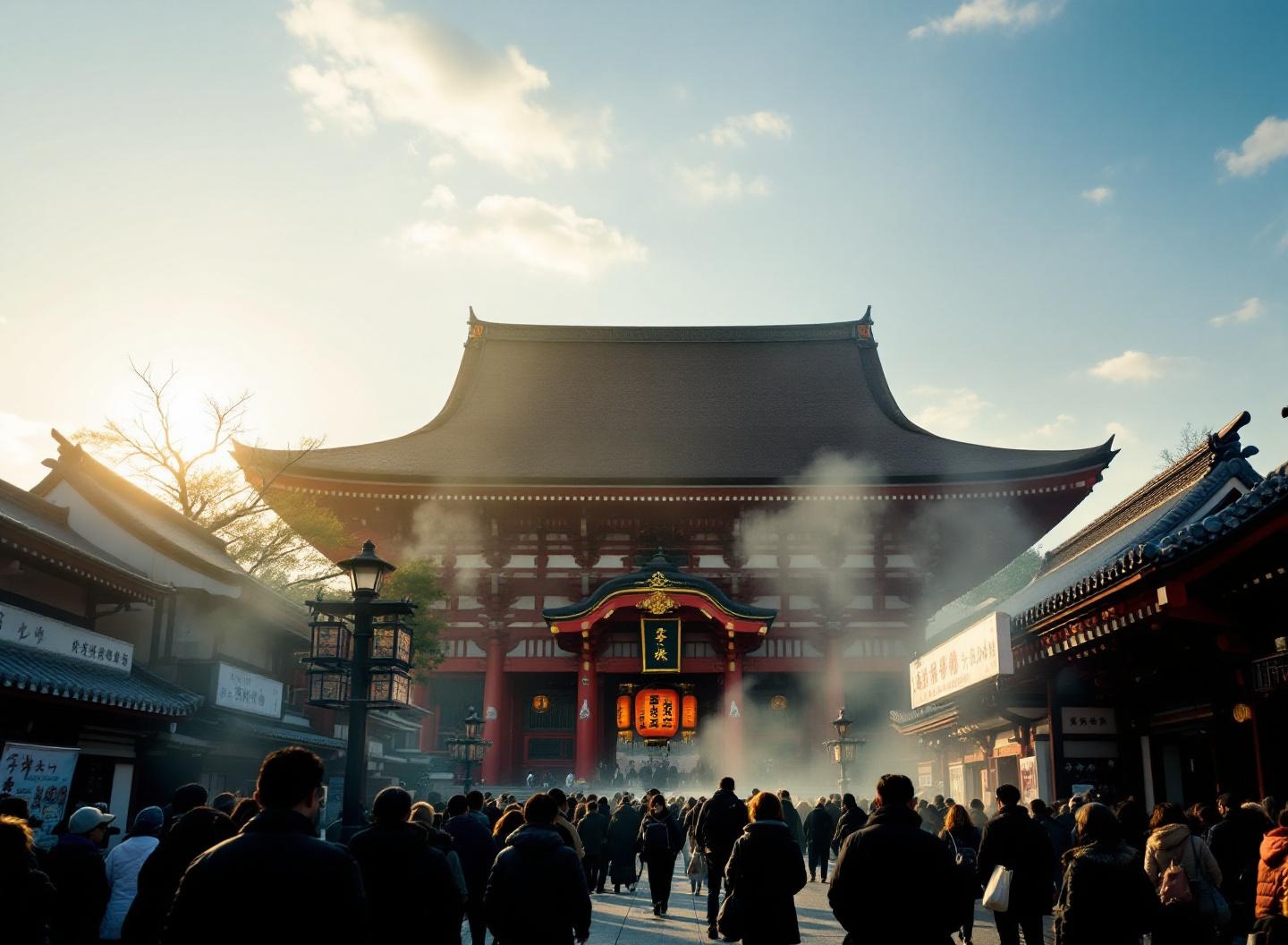
Senso-ji is Tokyo’s oldest and most visited temple, founded in 628 AD according to legend. The approach along Nakamise-dori is lined with stalls selling ningyo-yaki (fish-shaped cakes), paper fans, and folded cranes — making the walk itself part of the experience.
The Kaminari-mon (Thunder Gate) with its enormous red lantern is the single most photographed sight in Asakusa. Inside the main hall, incense smoke drifts over crowds waving it toward themselves for good health and fortune.
- Best time: Weekday mornings before 9:00 for fewer crowds; mid-January for Hatsumode atmosphere without the New Year crush
- Getting there: Asakusa Station (Tokyo Metro Ginza Line, Toei Asakusa Line)
- Entry: Free (main grounds); 200 yen for Asakusa-jinja behind the main hall
- Duration: 45–90 minutes
Meiji Shrine — Forest Sanctuary in Harajuku
Completed in 1920 and dedicated to Emperor Meiji and Empress Shoken, Meiji Jingu sits within 70 hectares of forested grounds in the middle of Harajuku. The approach along a wide gravel path lined with camphor trees creates a sense of genuine calm even on weekends.
The main shrine building is understated and powerful — cypress wood darkened with age, copper rooftops, white gravel forecourt. The adjacent iris garden (Gyoen) blooms in late June and costs 500 yen to enter separately.
- Best time: Early morning on any day; January 1–3 for the country’s largest Hatsumode (3 million visitors over three days)
- Getting there: Harajuku Station (JR Yamanote Line) or Meiji-jingumae Station (Tokyo Metro Chiyoda/Fukutoshin lines)
- Entry: Free (main shrine); 1,000 yen for inner garden
- Duration: 60–90 minutes
Nezu Shrine — Azalea Garden and Torii Tunnels
Nezu Shrine dates to 1706 and predates the founding of Edo as a city. It receives far fewer visitors than Meiji or Senso-ji, which makes it a genuinely special find. The tunnel of small torii gates winding up a hillside is often compared to Kyoto’s Fushimi Inari at a fraction of the scale and crowds.
The azalea garden (Otome Inari) explodes into color in late April, making it one of the best spring sights in the city. The grounds also include a small pond with turtles and koi.
- Best time: Late April for azalea season; weekday mornings year-round
- Getting there: Nezu Station or Todaimae Station (Tokyo Metro Chiyoda Line), 5-minute walk
- Entry: Free grounds; 200–500 yen for azalea garden during festival
- Duration: 45–60 minutes
Zojo-ji — Temple with a Tokyo Tower View
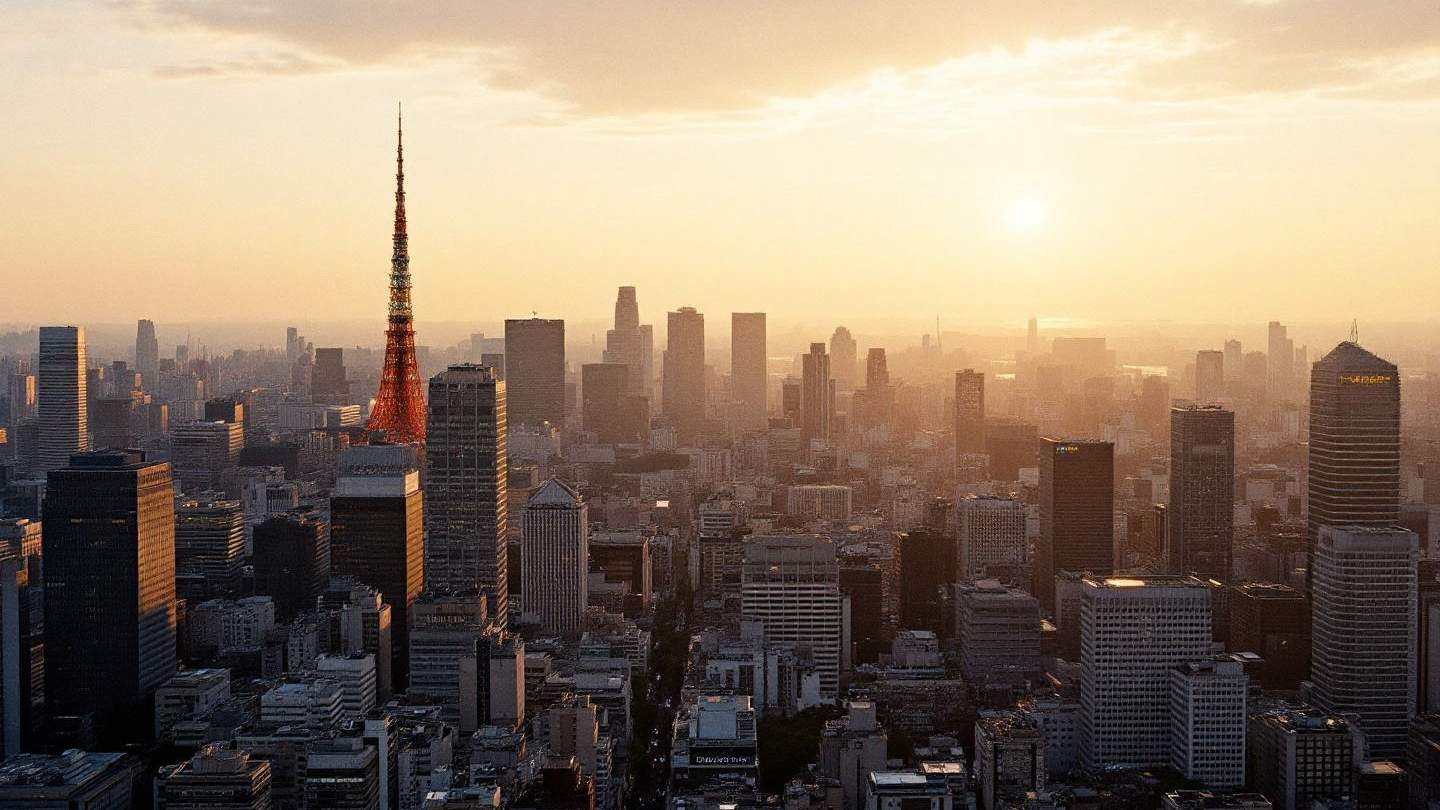
Zojo-ji was the mortuary temple of the Tokugawa shoguns and one of the most powerful Buddhist institutions in Edo-era Tokyo. Today it offers one of the city’s most arresting juxtapositions: a centuries-old sanmon (main gate) with Tokyo Tower looming red and white directly behind it.
The rows of small Jizo statues wearing red bibs and pinwheels — offerings for children who died young — are quietly moving. The main hall interior can be visited during service times.
- Best time: Early morning for the temple-meets-tower photograph; cherry blossom season for stunning foreground color
- Getting there: Shibakoen Station (Toei Mita Line), 3-minute walk; or Hamamatsucho Station (JR Yamanote Line), 8-minute walk
- Entry: Free
- Duration: 30–45 minutes
Gotoku-ji — The Lucky Cat Temple
Gotoku-ji in Setagaya is the birthplace of the maneki-neko (beckoning cat) figurine, at least according to popular legend. The temple is small and residential, surrounded by a quiet neighborhood rarely visited by tourists. Hundreds of ceramic beckoning cats of every size crowd shelves inside the main hall — donated by visitors in gratitude for good fortune.
The grounds are peaceful and beautifully maintained. It makes an excellent half-day combination with nearby Shimokitazawa’s vintage shops.
- Best time: Any day; rainy days have a melancholy charm
- Getting there: Miyanosaka Station (Tokyu Setagaya Line), 5-minute walk
- Entry: Free
- Duration: 30–45 minutes
Sengaku-ji — Shrine of the 47 Ronin
Sengaku-ji is one of Tokyo’s most historically charged sites. This is where the 47 loyal ronin who avenged the death of their master Lord Asano in 1703 are buried, making it a pilgrimage destination for those who know the story. The smell of incense is thick here — visitors burn sticks at the graves throughout the day.
A small museum on-site (500 yen) tells the full story of the Ako Incident. The annual Gishi-sai festival on December 14 draws thousands.
- Best time: December 14 for the memorial ceremony; any quiet weekday
- Getting there: Sengakuji Station (Toei Asakusa Line), 1-minute walk
- Entry: Free grounds; 500 yen for museum
- Duration: 30–45 minutes
Yasukuni Shrine — History and Controversy
Yasukuni is one of Japan’s most politically significant and visited Shinto shrines. Built in 1869 to enshrine those who died in service of the Emperor, it remains deeply controversial for also including Class A war criminals from WWII among the 2.46 million enshrined.
Set aside the politics for a moment and the site itself is striking — broad paths, stone lanterns, a bronze torii gate among the largest in Japan, and a cherry blossom avenue that is among the most beautiful in Tokyo in spring. The Yushukan war museum within the grounds (1,000 yen) presents a highly specific interpretation of modern Japanese history.
- Best time: Cherry blossom season; avoid visiting around August 15 (end-of-war anniversary) due to demonstrations
- Getting there: Kudanshita Station (Tokyo Metro Tozai/Hanzomon/Shinjuku lines), 5-minute walk
- Entry: Free; 1,000 yen for Yushukan museum
- Duration: 45–90 minutes
Hie Shrine — The Akasaka Torii Tunnel
Hie Shrine sits on a hillside in Akasaka and is best known for its spectacular approach: a tunnel of dozens of vermilion torii gates climbing steep stone steps. Unlike Fushimi Inari, this tunnel is compact and intimate, and the surrounding business district makes stumbling upon it feel genuinely surprising.
The shrine is dedicated to the god of Mount Hiei and serves as the tutelary shrine for the Sanno Matsuri, one of Tokyo’s three great festivals held in June in odd-numbered years.
- Best time: Morning light illuminates the torii best; June for the festival
- Getting there: Tameike-sanno Station (Tokyo Metro Ginza/Namboku lines), 3-minute walk; or Akasaka Station (Tokyo Metro Chiyoda Line)
- Entry: Free
- Duration: 20–30 minutes
Kanda Myojin — Patron Shrine of Akihabara
Kanda Myojin is one of Tokyo’s oldest shrines, patron deity to the nearby neighborhoods of Kanda, Akihabara, and the eastern city wards. It occupies a slightly elevated position above the streets and offers a striking vermilion main hall.
Its proximity to Akihabara has made it popular with anime and game culture fans — the shrine sells ema (wooden wish plaques) decorated with characters from popular series, and the souvenir shop stocks sacred charms alongside otaku merchandise.
- Best time: Early morning before Akihabara crowds arrive; May for the Kanda Matsuri (every two years)
- Getting there: Ochanomizu Station (JR Chuo Line, Tokyo Metro Marunouchi Line), 5-minute walk
- Entry: Free
- Duration: 20–30 minutes
Nogi Shrine — Quiet Meiji-Era Memorial
Nogi Shrine is dedicated to General Maresuke Nogi and his wife, who died by ritual suicide on the day of Emperor Meiji’s funeral in 1912. The shrine is intimate, unhurried, and rarely crowded. The general’s former residence is preserved on the grounds and open to the public on the last Sunday of each month.
Its location in the upscale Nogizaka neighborhood makes it a natural pairing with the National Art Center Tokyo nearby.
- Best time: Last Sunday of the month to see the residence interior; any quiet weekday
- Getting there: Nogizaka Station (Tokyo Metro Chiyoda Line), 1-minute walk
- Entry: Free
- Duration: 20–30 minutes
Practical Tips for Visiting Temples and Shrines
Etiquette basics: At shrines, bow twice, clap twice, bow once before the main hall. At temples, press your palms together without clapping. Remove hats and lower your voice in worship areas.
Dress code: There is no strict dress code at most Tokyo temples and shrines. Shoulders and knees are generally fine — this is a city, not Kyoto’s strict corridor temples.
Photography: Permitted in most outdoor areas. Avoid pointing cameras at worshippers mid-prayer. Some inner halls prohibit photography — look for signs.
Fortunes (omikuji): Cost 100–200 yen. If you draw a bad fortune, tie it to a rack near the hall and leave it there.
Timing: Most shrines are open from dawn to dusk. Temple halls typically close by 17:00. Senso-ji main grounds are accessible 24 hours.
Explore Senso-ji, Asakusa Shrine, and the hidden backstreets of Tokyo's oldest district with a knowledgeable local guide.
Getting Around
Most major temples and shrines are within walking distance of Tokyo Metro or Toei Subway stations. A 24-hour Tokyo Metro pass (600 yen) or 48-hour pass (1,000 yen) covers most routes. The Yanaka neighborhood north of Ueno is worth a half-day exploration on foot — it contains dozens of small temples and retains the atmosphere of old Tokyo.
For more on Tokyo’s cultural highlights, see the full Tokyo guide and the things to do in Tokyo overview.
Frequently Asked Questions
Are Tokyo’s temples and shrines free to enter? Most main grounds are free — Senso-ji, Meiji Shrine, Yasukuni, Hie Shrine, Kanda Myojin, Nogi Shrine, Gotoku-ji, and Zojo-ji all charge nothing to walk the grounds and visit the main hall. Separate inner gardens, small museums, or festival-only areas (like Meiji Shrine’s Gyoen or Sengaku-ji’s museum) typically charge 200–1,000 yen.
Do I need to book Tokyo temple visits in advance? No — none of the sites in this guide require reservations, and all can be visited on a walk-up basis at any hour they’re open. The only thing worth planning ahead is timing: arriving before 9:00 at Senso-ji and Meiji Shrine makes a genuine difference to the experience.
More tours on Viator
Top-rated experiences with verified reviews, bookable on Viator (a Tripadvisor company).
 Viator
Tokyo: Make Your Own Chopsticks Shibuya
FromUSD 11Check availability → Viator
Private Curated Tour | Get Tokyo’s Must Sees & Unique Insights
FromUSD 144Check availability → Viator
Akihabara Tailor-made Private Tour for Anime Fans
FromUSD 128Check availability → Viator
Experience all of Japanese culture and Japanese food experience classes "origami, udon, Japanese food, green tea, calligraphy" in 4 hours
FromUSD 89Check availability → Viator
Samurai Experience - Learn Bushido through Kendo, in Tokyo
FromUSD 128Check availability → Viator