Tokyo with Kids
Last updated: August 2026
At a glance
| Where | Citywide, with Ueno, Asakusa, and Odaiba the most family-dense neighborhoods |
| Cost | Around 15,000–20,000 yen/day (budget) to 50,000+ yen/day (comfortable) for a family of four |
| Time needed | A week or more in Tokyo lets you cover major family attractions without rushing |
| Getting there | Trains and subways are stroller-accessible and safe; taxis for late nights or heavy luggage days |
| Best time | Year-round; avoid the worst summer heat (July–August) and book Ghibli Museum tickets months ahead |
Tokyo is an exceptional destination for families. The city is extraordinarily safe, its public transport is reliable and easy to navigate with children, and the range of child-friendly activities is genuinely world-class — from Studio Ghibli to DisneySea to hands-on science museums. Japanese people are warm toward foreign children, and the culture of cleanliness and orderliness makes the city less stressful than most major capitals. This guide covers what to do, where to stay, and how to handle the practical realities of traveling Tokyo with kids.
Family activities compared by age and booking needs:
| Activity | Best age range | Advance booking |
|---|---|---|
| teamLab Planets | 4+ | Yes — weeks ahead for weekends |
| Ueno Zoo | All ages | No (panda viewing needs a same-day timed slot) |
| Ghibli Museum | All ages, especially Ghibli fans | Yes — released monthly, sells out in hours |
| Tokyo Skytree | All ages | Recommended online for shorter queues |
| KidZania Tokyo | 2–15 | Yes — sessions fill in advance |
| Sega Joypolis | Above 110cm for most rides | No |
Best Family Activities in Tokyo
teamLab Planets — Immersive Art for All Ages
teamLab Planets in Toyosu is consistently the top-rated Tokyo experience for families with children aged 4 and older. The barefoot walk through ankle-deep water into mirrored infinity rooms and flower projection spaces is awe-inspiring for children and adults alike.
Children under 4 are free. The experience is walkable, manageable, and takes about 90 minutes — exactly the right duration for younger visitors. Book tickets well in advance online; weekend slots sell out weeks ahead.
- Entry: 3,200 yen adults; 1,000 yen ages 4–12; free under 4
- Getting there: Shin-Toyosu Station (Yurikamome Line)
- Duration: 60–90 minutes
- Age suitability: Best for ages 4 and up
Book your family's entry to Tokyo's most popular immersive digital art experience. Time slots sell out fast — advance booking essential.
Ueno Zoo — Japan’s Oldest
Ueno Zoo is Japan’s oldest zoological park, opened in 1882, and home to the country’s most famous giant pandas. The zoo covers a large area of Ueno Park with significant collections of big cats, primates, reptiles, and birds. The panda enclosure requires a timed-entry reservation made at the gate on the day of your visit.
The adjacent Ueno area combines beautifully with the zoo: the National Museum of Nature and Science is directly next door and equally engaging for children, and Shinobazu Pond with its pedal boats offers a calming break.
- Entry: 600 yen adults; free for primary school children and under with a Tokyo resident adult (otherwise 200 yen)
- Hours: 9:30–17:00 Tuesday–Sunday
- Getting there: Ueno Station (JR Yamanote Line)
- Duration: 2–3 hours
Ghibli Museum — Magical but Needs Planning
The Studio Ghibli Museum in Mitaka is a pilgrimage for any family with children who love Totoro, Spirited Away, or My Neighbor Totoro. The building is designed as a maze of discovery — hidden passageways, a rooftop garden with the Laputa robot warrior, and an exclusive short film in the small cinema.
The challenge is logistics: tickets are only sold online in advance and release on the 10th of each month for the following month. They sell out within hours. International visitors should book through a licensed reseller or travel agency rather than trying the Japanese-language ticket site directly.
- Entry: 1,000 yen adults; 700 yen teenagers; 400 yen ages 4–12; 100 yen ages 1–3
- Hours: 10:00–18:00 Wednesday–Monday
- Getting there: Mitaka Station (JR Chuo Line), 15-minute walk or shuttle bus (210 yen each way)
- Duration: 2–3 hours
Tokyo Skytree — View from the Top
At 634 meters, Tokyo Skytree is the tallest tower in Japan and the second-tallest structure in the world. For children, the elevator ride itself — 50 seconds to the 350-meter deck — is a thrill. The tembo galleria (450 meters) has a glass-floored section that produces genuine vertigo.
The Skytree Town at the base houses Sumida Aquarium (a good rainy-day option), a planetarium, and an entire floor of Pokemon merchandise.
- Entry: 2,100 yen to 350m deck; 3,100 yen for both decks (advance purchase slightly cheaper online)
- Getting there: Oshiage Station (Tokyo Metro Hanzomon Line, Toei Asakusa Line), direct access
- Duration: 1.5–2 hours for the tower; longer if combining with aquarium
Odaiba — The Island of Activities
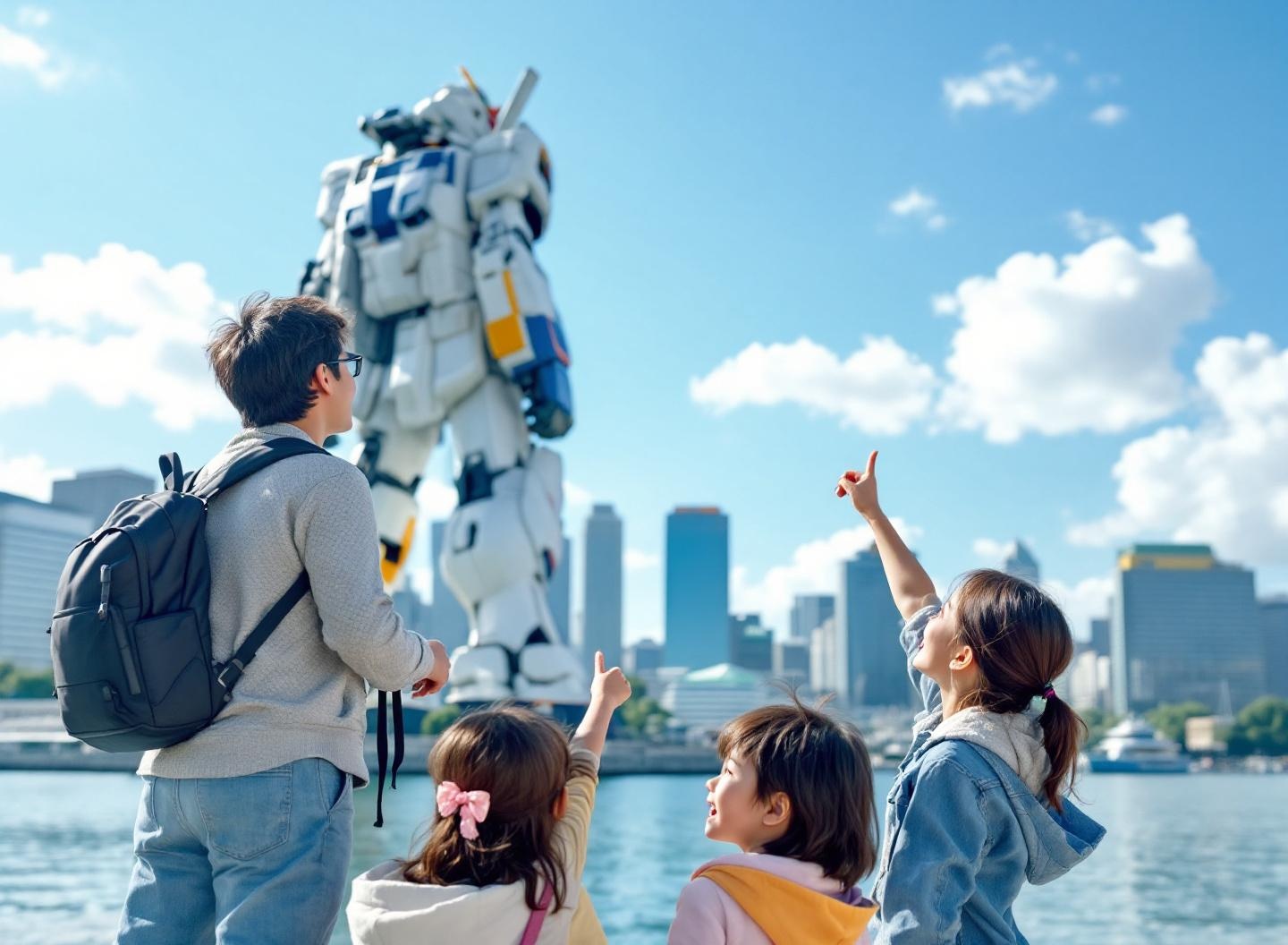
Odaiba is a man-made island in Tokyo Bay purpose-built for entertainment. For families it offers an exceptional concentration of activities in a walkable area. Key highlights include:
teamLab Borderless (digital art, see museums guide), VenusFort (free indoor theme-park architecture), Decks Tokyo Beach (a mall with Legoland Discovery Center and Sega Joypolis arcade), Palette Town Ferris Wheel (now closed but the area is still active), and the Toyota Mega Web showroom (free entry, drive simulators for kids).
The beach promenade offers a distant view of Rainbow Bridge and the city skyline — excellent in the evening.
- Getting there: Odaiba-Kaihin-Koen Station or Daiba Station (Yurikamome Line from Shimbashi)
- Duration: Half-day to full day
Sega Joypolis — Indoor Theme Park
Joypolis in Odaiba is Japan’s premier indoor urban theme park operated by Sega. It holds VR attractions, half-pipe skateboarding simulators, interactive dark rides, and classic arcade games spread across three floors. Almost entirely suitable for children above 110cm height.
- Entry: 900 yen entrance; individual attractions 300–700 yen each; all-inclusive passport around 4,500 yen
- Hours: 10:00–22:00 daily
- Getting there: Odaiba (Yurikamome Line)
Pokemon Centers — Catch Them All
There are multiple Pokemon Centers across Tokyo, each with exclusive merchandise only available at that location. The main ones worth visiting with children:
- Pokemon Center Mega Tokyo: Ikebukuro Sunshine City — the largest, most comprehensive
- Pokemon Center Tokyo DX: Nihonbashi Takashimaya — central location, Pokemon Cafe on-site (reservation required)
- Pokemon Center Shibuya: Inside Shibuya Parco
Allow 30–60 minutes per visit and budget accordingly — the merchandise quality is genuinely high and children will have strong opinions about what they need.
KidZania Tokyo — Career Role Play
KidZania is a child-sized city where children aged 2–15 take on professional roles — pilot, doctor, baker, journalist, banker — in realistic sets operated by major brands. It is enormously popular with Japanese families and educational in an immersive way that children genuinely enjoy.
Booking in advance is essential. The experience is fully in Japanese but is intuitive enough that language is rarely a barrier for the activities themselves.
- Entry: Around 3,500–4,500 yen per child depending on age and session; adults 2,200 yen
- Hours: Two daily sessions approximately 9:00–15:00 and 16:00–21:00
- Getting there: Tatsumi Station (Yurakucho Line), directly connected
Family-Friendly Neighborhoods
Ueno is the most concentrated family district in central Tokyo: zoo, science museum, national museum, Ameyoko market, and Shinobazu Pond all within a 20-minute walk.
Asakusa is excellent with children — Nakamise shopping street with snacks and souvenirs, Senso-ji’s dramatic gates, riverboats on the Sumida, and Hanayashiki (Japan’s oldest amusement park, dating to 1853) all close together.
Shibuya works well for older children (pre-teens and up) who will appreciate the Scramble Crossing, Shibuya Parco’s Nintendo Store, and the Pokemon Center.
Odaiba is best for a dedicated family day rather than a base neighborhood.
Eating with Kids in Tokyo
Japanese cuisine is broadly suitable for children — mild flavors, familiar formats (rice, noodles, grilled chicken), and an emphasis on freshness. A few practical notes:
Conveyor belt sushi (kaiten-zushi): Chains like Sushiro, Kura Sushi, and Hamazushi are popular with families. Ordering via touchscreen tablet means language is minimal. Prices start around 130–165 yen per plate.
Ramen: Most ramen shops are quick, informal, and welcoming to families. Many use ticket vending machines for ordering. The loud, atmospheric nature of ramen shops is entertaining for children.
Family restaurants (famiresu): Chains like Gusto, Denny’s Japan, Joyfull, and Royal Host are designed for families — children’s menus, high chairs, and booths are standard. Not culinary highlights, but reliable and easy.
Department store food halls: The basement food halls (depachika) of Isetan, Mitsukoshi, or Takashimaya let you assemble a picnic-style meal with minimal ordering stress. Excellent for families with fussy eaters.
Convenience stores: Japan’s konbini (7-Eleven, FamilyMart, Lawson) sell freshly prepared onigiri, sandwiches, hot foods, and snacks of genuinely good quality. An onigiri and a hot dog from 7-Eleven is a completely legitimate and cheap family lunch.
Practical Transport Tips
Strollers on trains: Permitted on all Tokyo trains and subway lines. Folding your stroller during rush hour (7:30–9:30, 17:30–20:00) is courteous but not legally required. Avoid rush hour if possible.
IC cards (Suica/Pasmo): Children under 6 ride free with a paying adult. Children aged 6–11 pay half fare. You can set up a child-rate IC card at station counters.
Taxis: Metered, clean, and safe but expensive. A cross-city ride may cost 3,000–5,000 yen. Drivers will not help with car seats — bring your own or rent one through your accommodation.
Walking: Tokyo is very walkable and sidewalks are wide and well-maintained. Crosswalks signal with both sound and visual cues.
Rainy Day Options
Tokyo’s rainy season peaks in June, and summer typhoons can disrupt any week. Good rainy day fallbacks include:
- teamLab Planets or Borderless (both fully indoor)
- Odaiba’s Joypolis and Legoland Discovery Center
- National Museum of Nature and Science (Ueno)
- Sumida Aquarium (Skytree base)
- Any Pokemon Center or Nintendo Tokyo
- A department store’s multiple floors of food, toys, and rest areas
Budgeting for a Family
Tokyo is not cheap, but it rewards planning. A realistic daily budget for a family of four (two adults, two children under 12):
- Budget: 15,000–20,000 yen (konbini meals, free parks, one paid attraction)
- Moderate: 25,000–40,000 yen (casual restaurants, 1–2 paid attractions)
- Comfortable: 50,000+ yen (sit-down meals, multiple attractions, taxis)
Free or low-cost options that are genuinely excellent: Ueno Park, Shinjuku Gyoen, Yoyogi Park (outdoor play), Hamarikyu Gardens (300 yen), Odaiba beachfront, and the observation decks of free skyscrapers (Tokyo Metropolitan Government Building, free admission).
For more Tokyo planning, see things to do in Tokyo, the complete Tokyo guide, and the wider Japan for families guide for tips beyond Tokyo. If you are also considering day trips from Tokyo with children, Kamakura and Enoshima are the most manageable options for younger kids.
Frequently asked questions
Is Tokyo safe for families traveling with young children? Yes, Tokyo is considered one of the safest major cities in the world for families. Public transport is reliable, streets are clean, and crime rates are very low. The main practical challenges are crowding during rush hour and the need to book popular attractions like the Ghibli Museum well in advance.
How many days should a family spend in Tokyo? A minimum of four to five days lets a family cover major attractions (teamLab, a zoo or aquarium, Skytree or Odaiba, one cultural neighborhood like Asakusa) without over-scheduling. A week or more allows a day trip such as Kamakura or Hakone without feeling rushed.
More tours on Viator
Top-rated experiences with verified reviews, bookable on Viator (a Tripadvisor company).
 Viator
Tokyo: Make Your Own Chopsticks Shibuya
FromUSD 11Check availability → Viator
Private Curated Tour | Get Tokyo’s Must Sees & Unique Insights
FromUSD 144Check availability → Viator
Akihabara Tailor-made Private Tour for Anime Fans
FromUSD 128Check availability → Viator
Experience all of Japanese culture and Japanese food experience classes "origami, udon, Japanese food, green tea, calligraphy" in 4 hours
FromUSD 89Check availability → Viator
Samurai Experience - Learn Bushido through Kendo, in Tokyo
FromUSD 128Check availability → Viator