Best Cooking Classes in Tokyo
At a glance
| Where | Tsukiji, Asakusa, Shinjuku, and Akihabara have the highest concentration of schools |
| Cost | Around 6,000–15,000 yen per person for a group class; 15,000–28,000 yen for a private session |
| Time needed | 2–4 hours depending on the dish (sushi and home cooking are shorter; ramen with hand-made noodles runs longest) |
| Getting there | Most schools are a short walk from a JR Yamanote Line or Tokyo Metro station |
| Best time | Any season; book 1–3 weeks ahead, longer during cherry blossom, Golden Week, and autumn foliage |
Eating well in Tokyo is easy. Understanding what you are eating — the technique behind the food, the selection of ingredients, the rhythm of a Japanese kitchen — takes something more than a restaurant seat. A cooking class gives you that something more. In two to four hours, you go from watching a dish arrive at your table to understanding how it was built, what makes it work, and how to replicate it at home. For many visitors, a cooking class turns out to be the single most memorable experience of their trip to Japan: not the temples, not the bullet trains, but the afternoon spent rolling sushi in a Tokyo kitchen with a patient local instructor and a glass of sake on the counter.
Tokyo has a serious cooking class scene. Instruction ranges from casual home-kitchen experiences run by local cooks to professional school workshops led by trained chefs. You can spend a morning at Tsukiji sourcing ingredients, spend an afternoon pressing ramen dough in Akihabara, or spend an evening learning the knife work behind tempura batter in a Shinjuku kitchen. Prices are reasonable — most classes fall between 8,000 and 15,000 yen per person — and the quality is consistently high. This guide covers everything you need to choose the right class and book it correctly.
What to Expect
Japanese cooking classes for visitors are generally structured around a single dish or a tight menu of two to three related dishes. You are not enrolling in a culinary program — you are joining a practical workshop designed to give you hands-on competence with one Japanese technique in a single session. This format works well.
Most classes are conducted in English, or with a bilingual instructor who moves fluidly between English explanation and Japanese demonstration. The learning environment is relaxed rather than formal. You work at your own station, handle real ingredients, and make your own plate of food — which you then eat at the end of the class, often with tea, miso soup, or sake provided alongside.
Typical format. A class begins with a brief introduction to the dish — its history, regional variations, and key techniques. The instructor demonstrates the process step by step before you replicate each stage yourself. Most instructors move through the kitchen during hands-on time, offering corrections and tips. The session ends with the meal, often with the instructor joining the group at the table.
What is included. Ingredients, equipment, an apron, and the finished meal are included in the price of virtually every class. Some include market visits, sake or tea, recipe cards to take home, and transport assistance for the market portion. Check the listing carefully, as add-ons like sake pairing or premium ingredients occasionally carry a small supplement.
Group sizes. Most Tokyo cooking classes cap enrollment at six to twelve participants. This keeps the experience personal and gives each student adequate time with the instructor. Private classes — run for one to four people — are widely available and cost more, but deliver noticeably more individual attention and flexibility on timing and menu.
Dietary requirements. Most cooking schools accommodate vegetarian, vegan, gluten-free, and halal requirements with advance notice. Communicate your dietary restrictions at booking, not at the door. Some dishes — traditional ramen broth, for example — require substantial recipe modification for vegetarian versions, and not all schools offer this adaptation, so confirm before you book.
What to wear. Casual, comfortable clothing that you do not mind getting flour or sauce on. Loose sleeves are manageable if you roll them up; the school will provide an apron. Closed-toe shoes are preferable in any kitchen. Avoid dangling jewelry.
Cooking class types compared:
| Class type | Typical price | Duration | Best for |
|---|---|---|---|
| Sushi making | around 8,000–15,000 yen | 2–3 hours | First-timers, couples, foodies who want a hands-on Tokyo signature experience |
| Ramen making | around 8,000–15,000 yen | 3.5–4 hours | Travelers with a full afternoon who want to understand broth, tare, and noodles from scratch |
| Bento / tempura / dashi | around 6,000–10,000 yen | 2–2.5 hours | Shorter stays, families, anyone wanting everyday Japanese home cooking rather than a signature dish |
| Sake and food pairing | around 10,000–18,000 yen | 3–4 hours | Travelers more interested in drink culture than technique |
Sushi Making Classes
Sushi making is the most popular cooking class category in Tokyo, and for good reason — sushi is the dish most visitors most want to understand, and the technique is accessible enough for a beginner to produce respectable results in a single session.
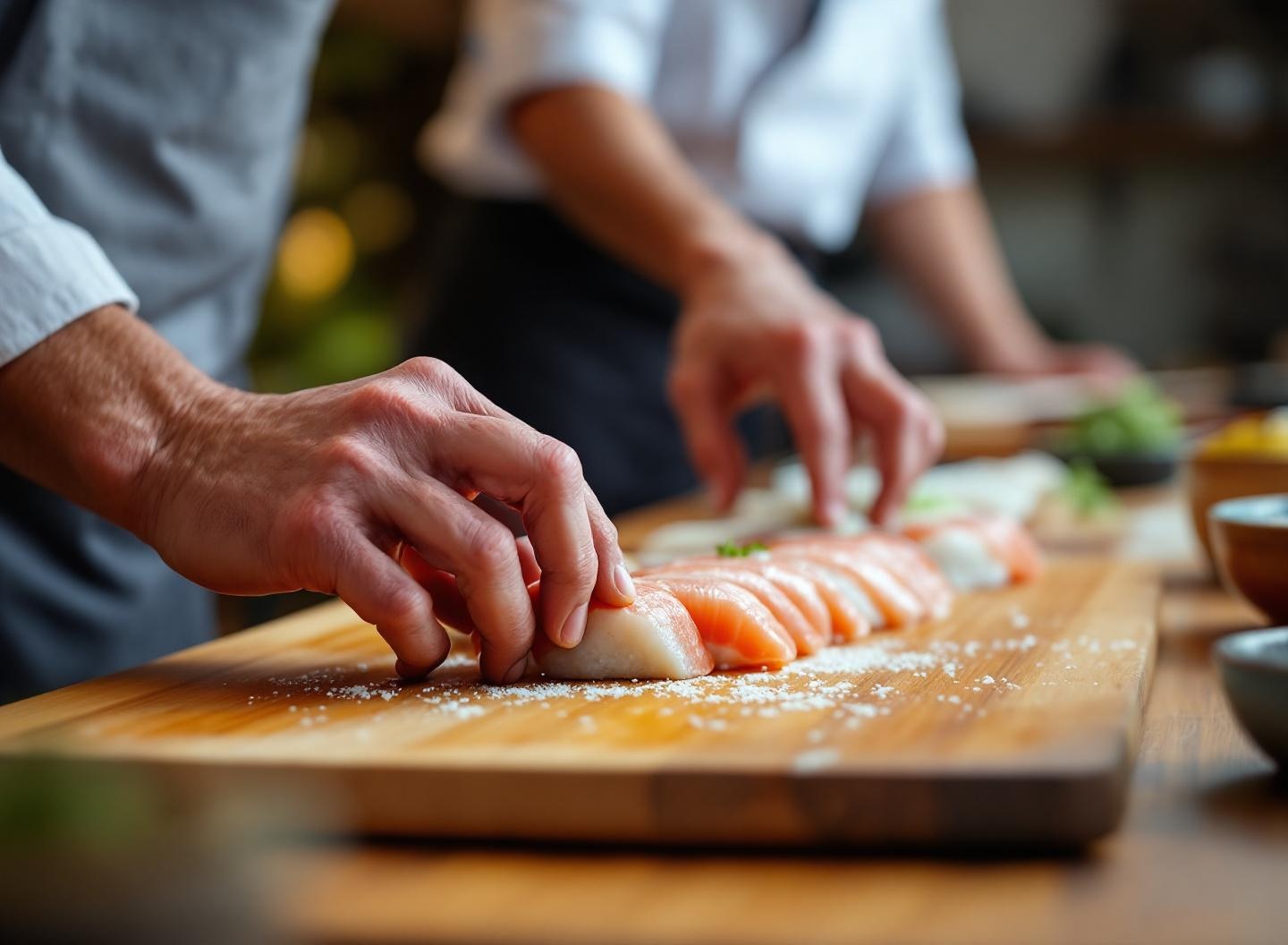
A standard sushi-making class covers the three foundational forms: nigiri (hand-pressed rice with a topping), maki (rolled sushi with nori), and sometimes temaki (hand rolls). The instructor teaches you how to prepare sushi rice — the seasoning, the cooling method, the texture — and then walks you through the shaping techniques for each form. You will learn how to handle raw fish correctly, how to use a bamboo rolling mat without tearing the nori, and how to portion the rice consistently.
What you actually learn. The most valuable thing in a sushi class is not learning to shape rice — it is learning to read quality fish. A good instructor will explain how to assess freshness, why certain cuts are used for nigiri versus rolls, and how the fat content of different fish changes the way they pair with rice. This knowledge transforms every future sushi meal from consumption into understanding.
Typical class format. Most Tokyo sushi classes run between two and three hours. You make eight to twelve pieces of sushi, often a mix of nigiri and maki with three to four different fish. The meal at the end includes your own production plus miso soup and sometimes a simple salad or tamagoyaki.
Tsukiji Market combination. The best sushi classes start with a guided walk through Tsukiji Outer Market before moving to the kitchen. You see where the fish comes from, watch the vendors, and often buy ingredients for your own class. This market-to-table structure adds an hour to the experience but delivers context that purely kitchen-based classes cannot provide.
Price range. Standard sushi classes: approximately 8,000 to 12,000 yen per person. Classes with a Tsukiji Market visit: approximately 10,000 to 15,000 yen. Private sushi classes: approximately 15,000 to 25,000 yen for one to two people.
Best neighborhoods for sushi classes. The Tsukiji area has the highest concentration of sushi-focused cooking schools, given the proximity to the market. Asakusa and Shinjuku also have well-regarded options. Advance booking of at least a week is advisable for the better-reviewed classes, and two to three weeks during peak season.
Ramen Making Classes
Ramen is the dish that rewards deep knowledge most generously. What looks like a simple bowl of noodles in broth involves multiple components — the broth, the tare, the noodles, the oil, the toppings — each prepared separately and assembled to order. A ramen-making class teaches you to build this system from scratch.
Tokyo-style ramen is typically shoyu ramen: a clear, soy-sauce-seasoned broth built on chicken or chicken-and-pork stock, with thin, slightly wavy noodles. Classes that focus on Tokyo ramen will teach you this style. Others offer tonkotsu (rich pork bone broth, associated with Fukuoka but widely made in Tokyo), miso ramen, or shio (salt-based, light and clean). The most comprehensive classes cover the full construction of one style from start to finish.
Making noodles from scratch. The best ramen classes in Tokyo include hand-making the noodles — measuring wheat flour and kansui (alkaline solution), mixing, kneading, resting, and rolling the dough before cutting. This takes time and physical effort, but noodles you shaped yourself taste noticeably better than ones you assembled from a package, and the process gives you genuine understanding of ramen’s structure.
The broth. A full ramen broth takes four to eight hours to build properly. Classes handle this by pre-starting the broth before participants arrive, so you work on the tare, the toppings, and the noodles while the broth completes in the background, then combine everything at the end. This is the honest approach to teaching ramen — it respects the actual process rather than shortcutting it.
Toppings and finishing. A complete ramen class will teach you to make chashu pork (braised and caramelized pork belly), marinated soft-boiled eggs (ajitama), nori selection, bamboo shoots preparation, and the finishing oil (aromatic oil drizzled on the surface just before serving). These details are what separate professional ramen from home cooking.
Price range. Ramen-making classes in Tokyo run approximately 8,000 to 12,000 yen per person for a three to four hour session. Classes that include a market visit or a neighborhood food tour as part of the experience cost approximately 10,000 to 15,000 yen. Private ramen classes: approximately 18,000 to 28,000 yen per session.
Duration. Expect three and a half to four hours for a proper ramen class. Shorter versions exist but compress the noodle-making portion, which is one of the most instructive parts of the experience.
Traditional Home Cooking Classes
Not every Tokyo cooking experience is built around a single iconic dish. A growing number of schools and local hosts offer home-cooking classes that teach the everyday food Japanese families eat — the kind of meal you would not find on a tourist restaurant menu but would eat in someone’s kitchen.
These classes typically cover a set menu of three to four dishes: a soup, a main, a side, and a rice dish. Common formats include:
Bento making. You assemble a traditional Japanese bento box with rice, tamagoyaki (rolled egg omelette), karaage (fried chicken), pickled vegetables, and seasonal sides. The session focuses on balance — color, nutrition, and arrangement — all of which are integral to Japanese bento culture. Duration: two to two and a half hours. Price: approximately 8,000 to 10,000 yen per person.
Tempura workshop. Tempura requires precise oil temperature, a cold batter mixed to the point of being almost underdone, and speed. A dedicated tempura class teaches you to fry vegetables and seafood correctly — the batter consistency, the sequence of items by density, the draining and serving technique. You will also learn the tsuyu dipping sauce and the grated daikon that accompanies it. Duration: two hours. Price: approximately 7,000 to 10,000 yen per person.
Miso soup and dashi fundamentals. Several schools offer classes specifically on Japanese stocks and soups. You will make dashi from kombu and katsuobushi, learn the grades of miso and how to blend them, and prepare a multi-component miso soup with tofu, wakame, and seasonal vegetables. This class teaches the flavor foundation of Japanese cooking — dashi is as central to Japanese cuisine as stock is to French. Duration: two hours. Price: approximately 6,000 to 9,000 yen per person.
Wagashi sweets. Hands-on classes in making traditional Japanese confections — nerikiri (sweet bean paste shaped by hand into seasonal forms), mochi, and dorayaki (pancakes filled with red bean). These classes are shorter (approximately 90 minutes), lighter in caloric output, and well-suited for travelers with a sweet tooth or interest in Japanese aesthetics. Price: approximately 5,000 to 9,000 yen per person.
Home cooking full menu. Classes that simulate a complete Japanese home dinner — typically ichiju sansai (one soup, three sides, rice) — are offered by several local hosts and small cooking schools in residential neighborhoods. These sessions often take place in actual home kitchens rather than purpose-built cooking schools, which gives them an intimacy that larger operations cannot replicate. Price: approximately 9,000 to 13,000 yen per person.
Sake and Food Pairing Workshops
Japanese sake is one of the most misunderstood fermented beverages in the world, in part because its flavor vocabulary and classification system have no direct equivalent in Western wine culture. A sake-and-food pairing workshop is the fastest way to close that gap.
Tokyo has developed a small but serious category of cooking experiences that combine hands-on food preparation with structured sake tasting. The format varies by school: some lead with cooking and use sake as a companion to the finished meal, while others structure the session as a sake tasting first, then move to the kitchen to prepare dishes that demonstrate the pairing principles you have just learned.
What you learn about sake. A typical workshop covers the four main grades of junmai sake — junmai, junmai ginjo, junmai daiginjo, and nigori (unfiltered) — and the difference between them in terms of rice polishing ratio, fermentation approach, and flavor profile. You taste three to five examples and learn the vocabulary: dry versus sweet, fruity versus earthy, light versus full-bodied. You learn why cold sake and warm sake taste different even when they are the same bottle — temperature shifts the expression of both umami and alcohol.
The food pairing component. Most pairing workshops combine sake tasting with sushi making, since the pairing logic for sushi is both clear and instructive — lighter, drier ginjo sake with delicate white fish, richer junmai sake with fatty tuna or soy-marinated toppings. The session teaches you to taste the interaction rather than just consume both items in sequence.
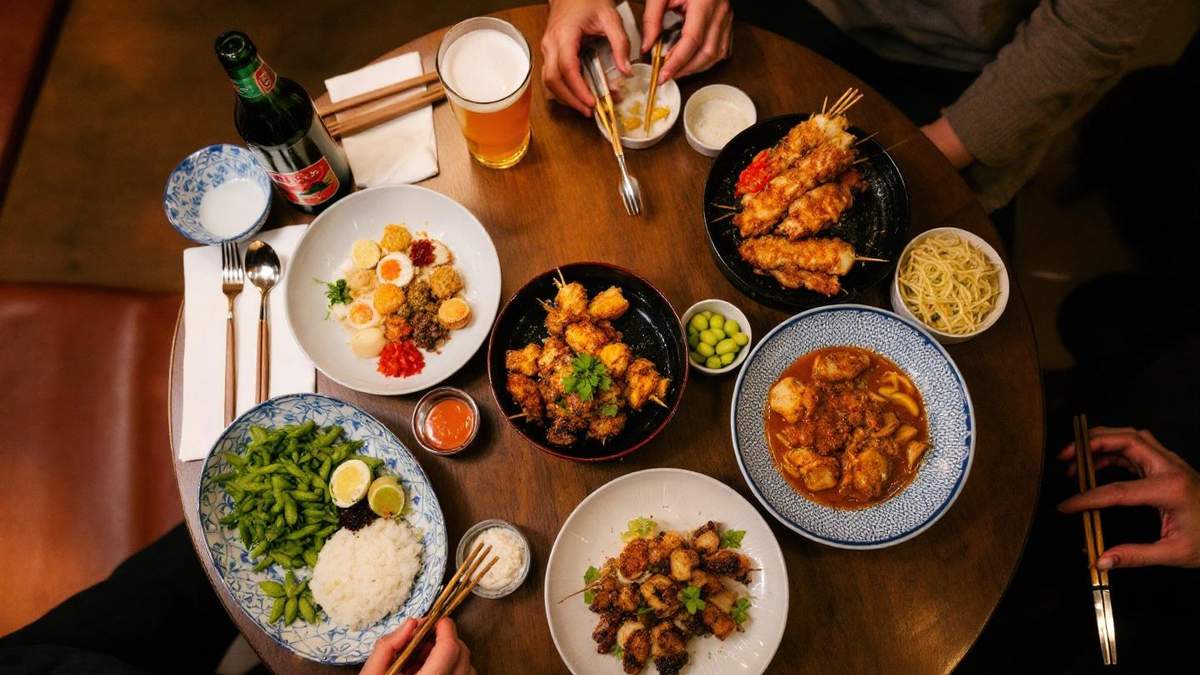
Other formats. Some workshops pair sake with izakaya-style dishes — yakitori, edamame, dashimaki tamago, grilled fish — which gives a broader picture of how sake functions across Japanese cuisine. These are less common but worth seeking out if your interest is in Japanese food culture more broadly rather than sushi specifically.
Price range. Sake and food pairing classes: approximately 10,000 to 15,000 yen per person for a three to four hour session. Premium sake tasting workshops with higher-grade sake selection: approximately 12,000 to 18,000 yen per person. Sake brewery tours with tasting, available as day trips from Tokyo, are a separate category and cost approximately 5,000 to 8,000 yen including transport.
Book a Cooking Class
These are the top-rated Tokyo cooking experiences available with instant confirmation and free cancellation:
Tsukiji Market Tour and Sushi Making
Explore Tsukiji Outer Market with a local guide, then learn to make sushi at a top cooking school.
Sushi Cooking Class with Sake Tasting
Shop at a local supermarket, learn sushi-making techniques, and enjoy sake with your creations.
Ramen Making from Scratch
Visit Akihabara, pick up ingredients at a local supermarket, then learn to make authentic ramen from scratch.
Private Japanese Cooking Class
A private, hands-on cooking class in a local chef's kitchen. Learn authentic recipes you can recreate at home with personalized instruction.
Tips for Choosing a Cooking Class
With dozens of operators offering Tokyo cooking classes, a few criteria help you separate the best from the merely adequate.
Book in advance. The best-reviewed cooking classes in Tokyo — particularly those at Tsukiji and the small home-kitchen operations — sell out. Booking two to three weeks ahead is prudent for travel during peak periods: cherry blossom season (late March to mid-April), Golden Week (late April to early May), and the autumn foliage period (mid-November). Even outside peak season, a week’s advance booking is advisable for popular formats.
Check the group size. Small group classes (six to eight people maximum) give you more hands-on time with the instructor and a more personal dynamic. Classes with twelve or more participants are more efficient for operators but less instructive for participants. The listing will usually state the maximum group size; if it does not, ask before booking.
Confirm the language of instruction. Most classes listed on international booking platforms are conducted in English or with bilingual English-Japanese instruction. A small number of highly rated local classes operate primarily in Japanese with printed English materials. If you want live English explanation throughout, confirm this at booking.
Communicate dietary restrictions at booking. Do not wait until you arrive. Cooking class menus often involve raw fish, shellfish, pork, and alcohol. If you have allergies or dietary restrictions, state them when you book. Most schools will accommodate with advance notice; some cannot modify the core menu without a private booking.
Consider private classes for groups. If you are traveling as a couple, family, or small group of four or more, a private cooking class costs more per person than a group class but frequently delivers a better experience: you set the pace, the instructor tailors explanations to your level, and the atmosphere is closer to a personal lesson than a workshop. Private classes in Tokyo typically run approximately 15,000 to 28,000 yen total for a group of two to four, making the per-person cost comparable to or only modestly higher than group rates.
Read reviews with specificity. Look for reviews that describe what the reviewer actually learned, not just whether they had fun. Phrases like “I finally understand why my sushi rice was always wrong” or “the instructor explained every step clearly and showed us how to correct our mistakes” indicate a genuinely instructive class. Generic positive reviews (“great experience, fun afternoon”) tell you less.
Ask about take-home materials. The best classes give you a printed recipe card with ingredient quantities and techniques noted in English so you can recreate the dish at home. This is a small thing that separates schools run by people who care about teaching from those optimized purely for tourist throughput.
Where to Find Classes by Neighborhood
Tokyo is large, and cooking class quality does not cluster uniformly across the city. Each major neighborhood has a character that shapes the type of cooking experience available.
Tsukiji area. The Tsukiji Outer Market remains one of the best places to source ingredients for sushi and seafood-focused cooking classes. Several cooking schools in this area structure their classes around a morning market visit followed by a kitchen session, making the most of the location. This is the natural home of sushi-making and sashimi-focused experiences.
Asakusa. Tokyo’s most traditional neighborhood has a growing number of cooking schools that lean into the cultural dimension of the experience — traditional home cooking, bento workshops, and wagashi sweets classes are particularly well-represented here. The proximity to Senso-ji and the craft shops of Nakamise means you can combine a morning cooking class with an afternoon of cultural sightseeing without covering significant ground.
Shinjuku. The largest and most commercially dense of Tokyo’s major districts has a range of mid-to-upscale cooking class operators, including several schools with professional teaching kitchens. Classes here tend to be slightly more formal and more polished than the home-kitchen operations in residential neighborhoods — good for travelers who prefer a structured, school-style environment.
Akihabara. An emerging food experience neighborhood as well as Tokyo’s electronics and anime district, Akihabara is the base for several ramen-focused cooking classes. Classes here typically combine a walk through the neighborhood’s market streets to source ingredients before moving to the kitchen, giving you a sense of the neighborhood’s daily life as well as the food.
Shinjuku and residential west Tokyo. Some of the most authentic home-cooking experiences are run by individual hosts in residential neighborhoods west of Shinjuku — areas like Nakano, Koenji, and Shimokitazawa. These are further from the major tourist circuits but offer a domestic Japanese cooking experience that urban tourist-district schools cannot replicate. Booking platforms like Airbnb Experiences and local operators list these; they are worth the extra metro time.
Fitting a Class Into Your Tokyo Days
A cooking class works best when it replaces a slot that would otherwise be spent queuing or wandering. If you are building a short stay, the Tokyo in 2 days and Tokyo in 3 days plans leave room for one anchor activity in the afternoon, and a class is a good candidate. On a longer visit, the Tokyo in 4 days plan has more breathing room, so you can pair a morning market visit with a class without rushing.
If your interest in Japanese drink culture grows after a sake pairing session, the Tokyo sake tasting guide goes further into bars and tasting rooms. For wider ideas on what else to do between classes, the best things to do in Tokyo guide lists attractions that sit well alongside a morning or evening in the kitchen, and the Tokyo temples and shrines guide pairs naturally with an Asakusa class.
Once you are home, the techniques carry over. The dishes you learn here are the same ones described in the Japanese food guide, so it is worth reading before you go: knowing the vocabulary makes the instructor’s explanations easier to follow. If you are still planning the wider trip, the Japan itinerary planner helps you decide where a class fits among your other stops.
For a broader picture of what to eat and where across the city, the Tokyo food guide covers markets, ramen shops, izakaya districts, and seasonal specialties across all neighborhoods. If Tokyo is only one stop on a longer trip, Kyoto cooking classes and Osaka cooking classes cover the same experience in other cities, and the best cooking classes in Japan guide compares options nationwide.
Frequently asked questions about Best Cooking Classes in Tokyo
Do I need to speak Japanese to take a cooking class in Tokyo? No. Most classes aimed at travelers are conducted in English or with bilingual instruction. A small number of local classes operate primarily in Japanese with printed English materials — confirm the language of instruction when booking if this matters to you.
How far in advance should I book a Tokyo cooking class? One to two weeks ahead is generally enough outside peak season. During cherry blossom season, Golden Week, or autumn foliage, book two to three weeks ahead, since the best-reviewed classes and Tsukiji-based sessions sell out first.
More tours on Viator
Top-rated experiences with verified reviews, bookable on Viator (a Tripadvisor company).
 Viator
Tokyo: Make Your Own Chopsticks Shibuya
FromUSD 11Check availability → Viator
Private Curated Tour | Get Tokyo’s Must Sees & Unique Insights
FromUSD 144Check availability → Viator
Akihabara Tailor-made Private Tour for Anime Fans
FromUSD 128Check availability → Viator
Experience all of Japanese culture and Japanese food experience classes "origami, udon, Japanese food, green tea, calligraphy" in 4 hours
FromUSD 89Check availability → Viator
Samurai Experience - Learn Bushido through Kendo, in Tokyo
FromUSD 128Check availability → Viator