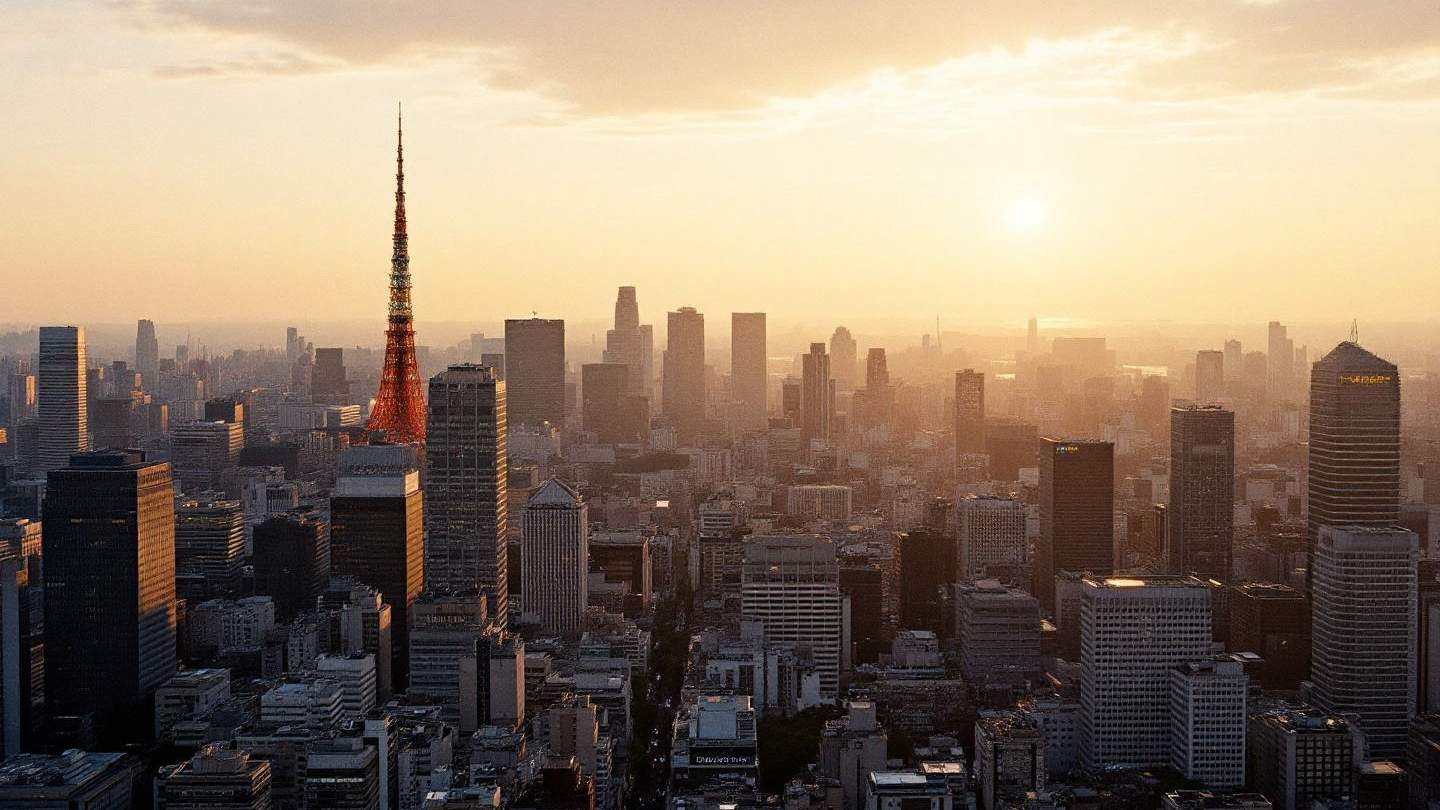
Tokyo in 4 Days
Is 4 days enough for Tokyo?
Four days is the comfortable first-visit to Tokyo. You get the city properly (neighborhoods, food, nightlife, at least one deep experience like teamLab), plus two solid day trips — Kamakura and Mount Fuji are both completely doable as separate days. No rushing, no choosing between things.
Four days in Tokyo is the version where you stop running and start exploring. The city rewards extra time with hidden streets, slower meals, and the accumulation of Tokyo moments that only come when you are not constantly watching a schedule. Here is the complete itinerary.
At a Glance
| Where to base yourself | Shinjuku — best transit hub, covers day trip bus/rail departures |
| Cost | Around 10,000–18,000 yen/night mid-range double; day trips add roughly 2,000–4,000 yen each in transport |
| Time needed | 4 full days, ideally with at least one buffer day if Fuji weather turns |
| Getting around | Suica or Pasmo IC card on the JR and Metro network; see how to use trains in Japan |
| Best time to go | Spring or autumn for the day trips; check the Mount Fuji forecast the night before regardless of season |
Day-by-Day Summary
| Day | Focus | Pace |
|---|---|---|
| Day 1 | Shinjuku, Shibuya, Golden Gai | Easy — orientation day |
| Day 2 | Tsukiji, Harajuku, Meiji Shrine, teamLab | Full — the city’s highlights |
| Day 3 | Mount Fuji day trip (weather dependent) | Full day, mostly transport and viewpoints |
| Day 4 | Kamakura day trip, evening in Shimokitazawa | Full day, moderate walking |
Day 1: Into Tokyo — Shinjuku, Shibuya, Asakusa
Morning: Arrival and Orientation (10:00–13:00)
Day 1 is an orientation day, not a sightseeing marathon. Even if you arrive the night before, the morning is for getting your footing.
From Shinjuku (the recommended base), walk east toward Kabukicho. Tokyo reveals itself best on foot. The contrast of a busy commercial street leading suddenly into a quiet covered market, into a temple courtyard, into a skyscraper lobby — this is the Tokyo that you cannot Google in advance. Just walk east of the station for 30 minutes.
If you arrive from the airport on Day 1 morning: the Narita Express from Narita Airport to Shinjuku takes 90 minutes (3,250 yen). From Haneda Airport, the Keikyu Line to Shinjuku takes about 50 minutes.
Afternoon: Shibuya (13:00–17:00)
Lunch in Shinjuku then subway one stop south to Shibuya.
Shibuya Scramble Crossing is mandatory — stand at street level, cross it, feel the organized chaos. Then: the Shibuya Sky observation deck (2,000 yen) or the free Starbucks view from above Mag’s Park for the aerial perspective. Do one.
Walk south from Shibuya Station into Daikanyama (15 minutes on foot) — independent cafes, good architecture, the Tsutaya Books complex. A good hour of slower Tokyo.
Evening: Shinjuku, Golden Gai (18:00–late)
Return to Shinjuku base. Walk through Kabukicho at dusk, find Golden Gai. The 200 micro-bars here are the essential first Tokyo evening — cover charge 500–1,000 yen, one beer, talk to whoever is there, repeat.
Dinner: ramen at one of the Shinjuku shops. Under 1,500 yen.
Day 2: Tsukiji, Harajuku, Meiji Shrine, teamLab
Morning: Tsukiji Market (7:00–10:00)
Tsukiji outer market at 7 am is the best food morning in Tokyo. Walk the alleys first, then eat. A sushi breakfast counter runs 1,500–3,000 yen.
Tsukiji Market Morning Sushi Tour
3-hour guided walk through Tsukiji with a local expert — market walk, fresh sushi breakfast, and context on washoku food culture you will not find independently.
Mid-Morning: Harajuku and Meiji Shrine (10:30–13:00)
From Tsukiji take the Hibiya Line to Meiji-Jingumae. Meiji Shrine: walk the full gravel forest path to the inner shrine. Forty-five minutes. The woodland is real — 70 hectares inside central Tokyo. One of the stranger and better experiences in the city.
After: Harajuku. Takeshita Street for the spectacle (15 minutes), then the backstreets of Ura-Harajuku for the actual shopping and cafes (45 minutes). Lunch at one of the Omotesando restaurants: 1,500–2,500 yen.
Afternoon: Omotesando and Free Time (13:00–15:30)
Walk slowly down Omotesando. Look at the buildings — Tadao Ando, SANAA, Herzog and de Meuron all have flagship stores here. Day 2 afternoon is built-in exploration time. You will know by now what you want more of: food, architecture, shopping, shrines. Do that.
Late Afternoon: teamLab Planets (16:00–18:00)
Book before the trip. teamLab Planets in Toyosu is the best paid Tokyo experience at 3,200 yen. Walk barefoot through mirror-floored rooms of digital projection — 90 minutes, and you will understand why it sells out.
teamLab Planets Tokyo — Entry Ticket
World-class digital art immersion in Toyosu. Book your slot weeks in advance — peak season dates sell out immediately. Free cancellation available.
Day 3: Mount Fuji Day Trip
Planning the Day
Check the weather forecast the night before. Mount Fuji is cloud-covered 60–70% of the time. On a clear day it is one of the most dramatic things you will see in Japan — the perfect volcanic cone visible from dozens of kilometers away. On a cloudy day you are looking at fog and your 2,000-yen bus ticket.
If clear: Go to Fuji. Take the bus from Busta Shinjuku (south exit terminal) to Kawaguchiko (about 100 minutes, 2,000 yen one-way). At Kawaguchiko: lake view from the north shore (Oshino Hakkai for the reflection shot), Chureito Pagoda (a 20-minute climb to the pagoda with Fuji behind it — one of Japan’s most photographed viewpoints), and the fifth station if you want to go high.
If cloudy: Go to Kamakura instead (see Day 4 below), and swap Day 4 to something Tokyo-focused.
Mount Fuji and Lake Kawaguchiko Day Trip
Full-day guided excursion from Tokyo covering Fuji's fifth station, Lake Kawaguchiko viewpoints, and Gotemba — all transport and guide included. The most efficient way to do Fuji as a day trip.
Return
Last buses from Kawaguchiko to Shinjuku run around 7:30 pm. Return by 9 pm, pick up takeout ramen, rest.
Day 4: Kamakura Excursion
Full Day (8:30 departure)
Kamakura is 50 minutes from Shibuya or Shinjuku by JR (via Kamakura Station, about 940 yen). Take the train south toward the coast.
Kotoku-in (Great Buddha): 20-minute walk from Kamakura Station. The 11-meter outdoor bronze Buddha is one of Japan’s most recognizable images and considerably more impressive in person. Entry is 300 yen. You can enter the hollow bronze interior for another 20 yen.
Hasedera Temple: 5-minute walk from Kotoku-in. Beautiful hillside temple complex with a giant wooden Kannon statue, cave circuit, and coastal views. Entry 400 yen. Allow 45 minutes.
Hokokuji (Bamboo Temple): A 10-minute taxi ride east. This small Zen temple has a private bamboo grove used for meditation — entry 500 yen, optional matcha tea in the grove for 700 yen additional. Quieter and more intimate than Arashiyama in Kyoto.
The Enoden Line: Take this coastal tram from Kamakura Station or Hasedera Station toward Enoshima. The narrow-gauge tram runs through beachside neighborhoods, past surfing beaches, and terminates at Enoshima Island (bridge crossing, free). The island has a shrine complex and a harbor. If the weather is good, the afternoon here is excellent.
Kamakura and Enoshima Day Trip from Tokyo
Guided full-day excursion covering the Great Buddha, Hasedera, the Enoden tram, and Enoshima Island — ideal for seeing Kamakura's highlights without navigating the timetables independently.
Return from Kamakura to Shinjuku by JR: direct trains run from Kamakura Station (change at Ofuna or Yokohama) arriving in Shinjuku in about 70 minutes.
Evening: Shimokitazawa or Omoide Yokocho
Two good options for the last evening:
Shimokitazawa (3 stops from Shinjuku on the Odakyu Line) is Tokyo’s best music and vintage neighborhood. Small live venues, izakayas, second-hand clothing, and no chains. Good final evening if you want something completely different from the Shinjuku/Shibuya world.
Omoide Yokocho (Memory Lane, Shinjuku) is a narrow alley of tiny yakitori restaurants under the JR tracks. Smoke, charcoal smell, salarymen eating on bar stools. Extremely atmospheric, extremely Tokyo. A good last night option if you want simple, cheap food and a full sensory experience.
Where to Stay
Shinjuku is the recommended base for 4 days. It covers all transit needs including the day trip bus departures. Mid-range doubles: 10,000–18,000 yen per night.
Asakusa works well as an alternative — especially for travelers who want to spend more time in east Tokyo (Yanaka, Ueno, the older neighborhoods). The transit journey to Shibuya and Harajuku is 30 minutes, acceptable for 4 days.
Getting Around
Suica or Pasmo IC card for all train and subway travel. Load 3,000 yen; top up at any station machine. Download the Tokyo Metro app for English route guidance.
For day trips: Fuji buses depart from Busta Shinjuku terminal (bus ticket counter on site, arrive 15 minutes early). Kamakura by JR from Shinjuku requires a change at Ofuna or Yokohama — Google Maps handles the routing clearly.
What to Skip in 4 Days
Odaiba. The artificial island area is fine for a 7-day trip but not worth the 30-minute monorail ride on 4 days. teamLab Planets (in Toyosu, near Odaiba) is the exception — that one is worth the trip.
More than two day trips. Nikko, Kawagoe, Hakone — all excellent, none of them fit comfortably in a 4-day Tokyo schedule alongside doing the city itself justice.
Disneyland or DisneySea. Full days, significant cost, and they crowd out the cultural content of the trip. Save for a dedicated family trip.
Tips for a 4-Day Tokyo Trip
- Check Mount Fuji weather the night before. Japan Meteorological Agency website shows cloud cover forecasts. Even “partly cloudy” often means you see nothing.
- The IC card works on Kamakura JR trains. No need to buy separate tickets.
- For 4 days, consider booking one slightly higher-end dinner — a kappo restaurant or a proper izakaya with a set menu, 4,000–7,000 yen per person. Tokyo’s mid-range food scene is exceptional and worth one indulgent meal.
- Shimokitazawa is best Wednesday through Sunday — the live music venues are quiet or closed on Monday and Tuesday.
- Jet lag typically resolves by Day 3 or 4. Plan the most physically demanding activities (Mount Fuji, Kamakura walking) for then.
- Keep 1,000 yen in cash at all times. Smaller temples, some market stalls, and older vending machines are still cash-only.
Should You Extend to a 5th or 6th Day?
Four days covers Tokyo’s core plus two day trips comfortably, but a few additions are worth knowing about if your schedule has flex. A fifth day is best spent on a neighborhood you did not reach — Tokyo’s temples and shrines beyond Senso-ji and Meiji Shrine, or a proper visit to Tokyo’s museums in Ueno, which this itinerary only brushes past. If you are combining Tokyo with the rest of the country, compare this itinerary against the tighter Tokyo in 3 days version or the 7-day and 10-day national itineraries, which fold Tokyo into a Kyoto-Osaka route.
Nikko as a third day trip: Some travelers try to swap in Nikko (Toshogu shrine, UNESCO-listed) as a third excursion. It is worth doing on a 5+ day trip, but on 4 days it usually means dropping either Fuji or Kamakura, and both of those pack more into less travel time.
Money and Practical Logistics for the Trip
Budget roughly 25,000–40,000 yen per person for the 4 days excluding accommodation and flights: food (1,500–4,000 yen per meal, more for the one indulgent dinner), the two day-trip transport costs (around 4,000 yen for the Fuji bus round trip, around 1,900 yen for Kamakura JR), teamLab and any other ticketed entries, and IC card top-ups for local transit. Load your IC card with 3,000–5,000 yen at the start and top up as needed at any station machine — see the Suica and Pasmo guide if you are setting one up for the first time. Cash is still useful for the smaller Kamakura temples and some Golden Gai bars, so keep a few thousand yen on hand throughout.
More tours on Viator
Top-rated experiences with verified reviews, bookable on Viator (a Tripadvisor company).
 Viator
Tokyo: Make Your Own Chopsticks Shibuya
FromUSD 11Check availability → Viator
Private Curated Tour | Get Tokyo’s Must Sees & Unique Insights
FromUSD 144Check availability → Viator
Akihabara Tailor-made Private Tour for Anime Fans
FromUSD 128Check availability → Viator
Experience all of Japanese culture and Japanese food experience classes "origami, udon, Japanese food, green tea, calligraphy" in 4 hours
FromUSD 89Check availability → Viator
Samurai Experience - Learn Bushido through Kendo, in Tokyo
FromUSD 128Check availability → Viator