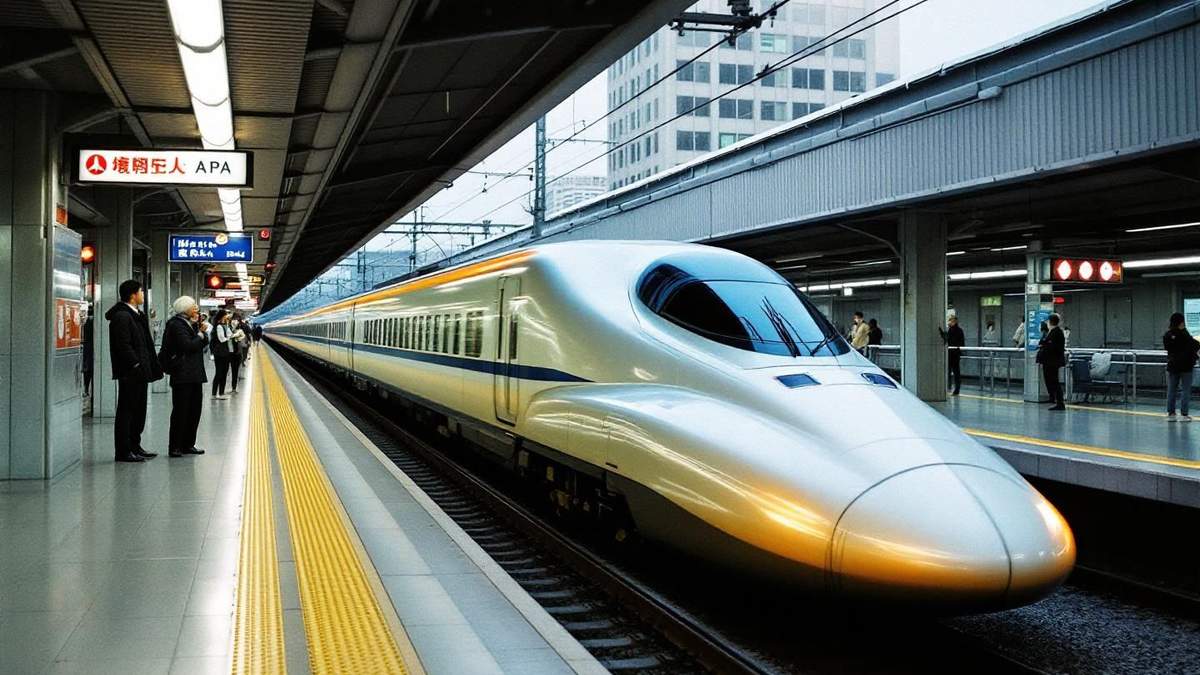
Shinkansen vs Night Bus in Japan
Which is better, shinkansen or night bus in Japan?
Shinkansen unless you are a budget backpacker prioritising cost above everything else. The night bus saves 8,000–10,000 yen on a Tokyo-Osaka run but costs 6–8 hours of travel time versus 2.5 hours by train. For anyone valuing time, comfort, or reliability, the shinkansen is the clear answer. Night buses are a legitimate tool for tight budgets — not a general recommendation.
Here is the honest version: the night bus is not a general recommendation. It is a tool for travellers on very tight budgets who cannot afford the shinkansen and are willing to sacrifice comfort and sleep quality to save 8,000–10,000 yen. If that describes your situation, the night bus is a legitimate choice. For everyone else, take the shinkansen.
At a glance
| Criterion | Shinkansen (Hikari) | Night Bus |
|---|---|---|
| Tokyo to Osaka one-way | 13,870 yen | 3,500–7,000 yen |
| Travel time | 2 hours 40 minutes | 7–9 hours |
| Departure flexibility | Every 10–20 minutes | 1–3 departures per evening |
| Sleep quality | N/A (daytime travel) | Poor to moderate |
| Arrive rested? | Yes | Usually not |
| Reliability | Near 100% on time | Variable (traffic) |
| Luggage handling | Keep with you | Undercarriage storage |
| Booking difficulty | Easy (tickets at any station) | Easy (Willer Express online) |
| Best for | Everyone | Budget backpackers |
Cost comparison
The price gap is real. A single Tokyo to Osaka Hikari shinkansen ticket costs 13,870 yen. A budget highway bus covers the same route for 3,500–5,000 yen. For a return trip, that is a potential saving of 17,000–21,000 yen.
Tokyo–Osaka price breakdown (2026):
| Option | Cost | Journey time |
|---|---|---|
| Hikari Shinkansen (unreserved) | 13,870 yen | 2h 40min |
| Nozomi Shinkansen (unreserved) | 13,870 yen | 2h 30min |
| Highway bus (budget, 4-across) | 3,500–5,000 yen | 7–9 hours |
| Highway bus (premium, 3-across) | 6,000–9,000 yen | 7–9 hours |
| Highway bus (luxury semi-private pod) | 9,000–14,000 yen | 7–9 hours |
| JR Pass (covers shinkansen) | 50,000 yen (7-day) | 2h 40min |
Other routes where the price gap is significant:
| Route | Shinkansen | Night bus |
|---|---|---|
| Tokyo to Kyoto | 13,080 yen | 3,500–6,000 yen |
| Tokyo to Hiroshima | 18,040 yen | 5,000–8,000 yen |
| Tokyo to Fukuoka | 22,950 yen | 6,000–10,000 yen |
| Osaka to Fukuoka | 14,800 yen | 3,500–6,000 yen |
Where the shinkansen wins
Time. Tokyo to Osaka in 2 hours 40 minutes versus 8 hours on a bus. That is an extra 5–6 hours in Osaka, or an early arrival that opens up a full travel day rather than a groggy morning. For trips of 7–14 days, recovering lost time from a night bus is harder than it appears.
Reliability. Shinkansen operate to the minute. The average annual delay of the Tokaido Shinkansen is under 1 minute when measured over all services. Night buses travel on highways where traffic, accidents, and weather cause unpredictable delays. A 90-minute late arrival is not unusual and can cascade into a disrupted schedule.
Arrive alert. Arriving in Kyoto at 6:30am after poor bus sleep, then trying to visit temples at 9am before the crowds, is not the experience the plan promises. Arriving by shinkansen at noon, fully rested, and having the afternoon to explore is categorically better.
Luggage. On the shinkansen, your bags stay with you in the overhead rack. On a bus, large bags go in undercarriage storage. If you are forwarding luggage between hotels via takkyubin, you do not have this problem. But if you are carrying your bags yourself, bus luggage handling adds inconvenience.
Flexibility. Shinkansen run every 10–20 minutes on the Tokyo-Osaka corridor. Missed your planned train? The next one departs shortly. Night buses have one to three departures per evening — miss your bus and you wait 24 hours.
Japan Rail Pass — 7, 14 or 21 Days
Unlimited Shinkansen (Hikari/Kodama) + all JR trains nationwide. The correct choice for travellers doing multiple intercity routes — makes the shinkansen vs bus decision irrelevant for covered journeys.
Where the night bus wins
Budget travel. If your daily accommodation budget is 3,000–5,000 yen and your entire 14-day Japan budget is under 200,000 yen all-in, the 10,000 yen saved on a night bus round trip between Tokyo and Osaka is meaningful. Backpackers who have made peace with the comfort trade-off use night buses systematically and experience Japan on budgets that shinkansen travel makes impossible.
Overnight travel efficiency. The night bus argument is cleaner when you cannot sleep anyway. If you are an insomniac or find that you are productive at night, the bus uses travel time that you would have spent awake in a hostel regardless. You arrive without having paid for the previous night’s accommodation either.
Routes without shinkansen. Some destination-to-destination combinations do not have convenient direct shinkansen connections. Highway buses often connect cities in more direct routings, or serve destinations (Shirakawa-go, remote mountain areas) that are not on any shinkansen line.
Multi-city backpacker routes. For a traveller hitting 8–10 cities in 3 weeks and sleeping in hostels throughout, a combination of night buses and occasional shinkansen legs is a practical strategy. Not comfortable, but practical.
How to decide
Choose the shinkansen if:
- Your daily Japan budget is 8,000 yen or more (meaning transport is not your primary constraint)
- You have a JR Pass (the shinkansen becomes effectively free on covered routes)
- You value arriving alert and making full use of travel days
- You are travelling with family, elderly companions, or anyone for whom poor sleep is a real health concern
- Your schedule is tight and a late bus arrival would cost you bookings or activities
Choose the night bus if:
- You are a budget backpacker and saving 8,000–10,000 yen genuinely changes what else you can do
- You have flexibility to absorb a 60–90 minute delay without consequences
- You have chosen a premium service (3-across seating, footrests, eye mask and earplugs provided) and accept you will arrive somewhat tired
- You are travelling a route where the shinkansen would require awkward transfers
Avoid the night bus if:
- You have important activities the morning you arrive
- You are travelling with children
- You have back problems or mobility limitations
- You are doing this journey multiple times during the same trip
Booking and boarding, step by step
Shinkansen: Buy tickets at any JR ticket machine or counter (English available), or reserve online via the JR East/JR West apps. Unreserved cars (jiyuseki) are usually cars 1–3 or 1–5 depending on the train — walk-up works fine outside peak periods. If you have a JR Pass, show it at the staffed gate rather than the automatic ticket gate. Arrive on the platform 5–10 minutes before departure; the train stops for roughly 1–2 minutes at most stations, and platform position markers show exactly where your car door will stop.
Night bus: Book through Willer Express or Kosoku Bus, choose your seat from the seat map, and arrive at the departure point (often a spot outside a major station, not always the station itself) 15–20 minutes early. Bring an eye mask, earplugs, a neck pillow, and a light layer — bus air conditioning runs cold overnight. Confirm the exact departure point address the day before; some routes depart from a bus terminal a short walk from the station rather than the station itself.
Related transport decisions
Once you’ve settled the shinkansen-vs-bus question, two other choices tend to follow directly from it. If you’re taking multiple shinkansen legs, work out whether a JR Pass or point-to-point tickets cost less for your route — see our JR Pass vs IC card guide for how the two systems interact. And for getting around once you land, our how to use trains in Japan guide covers the IC card and local transport side that neither the shinkansen nor the night bus replaces.
Common scenarios
Solo backpacker, 3-week trip, 150,000 yen total budget: Night buses are a sensible tool. Tokyo to Kyoto, Osaka to Hiroshima, and Hiroshima to Fukuoka by night bus could save 40,000–50,000 yen compared to all shinkansen. Accept that you will arrive tired and plan low-intensity first mornings in each city.
Couple, 10-day trip, flexible budget: Shinkansen every leg. A Tokyo–Kyoto–Hiroshima–Osaka route with a JR Pass covers all intercity travel. The time saved (12–15 extra hours in destinations versus night buses) far outweighs the cost. Use the savings from the JR Pass versus individual tickets on better accommodation or a ryokan night.
Family of four (parents + two children): Shinkansen, no question. Night buses with children are a specific form of misery. Shinkansen travel with children in Japan is genuinely enjoyable — the trains are punctual, clean, and the bento boxes make the journey an event. The cost difference for four people is significant but the quality-of-trip difference is larger.
Student exchange trip, tight budget, flexible schedule: Mix strategically. Take the night bus for the longest routes (Tokyo–Osaka or Osaka–Fukuoka) to save the most. Use shinkansen for shorter legs where the time and price differential is smaller. Buy individual shinkansen tickets rather than a JR Pass if you are only taking 2–3 shinkansen journeys.
Verdict
The night bus wins on price and nothing else. On every other criterion — time, comfort, reliability, arrival experience, flexibility — the shinkansen is superior.
Take the night bus if saving 8,000–10,000 yen per leg meaningfully changes your trip and you have made peace with the comfort trade-off. Take the shinkansen if you have a JR Pass, a functional daily budget, or any reason to arrive in good condition.
For the majority of international visitors to Japan, the shinkansen is the correct choice. It is not extravagant — it is how Japan is designed to be experienced.
More tours on Viator
Top-rated experiences with verified reviews, bookable on Viator (a Tripadvisor company).
 Viator
Peaceful Hiroshima & Miyajima UNESCO 1 Day Bus Tour
FromUSD 124Check availability → Viator
World Heritage Shirakawa-go and Experience Tours from Kanazawa
FromUSD 118Check availability → Viator
World Heritage Kyoto & Nara Uji Authentic Matcha Experience
FromUSD 124Check availability → Viator
Nara Half Day Trip Walking Tour (Private Option Available)
FromUSD 101Check availability → Viator
Hiroshima Peace (Heiwa) Walking Tour at World Heritage Sites
FromUSD 91Check availability → Viator