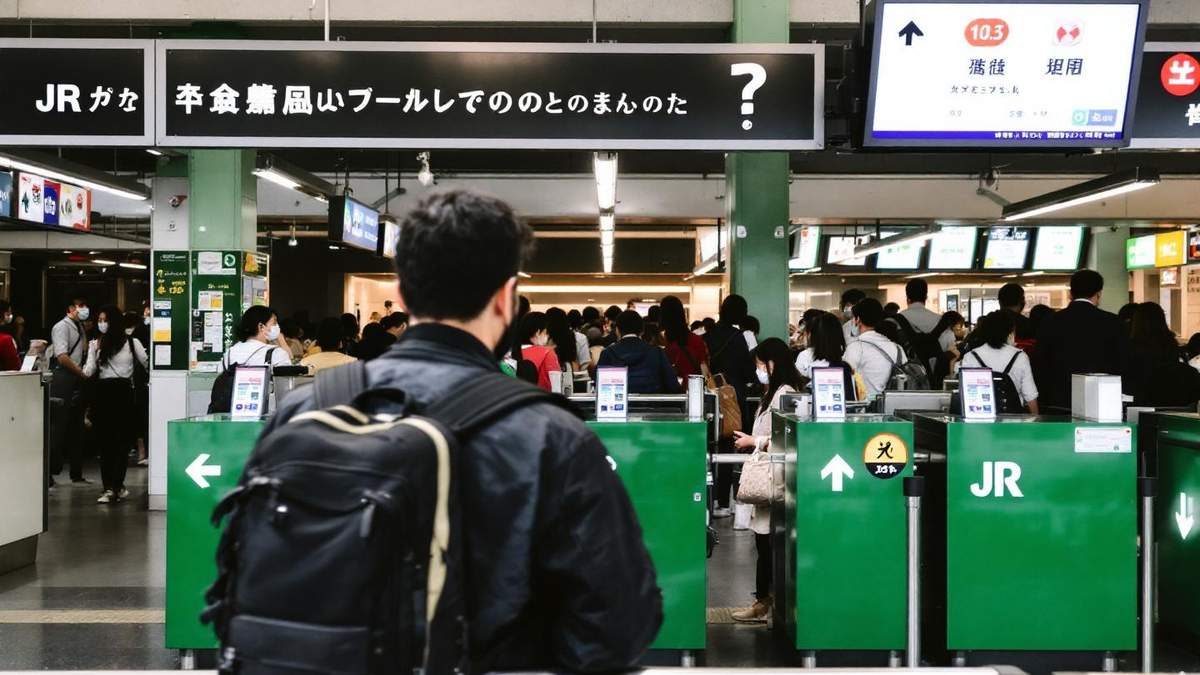
JR Pass vs IC Card in Japan
Which is better, JR Pass or IC card?
JR Pass if you are doing Tokyo–Kyoto–Hiroshima or any multi-city shinkansen route where total fares exceed 50,000 yen. IC card if you are staying in one city or one region (Tokyo only, or Kansai only). Most Japan trips need both: JR Pass for intercity travel, IC card for everything else.
If you are doing Tokyo–Kyoto–Hiroshima, get the JR Pass. Otherwise, probably don’t. That’s the entire decision tree, compressed. Now here’s the full math, because the details matter for every itinerary that doesn’t fit that template perfectly.
At a glance
| Criterion | JR Pass | IC Card (Suica/ICOCA) |
|---|---|---|
| Cost | 50,000 yen (7-day) / 80,000 yen (14-day) — official online price; overseas agencies from 53,000 / 84,000 yen from 1 Oct 2026 | Free (500 yen deposit) + loaded value |
| Covers shinkansen | Yes (Hikari/Kodama, not Nozomi) | No |
| Covers city subway | No | Yes |
| Covers local JR trains | Yes | Yes (pay-per-ride) |
| Covers buses | Some JR buses | Yes (most city buses) |
| Covers convenience stores | No | Yes |
| Best for | Multi-city trips with shinkansen | Single-city or short-region travel |
| Both useful? | Yes — use together | Yes — always needed even with JR Pass |
Cost comparison
The JR Pass is a fixed-cost gamble: 50,000 yen for 7 days. If your actual shinkansen fares would have exceeded that, you win. If not, you overpaid. From 1 October 2026, that 50,000 yen figure is the official online price only — exchange orders bought through overseas travel agencies rise to 53,000 yen (agency orders placed by 30 September 2026 keep the old price).
Key individual shinkansen fares (2026, Hikari unreserved):
| Route | One-way | Round-trip |
|---|---|---|
| Tokyo to Kyoto | 13,080 yen | 26,160 yen |
| Tokyo to Osaka | 13,870 yen | 27,740 yen |
| Tokyo to Hiroshima | 18,040 yen | 36,080 yen |
| Tokyo to Hakata (Fukuoka) | 22,950 yen | 45,900 yen |
| Narita Express (N’EX) | 3,070 yen | 6,140 yen (round trip) |
| Kyoto to Hiroshima | 10,580 yen | 21,160 yen |
IC card: what you actually pay day-to-day
| Journey | Typical cost |
|---|---|
| Tokyo Metro single ride | 170–310 yen |
| Tokyo Yamanote Line loop | 140–200 yen per hop |
| Osaka Metro single ride | 180–370 yen |
| Kyoto bus (one ride) | 230 yen |
| Convenience store purchase | Pay with IC card balance |
A typical week of city transit uses 2,000–5,000 yen on an IC card. This is unavoidable regardless of whether you have a JR Pass — the subway is not covered.
Where the JR Pass wins
Multi-city shinkansen travel. Tokyo–Kyoto–Hiroshima round trip by Hikari costs approximately 50,000 yen in individual tickets — matching the 7-day pass price. Add the Narita Express (6,140 yen round trip), local JR trains in cities, and any additional legs (Hakone, Nara via JR, Miyajima ferry) and the pass exceeds its value cleanly.
Long trips with Tohoku or Kyushu. Tokyo to Hakata (Fukuoka) round trip costs 45,900 yen alone. Add Kyoto or Hiroshima stops and the 7-day pass pays for itself on the first two days. For 14–21 day trips spanning multiple regions, the national JR Pass is almost always the right call.
Flexibility and spontaneity. With a JR Pass activated, you can board any covered train without buying a ticket. This matters on complex itineraries where plans shift — missing a train is a minor inconvenience, not a rebooking cost.
Narita Express included. The N’EX from Narita Airport to Tokyo costs 3,070 yen one-way. A round trip is 6,140 yen. JR Pass holders ride free — a meaningful day-one saving that reduces the pass’s net cost.
Japan Rail Pass — 7, 14 or 21 Days
Unlimited Shinkansen (Hikari/Kodama) + all JR trains nationwide, including the Narita Express. The correct choice for multi-city itineraries. Activates on your chosen start date.
Where the IC card wins
Any single-city stay. If you are spending a week in Tokyo, the JR Pass is almost useless. Tokyo’s transit is dominated by Tokyo Metro (13 lines) and Toei Subway (4 lines) — none covered by the JR Pass. The only JR rail that matters in daily Tokyo life is the Yamanote and Chuo lines, which cost 140–200 yen per ride on an IC card. You would not recoup 50,000 yen by riding the Yamanote Line.
Kansai-only trips. Osaka–Kyoto–Nara travel is better served by the IC card plus a regional Kansai Area Pass (4 days: 6,400 yen) or Hankyu Tourist Pass (2 days: 2,000 yen). These regional options plus IC card cost a fraction of the national JR Pass for Kansai-only itineraries.
Convenience store purchases. An IC card doubles as a contactless payment card at 7-Eleven, FamilyMart, Lawson, and most vending machines. Using your phone’s Apple Pay Suica for transit and small purchases is the smoothest travel experience in Japan. The JR Pass does not help with this.
Short trips (4 days or fewer). The 7-day JR Pass is the minimum duration. If your trip is 4 days, there is no pass that matches a short trip length. Individual shinkansen tickets plus IC card will cost less.
Budget Kansai travel. Osaka–Kyoto on the Hankyu Line is 400 yen and fast. Osaka–Nara on Kintetsu is 680 yen. Neither is covered by the JR Pass, but both work with an IC card or separate ticket. For Kansai city-hopping, private rail lines are often faster and cheaper than JR equivalents.
Tokyo Metro 24h / 48h / 72h Pass
Unlimited rides on all Tokyo Metro lines — covers Shinjuku, Shibuya, Asakusa, Ueno, and Ginza without counting fares. Not covered by the JR Pass, this is the city-transit equivalent for Tokyo-focused days.
How to decide
Choose the JR Pass if you:
- Are travelling between two or more regions (Tokyo + Kansai, or Kansai + Hiroshima, or any combination including Tohoku/Kyushu)
- Have calculated that your individual shinkansen fares would exceed 50,000 yen (7-day) or 80,000 yen (14-day)
- Plan to use the Narita Express to/from the airport
- Want flexibility to change travel dates or miss a train without rebooking costs
Choose IC card only if you:
- Are staying in one city for your entire trip
- Are doing a Kansai-only trip (Osaka, Kyoto, Nara, Kobe) — use regional passes instead
- Are in Japan for 4 days or fewer
- Have calculated that individual shinkansen tickets are cheaper than the pass for your specific route
The honest answer for most 10–14 day Japan trips: You need both. The JR Pass covers intercity shinkansen travel. The IC card covers everything else — subway, local buses, convenience stores. Buy both, use each for what it covers. There is no competition between them.
Common scenarios
Tokyo–Kyoto–Osaka (Golden Route, 7 days): Flying into Tokyo, out of Osaka one-way: individual tickets cost approximately 18,000–20,000 yen. JR Pass is overkill. Use IC card + individual shinkansen ticket. If returning to Tokyo from Osaka, the round trip shinkansen alone (27,740 yen) plus N’EX (6,140 yen) plus local JR travel approaches 40,000 yen. The pass becomes worth considering.
Tokyo–Kyoto–Hiroshima–Osaka (10 days): Round trip from Tokyo to Hiroshima via Kyoto, returning from Osaka: approximately 50,000–55,000 yen in individual tickets. 7-day JR Pass matches or beats this, and covers any additional JR travel during the trip. Get the pass.
First-time visitor staying only in Tokyo (5 days): IC card (Suica on your phone). Load 5,000 yen. Reload at 7-Eleven. The JR Pass would sit unused. Total metro spend: approximately 2,000–4,000 yen.
Family of 4 on a 14-day multi-city trip: Four 14-day JR Passes at 80,000 yen each = 320,000 yen. Individual shinkansen for four (Tokyo–Kyoto–Hiroshima return, unreserved) = approximately 200,000 yen in tickets plus N’EX. If the family is also visiting Tohoku or Kyushu, the pass math turns positive. Calculate per person, then multiply.
Verdict
The JR Pass and IC card solve different problems. The JR Pass is a shinkansen cost-management tool for multi-city itineraries. The IC card is your daily transit and payment card everywhere.
If your shinkansen fares would exceed the pass price, buy the pass. If they wouldn’t, skip it. But always get an IC card — it is not optional for any Japan trip, regardless of whether you have a JR Pass. The subway does not take the JR Pass.
For the standard Japan itinerary (Tokyo + Kyoto + Hiroshima + Osaka), the 7-day JR Pass consistently justifies its cost once you include the N’EX and local JR travel. Do the calculation for your specific route using the fares listed above — the answer is usually clear within five minutes.
Suica vs ICOCA vs Pasmo — Does It Matter Which IC Card You Get?
Not much for a visitor. Suica (issued by JR East, based in Tokyo), Pasmo (Tokyo private and metro operators), and ICOCA (JR West, based in Osaka/Kyoto) are functionally interchangeable for tourists — all work nationwide on trains, buses, and at convenience stores, with rare regional exceptions on small local bus networks.
The practical differences that matter:
Mobile Suica is the most convenient starting point for iPhone users, since it can be added to Apple Wallet before you even land in Japan, topped up with a credit card, and used to tap through gates from Narita or Haneda without visiting a machine.
ICOCA has occasionally had physical card shortages during periods of chip supply issues — if buying a physical card in Kansai, check availability, or default to mobile Suica if your phone supports it.
Whichever card you get, get only one. There is no benefit to holding multiple physical IC cards; balance and functionality are identical nationwide.
More tours on Viator
Top-rated experiences with verified reviews, bookable on Viator (a Tripadvisor company).
 Viator
Peaceful Hiroshima & Miyajima UNESCO 1 Day Bus Tour
FromUSD 124Check availability → Viator
World Heritage Shirakawa-go and Experience Tours from Kanazawa
FromUSD 118Check availability → Viator
World Heritage Kyoto & Nara Uji Authentic Matcha Experience
FromUSD 124Check availability → Viator
Nara Half Day Trip Walking Tour (Private Option Available)
FromUSD 101Check availability → Viator
Hiroshima Peace (Heiwa) Walking Tour at World Heritage Sites
FromUSD 91Check availability → Viator