Osaka Street Food Guide
Last updated: March 2026
Osaka has been Japan’s food capital for four centuries. The phrase kuidaore — roughly “eat until you drop” or “ruin yourself with food” — is Osaka’s civic motto and its residents take it seriously. The city produces more restaurant revenue per capita than Tokyo. The density of food options in any given city block in Dotonbori or Namba is not paralleled anywhere else in Japan. For the best ramen across Japan, see the best ramen in Japan guide. And at the foundation of all of it is street food: affordable, specific, obsessively perfected over generations.
This is the complete guide to eating street food in Osaka. We cover every significant dish, the best stalls for each, the areas where they concentrate, prices for 2026, the etiquette of eating them correctly, and walking routes that connect the best stops in each neighborhood. For guided food experiences, see Osaka food tours. For broader Japanese food culture, see the Japanese food guide.
The Essential Osaka Street Foods
Takoyaki
Takoyaki are the defining Osaka street food — round, golf ball-sized dumplings of wheat batter with a piece of octopus (tako) in the center, cooked in a specialized cast iron pan with hemispherical molds, flipped repeatedly with metal picks until the exterior is crisp and golden and the interior remains liquid and steaming.
The technique requires practice and skill. Watching a good takoyaki cook manage 48 balls simultaneously, flipping each one at the precise moment with practiced efficiency, is genuinely impressive. The rotation creates the perfectly round form; timing creates the contrast between crisp shell and molten interior.
How they are served: Presented in a boat-shaped tray of six or eight pieces, topped with takoyaki sauce (a thick, sweet-savory sauce similar to Worcestershire), Japanese mayonnaise in a zigzag pattern, dried bonito flakes (katsuobushi) that wave in the heat rising from the balls, and dried green seaweed (aonori). Some shops add additional toppings.
How to eat them: Eat immediately. The interior is extremely hot — the liquid filling stays scalding for several minutes. Bite carefully, or split with a skewer first. Do not put a whole piece in your mouth immediately.
Price: 500–750 yen for six pieces; 700–1,000 yen for eight pieces.
Best stalls:
Aizuya in the Dotonbori arcade has operated since 1945 and is considered by many locals the finest in the city. Their version uses thinner, more delicate batter and a particularly strong dashi-based filling. Less sweet than competitor versions. Six pieces for 600 yen.
Aiduya (separate from Aizuya, despite the similar name) on the Hozenji Yokocho side is another long-running traditional option with a notably savory sauce.
Takoyaki Juhachiban near Kuromon Market has a more modern approach — larger balls, higher quality octopus, premium sauce. Eight pieces for 900 yen.
Otakoyasan in Shinsekai is the local neighborhood specialist, used by residents rather than tourists, at 500 yen for six.
Okonomiyaki
Okonomiyaki is the other dish most closely associated with Osaka. The name means roughly “what you like, grilled” — it is a savory pancake of wheat batter mixed with shredded cabbage, egg, and a variety of toppings (meat, seafood, cheese, vegetables) cooked on a flat iron griddle and served with okonomiyaki sauce, mayonnaise, katsuobushi, and aonori.
The Osaka style (referred to as Kansai-style) mixes all ingredients together before grilling. The Hiroshima style layers them, producing a different texture and structure. Both are valid; in Osaka you eat the Osaka version.
Okonomiyaki is primarily a restaurant food rather than a street stall food in Osaka — you sit at a counter with a built-in griddle and either the cook prepares it for you or you cook it yourself at the table. Prices run 800–1,500 yen per okonomiyaki depending on toppings and venue.
Best restaurants:
Mizuno on Dotonbori has operated since 1945 and maintains a queue most lunchtimes. A mixed okonomiyaki with pork, shrimp, and squid costs around 1,200 yen and is one of the definitive versions of the dish.
Fukutaro in the Shinsaibashi/Namba area specializes in the dish and offers both traditional and creative variations. The yakisoba-filled version (modan-yaki) is excellent.
Chitose in Shinsekai is the neighborhood option — smaller, less designed for tourists, with a longer-operating local reputation and prices around 100 yen less per dish than the Dotonbori competitors.
Kushikatsu
Kushikatsu (also called kushiage) is breaded, deep-fried skewers of meat, seafood, and vegetables. The breadcrumbing uses panko (Japanese breadcrumbs) for a lighter, crispier coating than Western fried food. The dipping sauce is a communal thick sauce similar to tonkatsu sauce, maintained in a shared container at each table.
The rule is non-negotiable: do not double-dip. You dip once, eat, never return the half-eaten skewer to the sauce container. The rule exists for hygiene reasons and the restaurants enforce it with genuine seriousness. First-time visitors are warned by signs at the entrance, by menus, and often verbally. Respect it.
Standard skewers (130–200 yen each): pork, beef, shrimp, chicken, asparagus wrapped in bacon, lotus root (renkon), quail egg, corn, cheese, shiso-wrapped meat, scallop, onion.
Best venues:
Shinsekai is the home of kushikatsu and the restaurants here are the originals. Look for small, bustling counters with handwritten menus rather than the large tourist-oriented branches found elsewhere. Eating kushikatsu standing at a counter in Shinsekai while watching the Tsutenkaku Tower through the window is the authentic context for the dish.
Kushikatsu Daruma has multiple branches across the city including Dotonbori and Namba, all operating to the same sauce standards. Reliable quality, good for first-time visitors, slightly more expensive than independent Shinsekai restaurants.
Tsuji in the Shinsekai area has operated for decades and is well-regarded by locals. Cash only, small counter, basic menu, excellent execution.
A full kushikatsu meal of 10–12 skewers with salted cabbage side dish and beer costs approximately 2,000–2,800 yen.
Gyoza
Osaka’s gyoza culture is distinct from Tokyo’s — the Osaka version tends toward thicker wrappers, more vegetable filling relative to meat, and preparation methods that emphasize steaming then frying rather than just frying. Several small gyoza specialist shops in the Namba and Nipponbashi areas have operated for generations.
A standard serving of six pan-fried gyoza runs 400–600 yen. Look for stands and counters where you can watch the cooking through the window — the best gyoza shops have a direct view of the iron pan.
Osaka Ohsho is the Kansai-based gyoza chain with multiple city locations — not artisanal but consistently good at 450–600 yen per serving.
Gyoza no Ohsho near Shinsaibashi is the long-running neighborhood option with crispy-bottomed dumplings at around 450 yen for six.
For more creative gyoza, some Amerikamura side street restaurants offer variations with garlic butter, cheese, and combinations that would be unrecognizable to traditionalists but are delicious.
Ikayaki
Ikayaki is squid grilled on a flat iron griddle, brushed with soy sauce during cooking, and served as a whole squid on a stick or as flattened squid slices in a kind of savory crepe form. The Dotonbori and Namba areas have ikayaki vendors that have operated for decades.
The whole-squid version on a stick is the street food form: a medium squid grilled until tender and slightly charred, with soy glaze, for around 400–700 yen. The flat version (ikayaki pancake) is more substantial — a thin batter sheet with squid inside, pressed and grilled into a flat cake, around 300–500 yen.
Ikayaki requires patience — good squid needs proper grilling time. A vendor who rushes the process produces rubbery squid. A good vendor produces tender, slightly chewy, smoky, soy-glazed squid that is one of the most satisfying simple things to eat in Osaka.
Butaman (Buta Manju)
Butaman are steamed buns filled with pork (buta) and/or other savory fillings. The most famous vendor in Osaka is 551 Horai, a chain with branches throughout the city whose pork buns have attained the status of civic institution. The pork filling is seasoned with soy, ginger, and a particular spice blend that is recognized by smell alone by most Osaka residents.
A single butaman from 551 Horai costs 220 yen. They are always served hot, steamed to order from bamboo baskets, and are the right thing to eat walking out of a train station. The branch in Osaka Station (south exit area) usually has a visible queue; the wait is short and worth it.
Other notable steamed bun options include the Chinese-influenced nikuman from Nankinmachi (Kobe’s Chinatown, a day trip away) and various convenience store versions that are serviceable at midnight but not in the same category as 551.
Karaage
Karaage is Japanese-style fried chicken — bite-sized pieces marinated in soy sauce, garlic, and ginger, then dusted in potato starch (not flour) and fried to a crackling exterior with juicy interior. The starch coating produces a distinctly different texture from Western fried chicken — lighter, crispier, and more delicate.
Street food karaage in Osaka is sold by the portion at festivals, from take-out windows at izakayas, and at dedicated fried chicken stalls in markets and covered arcades. A portion of 3–4 pieces runs 350–600 yen.
Karaage Club and similar chain counters in Namba and Shinsaibashi offer consistent, well-seasoned karaage at competitive prices. But the best karaage in any city is usually the version made by a local izakaya that has perfected its marinade over years — look for small restaurants with visible frying activity.
For a karaage crawl, the covered arcade streets parallel to Dotonbori have several chicken-specialist counters where you can get a portion and eat walking.
Taiyaki
Taiyaki are fish-shaped waffles made in cast iron molds, filled with sweet red bean paste (the traditional filling), custard, matcha cream, sweet potato, or chocolate. The fish shape is traditional and specific — it represents sea bream (tai), which in Japanese sounds like “good fortune” (medetai).
The batter is similar to cake batter, pressed into the mold, filled, sealed with a second mold layer, and cooked until golden. The exterior should be thin and crisp; the interior should have a generous filling that extends close to the tail.
Price: 180–350 yen per taiyaki. Multiple vendors in the Namba and Shinsaibashi arcade areas, plus stalls near Tsutenkaku in Shinsekai.
The best taiyaki in Osaka is at small stalls where they are made continuously to order rather than batched. The Nanba Walk underground shopping street has a reliable taiyaki stall near the Namba exit.
Crepes
Japanese crepes — thinner than French versions, filled with whipped cream, fruit, custard, and various sweet combinations, folded into a cone shape — arrived in Tokyo in the 1980s and spread nationwide. In Osaka, the Shinsaibashi and Amerikamura area has numerous crepe stalls and the product has been localized to include matcha fillings, anko (sweet bean paste) combinations, and larger, more elaborate constructions.
Price: 500–900 yen depending on filling. Not an Osaka original — this is a Japanese street food more broadly — but eaten widely and with enthusiasm throughout the city.
Best Areas for Street Food
Dotonbori
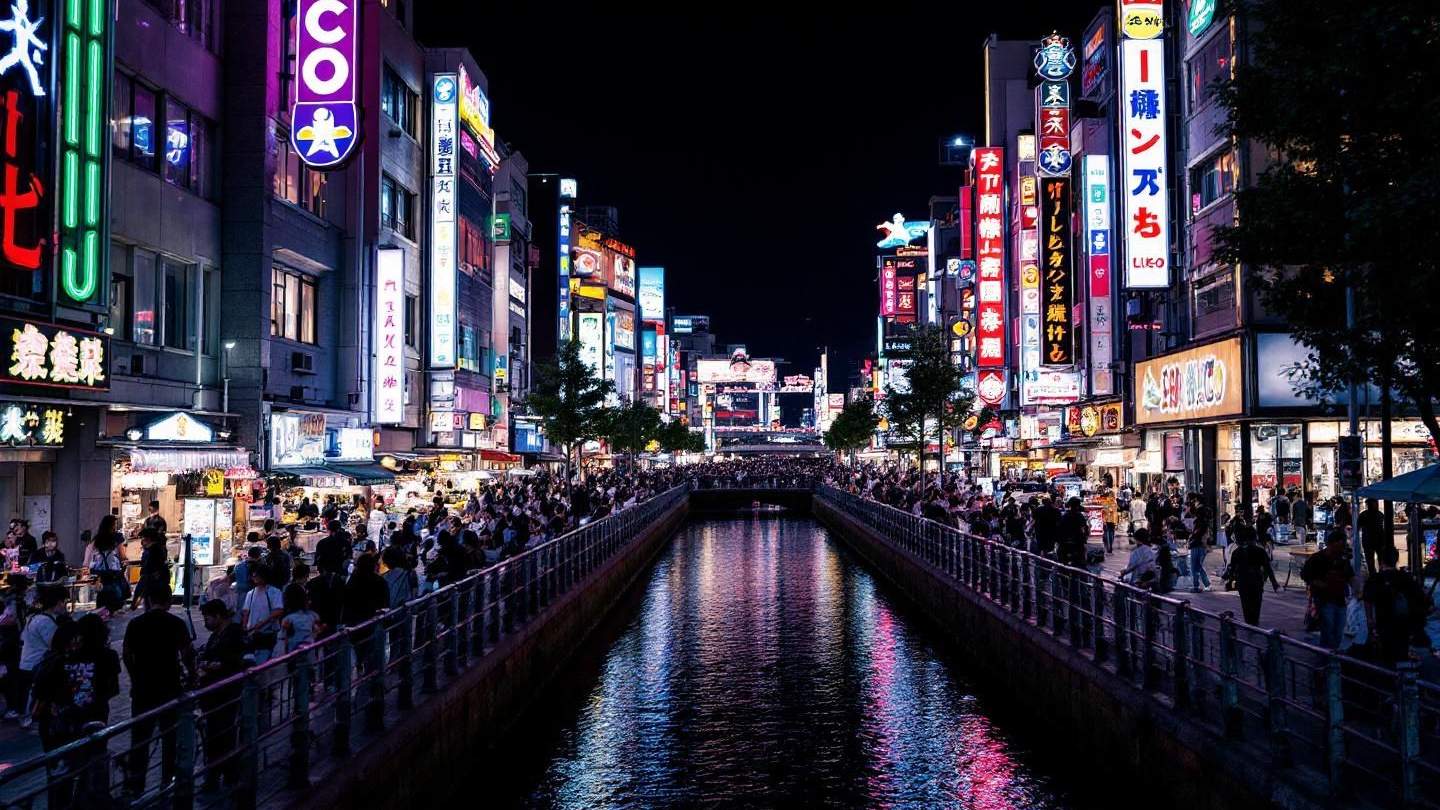
Dotonbori is the most concentrated street food area in western Japan. The canal-side promenade and the parallel arcade running south of the canal both have continuous vendor activity from around 10am until 1am or 2am. The density means you can cover takoyaki, kushikatsu, fresh seafood, ramen, and several other dishes within 400 meters without backtracking.
The quality range is wide — the most visible and tourist-facing stalls are not always the best. Walk the full length once to orient yourself, then return to the specific stalls and counters that caught your attention. The ones with queues of local-looking customers (not just confused tourists) are usually the better options.
Best hours: 11:30am–2pm for lunch crowds and fresh product; 7pm–10pm for full evening atmosphere with illuminations reflected in the canal.
Shinsekai
Shinsekai is where kushikatsu lives and the neighborhood’s street food culture is distinct from Dotonbori’s — older, less tourist-facing, with vendors and restaurants that serve the local community as much as visitors. The atmosphere is particularly distinctive: old-school advertising signs, retro aesthetics from the 1950s–70s, and an unpretentious character that increasingly stands out as the rest of the city modernizes.
Beyond kushikatsu, Shinsekai has excellent fugu restaurants, karaage stands, and traditional candy shops that sell hard candies and nostalgic sweets from glass jars. The combination of eating and walking through the retro visual landscape is one of the most enjoyable half-days in Osaka.
Best hours: 11:30am–3pm and 5pm–8pm. Many restaurants open for lunch and dinner but close in the mid-afternoon gap.
Kuromon Ichiba
Kuromon Market is a morning food experience above all. The 580-meter covered arcade is at its best between 8am and 11am when produce is freshest and the cooking stalls are in full operation. Walking through the market eating standing at various counters — oysters, wagyu skewers, tamagoyaki, fresh fruit, unagi — is the definitive Kuromon experience.
After 11am the market continues with good energy but the freshest product has usually gone. By 2pm many vendors begin to wind down.
Best hours: 8:00am–11:00am for freshest experience. 11am–2pm still good with lower crowds than weekends.
Amerikamura and Shinsaibashi Backstreets
The Shinsaibashi/Amerikamura area is Osaka’s youth culture district and its street food skews toward the younger end of the spectrum — crepes, fresh bubble tea, gyoza, Korean-influenced fried chicken, loaded fries, and various creative fusion snacks alongside more traditional options.
The area is most active from mid-afternoon through the evening. Festival food stalls appear in Triangle Park during events and the surrounding streets have persistent food carts through the weekend.
Self-Guided Street Food Walking Route
This route covers all the essentials in approximately 4 hours. Wear comfortable shoes and arrive hungry.
Start: Namba Station, south exit. Head toward Hozenji Yokocho.
1st stop: 551 Horai in Namba Walk underground (under Namba Station) — butaman pork bun (220 yen). Eat immediately, walking.
2nd stop: Kuromon Market (10-minute walk from Namba) — fresh oysters and wagyu skewer. Best done first if you start early; skip if arriving after 1pm.
3rd stop: Dotonbori arcade, Aizuya takoyaki — six pieces (600 yen). Walk the canal promenade while eating.
4th stop: Kushikatsu Daruma on Dotonbori for six skewers and the sauce education experience (around 900–1,200 yen with beer).
5th stop: Continue west through the arcade to a fresh seafood counter — a piece of grilled fish or fresh sashimi standing at the counter (400–600 yen).
6th stop: Ikayaki vendor in the Dotonbori/Namba side streets — whole squid on a stick (500–600 yen).
Transit: Take the Midosuji Line from Namba to Dobutsuen-mae (2 stops), then walk to Shinsekai.
7th stop: Kushikatsu at an original Shinsekai restaurant — sit down for 8–10 skewers with beer (2,000–2,500 yen).
8th stop: Taiyaki from a street stall near Tsutenkaku (200–300 yen). Walk the Shinsekai arcade.
End in Shinsekai, return to Namba by Midosuji Line.
Total spend: approximately 5,000–6,500 yen across all stops, not including drinks.
Street Food Etiquette
Eating while walking is more accepted in Osaka than in most Japanese cities, particularly in the food streets of Dotonbori and Shinsekai. Still, standing to eat at the vendor’s counter (and not blocking the queue) is the preferred approach.
No double-dipping at any kushikatsu restaurant. This is non-negotiable.
Dispose of waste properly. Dedicated waste bins appear outside many food stalls; if none is present, carry your packaging to the next bin. Japan’s streets are clean because its people treat them that way.
Point and gesture works. Japanese vendors in tourist areas understand pointing, counting fingers, and grateful nods. A basic “sumimasen” (excuse me) to get attention and “kore o kudasai” (this one please) covers most ordering situations. Many stalls in Dotonbori and Kuromon have picture menus.
Prices are fixed. Bargaining is not part of Japanese food culture and is not appropriate at stalls or restaurants.
Prices Summary
A full day of street food eating in Osaka — working through all the major categories across multiple stops — costs approximately 4,000–7,000 yen per person. This is far less than a single restaurant dinner and far more satisfying as an exploration of the city’s food culture. Add beer or drinks and budget 6,000–9,000 yen for a thorough, unhurried street food day.
The city rewards eating broadly and often rather than spending everything on a single elaborate meal. Osaka’s street food is its most democratic and genuine expression of kuidaore culture — available to everyone, produced with care, and requiring only hunger and a willingness to follow the smell of charcoal smoke through narrow streets. For guided tours of these food areas, see Osaka food tours.