Osaka Nightlife Guide
Last updated: August 2026
Osaka has long held a reputation as Japan’s most uninhibited city after dark. Where Tokyo nightlife can feel curated and self-conscious, Osaka operates with the same open, hospitable, slightly chaotic energy that defines the city during the day. The locals drink with commitment, eat late with enthusiasm, and generally treat strangers in a bar the way friends in Tokyo would treat close acquaintances. The result is a nightlife scene that is warm, accessible, and often excellent — even for travelers arriving without local connections or Japanese language ability.
This guide covers the essential districts, what to expect, how to navigate izakaya culture as a foreign visitor, and where to eat after midnight.
At a glance
| Where | Dotonbori, Namba, Shinsaibashi, Amerika-mura, Kitashinchi |
| Cost | Around 2,000–4,000 yen for a full izakaya evening; cover charges 1,500–3,000 yen at clubs |
| Time needed | A single evening covers one or two districts comfortably; nightlife peaks 8pm–midnight |
| Getting there | Namba Station for Dotonbori/Namba/Amerika-mura; Osaka Station area for Kitashinchi |
| Best time | Weekends for club energy; any night for izakayas and Hozenji Yokocho |
Dotonbori After Dark
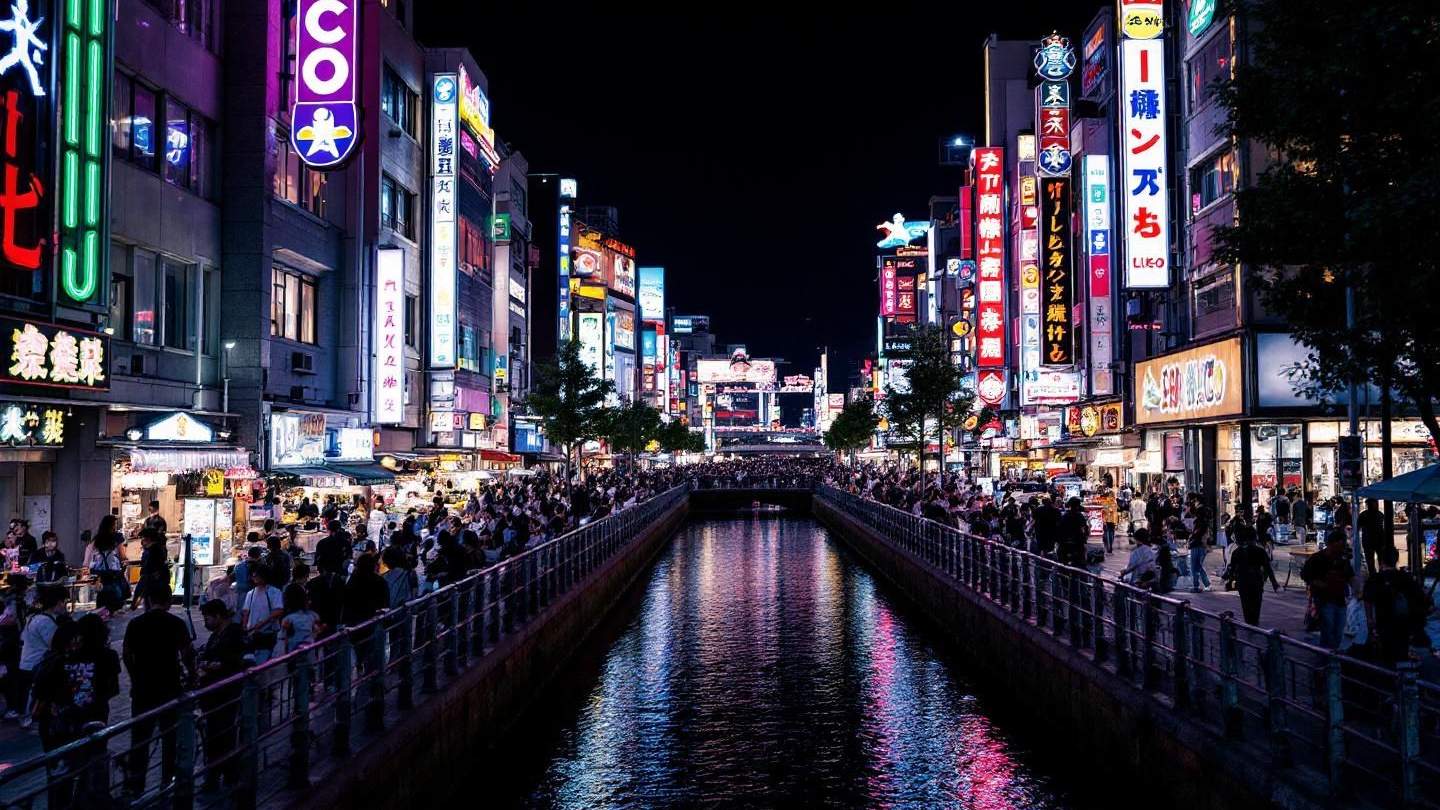
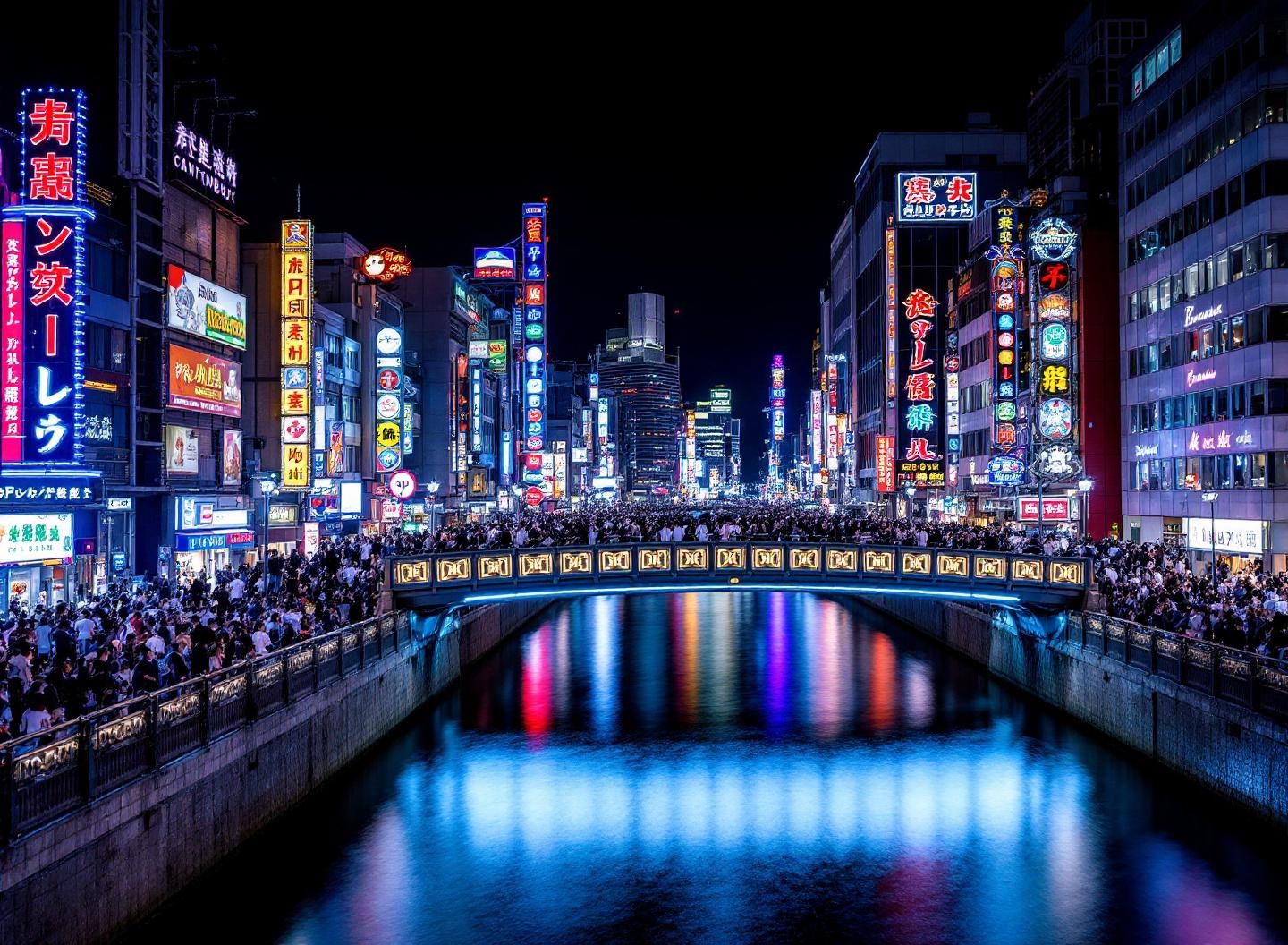
Dotonbori is the center of Osaka’s tourism and also, genuinely, the center of its entertainment culture. After dark, the canal district becomes something closer to a full-sensory experience: the mechanical Kani Doraku crab rotates above its restaurant entrance, the Glico Running Man illuminates the canal facade, and every surface carries neon, screen, or LED at maximum intensity. The canal water reflects all of it.
The riverside promenade (Tonbori River Walk) is the right place to start an evening. Walk the full length at the water level first, then climb back to the main Dotonbori arcade for food and drinks. The atmosphere peaks between 8pm and midnight, when the crowds are festive rather than chaotic and every restaurant and bar is operating at full power.
For drinking, the second-floor and above establishments on the main arcade offer a different experience from the street-level tourist operations below. Look for the staircases between the ground-floor restaurants — the izakayas and bars on upper floors tend to be smaller, cheaper, and more local in character.
Getting there: Namba Station (multiple lines). The canal entrance is a 5-minute walk from any Namba exit.
Dotonbori Evening Food Tour
A guided evening walk through Dotonbori and the Namba backstreets, including tastings of takoyaki, kushikatsu, and street food that most visitors never find. Small group, local guide, starts at 7pm.
Namba Bar District
The streets immediately east and north of Dotonbori — particularly Soemoncho and the blocks around Namba Parks — contain a dense concentration of bars ranging from standing-room shot bars to sit-down cocktail lounges. The area is navigated more by exploration than by specific addresses; wander the side streets off Midosuji Boulevard and Shinsaibashi-suji until something catches your attention.
Worthwhile categories to look for:
Standing bars (tachimomi): Osaka has a strong culture of standing-room-only drinking spots where glasses of beer or highballs cost 300–500 yen and the clientele is reliably local. Look for them in the narrow streets east of Dotonbori.
Whisky bars: Japanese whisky culture is strong in Osaka. Several specialist bars in the Namba area carry comprehensive selections of Nikka, Suntory, and regional craft whiskies alongside imported Scotch. A 30ml pour of standard Japanese whisky runs 800–1,500 yen; premium single casks run significantly higher.
Craft beer: The Osaka craft beer scene has expanded considerably since 2020. Minoh Beer (from the local Minoh Brewery) is the regional reference point — a full-bodied pale ale and a slightly sweet stout. Several craft beer bars in Namba carry Minoh drafts alongside rotating taps from other Kansai producers.
Shinsaibashi and Amerika-mura
Shinsaibashi, the shopping and entertainment district north of Namba, transforms after dark from a retail corridor into the densest concentration of clubs and music venues in western Japan. The heart of the action is Amerika-mura (American Village, commonly abbreviated to Amemura), a few blocks west of Shinsaibashi-suji arcade characterized by vintage fashion shops, street art, and a cluster of club venues around the small Triangle Park plaza.
Osaka’s club scene skews younger than Tokyo’s and tends to open earlier (events starting at 10pm or 11pm rather than midnight). Cover charges at mid-size venues run 1,500–3,000 yen including a drink ticket. The music range is wide: house and techno at the longer-established clubs, hip-hop and R&B at the newer Amerika-mura venues, jazz at smaller listening bars scattered through the side streets.
Notable venues (stable as of early 2026):
- Joule: Long-running house and techno club in the Shinsaibashi area; consistent quality booking
- Club Circus: Americana-influenced space in the Triangle Park area; hip-hop and pop events
- Muse: Multi-floor venue near Namba; accessible music policy, heavy international visitor traffic
- Anima: Smaller jazz and soul venue north of Shinsaibashi; seated, no cover, drinks from 600 yen
Hozenji Yokocho
Hozenji Yokocho is a short, narrow alley in the heart of Namba named after the small moss-covered temple at its center. Two rows of restaurants and bars — most of them small, old, and excellent — line the stone-paved passage, lit by lanterns and the warm light from open kitchen fronts. The atmosphere is the closest Osaka gets to the idealized Japanese entertainment alley of popular imagination.
The restaurants here are uniformly dinner-oriented — kappou (counter omakase) and kaiseki rather than izakaya — with prices ranging from 3,000 yen set menus to 15,000+ yen full courses. But the alley itself is free to walk through, and several of the establishments have small bar areas accessible for drinks alone.
Hozenji Yokocho is best visited between 7pm and 10pm, after dinner service is in full swing and before the late-night crowd thins it out.
Getting there: 5-minute walk east from the Dotonbori canal, behind the Shochikuza theater.
Izakaya Culture in Osaka
Izakayas (Japanese drinking-and-eating establishments, roughly equivalent to a gastropub) operate differently in Osaka than in Tokyo or Kyoto. The Osaka variety tends to be louder, more communal, and considerably more welcoming to strangers. It is entirely normal to begin a conversation with the people at the next table, have them insist on ordering for you, and end the evening as provisional friends.
The standard entry format: sit down, order a round of beers or highballs (Kakubin whisky and soda is the default Osaka ordering pattern), work through small plates from a laminated menu, order more drinks, order more food. The bill per person for a full evening of this typically runs 2,000–4,000 yen including drinks.
What to order:
- Takoyaki (octopus balls, 400–600 yen for six)
- Kushikatsu (breaded deep-fried skewers, 80–200 yen per skewer) — do not double-dip the shared sauce
- Negiyaki (green onion pancake; less famous than okonomiyaki but typically better)
- Takowasa (raw octopus in wasabi; pairs exceptionally well with cold beer)
- Edamame, pickled vegetables, karaage chicken — standard openers at any izakaya
Useful phrase: “Toriaezu nama de” (for now, draft beers, please) signals the correct Osaka attitude toward drink ordering.
Shinsekai at Night
Shinsekai is Osaka’s old working-class entertainment district, built in the early 20th century in imitation of New York and Paris and now preserved as a time capsule of that ambition. The centerpiece is the Tsutenkaku Tower, which glows in colored light after dark. The surrounding streets are packed with kushikatsu restaurants — Shinsekai is the original home of kushikatsu culture and the best place in the city to eat the real thing — alongside old-school pachinko parlors, retro candy shops, and bars unchanged since the 1970s.
Shinsekai has a reputation as rough, which is exaggerated. It is simply un-gentrified. Walk freely, eat at any of the kushikatsu restaurants along Janjan Yokocho alley, and take the 700-yen observation deck at Tsutenkaku for a view of the neon-lit streets below.
Getting there: Osaka Metro Sakaisuji Line to Ebisucho Station (2-minute walk).
Kitashinchi — Upscale Drinking
Kitashinchi, north of Osaka Station in the Kita (Umeda) area, is the upscale counterpart to Namba’s populist energy. The district is built around Osaka’s traditional water-trade nightlife culture — the formal bars, hostess clubs, and premium restaurants that cater to Osaka’s business establishment. For visitors, the interesting part is the surrounding streets: small whisky bars with excellent selections, craft cocktail lounges, and counter wine bars.
Kitashinchi is notably more expensive than Namba (cocktails 1,500–2,500 yen, bar snacks priced accordingly) but offers a markedly quieter and more refined atmosphere. The crowds here are business professionals rather than tourists.
Getting there: Walk 10 minutes north from Osaka Station, or take the Sakaisuji Line to Kitashinchi Station.
Karaoke in Osaka
Karaoke is central to Osaka social life and the private-room format (rather than a public stage) means it is accessible to non-Japanese speakers without embarrassment. Major chains like Joysound and Big Echo have locations throughout Namba and Shinsaibashi. Rates run approximately 400–700 yen per person per hour, plus drinks ordered from the in-room service system. The English-language song selection at Joysound is extensive and covers most Western popular music from the 1960s to the present.
The correct karaoke etiquette: sing your own songs, sing along on the chorus of everyone else’s, use the tambourines provided, and make sure everyone in the room gets a turn. Karaoke sessions typically run 2–3 hours.
Late-Night Food
Osaka’s eating culture extends well past midnight, and the late-night food options are among the best in Japan.
Ramen after midnight: Kinryu Ramen on Dotonbori (open until 5am, cash only, 800 yen for a bowl) and its slightly less famous neighbor Taiko Ramen are the standard late-night choices. The broth at Kinryu is rich tonkotsu-shoyu; you can add garlic and ginger from the condiment tray.
Takoyaki at 2am: Several Dotonbori takoyaki vendors operate until 3 or 4am on weekends. Fukutaro on the main arcade is the most consistent late-night option (open until 3am, 700 yen for eight balls with your choice of sauce).
Convenience store elevated: The Lawson, 7-Eleven, and FamilyMart branches around Namba operate 24 hours. The prepared food quality — onigiri, hot dogs from the rotating warmers, steamed nikuman buns — is genuinely good and costs under 500 yen for a substantial late snack.
Yoshinoya and Matsuya: The beef bowl chains are open 24 hours in central Osaka. A gyudon (beef rice bowl) at Yoshinoya is 468 yen and serves as reliable post-midnight ballast.
Practical Notes for Osaka Nightlife
Last trains: The Osaka Metro stops service between midnight and 12:30am depending on the line. Taxis are available throughout central Osaka after last trains; a ride within the Namba-Shinsaibashi-Dotonbori area costs 700–1,000 yen. Long taxi rides (to Osaka Station or beyond) run 1,500–2,500 yen.
Cash: Many smaller bars and izakayas in Osaka are cash-only. Carry at least 5,000–10,000 yen in cash for a full night out. 7-Eleven ATMs accept foreign cards 24 hours.
Dress code: There is no enforced dress code at the vast majority of Osaka venues, including clubs. Smart casual is appropriate everywhere. The exceptions are a handful of upscale Kitashinchi bars that may require long trousers.
Cover charges: Most izakayas charge a small otoshi fee (table snack charge, 300–500 yen per person) that appears automatically on your bill. This is standard practice, not a scam.
Solo Travelers and Going Alone
Osaka is one of the easier Japanese cities to drink alone in. Standing bars and counter-seat izakayas in Namba and Kitashinchi are built around solo and small-group drinkers rather than large tables, so a single traveler rarely feels out of place. The Osaka habit of talking to neighboring tables also works in a solo traveler’s favor — conversation starts more easily than in Tokyo. Women traveling alone generally find central Namba, Shinsaibashi, and Kitashinchi comfortable late into the evening; Shinsekai is safe but quieter and less lively after midnight, so it suits an earlier visit.
An IC card (Suica, Pasmo, or ICOCA — see our Suica and Pasmo guide for how to get one as a visitor) makes the whole night easier logistically: it covers subway fares, vending machines, and most convenience store purchases without needing cash on hand for every transaction, even if the bars themselves are cash-only.
Which District Fits Your Evening
Osaka’s nightlife districts are close together but distinct in character. Use this as a quick reference before picking a starting point:
| District | Vibe | Typical cost | Best for |
|---|---|---|---|
| Dotonbori | Loud, touristy, spectacular | 2,000–4,000 yen an evening | First-timers, photos, the classic Osaka scene |
| Namba bar district | Local, informal, standing bars | 300–1,500 yen a drink | Meeting locals, whisky and craft beer |
| Shinsaibashi / Amerika-mura | Young, club-oriented | 1,500–3,000 yen cover | Music, dancing, a later start |
| Kitashinchi | Upscale, quiet, business crowd | 1,500–2,500 yen a cocktail | A refined, less touristy evening |
Most visitors do best starting in Dotonbori for the atmosphere, then moving one district over — Namba’s standing bars or Amerika-mura’s clubs — once the crowds there thin out after 10pm.
How Osaka Nightlife Compares to Tokyo
Travelers splitting a trip between the two cities often ask which has better nightlife. Osaka wins on approachability, price, and izakaya warmth — a night out costs noticeably less than the equivalent evening in Shibuya or Shinjuku, and strangers are more likely to include you at their table. Tokyo wins on sheer scale and specialization: deeper cocktail bar culture, more niche music venues, and districts that stay busy every night of the week rather than peaking on weekends.
See our Tokyo nightlife guide if you are weighing the two directly, or read Kyoto vs Tokyo for the wider Kansai-versus-Kanto picture. If you are combining an Osaka night out with a Kansai base, our where to stay in Osaka guide covers which neighborhoods put you closest to Dotonbori and Kitashinchi.
Frequently asked questions
Is Osaka nightlife safe for tourists?
Yes. Osaka has a very low violent crime rate and the main nightlife districts (Namba, Shinsaibashi, Kitashinchi) are heavily trafficked and well-lit well past midnight. The usual precautions apply — watch your drink, agree on prices before entering a bar with no visible menu, and avoid touts who approach you on the street offering “all you can drink” deals, which are occasionally used to overcharge tourists.
What is the difference between Osaka and Tokyo nightlife?
Osaka’s scene is more informal, louder, and more welcoming to strangers striking up conversation, with an izakaya culture that feels closer to a shared communal event than Tokyo’s more curated bars. See our Osaka things to do guide for how that same open character shows up in the city during the day.
See our Osaka street food guide for daytime eating, and our full Osaka things to do guide for broader planning.
More tours on Viator
Top-rated experiences with verified reviews, bookable on Viator (a Tripadvisor company).
 Viator
Samurai Training Experience KENDO in Osaka
FromUSD 126Check availability → Viator
Osaka Sake Tasting & Takoyaki Cooking Experience
FromUSD 70Check availability → Viator
Private Osaka Tour from Your Hotel with Local Guide
FromUSD 108Check availability → Viator
Ramen Cooking Class in Osaka Dotonbori with Sushi or Gyoza Option
FromUSD 69Check availability → Viator
Kimono experience and Japanese home-cooking lesson Osaka Umeda
FromUSD 77Check availability → Viator