Japan Festivals Calendar 2026
Last updated: August 2026
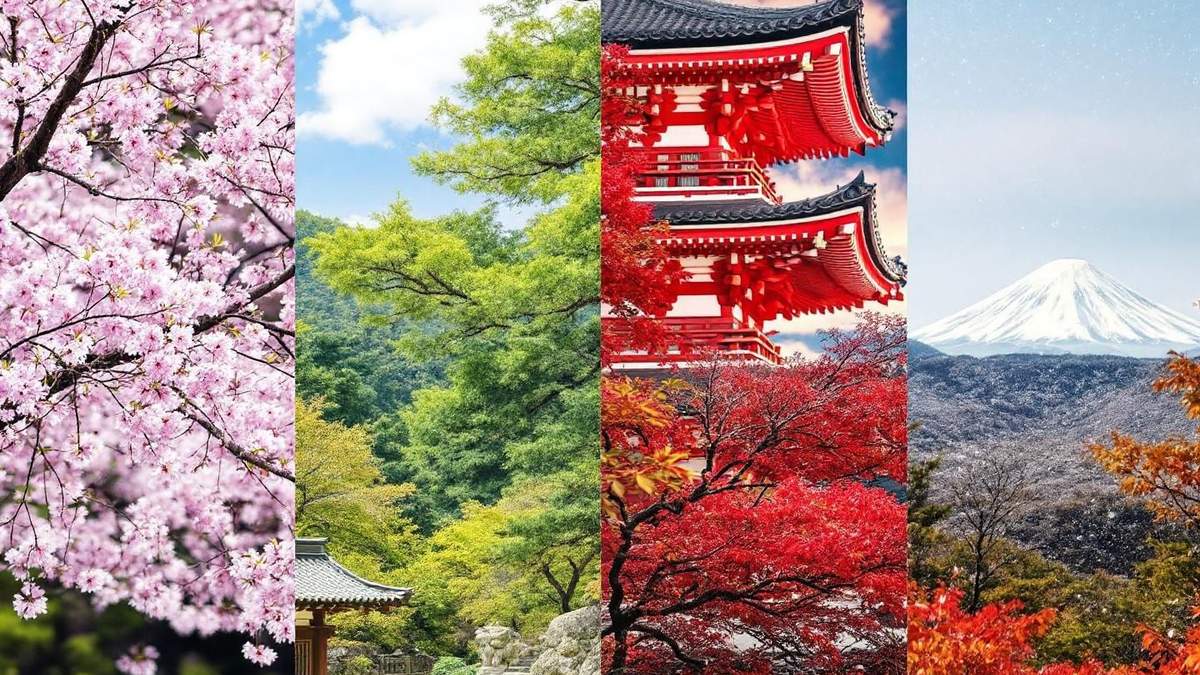
Japan’s festival calendar is one of the densest in the world. There are over 300,000 registered matsuri across the country — local shrine festivals, national spectacles, seasonal rituals that have run for centuries, and modern illumination events that draw millions of visitors. This calendar covers the events that genuinely shape travel decisions: the ones worth building an itinerary around or booking accommodation months in advance to attend.
Dates for recurring festivals are listed as confirmed or estimated for 2026. For events tied to lunar or agricultural calendars, dates shift each year — verify closer to your travel date.
| At a glance | |
|---|---|
| Biggest single windows | Cherry blossom (late Mar–early Apr) and autumn foliage (Nov) — book 3–6 months ahead |
| Cost impact | Peak festival weeks can push accommodation prices 30–80% above off-peak rates |
| Booking lead time | 1–2 weeks for most local matsuri; 3–6 months for Gion Matsuri, Takayama festivals, sakura/koyo ryokan |
| Getting around | Reserve shinkansen seats as soon as the JR booking window opens (1 month ahead) for Golden Week, O-bon, Gion Matsuri |
| Best low-key window | Early December or post-Golden Week (mid-May to mid-June) for festival atmosphere without peak pricing |
January
Key dates:
- January 1–3: New Year (Shogatsu) — Japan’s most important national holiday
- January 12: Coming of Age Day (Seijin no Hi) — national holiday
- January 12–26: Grand Sumo Tournament, Ryogoku Kokugikan, Tokyo (Hatsu Basho)
New Year and Hatsumode
The first shrine or temple visit of the New Year (hatsumode) is taken by the majority of the Japanese population within the first three days of January. Major shrines — Meiji Shrine in Tokyo, Naritasan Shinshoji in Chiba, Naritasan Osaka Fudoson — draw millions of visitors in this window. The atmosphere is extraordinary: night visits, incense smoke, crowds pressing forward past food stalls selling amazake (warm sweet sake) and yakitori, the sound of bells.
Arrive after 2am on New Year’s Day for the shortest queues at major shrines, or visit a smaller neighborhood shrine instead — the atmosphere at local shrines is intimate and unhurried.
January 1–3 sees significant price surges for accommodation and transport. From January 4th onward, Japan is quiet and affordable — one of the best windows for budget travel.
Coming of Age Day
The second Monday of January is a national holiday celebrating those who turned 20 (the age of adulthood) in the past year. Young women wear elaborate furisode kimono; young men often wear traditional hakama. The visual spectacle at shrines and city halls is remarkable — excellent for street photography.
Grand Sumo Tournament (Hatsu Basho)
Tokyo’s Ryogoku Kokugikan hosts the first of the year’s six grand tournaments across 15 days. Sumo tickets sell out fast for prime ring-side seats, but upper-tier general admission tickets are available on the day. The atmosphere — salt throwing, referee costumes, the ritual weight and ceremony of each match — makes this one of Japan’s most distinctive live sporting experiences.
Practical tips: Book New Year accommodation 3–4 months ahead. January temperatures in Tokyo run 3–10°C — dress warmly. This is Japan’s quietest month for international tourism once the New Year holiday ends.
February
Key dates:
- February 3: Setsubun
- February 5–15 (estimated): Sapporo Snow Festival (Yuki Matsuri)
- Late February: Plum blossom (ume) viewing begins in warmer regions
Setsubun
February 3rd is Setsubun, the traditional start of spring in the old Japanese calendar. The main ritual is mamemaki — throwing roasted soybeans while shouting “Oni wa soto! Fuku wa uchi!” (Demons out! Good luck in!). Major temples across Japan stage public mamemaki ceremonies where celebrities, sumo wrestlers, and monks throw beans into crowds. Naritasan Shinshoji (Chiba), Nishiarai Daishi (Tokyo), Yoshida Shrine (Kyoto), and Heian Shrine (Kyoto) are among the most celebrated venues.
Sapporo Snow Festival
One of Asia’s great winter spectacles, the Sapporo Snow Festival fills Odori Park and the Susukino entertainment district with enormous snow and ice sculptures — some reaching 25 meters in height, many depicting famous world monuments, anime characters, or Japanese cultural icons. The event runs for about 10 days in early February and draws roughly 2 million visitors.
Book Hokkaido accommodation for this period 3 months in advance. Sapporo temperatures during the festival hover around -3 to -8°C; snow gear is essential.
Plum Blossom (Ume)
Plum blossoms are the quieter, less-crowded precursor to cherry blossom season. They begin blooming in warmer parts of Japan in late February — Atami (Shizuoka) usually peaks in mid-to-late February, Kitanomaru Park in Tokyo in late February, and Korakuen garden in Okayama in late February to early March. Ume flowers are smaller than sakura, often intensely fragrant, and white to deep pink.
Practical tips: February is Japan’s coldest month and one of the cheapest for flights and accommodation (outside Sapporo during the Snow Festival). Excellent for budget travelers and photographers.
March
Key dates:
- March 3: Hina Matsuri (Girls’ Day / Doll Festival)
- Mid-to-late March: Cherry blossoms begin in Kyushu and western Honshu
- Mid-March: Omizutori (Water-Drawing Ceremony), Todai-ji, Nara
Hina Matsuri
The third day of the third month is Girls’ Day — families with daughters display elaborate tiered sets of ornamental dolls (hina ningyo) representing the imperial court. Not a public festival in the Western sense, but a domestic occasion that fills shops with pink and white wagashi (sweets) and makes city decoration notably more elaborate. Katsuura in Chiba Prefecture displays thousands of dolls in public spaces during early March.
Omizutori, Nara (March 1–14)
One of Japan’s oldest unbroken rituals, performed at Todai-ji’s Nigatsudo Hall every year since 752 AD without interruption. Priests carry enormous burning torches along the hall’s veranda, scattering embers over the crowds below (catching embers is said to bring good luck). The main torch ceremony takes place on the nights of March 12–13 and is one of the most atmospheric events in the Japanese religious calendar.
Cherry Blossoms Begin
Cherry blossoms open first in Kyushu. Fukuoka’s Maizuru Park and Ohori Park typically see first bloom in mid-March. Hiroshima and Osaka follow in the third week of March. Tokyo first bloom usually falls in the final week of March, depending on winter temperatures.
Practical tips: Hotel prices surge from mid-March through April. Book accommodation for late March in Tokyo and Kyoto by January at the latest — preferably in November or December for popular ryokan.
April
Key dates:
- Late March to early April: Cherry blossom peak in Tokyo
- Early-to-mid April: Cherry blossom peak in Kyoto
- April 14–15: Takayama Spring Festival (Sanno Matsuri)
- Late April to early May: Golden Week begins
Cherry Blossom Peak
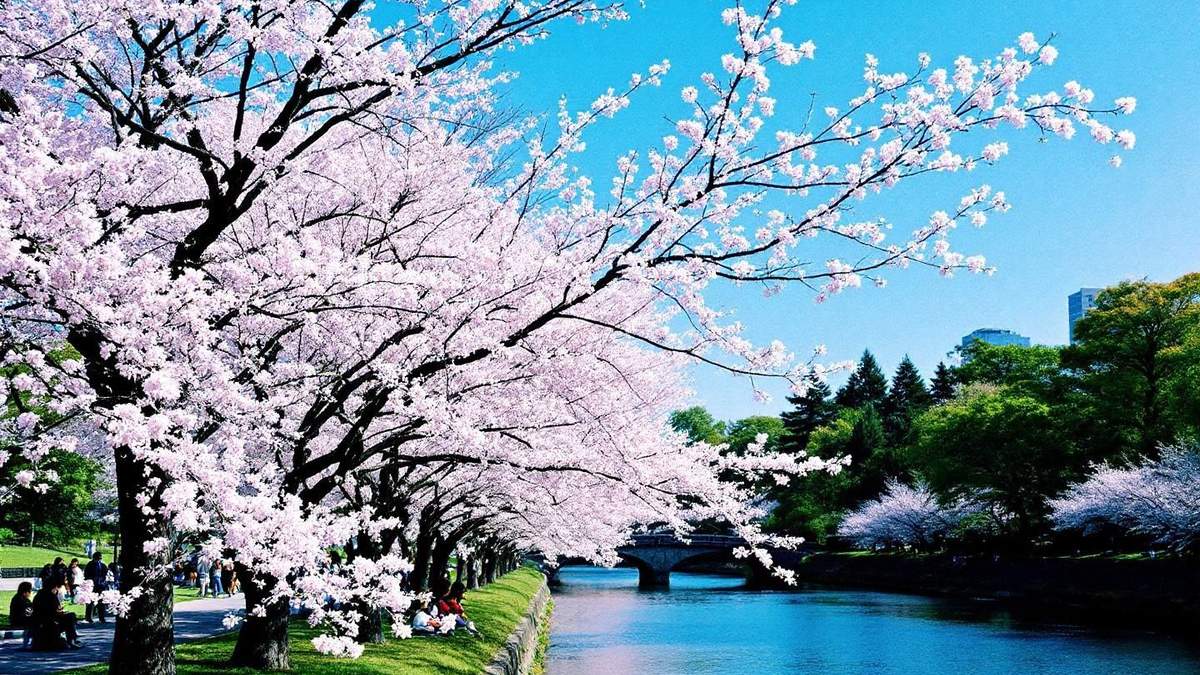
April is the centerpiece of the Japanese spring calendar. Tokyo typically peaks late March to early April; Kyoto a few days later; Hiroshima and Osaka around the same time as Tokyo. Yoshino Mountain in Nara Prefecture — with 30,000 cherry trees covering multiple elevations — peaks in early to mid-April and is regarded as one of Japan’s supreme sakura experiences.
Key spots: Shinjuku Gyoen, Chidorigafuchi, Ueno Park (Tokyo); Maruyama Park, Philosopher’s Path (Kyoto); Hirosaki Castle (Aomori, late April); Takato Castle Park (Nagano, early April). See the cherry blossom guide for precise location details and bloom-date forecasting.
Takayama Spring Festival (Sanno Matsuri)
April 14–15 in the mountain town of Takayama, this is consistently ranked among Japan’s three most beautiful festivals. Twelve elaborately decorated yatai (floats) are paraded through the streets; at night, the floats are lit with lanterns. Mechanical karakuri puppets perform on some of the floats. The setting — a preserved Edo-period townscape — makes this unlike any festival in an urban setting.
Book Takayama accommodation months in advance. Day-trip buses from Nagoya and Osaka fill quickly.
Golden Week Begins
The final days of April mark the start of the Golden Week cluster of national holidays, Japan’s longest holiday period and the busiest domestic travel window of the year.
Practical tips: Late March through Golden Week is Japan’s single most expensive and crowded travel period. First-timers wanting cherry blossoms should book everything 4–6 months in advance.
May
Key dates:
- April 29 to May 5: Golden Week (national holidays)
- May 9–10 (estimated): Kanda Matsuri, Tokyo (odd-numbered years)
- May 11–17: Grand Sumo Tournament, Ryogoku Kokugikan, Tokyo (Natsu Basho)
Golden Week
April 29 (Showa Day), May 3 (Constitution Day), May 4 (Greenery Day), and May 5 (Children’s Day) create a continuous run of national holidays. Domestic transport and popular resort towns reach maximum capacity. Shinkansen seat reservations are essential — book as early as JR systems allow (1 month ahead). Tokyo Disneyland, Universal Studios Japan in Osaka, and popular shrine towns can have 2–3 hour queues for entry.
Kanda Matsuri, Tokyo (Odd-Numbered Years)
In odd-numbered years (2027 next), Kanda Myojin Shrine in Akihabara stages one of Tokyo’s three great festivals. Over 200 mikoshi (portable shrines) and elaborate dashi floats process through the Kanda, Nihonbashi, and Akihabara neighborhoods in mid-May. The main parade day draws several hundred thousand spectators.
Post-Golden Week: Japan’s Secret Window
From approximately May 10th to June 10th, Japan offers some of the best travel conditions of the year: pleasant temperatures (18–24°C in Tokyo), fresh green foliage (shinryoku), dramatically reduced crowds after Golden Week, and prices returning to normal. This is arguably the most underrated window in the Japan travel calendar.
Practical tips: If you can avoid Golden Week entirely, mid-to-late May is excellent. If Golden Week is unavoidable, book all accommodation and train seats months ahead.
June
Key dates:
- Early-to-mid June: Rainy season (tsuyu) begins across Honshu
- Throughout June: Hydrangea (ajisai) viewing
- June: Firefly (hotaru) viewing begins in rural areas
Rainy Season and Hydrangeas
The rainy season arrives in southern Kyushu in late May and reaches Tokyo and Kyoto in early-to-mid June. It is not constant rain but a period of elevated humidity, frequent overcast skies, and intermittent showers. Hokkaido largely escapes tsuyu.
The most beautiful side effect of the rainy season is the hydrangea bloom. Ajisai gardens across Japan reach peak color in June — Kamakura’s Meigetsuin temple (the “Hydrangea Temple”) is the most famous, its paths lined with blue and purple flowers in misty conditions that are ideal for photography. Hasedera temple in Kamakura, Hakusan Shrine in Tokyo, and Yanagidani Kannon in Kyoto are other excellent spots.
Firefly Viewing
From mid-June through early July, fireflies emerge in rural river valleys across Japan. The Uji River near Kyoto, Minoo Park in Osaka, and various locations in the Japanese Alps offer evening firefly viewing. These events are atmospheric, uncrowded, and genuinely magical — one of Japan’s most underappreciated seasonal experiences.
Practical tips: Carry a compact umbrella at all times during June. Book indoor activities (museums, cooking classes, sake tasting) as rain alternatives. June prices are substantially lower than spring peak.
July
Key dates:
- July 1: Mount Fuji official climbing season opens
- July 7: Tanabata (Star Festival)
- July 1–31: Gion Matsuri, Kyoto (main parades July 17 and 24)
- July 24–25: Tenjin Matsuri, Osaka
- Late July: Sumida River Fireworks, Tokyo
Gion Matsuri, Kyoto
Japan’s most famous festival runs the entire month of July at Yasaka Shrine. The Yamaboko Junko — the grand parade of 32 elaborately decorated floats, some over 25 meters tall and weighing several tonnes — takes place on July 17th (Sakimatsuri) and July 24th (Atomatsuri). The floats are assembled over the preceding week without a single nail, using only rope binding in a technique unchanged since the 9th century. The evenings of July 14–16 (Yoiyama) see the central streets of Kyoto closed to traffic and the float neighborhoods become outdoor festivals.
Kyoto accommodation during Gion Matsuri sells out months ahead. Book as soon as reservations open.
Tanabata
Based on the legend of two stars (Vega and Altair) meeting once a year across the Milky Way, Tanabata is celebrated across Japan on July 7th (some regions celebrate it on August 7th by the old calendar). Communities decorate bamboo branches with colorful streamers and paper wishes. Sendai holds Japan’s largest Tanabata festival in early August; Hiratsuka (Kanagawa) hosts one of the largest July celebrations.
Tenjin Matsuri, Osaka
One of Japan’s three great festivals, Tenjin Matsuri at Osaka Tenmangu Shrine on July 24–25 climaxes with a river procession of boats carrying portable shrines, accompanied by fireworks. The combination of water, fire, and the long summer dusk makes this visually spectacular.
Fireworks Season
Major fireworks festivals (hanabi taikai) begin in late July and run through August. The Sumida River Fireworks in Tokyo (last Saturday of July) launches 20,000 fireworks from two sites simultaneously over the Sumida River — one of Japan’s largest displays. Arrive 2–3 hours early to secure viewing space along the river.
Practical tips: July in Kyoto and Osaka is extremely hot — regularly 35°C with high humidity. Carry water, wear light clothing, and plan indoor time during midday.
August
Key dates:
- August 2–7: Nebuta Matsuri, Aomori
- August 5–7: Hanagasa Matsuri, Yamagata
- August 6: Peace Memorial Ceremony, Hiroshima
- August 12–15: Awa Odori, Tokushima
- August 12–16: O-bon holiday
- Throughout August: Bon Odori dances nationwide
O-bon
The mid-August O-bon period is Japan’s ancestral memorial season. Families return to their hometowns to visit graves and welcome the spirits of ancestors. Bon Odori folk dances are performed in neighborhoods, temple grounds, and parks across the country. The dances are participatory — anyone can join the circle around the central tower, following simple repetitive steps.
August 15th sees the most concentrated ceremonies: lantern-floating (toro nagashi) rituals, where paper lanterns carrying messages to the dead are released onto rivers and seas, are held at hundreds of locations including Hiroshima’s Peace Park.
Hiroshima Peace Memorial Ceremony
August 6th marks the anniversary of the atomic bombing of Hiroshima. The Peace Memorial Ceremony at Hiroshima Peace Memorial Park, beginning at 8:15am, is a solemn and moving public event attended by city and national officials, survivors (hibakusha), and thousands of members of the public. Visiting Hiroshima in early August carries particular significance for many travelers.
Tohoku Festivals
The Tohoku region stages Japan’s most spectacular August festivals:
- Nebuta Matsuri, Aomori (Aug 2–7): Enormous illuminated papier-mache figures mounted on wheeled platforms are pulled through the streets at night by thousands of performers dancing to taiko drums. One of the most visually dramatic events in Japan.
- Sendai Tanabata Matsuri (Aug 6–8): Japan’s largest Tanabata festival, with millions of streamers transforming the city’s covered shopping arcades.
Awa Odori, Tokushima
Japan’s most exuberant dance festival, running August 12–15 on the island of Shikoku. Over 100,000 performers and 1.3 million spectators participate in this mass dance festival dating to 1587. The dance is simple enough for visitors to join — look for the “fool’s dance” (aho odori) where tourists are actively invited to participate.
Practical tips: O-bon (August 12–16) triggers Japan’s second-largest domestic travel surge after Golden Week. Shinkansen reservations fill within minutes of opening. Book everything months ahead if your trip overlaps with this period.
September
Key dates:
- September: Typhoon season peak
- September 14–27: Grand Sumo Tournament, Ryogoku Kokugikan, Tokyo (Aki Basho)
- Mid-to-late September: Moon viewing (Tsukimi) around the harvest moon
- Late September: Autumn foliage begins in Hokkaido
Sumo Tournament (Aki Basho)
The September sumo tournament is one of three held in Tokyo each year and draws a devoted crowd. September is a less busy tourist month than spring or summer, making it easier to buy general-admission day tickets at the venue.
Tsukimi — Moon Viewing
The harvest moon (jugoya) falls on the 15th day of the 8th month of the traditional lunar calendar — typically in September or early October. Moon viewing parties (tsukimi) are held at shrines, temples, and private homes. Offerings of tsukimi dango (round rice dumplings) and seasonal vegetables are placed outside. The tradition is quieter than a major festival but deeply embedded in Japanese cultural life.
Typhoon Awareness
September is statistically the most active month for typhoons affecting Japan. Most track from the south and move northeast, affecting Kyushu, Kansai, and central Honshu most severely. Transport disruptions — shinkansen suspensions, flight cancellations — typically last 24–48 hours and then fully recover. Have flexible booking terms or travel insurance if visiting this month.
Autumn Begins in Hokkaido
Hokkaido’s Daisetsuzan National Park and other highland areas begin showing autumn colors in late September — well ahead of anywhere else in Japan. The combination of uncrowded trails, vivid colors, and cool temperatures makes late-September Hokkaido one of Japan’s best-kept seasonal secrets.
Practical tips: Late September is increasingly excellent as temperatures drop from summer highs. Prices are moderate and crowds are manageable outside of the sumo tournament vicinity.
October
Key dates:
- October 9–10: Takayama Autumn Festival (Hachiman Matsuri)
- October 22: Jidai Matsuri, Kyoto
- October 22: Kurama Fire Festival, near Kyoto
- Early October: Peak autumn foliage, Hokkaido and northern Tohoku
Takayama Autumn Festival (Hachiman Matsuri)
The autumn counterpart to the spring Sanno Matsuri uses the same elaborately decorated yatai floats in the same Edo-period streetscape. Because the autumn festival takes place in October rather than April, it is not combined with cherry blossom season — slightly easier for accommodation, though still sells out quickly.
Jidai Matsuri, Kyoto
The Festival of the Ages, held October 22nd at Heian Shrine, is a 2km historical costume parade stretching 2,000 years of Japanese history. Over 2,000 participants in historically accurate period costume — representing figures from different eras of Japanese history — process from the Imperial Palace to Heian Shrine. The attention to historical detail is extraordinary.
Kurama Fire Festival
The same night as Jidai Matsuri, October 22nd, the mountain village of Kurama north of Kyoto stages one of Japan’s most atmospheric small festivals. The entire hillside is lit with fire: pine torches, bonfires, and the procession of increasingly large fire bearers moving up toward Yuki Shrine. Limited in capacity and not set up for mass tourism — arrive early by Eizan Railway.
Autumn Foliage Calendar
Hokkaido (Daisetsuzan, Shiretoko): early-to-mid October. Nikko, Tohoku: mid-to-late October. Tokyo (Shinjuku Gyoen, Rikugien): November. Kyoto: late November.
Practical tips: October is widely considered Japan’s best all-around travel month — mild weather (18–22°C in Tokyo), clear skies, manageable crowds in most areas, and stunning foliage beginning in the north. Book this period with 2–3 months’ advance notice.
November
Key dates:
- November 15: Shichi-go-san
- Mid-to-late November: Peak autumn foliage, Kyoto
- November: Special autumn illuminations at major Kyoto temples
Shichi-go-san
November 15th (or the nearest weekend) is Shichi-go-san — a Shinto rite of passage for children aged 3, 5, and 7 (the name means “seven-five-three”). Families visit shrines to give thanks for their children’s health. Children are dressed in formal kimono or traditional hakama and their photographs taken at shrines. Major shrines such as Meiji Shrine and Hie Shrine in Tokyo, and Kitano Tenmangu in Kyoto, see hundreds of families. For photography enthusiasts, this is one of the most rewarding days in the Japanese family calendar.
Kyoto Autumn Foliage Peak
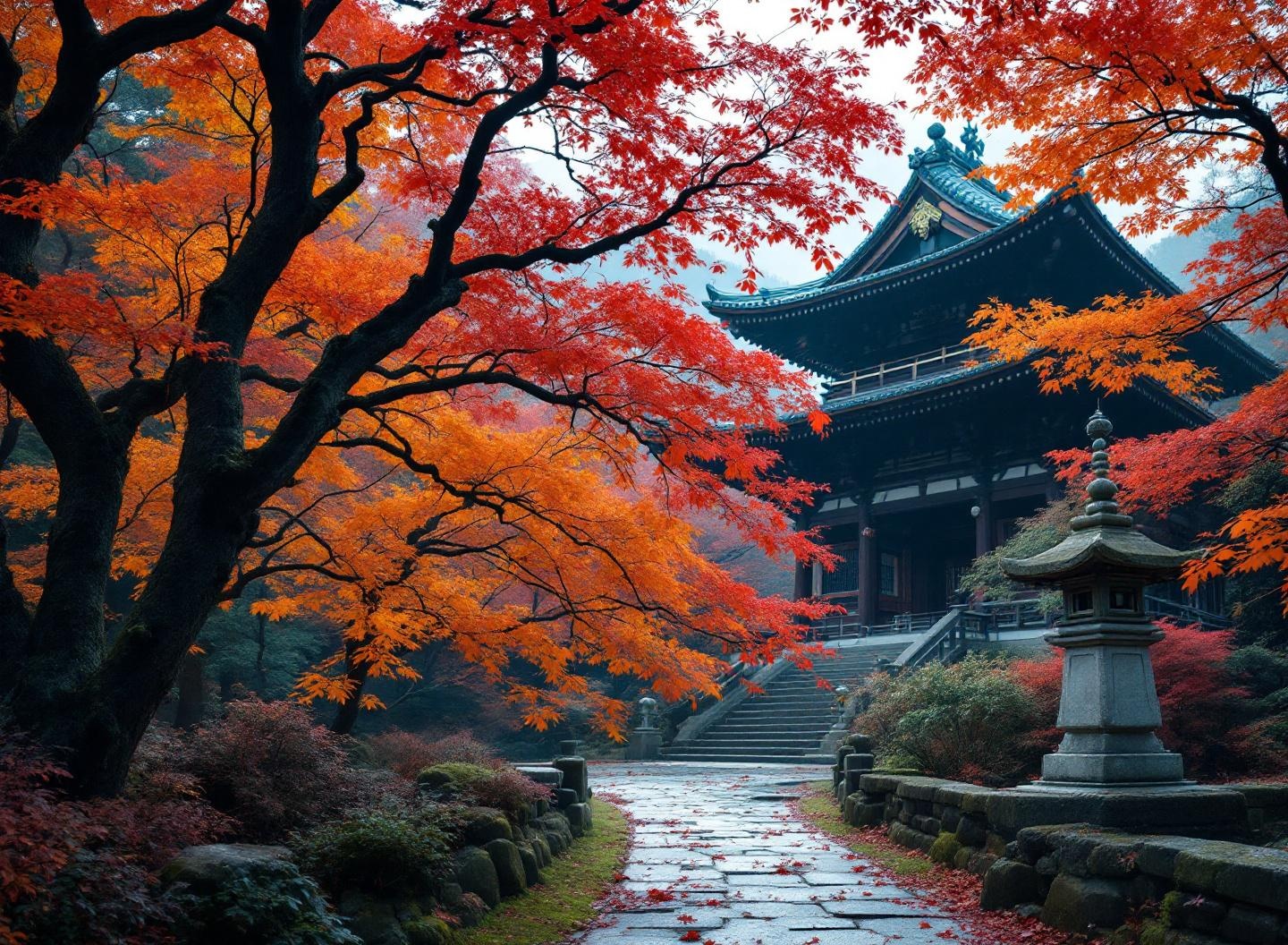
Kyoto’s autumn foliage typically peaks in the third to fourth week of November, though this shifts year to year with temperatures. The enclosed mountain-backed geography that makes Kyoto’s summers punishing also makes its autumns exceptional — the colorful maples are held longer than in more exposed locations, and the contrast between crimson foliage and grey stone temple walls, moss gardens, and wooden architecture is genuinely unlike anywhere else.
Prime locations: Tofuku-ji (famous for maple carpets across the stone bridges), Eikan-do (illuminated evening sessions), Kiyomizu-dera, Arashiyama, Fushimi Inari at dusk. Book accommodation for late November in Kyoto 3–4 months in advance — this is arguably the most heavily booked period in the Japanese travel calendar.
Special Temple Illuminations
Many of Kyoto’s major temples (Kodai-ji, Kiyomizu-dera, Tenryu-ji, Nijo Castle) stage special evening light-up sessions during peak foliage weeks. Tickets must be bought in advance; many sell out. The night illuminations combine colored lights, fog machines, and the natural foliage in theatrical compositions that differ completely from daytime visits to the same temples.
Practical tips: November in Kyoto is as crowded and as expensive as April sakura season. Book everything far in advance. Tokyo is less affected and offers excellent foliage at Shinjuku Gyoen and Rikugien at more manageable crowd levels.
December
Key dates:
- Throughout December: Winter illuminations (fuyu no illumination) nationwide
- December 2–3: Chichibu Night Festival (Yomatsuri)
- December 31: New Year’s Eve temple bells (joya no kane)
- December 28 to January 3: New Year holiday period
Winter Illuminations
Japan’s winter illuminations are among the world’s most elaborate. Unlike the single-tree Christmas light displays common in Europe, Japanese winter illuminations cover entire hillsides, parks, and urban districts with millions of individually programmed LED lights.
Top venues: Nabana no Sato (Mie Prefecture) — Japan’s most spectacular, with a 200-meter illuminated tunnel; Ashikaga Flower Park (Tochigi) — over 4 million lights; Sagamiko Illumillion (Kanagawa) — one of Japan’s largest by quantity of lights; Roppongi Hills and Marunouchi (Tokyo) for urban displays; Kobe Luminarie (usually December).
Chichibu Night Festival
December 2–3 in Chichibu, Saitama Prefecture. One of Japan’s three great float festivals, held at night in winter — the combination of snow-dusted mountains, festival floats lit with lanterns, and fireworks creates an exceptionally atmospheric event. Accessible by Seibu Railway from Ikebukuro in Tokyo (approximately 90 minutes).
New Year’s Eve
December 31st, the 108 tolls of the temple bell (joya no kane) are rung at Buddhist temples across Japan beginning just before midnight, symbolizing the elimination of 108 earthly desires. Major temples such as Chion-in in Kyoto and Zojo-ji in Tokyo (with Tokyo Tower illuminated behind) draw large crowds for the midnight ceremony. A deeply moving way to mark the transition to the new year.
Practical tips: Early December (before the 20th) is one of Japan’s quietest and cheapest periods. December 28th onward sees prices spike dramatically for the New Year holiday. Illuminations run throughout December and often into mid-January.
Planning Around Festivals
Book early for cherry blossom and autumn foliage: These are the two periods where demand systematically outstrips supply across all price ranges. A 3-month advance booking window is the minimum; 6 months is safer for popular ryokan during peak sakura or koyo weeks.
Golden Week and O-bon mean domestic crowds: These are Japanese domestic travel peaks. International visitors add to the pressure but do not cause it. Book shinkansen seats as soon as the JR reservation window opens (1 month before travel date) and expect popular attractions to have queues.
Off-peak festival attendance: Many of Japan’s most spectacular festivals — Chichibu Night Festival, Takayama Spring and Autumn Festivals, Kurama Fire Festival — occur outside the two main peak seasons, meaning festival quality without peak-season pricing and crowds.
For a full itinerary built around seasonal highlights, see our 7-day, 10-day, and 14-day itinerary guides.
Building a Trip Around One Festival
If a single festival is the reason for your trip — Gion Matsuri, cherry blossoms, Takayama’s spring or autumn festival, Nebuta Matsuri — the most common mistake is treating the festival date as the centre of a short trip rather than building buffer days around it. Trains and hotels compress hardest on the exact festival dates; arriving 2–3 days early and leaving 1–2 days after gives you both the event and a realistic chance at reasonable prices for the rest of the stay. Pair a major festival city with a quieter base: travelers doing Gion Matsuri often sleep in Osaka for part of the week and day-trip in, since Kyoto hotel inventory disappears first.
For cherry blossom or autumn foliage trips specifically, see the dedicated cherry blossom guide and Japan in autumn guide for city-by-city bloom forecasting rather than relying on calendar averages alone, which can be off by a week or more in either direction.
Festival Etiquette for Visitors
Most matsuri welcome spectators warmly, but a few points of etiquette matter: do not touch or climb on mikoshi (portable shrines) or festival floats; ask before photographing performers up close, especially at smaller neighbourhood events; and at participatory dances like Awa Odori or Bon Odori, follow the lead of people already dancing rather than improvising in the front row. At solemn events — the Hiroshima Peace Memorial Ceremony above all — keep a respectful distance and volume; it is a memorial, not a spectacle.
Frequently asked questions
What is the single best month to visit Japan for festivals without extreme crowds? October is the strongest all-round choice — mild weather, the Takayama Autumn Festival, Jidai Matsuri, and Kurama Fire Festival all fall in the month, and neither cherry blossom nor peak autumn foliage pricing has kicked in yet.
Do I need tickets for most Japanese festivals? No — the vast majority of matsuri, including Gion Matsuri’s daytime float viewing and most Bon Odori dances, are free and open to the public. Paid tickets apply mainly to reserved parade seating, evening temple illuminations, and indoor events like sumo tournaments.
More tours on Viator
Top-rated experiences with verified reviews, bookable on Viator (a Tripadvisor company).
 Viator
Peaceful Hiroshima & Miyajima UNESCO 1 Day Bus Tour
FromUSD 124Check availability → Viator
World Heritage Shirakawa-go and Experience Tours from Kanazawa
FromUSD 118Check availability → Viator
World Heritage Kyoto & Nara Uji Authentic Matcha Experience
FromUSD 124Check availability → Viator
Nara Half Day Trip Walking Tour (Private Option Available)
FromUSD 101Check availability → Viator
Hiroshima Peace (Heiwa) Walking Tour at World Heritage Sites
FromUSD 91Check availability → Viator