Fukuoka Food Guide
Last updated: August 2026
No city in Japan takes eating more seriously than Fukuoka. This is the place that exported tonkotsu ramen to the world, runs outdoor yatai food stalls along the Nakagawa River until two in the morning, and treats food as a form of civic identity rather than a commercial transaction. For a city of approximately 1.6 million people, the concentration and quality of food culture here is extraordinary — Fukuoka consistently ranks among Japan’s top food cities in domestic surveys, and locals from Tokyo make overnight trips specifically to eat here. If you are visiting for any length of time, the food will be one of the dominant memories of the experience.
This guide covers every major category of Fukuoka cuisine: the definitive tonkotsu ramen you need to try and where to find it, the yatai stall tradition and how to approach it, mentaiko and the role it plays in the local diet, motsunabe and mizutaki as the two great Fukuoka hot pots, the Yanagibashi covered market, and the neighborhoods where Fukuoka’s best eating happens. Prices, locations, and practical guidance throughout.
| At a glance | |
|---|---|
| Where | Hakata, Tenjin, and Nakasu districts, plus the Yanagibashi Ichiba market near Hakata Station |
| Cost | Around ¥800–1,200 for a ramen bowl, ¥2,500–4,000 for a yatai meal, ¥2,500–8,000 for a hot pot course |
| Time needed | A focused food day covers ramen, yatai, and a market visit; two days allows for both hot pots as well |
| Getting there | Most of central Fukuoka’s food districts are walkable from Hakata Station or Tenjin Station |
| Best time | Yatai stalls run year-round from around 18:00–02:00; mizutaki and motsunabe are especially appealing in cooler months |
Hakata Tonkotsu Ramen
Fukuoka’s tonkotsu ramen — called Hakata ramen after the historic city district that is now part of greater Fukuoka — is one of the most distinctive regional noodle styles in Japan. The broth is milky white, intensely rich, and built entirely from pork bones simmered at a rolling boil for six to twelve hours until the collagen, gelatin, and marrow have fully emulsified into the cooking liquid. The result is a bowl that is simultaneously heavy and clean: the fat content is high, but the flavor is focused and there is no murkiness.
The noodles. Hakata ramen uses thin, straight noodles with low hydration — the dough is firmer, which means the noodles cook fast and hold their texture without turning soft in the hot broth. This firmness is why Fukuoka ramen shops offer the option of noodle hardness: kata (firm), futsu (standard), yawarakai (soft), or harigane (extremely firm, almost crunchy). First-time visitors should order kata, which is close to the kitchen’s preferred eating state. If you finish the noodles before the broth, kaedama — a fresh portion of noodles added to your remaining broth for a nominal charge — is the standard practice.
The toppings. Standard Hakata ramen is deliberately minimal: a slice or two of chashu pork, menma bamboo shoots, green onion, and a sheet of nori. The restraint is intentional — the broth is the point, and excess toppings would distract from it. Some shops add a soft-boiled egg or sesame seeds. The table at most ramen shops carries condiments for self-adjustment: sesame seeds, pickled ginger (beni shoga), crushed garlic, and spicy karashi high miso paste. Add these incrementally rather than all at once.
Ichiran. Ichiran is Fukuoka’s ramen export to the world, and its flagship shop near Nakasu is where the brand began. The solo-eating booths, the flavor questionnaire, the focused ordering process — these are not Tokyo innovations. They were developed here in Fukuoka in the 1990s by a company that believed ramen was best eaten in concentrated attention rather than social conversation. Eating at the original Fukuoka Ichiran is worth doing for context, even if you have visited other locations. The broth here is slightly adjusted for the home market and differs meaningfully from overseas branches.
Shin-Shin. For many Fukuoka regulars, Shin-Shin in Tenjin is the definitive local ramen shop — a version of Hakata ramen that is slightly lighter and cleaner than Ichiran’s full-fat intensity, while remaining unmistakably tonkotsu. The shop opens at 11:00 and closes when the broth runs out, which is typically by early afternoon on weekends. Arrive early or accept a queue. The ambience is functional rather than designed, and the regulars who eat here daily are the most reliable indicator of the quality.
Ippudo original. Ippudo’s original Daimyo shop in Fukuoka is the ancestor of the chain that now operates worldwide. Eating here is the ramen equivalent of visiting the original Starbucks in Seattle — the food is good, the location is historic, and the neighborhood context of Daimyo’s design and fashion district gives the experience a framing that the chain’s international branches cannot replicate. The Shiromaru Moto (original white broth) is the bowl to order.
What to expect in terms of cost. A standard bowl of Hakata tonkotsu ramen costs between 800 and 1,200 yen at a local shop. Adding a soft-boiled egg costs approximately 100 to 150 yen extra. Kaedama costs 100 to 200 yen. Most shops are cash only, though this is gradually changing.
Yatai — Fukuoka’s Outdoor Food Stalls
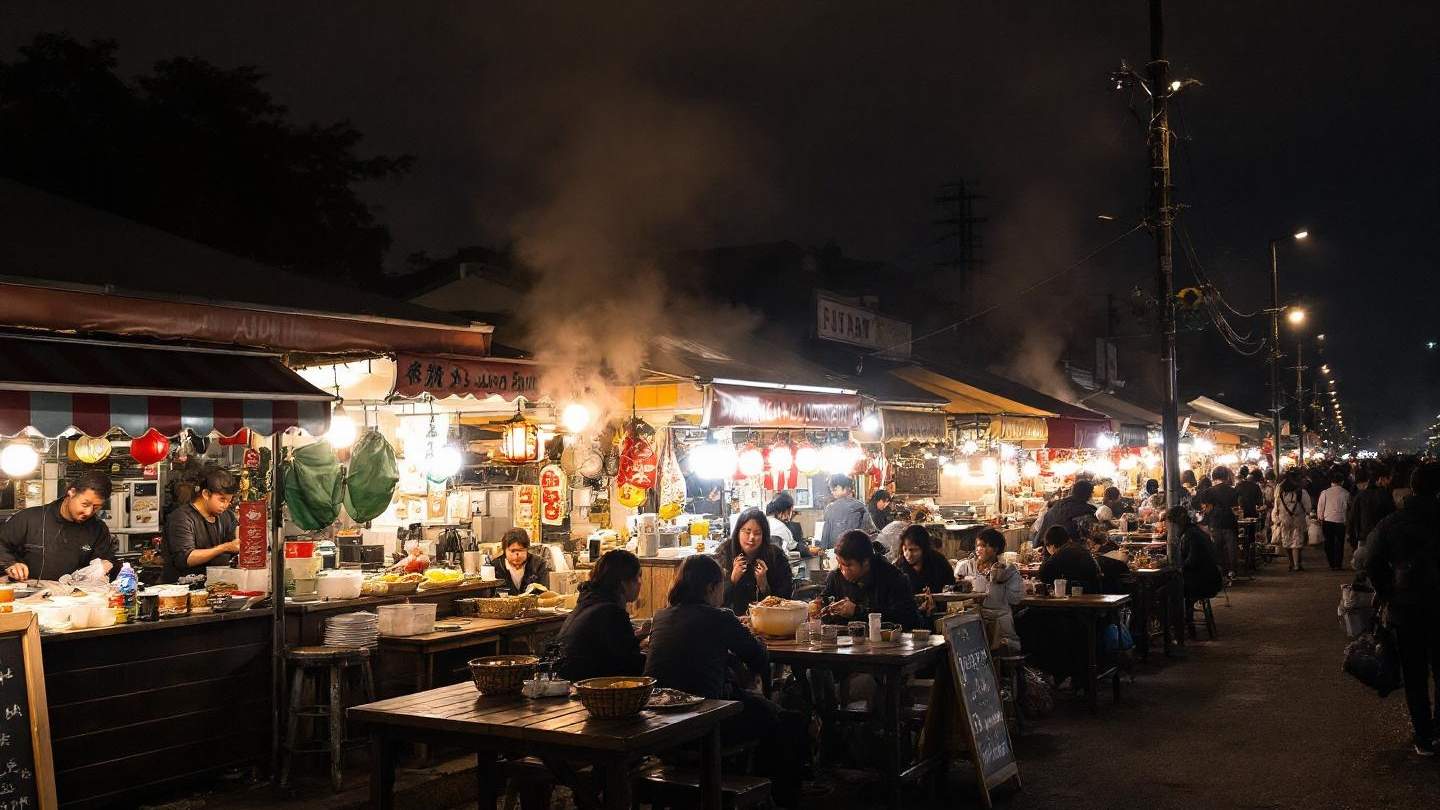
Fukuoka’s yatai — portable outdoor food stalls covered by a canvas roof with counter seating for six to eight people — are one of the last surviving examples of a food format that once existed in cities across Japan. Fukuoka has approximately 100 active yatai stalls, the majority concentrated along the Nakagawa River in Nakasu, along Watanabe-dori in Tenjin, and around the canal in Momochi. The stalls operate from approximately 18:00 to 02:00 nightly, weather permitting, and are an essential part of understanding how Fukuoka eats.
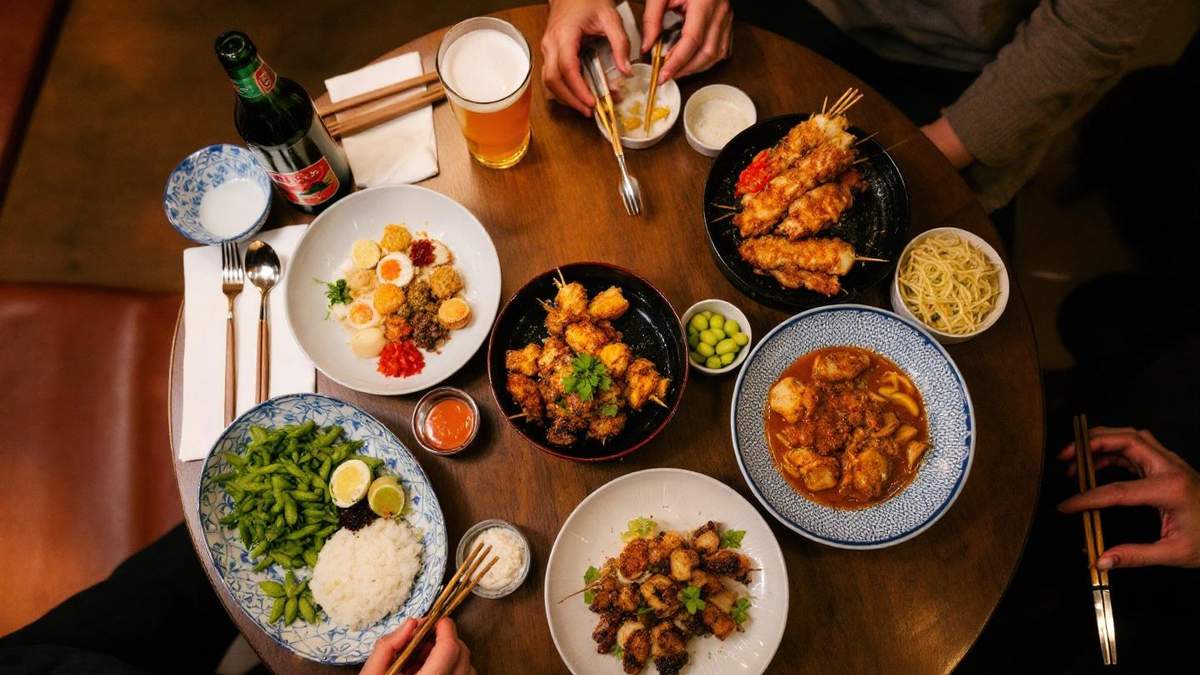
What yatai serve. The menu at any given yatai depends on the owner’s specialty, but the standard repertoire includes: tonkotsu ramen (yes, even the outdoor stalls do it seriously), yakitori (grilled chicken skewers), oden (slow-simmered vegetables and fish cakes in a dashi broth), gyoza (pan-fried pork dumplings), and a selection of small drinking plates. Many stalls also offer mentaiko dishes — see below — as a house specialty. Portions are small and designed to accompany drinking.
How to approach yatai. Yatai etiquette is less formal than sitting-restaurant culture. You sit at the counter, order drinks first, and then work through whatever looks appealing. The stall owner (and usually their family) handles everything: cooking, pouring, plating, and conversation. The space is intimate by necessity — you are seated within arm’s reach of the cooking surface and of the other customers. Conversation between strangers is normal and encouraged. Yatai are not rushing you toward table turnover, so the pace is social rather than transactional.
Nakasu yatai row. The largest concentration of yatai is along the south bank of the Nakagawa near Nakasu-Kawabata station. On warm evenings, the lit rows of canvas-covered stalls reflected in the river are genuinely atmospheric. This row is popular with tourists, so prices are slightly higher and English menus are common. Quality ranges from very good to workmanlike — ask at your hotel which stalls the staff recommend.
Tenjin yatai. The Tenjin stalls, spread across Watanabe-dori and the side streets adjacent to Fukuoka’s main commercial district, tend to draw a higher proportion of local office workers and repeat regulars. The atmosphere is slightly more local than Nakasu, and the food quality is consistently high. If you want a yatai experience that feels less tourist-facing, start in Tenjin.
Budget. A full yatai meal with two to three small dishes and two or three beers or whisky highballs costs approximately 2,500 to 4,000 yen per person. Cash is standard.
Mentaiko — Fukuoka’s Signature Ingredient
Mentaiko is spicy marinated pollock roe, and Fukuoka is its capital. While mentaiko is available throughout Japan, the product originated in Fukuoka after World War II when local merchants adapted a Korean technique for marinating fish eggs to suit Japanese ingredients and taste preferences. The Fukuoka version uses pollock roe marinated in a spice blend that typically includes gochugaru (Korean chili), sake, soy sauce, and mirin, then aged briefly to develop depth.
Where and how to eat it. In Fukuoka, mentaiko appears on virtually every menu and in every possible application: raw over rice, wrapped in nori, mixed into pasta, spread on bread as a seasoned butter, stuffed into onigiri, stirred into mayonnaise as a condiment, or served as a standalone dish on izakaya menus. The baseline experience is mentaiko with rice — the salt, spice, and umami of the roe against plain steamed rice is clean and complete.
Fukuya. Fukuya, founded in 1949, is credited as the originator of modern Fukuoka mentaiko and remains the most respected producer. Their flagship shop in Tenjin sells the original product alongside a range of mentaiko-based prepared foods and souvenirs. Buying mentaiko at Fukuya to eat with rice that evening, rather than packing it home, is the recommended approach for first-time visitors.
Yakiniku mentaiko. Several Fukuoka yakiniku restaurants serve mentaiko as a dipping sauce for grilled beef — the spice and brine complement the fat of wagyu in a pairing that makes more sense than it sounds. If you are eating yakiniku in Fukuoka, ask whether they offer mentaiko accompaniments.
Taking it home. Mentaiko in vacuum-sealed packaging is widely available at Fukuoka Airport’s departures level. The product requires refrigeration, and most sealed formats will last the duration of a flight to Europe or North America with an ice pack. Airport vendors keep larger stock than convenience stores and can usually advise on transit durability.
Motsunabe — Offal Hot Pot
Motsunabe is Fukuoka’s great everyday hot pot: a communal iron pot filled with beef or pork offal (typically small intestine and stomach), cabbage, garlic chives, and tofu, simmered in a broth seasoned with soy sauce and miso or, in the miso version, with a richer fermented soybean base. The dish became popular in post-war Fukuoka as an economical meal using cuts that other cuisines discarded; it has since evolved into one of the city’s celebrated specialties and is the subject of fierce local pride over which restaurant version is superior.
The eating experience. Motsunabe is served bubbling in the pot at the table, with the offal already partially cooked. You add vegetables as you eat, managing the cooking process yourself and adjusting the broth with supplemental seasoning at the table. The texture of properly prepared motsu — small intestine — is soft and slightly fatty, with a mild offal flavor that the seasoned broth moderates considerably. Visitors who approach it expecting strong organ-meat intensity are usually surprised by how clean and satisfying the flavor actually is.
The soy versus miso debate. Most Fukuoka motsunabe restaurants serve either soy-based or miso-based broth, rarely both. Soy-based broth is lighter and more aromatic; miso is richer and heavier. Both are served with the same ingredients. There is no consensus on which is superior — it comes down to personal preference and, depending on who you ask in Fukuoka, neighborhood loyalty.
Where to eat. Hakata and Tenjin both have concentrated clusters of motsunabe restaurants. Marucho in Nakasu is one of the longest-standing and most frequently recommended by locals. Shogun and Rakutenchi are popular chains that offer consistent quality across multiple locations. Reservations are advisable on weekend evenings; weekday lunches are often available without booking.
Price. Motsunabe courses typically run 2,500 to 4,500 yen per person including rice and the traditional finishing course of chanpon noodles added to the remaining broth at the end.
Mizutaki — Chicken Hot Pot
Where motsunabe is hearty and richly flavored, mizutaki is delicate and contemplative: a clear broth made from whole chicken simmered for hours until it has absorbed the gelatin from the bones without the fat and milkiness of tonkotsu. You eat the chicken and vegetables from the pot with a ponzu dipping sauce and ground sesame, managing each piece yourself at the table.
Mizutaki is considered Fukuoka’s more refined hot pot — it appears on menus at the city’s traditional restaurants alongside kaiseki courses, and the broth quality at a serious mizutaki establishment demonstrates the same obsessive attention to base stock that Hakata ramen gives to tonkotsu. The most celebrated mizutaki restaurants have been perfecting their broth for decades.
The format. At a traditional mizutaki restaurant, the broth is often brought to the table already hot and fragrant. The host or server adds chicken first, then instructs you to drink a cup of pure broth before any solid ingredients are added. This moment — tasting the undiluted broth — is considered the proper beginning of the meal and demonstrates the quality of the stock. Vegetables and tofu follow, and the meal continues at the pace you set.
Where to eat. Mizutaki Hakata Junjo in Hakata is a well-regarded mid-range option. Mizutaki Hakata Torikin, a long-standing establishment in the Hakata area, is considered among the city’s best. Expect to spend 4,000 to 8,000 yen per person at a serious mizutaki restaurant, more at the premium end.
Yanagibashi Ichiba Market
Yanagibashi Ichiba, the covered market near Hakata Station, is the closest thing Fukuoka has to a daily food market in the European tradition — a working trade market that sells fresh fish, vegetables, pickles, and prepared foods to restaurant buyers in the early morning and to the public from approximately 08:00 onward. It is smaller and less touristic than Tsukiji, and the vendors are more likely to be focused on the transaction than on explanation, but the quality is excellent and the prices reflect actual market rates.
What to buy and eat. The fish stalls at Yanagibashi carry exceptional product — local catches from the Sea of Japan and Ariake Sea, which together provide Fukuoka with some of the best seafood access in Japan. Prepared food vendors offer morning snacks: fresh sashimi, grilled fish, onigiri, and tamagoyaki. Mentaiko vendors in the market typically stock a wider range of grades and styles than airport or department store selections.
Visiting. The market is most active between 07:00 and 11:00. Serious restaurant buyers complete their transactions by 09:00, and the public has better access to browsing and purchasing after that hour. Closed Sundays and public holidays. Yanagibashi Ichiba is a five-minute walk from Hakata Station’s Chikushi exit.
Canal City Food Court and Nakasu Nightlife Dining
Canal City Hakata. The large shopping and entertainment complex near Hakata Station houses a food court on its lower level that covers most of Japan’s major regional ramen styles in a single location — a useful orientation for first-time visitors who want to compare Hakata, Sapporo, and Tokyo ramen side by side in one meal. The presentation is commercial, but the cooking is competent and the selection is genuinely comprehensive. Canal City is also useful for groups with mixed tastes, as the food court sits alongside a full range of restaurant formats.
Nakasu nightlife dining. Nakasu is Fukuoka’s entertainment and nightlife district, occupying the island between the Nakagawa and Hakata Rivers. Beyond the yatai stalls along the riverbank, Nakasu’s interior streets hold izakaya, yakitori counters, sushi bars, and the kind of late-night eating that happens when restaurant chefs finish their own service and go out. The area is most interesting after 21:00, when the restaurants have moved past their first sittings and the evening takes on a more local character.
Budget Tips and Eating Like a Local
Fukuoka is one of Japan’s more affordable cities for eating, partly because the local food culture runs toward communal, casual formats rather than per-person tasting menus. A few practical notes:
Lunch sets. Most Fukuoka restaurants offer a teishoku (set meal) at lunch for 850 to 1,500 yen — a main dish with rice, miso soup, and one or two small sides. This is one of the best food values in Japan. Ramen shops, tonkatsu restaurants, izakaya, and even some sushi bars offer lunch sets that represent significant discounts off dinner pricing.
Convenience store mentaiko. Fukuoka’s convenience stores (7-Eleven, FamilyMart, Lawson) stock mentaiko onigiri and mentaiko-flavored products that are specific to Kyushu distribution — you will not find the same products in Tokyo stores. The mentaiko onigiri at a Fukuoka convenience store is genuinely excellent and costs approximately 150 to 200 yen.
Standing ramen. Several Hakata ramen shops operate in standing format, particularly near Hakata Station. A bowl of tonkotsu ramen at a standing shop costs 650 to 900 yen and is often as good as the seated alternatives. These are not compromise options — the speed and focus of a standing ramen shop suits the dish’s intensity.
Supermarkets for prepared food. The basement food halls of department stores near Tenjin and Hakata stations, along with well-stocked supermarkets, carry prepared mentaiko dishes, chikuwa fish cake products, and local pickles at prices well below restaurant equivalents. For self-catering travelers or those who want to assemble a picnic, these basement halls offer comprehensive coverage of Fukuoka’s food culture in a single visit.
Fukuoka rewards visitors who eat instinctively rather than planning every meal. Walk toward any lit lantern and the smell of stock on the boil, sit at whatever counter has a free stool, and let the locals around you inform your ordering. This city has spent decades developing an eating culture worth trusting.
Fukuoka Ramen vs. Other Regional Styles
Travelers arriving in Fukuoka after Tokyo or Sapporo sometimes need a reference point for how Hakata tonkotsu differs from what they have already eaten.
| Style | Broth | Noodles | Where it’s from |
|---|---|---|---|
| Hakata tonkotsu | Milky pork bone, rich and intense | Thin, straight, low hydration | Fukuoka |
| Tokyo shoyu | Clear soy-based, lighter | Medium, wavy | Tokyo |
| Sapporo miso | Rich miso, buttery variants common | Thick, curly | Hokkaido |
If comparing regional styles interests you, Kyoto’s food scene and Osaka’s street food offer useful contrast points for a wider Japan food itinerary.
Pairing Fukuoka With the Rest of Kyushu
Fukuoka works well as a base for a short Kyushu food-focused loop, since Hakata Station has excellent Shinkansen connections south. Travelers combining Fukuoka with the rest of Japan should also see the Japan itinerary planner for how to fit a Kyushu stop into a wider trip, and the Fukuoka things to do guide for a full sightseeing plan around the eating.
Frequently asked questions
Is Fukuoka worth visiting just for the food? Yes, for travelers with a serious interest in Japanese cuisine. Fukuoka regularly draws food-focused day and overnight trips from Tokyo and Osaka precisely because the tonkotsu ramen, yatai culture, and hot pot traditions here are not fully replicated elsewhere in Japan.
How many days do I need in Fukuoka to eat well? One full day covers the essentials — a ramen shop, a yatai evening, and a walk through Yanagibashi Ichiba. Two days allows time to add both motsunabe and mizutaki, plus a slower visit to Nakasu’s nightlife dining.
More tours on Viator
Top-rated experiences with verified reviews, bookable on Viator (a Tripadvisor company).
 Viator
Peaceful Hiroshima & Miyajima UNESCO 1 Day Bus Tour
FromUSD 124Check availability → Viator
World Heritage Shirakawa-go and Experience Tours from Kanazawa
FromUSD 118Check availability → Viator
World Heritage Kyoto & Nara Uji Authentic Matcha Experience
FromUSD 124Check availability → Viator
Nara Half Day Trip Walking Tour (Private Option Available)
FromUSD 101Check availability → Viator
Hiroshima Peace (Heiwa) Walking Tour at World Heritage Sites
FromUSD 91Check availability → Viator