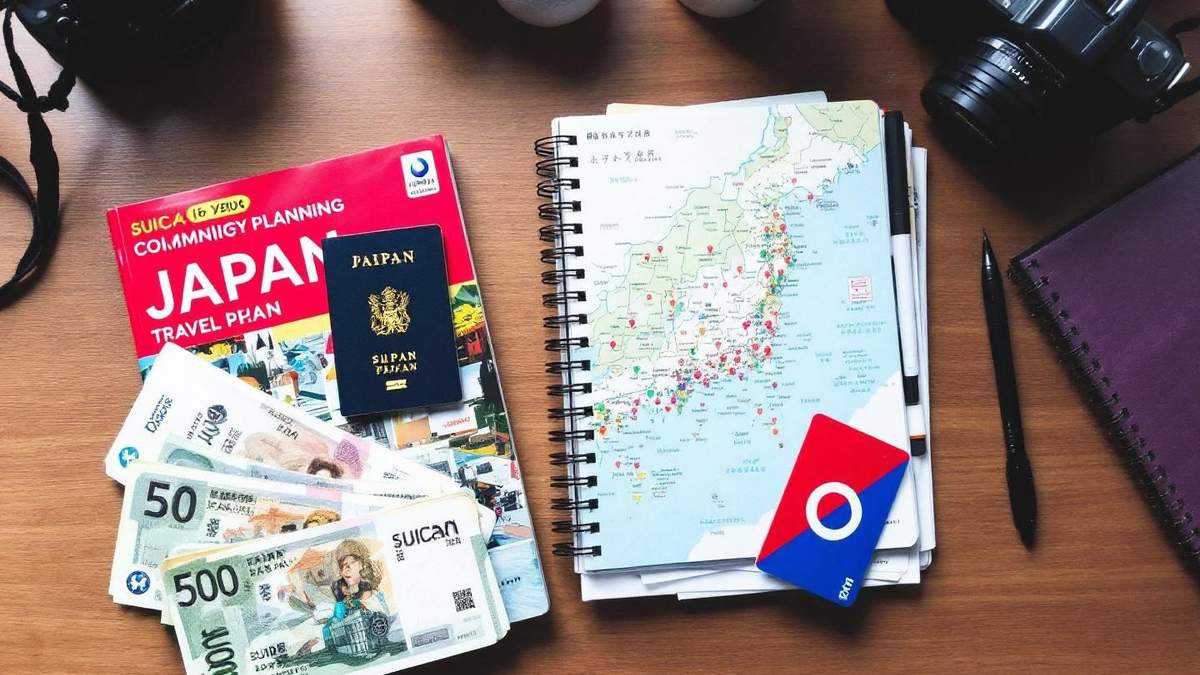
What to Pack for Japan
Last updated: March 2026
What should I pack for Japan?
Pack light — Japan has excellent laundry facilities and you can buy almost anything there. Essentials: comfortable walking shoes (you will walk 15,000-25,000 steps daily), a small daypack, rain gear, layers for temple visits, and a portable battery. Leave bulky toiletries behind — Japanese drugstores are incredible.
A Japan packing list looks different from most other destinations. The country is exceptionally well-stocked with everything you might need — from prescription-grade skincare to Gore-Tex rain gear to emergency pocket heaters — so the cardinal rule is to pack less than you think you need. Japan’s convenience stores, pharmacies, and 100-yen shops fill gaps with extraordinary efficiency. What you cannot substitute in Japan are well-worn comfortable shoes and a mindset prepared for walking further than you have ever walked as a tourist.
This guide gives you the authoritative what to pack for Japan breakdown, with core essentials, seasonal additions, tech gear, and a clear list of what to leave at home. Use it as a practical checklist for your Japan travel essentials.
The Core Japan Packing List
These items belong in your bag for any Japan trip, any season:
| Category | Item | Notes |
|---|---|---|
| Footwear | Comfortable walking shoes (broken in) | Non-negotiable; expect 20,000+ steps/day |
| Footwear | Slip-on shoes or travel sandals | For ryokan, some restaurants require shoe removal |
| Bag | Small daypack (15–20 L) | Carried daily; for camera, snacks, umbrella |
| Bag | Main luggage (ideally 20–28 L carry-on) | Smaller is better on trains; see luggage section |
| Rain | Compact folding umbrella | Sudden rain is Japan’s most predictable weather event |
| Rain | Light packable rain jacket | For heavier rain; also a wind layer |
| Tech | Portable battery pack (10,000 mAh minimum) | Full day of Maps + photos + translation = heavy battery use |
| Tech | USB-C charging cable | Japan uses Type A sockets; adapter useful but new hotels have USB-C |
| Tech | Power adapter (Type A, 2-pin flat) | Japan uses 110V/60Hz; most modern devices self-adjust |
| Documents | Passport (valid 6+ months) | Required; make a digital copy |
| Documents | Travel insurance card/info | Print or screenshot — hospitals are excellent but costly without coverage |
| Documents | IC card or Suica setup ready | See our Suica guide |
| Money | Yen cash (¥30,000–¥50,000 starter) | Many small restaurants and rural spots are cash-only |
| Health | Any prescription medication | Carry in original packaging with prescription note |
| Health | Basic blister treatment | For inevitable blisters despite good shoes |
| Clothing | 4–5 days of clothing, plus layers | Japan has excellent coin laundry; no need for 14 outfits |
| Etiquette | Socks without holes | You will remove shoes at temples, ryokan, traditional restaurants |
Seasonal Packing Additions
The Japan packing list changes significantly by season. Core items above apply year-round; add the relevant seasonal column below:
| Item | Spring (Mar–May) | Summer (Jun–Aug) | Autumn (Sep–Nov) | Winter (Dec–Feb) |
|---|---|---|---|---|
| Jacket | Medium weight coat | None (rain jacket suffices) | Light–medium jacket | Warm winter coat |
| Layers | 2–3 tops + cardigan | Lightweight tops only | 2–3 tops + mid layer | Thermals + fleece + coat |
| Trousers | Mix of light and mid-weight | Shorts or light trousers | Mix; one warmer pair | Warm trousers; thermal option |
| Scarf | Optional | No | Yes — evenings get cold | Essential |
| Gloves | Optional (March only) | No | Light gloves for Nov | Warm gloves essential |
| Cooling towel | No | Yes — strongly recommended | No | No |
| Portable fan | No | Yes — buy in Japan cheaply | No | No |
| Sunscreen SPF 50 | Yes | Yes — essential | Optional | Minimal |
| Hand warmers (kairo) | No | No | Optional for late Nov | Yes — buy in Japan ¥100–¥200 |
| Waterproof shoes | Optional | Optional | Optional | Yes — cold rain likely |
| Umbrella | Essential (cherry blossom rain) | Essential | Essential (typhoon season until Oct) | Useful |
Spring note: The cherry blossom season involves a lot of outdoor standing. Pack a warmer layer than you expect to need — hanami (blossom viewing) parties in the evening can be cold even in late March and early April.
Summer note: Japan’s summer heat is genuine (35°C+ in Tokyo, 80%+ humidity). The portable fan, cooling towel, and moisture-wicking fabrics are not optional — they are the difference between enjoying a day out and suffering through it.
Winter note: Japanese indoor spaces (restaurants, department stores, trains) are aggressively heated. Dress in layers so you can remove your coat and mid-layer without being cold outdoors. Hand warmers (disposable kairo) are sold at every convenience store for ¥100–¥200 and are genuinely useful during cold outdoor temple walks.
Tech Essentials for Japan
Japan is a tech-forward country and the right gear makes travel significantly easier:
Portable battery: The single most important piece of tech. A full day of Google Maps navigation, camera use, Google Translate, and messaging will drain your phone battery to zero by early afternoon. Carry a 10,000–20,000 mAh power bank. Anker and similar brands are available in Japan at Yodobashi Camera or Bic Camera if you forget.
Translation app (Google Translate offline): Download the Japanese language pack for offline use before you leave. The camera mode (point phone at Japanese text to translate in real time) is essential for menus, signs, and vending machine instructions.
Google Maps offline: Download the offline map of Japan (or regional sections) from Maps settings. Works fully offline for navigation and transport routing.
eSIM or pocket Wi-Fi: Japan does not have widespread free Wi-Fi outside tourist spots. Options:
- eSIM (recommended): Buy a Japan data eSIM from providers like Airalo or IIJmio before departure; activate on arrival; unlimited data for ¥1,500–¥3,000 per week. See our eSIM vs pocket Wi-Fi guide for a full comparison.
- Pocket Wi-Fi: Rent a Mi-Fi device from the airport; shares Wi-Fi with your group; costs ¥400–¥700/day; extra device to manage.
Travel camera: Japan is extraordinarily photogenic. If photography is a priority, a mirrorless camera with a 24–70 mm equivalent lens handles virtually every situation. A waterproof case or dry bag is useful for both cameras and phones in rainy season.
Outlet adapter: Japan uses Type A plugs (two flat parallel pins) at 110V/60Hz. Modern phones, laptops, and cameras are universally compatible with 110–240V so only the plug shape matters. A simple Type A adapter weighs almost nothing; bring one.
What NOT to Pack for Japan
This section might be the most useful part of the list. Japan travel essentials do NOT include:
Large bottles of shampoo, conditioner, or body wash: Japanese hotels (even business hotels at ¥8,000/night) provide full-size quality toiletry sets. Ryokan provide premium skincare products. You do not need to bring any toiletries beyond personal specialised items (specific brand face cream, prescription skincare).
A full two-week wardrobe: Japan’s coin laundries (coin randori) are clean, fast (30-minute wash cycle, 30-minute dry), and cost ¥300–¥600 per load. Many hotels have in-room laundry facilities or laundry bags for next-day return. Pack 4–5 days of clothes and wash every 4–5 days. A 14-day wardrobe means a large suitcase which creates significant problems on Japanese trains.
Heavy guidebooks: Japan-Atlas.com has you covered. A Kindle or phone with PDFs is infinitely lighter.
Multiple pairs of shoes: One primary pair of broken-in walking shoes and one pair of slip-on shoes is sufficient. Shoe removal at ryokan, traditional restaurants, and some temple areas makes slip-ons invaluable. A third pair is rarely needed and adds significant weight.
Deodorant from home: Japanese pharmacies (Matsumoto Kiyoshi, Sundrug) stock excellent antiperspirants. Japanese people are famously attentive to personal hygiene; the product range is outstanding.
Prescription medication in large quantities: Bring what you need for your trip. For a full list of over-the-counter options in Japanese pharmacies, see our Japan etiquette guide which covers healthcare section guidance plus a few extra days. Japanese pharmacies carry a wide range of over-the-counter equivalents for common conditions. If you have specific prescription needs, bring documentation.
Water bottle (large): Japan has vending machines approximately every 50 metres selling drinks for ¥150–¥200. While a small collapsible bottle is useful, a large Hydro Flask is unnecessary weight in a country this vending-machine-dense.
Luggage and Size Considerations
Japan has specific luggage considerations that many visitors overlook:
Size: Shinkansen overhead racks accept bags up to 160 cm combined dimensions (length + width + height). Most 28-inch checked suitcases exceed this. The rule is new (implemented 2020) and enforced — bags over 160 cm need advance seat reservations with baggage spots, which book out.
Practical maximum: A 20–22 inch (50–55 cm) carry-on suitcase or large backpack is the ideal Japan travel bag. It fits Shinkansen overhead, can be carried upstairs in stations without lifts, and fits in small guesthouses.
What if you have large luggage? Japan’s takuhaibin (luggage forwarding) system is the solution. Services like Yamato Transport’s Ta-Q-Bin forward your luggage from hotel to hotel (or airport) overnight for ¥1,500–¥2,500 per item. Drop your luggage at the hotel front desk the morning before you travel; it arrives at your next hotel by the following day. This is completely standard practice for Japan travellers and allows you to move between cities by Shinkansen with just your daypack.
Laundry Options in Japan
Planning around laundry makes packing much lighter:
| Option | Cost | Time | Notes |
|---|---|---|---|
| Hotel laundry service | ¥500–¥1,500/item | Overnight | Convenient; expensive for multiple items |
| Hotel coin laundry | ¥200–¥400/load | 1 hour | Available in most business hotels |
| Coin laundromat | ¥300–¥600/load | 1 hour | Common in all neighbourhoods; easy to use |
| Laundry detergent pods | ¥100 (3-pack) | — | Available in all convenience stores |
Most neighbourhoods have at least one coin laundromat visible from the street — identified by stacked washing machines visible through large windows. Machines have English or simple picture instructions. Detergent is sold in single-use pods at the machine or from vending machines inside.
Buying Things in Japan
Japan’s drugstores (yakkyoku / dragh store) are genuinely extraordinary and stock items that are difficult to find at home. Matsumoto Kiyoshi is the largest chain with English-friendly signage. Items worth buying in Japan rather than packing:
- Sunscreen: Japanese formulations (Anessa, Biore UV) are widely considered the best in the world; SPF 50 PA++++ at ¥1,200–¥2,500
- Sheet masks and skincare: quality far exceeds equivalent Western products at comparable prices
- Cooling products (summer): ice patches, cooling sprays, cooling sheets for body and forehead
- Cold and allergy medicine: highly effective Japanese formulations at very low cost
- Blister plasters: Japanese Compeed equivalents are excellent and cheaper than buying abroad
100-yen shops (Daiso, Seria): Stock an extraordinary range of practical travel items — packing cubes, collapsible cups, cable organisers, pocket umbrellas, sewing kits, and hundreds of other items for ¥110 each. If you need something minor, check a 100-yen shop before paying full price elsewhere.
Final Japan Packing Checklist
Before you close your bag:
- Passport and travel insurance documentation
- Yen cash (¥30,000–¥50,000 minimum)
- IC card/Suica ready (see our Suica guide)
- JR Pass if applicable (see JR Pass guide)
- Comfortable broken-in walking shoes
- Compact umbrella
- Portable battery pack charged
- Google Translate (offline Japanese pack downloaded)
- Google Maps (offline Japan map downloaded)
- Phone SIM or eSIM arranged
- Socks without holes (you will be removing shoes)
- Layers appropriate for your travel season
The Japan packing list truth: almost everything else you can buy in Japan, probably better and cheaper than at home. Travel light, walk far, and let Japan’s extraordinary supply chain look after the rest.
For the full trip planning framework, see our plan a trip to Japan guide.
Clothing for Japan: Specific Guidance
What to Wear at Temples and Shrines
Japan’s temples and shrines have minimal formal dress codes compared to many religious sites in other countries. There are no mandatory head coverings, and shoulders and knees do not need to be covered at most sites (unlike many South and Southeast Asian temples). However, a few specific situations require attention:
- Some traditional ryokan and tea house restaurants expect smart casual rather than sportswear for dinner
- Zen meditation sessions at specific temples (Kennin-ji in Kyoto, for example) may request that you wear their provided kneeling clothes
- Onsen and sento: Swimwear is NOT worn in Japanese baths (you are nude); swimwear is worn only at beach resorts and water parks. This surprises many first-time visitors.
Shoe Removal Logistics
You will remove your shoes multiple times per day in Japan. This is the single most important clothing logistics consideration. Plan for it:
- Primary walking shoes: Tie up properly but are removed at ryokan entrances (genkan). Choose shoes that are not overly complicated to put on and off.
- Secondary slip-ons: A pair of Birkenstock-type sandals, Crocs, or similar are invaluable for ryokan stays, some traditional restaurants, and temple inner sanctums. They go into your day bag in the morning and appear whenever needed.
- Slippers: Many sites provide plastic guest slippers after you remove your shoes. These are worn in corridors but removed again on tatami (woven straw mat) rooms. You will be changing footwear 5–10 times in a single ryokan evening. Embrace it.
Sock quality matters: You will be in your socks on tatami mats and wooden corridor floors. Japanese wood floors show dust clearly. Good-quality clean socks (without holes) are a small detail that matters.
Clothing for the Onsen
If you are staying at a ryokan or visiting an onsen facility, note:
- Yukata (light cotton kimono) is provided by the ryokan; you wear it in the facility and to the dining room
- Towels are provided; you carry a small towel to the bath and fold it on your head (not in the water)
- Tattoos: Onsen facilities have varying policies on tattooed guests. See our dedicated onsen and tattoos guide for current policies and tattoo-friendly facilities.
Technology and Connectivity
Staying connected in Japan is essential given the reliance on Google Maps, Google Translate, and real-time information. Options for data:
| Option | Cost | Speed | Convenience |
|---|---|---|---|
| eSIM (Airalo, IIJmio) | ¥1,500–¥3,500/week | Fast 4G/5G | Best; set up before travel |
| Physical SIM (IIJmio, Sakura) | ¥3,000–¥5,000 | Fast 4G/5G | Good; buy at airport |
| Pocket Wi-Fi rental | ¥400–¥700/day | Good 4G | Heavy; another device to charge |
| Free Wi-Fi only | Free | Unreliable | Not recommended as primary solution |
eSIM setup: Purchase from Airalo or similar provider before departure. Activate on arrival (requires cellular signal; activate at the airport before leaving). No physical card needed; multiple Japan eSIM options are available from ¥1,500 for 7 days.
See our complete Japan eSIM vs pocket Wi-Fi guide for a full comparison.
Camera recommendations:
- Smartphone (iPhone 15+ / Google Pixel 8+): Sufficient for 90% of Japan travel photography. The computational photography handles low light, portrait, and wide-angle capably.
- Mirrorless camera: For dedicated photography, a Sony A7 series or Fujifilm X-series with a 24-70mm equivalent covers all situations. Japan photography rewards a quality camera.
- Spare batteries: Cold weather (winter temple visits) drains batteries faster. Bring a spare or carry a portable charger.
Japan-Specific Items Worth Buying Before You Leave
A few items are specifically useful for Japan travel and worth sourcing before departure:
Compression packing cubes: Japan hotel rooms — particularly in Tokyo, Kyoto, and Osaka — are compact. Organised packing keeps a small bag usable. Eagle Creek, Away, or Muji packing cubes (Muji in Japan is excellent quality at low price — you could buy these on arrival too).
Collapsible tote bag: Shopping in Japan is irresistible. A lightweight foldable bag in your daypack handles everything from konbini purchases to department store bags. Required under Japan’s plastic bag fee policy.
Blister plasters (hydrocolloid): Get them before you go, because the first major blister on Day 2 of a Japan trip is a miserable experience that ruins several days. Compeed or similar gel blister pads are available in Japan but finding them in a rush wastes time.
Small gift items from home: Japanese culture values omiyage (souvenir gifts) deeply. If you are staying with Japanese contacts, visiting a business, or attending any hosted event, bring small gifts from your home country — chocolates, local specialty foods, artisan items. It is not expected from tourists but is exceptionally well-received.
Luggage Forwarding (Takuhaibin) in Detail
Japan’s luggage forwarding system deserves its own section because it fundamentally changes how you can pack.
The system: Yamato Transport’s Ta-Q-Bin service and Sagawa Express both offer same-day or next-day delivery of luggage between hotels, to airports, and from airports to hotels. The process:
- At your current hotel, ask the front desk for a takuhaibin form (they have them)
- Fill in your destination hotel name and address, your name, phone number, and preferred arrival date
- Pack your bag for forwarding
- Hand to front desk or designated collection point before the morning cut-off (typically 11 AM)
- Your bag arrives at the next hotel the following day
Cost: ¥1,500–¥2,500 per bag depending on size and destination. For a family of 4 forwarding 4 large suitcases, this costs ¥6,000–¥10,000 — worth it for the freedom of moving between Shinkansen stops with only daypacks.
Airport forwarding: Both Narita and Haneda airports have takuhaibin desks. You can forward your luggage directly from your hotel to the airport (arrives same or next day), and in reverse — forward from the airport to your first hotel so you can immediately use public transport without dragging suitcases.
Timing: For airport to hotel, forward on arrival if you do not need formal clothing until Day 2. For hotel to airport, forward the day before your departure flight.
Final Word on the Japan Packing Philosophy
The defining principle of a Japan packing list is trust in Japan’s infrastructure. The country’s convenience stores, pharmacies, 100-yen shops, and department stores are extraordinary. You can buy almost anything you need, often at better quality and lower price than you would have packed from home.
What you cannot buy in Japan: broken-in walking shoes (new ones will betray you), your specific prescription medications, and the mental preparation that comes from reading guides like this one. Everything else is procurable on the ground.
Pack light. Trust Japan. Let the country’s extraordinary supply chain handle the rest. The less you carry, the more you will enjoy every step of what will almost certainly be the best trip you have ever taken.
For seasonal-specific planning, see our Japan in spring, Japan in summer, Japan in autumn, and Japan in winter guides. For first-time visitor planning, see Japan for first-timers.