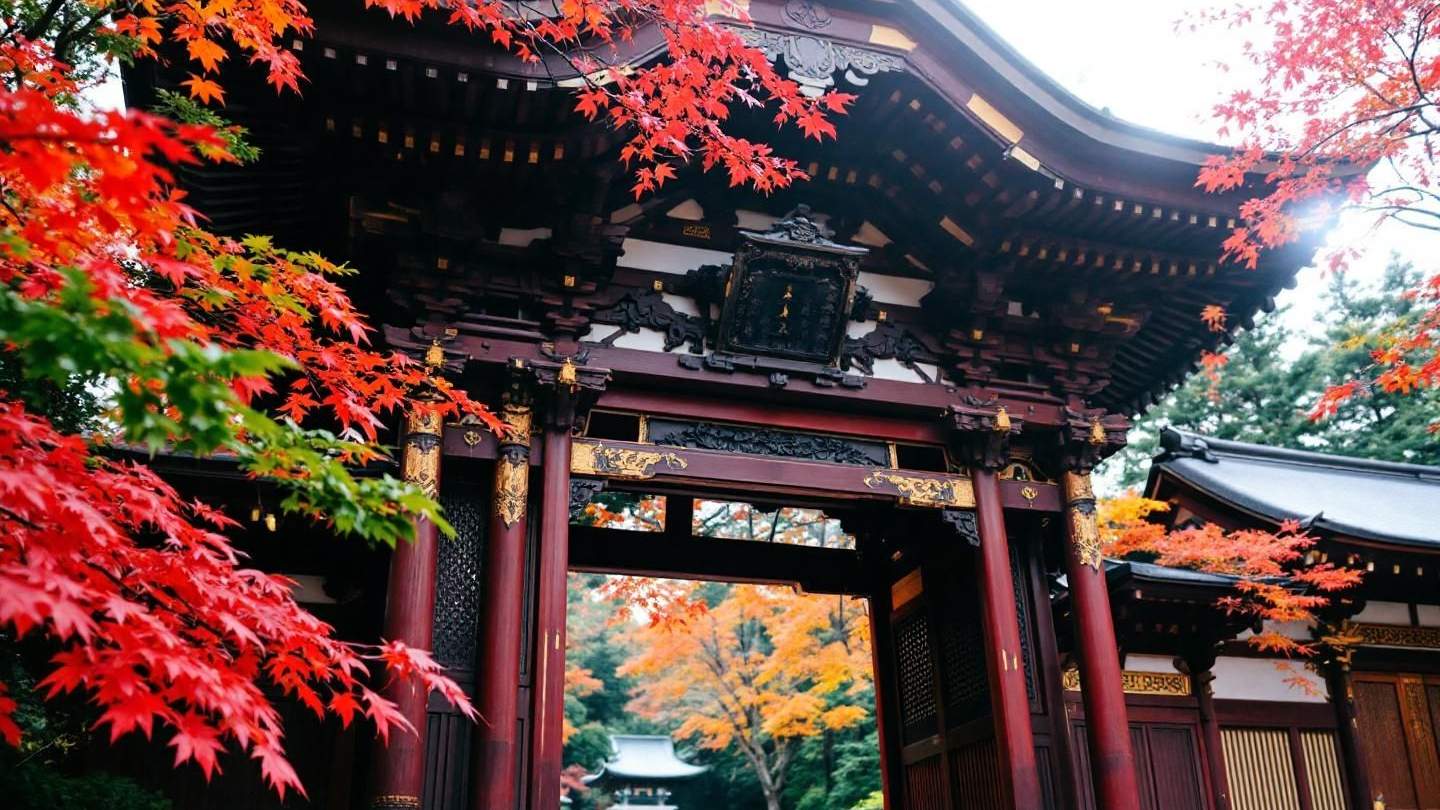
Nikko
Complete Nikko travel guide. Ornate Toshogu shrine, stunning autumn foliage, Kegon Falls, and natural beauty in the mountains north of Tokyo.
Quick Facts
- Best For
- Temples, Nature, Autumn Foliage
- Days Needed
- 1 day or overnight
- Best Season
- Autumn (October)
- Getting There
- 2h from Tokyo (Tobu Railway)
- Getting Around
- Buses + walking
- Budget (per day)
- 5,000-15,000 yen
Why Visit Nikko
This Nikko travel guide covers Toshogu Shrine, Lake Chuzenji, Kegon Falls, things to do in Nikko, and whether a Nikko day trip from Tokyo is enough or you should stay overnight. It also covers the best time to visit Nikko, how to get there, and practical tips for first-timers.
Nikko has been a center of mountain worship and Buddhist practice since the 8th century, but what draws most visitors today was built much later. In the 1630s, the Tokugawa shogunate constructed a series of shrines and mausolea in the mountains north of Tokyo to house the spirit of Tokugawa Ieyasu, the founder of the Edo period dynasty that unified and governed Japan for two and a half centuries. The result — Toshogu Shrine and the surrounding complex — is the most ornate religious architecture in Japan, full stop.
Where most Japanese temple architecture favors restraint, minimalism, and the quiet beauty of natural materials, Toshogu went in a completely different direction: lacquered red and gold, carved with thousands of figures of animals, birds, mythological creatures, and scenes from nature, standing in a cedar forest on a steep mountainside. It looks like someone took the most lavish building in China, transplanted it into the Japanese mountains, and then kept adding more decoration. It should not work. It is extraordinary.
Beyond the shrine complex, Nikko sits at the edge of a national park of considerable beauty, with a volcanic lake, a powerful waterfall, dramatic gorges, and some of the best autumn foliage anywhere in the Kanto region. This combination — vertiginous history and remarkable nature — makes Nikko one of the most rewarding day trips from Tokyo, and a place that justifies an overnight stay to do properly.
Day Trip vs Overnight
Day trip works for the Toshogu complex and Shinkyo Bridge. Leave Tokyo by 7am on the first Tobu Express, spend the morning at Toshogu and the surrounding shrines, and return by 5pm. You will need to choose between the main shrine complex and Lake Chuzenji — they are in different locations and the bus journey between them takes about 45 minutes.
Overnight is strongly recommended if you want to see both the shrine complex and Lake Chuzenji/Kegon Falls, or if you want to experience Nikko’s mountain onsen inns. Staying overnight also lets you visit Toshogu at opening time (8am) before tour groups arrive — the early morning light through the cedar forest is exceptional.
Toshogu Shrine: An Extremely Close Look
Toshogu is technically a complex of over a dozen separate buildings, built between 1634 and 1636 under the direction of the third shogun Tokugawa Iemitsu. Around 15,000 craftspeople worked on the construction over roughly a year and a half. The numbers matter because you can feel them in every surface — there are over 5,000 individual carvings on the structures, executed by the finest craftspeople of the era.
The entrance fee covers the main complex including most buildings. Entry to the inner sanctuary (Naiinsha) and the sleeping cat carving requires a separate additional ticket of 520 yen, which also includes the path up to Ieyasu’s mausoleum. Get this ticket — it covers the most important elements.
Total entry fees: 1,300 yen for the main complex, plus 520 yen for the sleeping cat and mausoleum path. Bring cash; some parts of the complex do not accept cards.
The Approach: Omotesando and the Five-Story Pagoda
The main approach begins at the base of stone steps leading through an enormous stone torii gate (the largest stone torii gate in Japan when it was built in 1618). To your right as you enter stands the five-story pagoda, a 1818 reconstruction of an older structure, its lacquerwork shimmering in crimson and gold.
The pagoda contains no sacred objects — it is primarily architectural. Note the suspended pendulum visible through the latticed walls on lower levels, functioning as a seismic stabilizer, a remarkable piece of 17th-century engineering.
Omotesando Steps and the Three Sacred Warehouses
Climbing the first flight of stone steps, you reach the three sacred storehouses (Sanjinko) on the left. The upper storehouse’s exterior is carved with a famous relief of elephants — elephants that the sculptor had presumably never seen, producing creatures that are recognizable but distinctly imagined, with cat-like faces and rounded proportions. They are charming and much photographed.
The Three Monkeys: See No Evil, Hear No Evil, Speak No Evil
On the wall of the sacred stable (Shinkyusha), a series of carved wooden panels illustrate a complete life philosophy through scenes of monkeys — the only undecorated (unpainted) building in the complex, which makes it stand out. The famous three monkeys (Mizaru, Kikazaru, Iwazaru — see no evil, hear no evil, speak no evil) appear in the second panel from the left. While this is the most globally famous element of Toshogu, it is just one panel in a much larger sequence showing the entire passage of a monkey’s life, from childhood through old age. Take time to read the full series rather than snapping the famous three and moving on.
Yomeimon Gate
If you can only look closely at one thing in Nikko, make it Yomeimon. This gate — the “Gate of Sunlight” — is the compositional heart of the entire complex and one of the greatest works of decorative art in Japan. Every surface is carved and lacquered: 508 individual carved figures including angels, sages, dragons, lions, and mythological creatures fill the gate’s columns, beams, and transoms. It was decorated by over 100 master craftspeople working with materials including gold leaf, lacquer, and pigments made from ground minerals.
One of the gate’s columns is deliberately installed upside-down — with the decorative pattern inverted compared to the other columns. The explanation given is that a perfect building invites the jealousy of evil spirits, so one flaw was deliberately introduced. Whether this is the true historical reason or later folk explanation, it is a fascinating detail to hunt for. The inverted column is the second from the left on the right side of the gate as you face it.
The gate was completed in 1636 and has undergone periodic restoration since. The current appearance is the result of an extensive cleaning and restoration project completed in 2019, and the colors — white, gold, red, blue, green — are vivid in a way that photographs do not fully capture.
The Sleeping Cat (Nemuri-Neko)
Just beyond Yomeimon, a small carved wooden cat is embedded in a transom above a gate. The Sleeping Cat (Nemuri-neko) was carved by master craftsman Jingoro Hidari in the 17th century and has become so iconic that it appears on local souvenirs everywhere. The cat appears to be napping, and tradition holds that this pose symbolizes an era of peace — a cat that has no need to be vigilant because the world is safe.
The carving is smaller than many visitors expect — about the size of a handspan — so look for it carefully. Behind this gate, a flight of stone steps leads through cedar forest to Ieyasu’s actual tomb, the Okumiya mausoleum at the top.
Ieyasu’s Mausoleum (Okumiya)
The 200-step climb through ancient cedar forest to Ieyasu’s mausoleum is one of the more atmospheric experiences in the complex, and one that many visitors skip to their loss. The tomb itself is a small bronze urn housed in a simple bronze tower — deliberately austere compared to everything below, giving the impression of a man who wanted the approach to be magnificent but the final resting place to be dignified.
The forest around the mausoleum has been growing for four centuries and the cedar trees are enormous.
Rinno-ji Temple
Rinno-ji is the ancient Buddhist temple complex that predates Toshogu, founded in the 8th century and closely associated with mountain worship. The main hall, Sanbutsudo (Hall of Three Buddhas), houses three large gilt statues — Amida Buddha flanked by a thousand-armed Kannon and the horse-headed Kannon — each nearly 8 meters tall and extraordinarily serene in the incense-hazed interior. Entry is 400 yen and worth it.
The adjacent Shoyoen garden (150 yen) is a pleasant strolling garden with a small pond and good views of the pagoda.
Futarasan Shrine
Often overlooked in the shadow of Toshogu, Futarasan Shrine is one of the oldest sacred sites in Nikko, founded in 767 by the monk Shodo Shonin. The main hall predates Toshogu and has a more subdued, dignified character. The shrine is dedicated to the three sacred mountains of Nikko: Nantai, Nyoho, and Taro. Entry is 200 yen. The sacred spring within the grounds is said to have spiritual properties; small cups are available to drink from it.
Shinkyo Bridge
The sacred bridge (Shinkyo) over the Daiya River at the base of the shrine complex is one of Nikko’s most photographed sights. The lacquered vermilion bridge was originally built in the 17th century and restricted to imperial and shogunal use — ordinary visitors had to use a separate crossing. Today, the bridge is open to pedestrian crossing for a fee of 300 yen (round trip). It is most beautiful in autumn foliage or in snow.
The gorge below the bridge is particularly striking in spring when the river runs high with snowmelt.
Lake Chuzenji and Kegon Falls
Lake Chuzenji sits at 1,269 meters elevation, 12 kilometers west of the shrine area by bus (the journey involves the famous Irohazaka hairpin switchback road — 48 curves, one for each syllable of the old Japanese kana syllabary). The lake occupies a volcanic caldera formed by an eruption of Mount Nantai and has a calm, almost Nordic beauty.
Kegon Falls plunges 97 meters from the outlet of Lake Chuzenji into the Daiya River gorge below. It is among the most dramatic waterfalls in Japan and runs at its most powerful in spring and after summer rains. An elevator (550 yen) descends to a viewing platform at the base of the falls, giving a perspective that is markedly different from the view from above. Both viewpoints are worth taking. The sound at the base — a sustained, physical roar — is something photographs cannot convey.
In October, the mountainsides around the lake turn red, orange, and gold, and the reflection of the foliage on the lake is one of the finest autumn foliage scenes in Japan.
Practical note: Allow at least two hours for Lake Chuzenji and Kegon Falls. The bus journey each way takes about 45 minutes from the shrine area. If you are doing both the shrine complex and the lake in one day, start at the shrines and head to the lake in the early afternoon.
Nikko National Park
Nikko National Park covers 1,149 square kilometers of mountainous terrain extending from the shrine complex through the Chuzenji area and north into the more remote Oku-Nikko region around Yumoto Onsen. The park contains several excellent hiking trails, and the Senjogahara marshland (a high-altitude wetland) is particularly beautiful in June when alpine flowers bloom and in autumn when the grass turns gold.
The Yumoto Onsen area, 30 kilometers further into the park from Chuzenji, is a small hot spring village at 1,478 meters with traditional onsen ryokan and access to high-altitude hiking. This is a separate trip from the shrine area but excellent for those who want to spend a night in a mountain onsen.
Tamozawa Imperial Villa
The Tamozawa Imperial Villa is a 106-room historical imperial retreat built in the late 19th and early 20th centuries, combining traditional Japanese architectural styles in a large garden setting. It was used by the imperial family as a mountain retreat and is now open to the public as a museum. Entry is 600 yen.
The villa is less visited than the shrine complex but is architecturally fascinating — different sections of the building were transported from the old imperial palace in Kyoto and integrated with newer construction, creating a patchwork of architectural periods that is unique. Allow 45–60 minutes.
Kanmangafuchi Abyss
The Kanmangafuchi Abyss is a beautiful gorge formed by an ancient volcanic eruption of Mount Nantai, where the Daiya River runs along a wall of hardened lava. A riverside path leads past a row of approximately 70 stone Jizo statues draped in red bibs — the Bake Jizo (Ghost Jizo), so called because local tradition says they cannot be counted: you always get a different number. The path through the cedar trees along the riverbank is quiet and atmospheric.
The gorge is a 20-minute walk from the shrine area and is almost always uncrowded. There is no entrance fee.
How to Get to Nikko from Tokyo
Tobu Railway (Recommended)
The Tobu Nikko Line from Asakusa Station (also connected to the Tokyo Metro network at Oshiage) is the standard and most convenient option. The Tobu Revaty limited express takes 1 hour 50 minutes from Asakusa to Nikko for around 2,720 yen. Regular express trains (requiring one transfer at Shimo-Imaichi) take about 2 hours and cost 1,360 yen.
The All Nikko Pass (see below) covers the Tobu train and unlimited buses within Nikko, making it the most economical option for most visitors.
JR (Japan Rail Pass Holders)
JR Pass holders can take the Shinkansen to Utsunomiya (50 minutes from Tokyo, fully JR Pass-covered) and then the JR Nikko Line to Nikko (45 minutes, also JR Pass-covered). Total journey about 1 hour 40 minutes from Tokyo. This is free with the JR Pass and an excellent option for pass holders.
All Nikko Pass
Sold by Tobu Railways, the All Nikko Pass covers unlimited Tobu trains to and from Nikko, unlimited Tobu buses within the Nikko area (including the bus to Lake Chuzenji), and discounts at major attractions. The 2-day pass costs 4,780 yen from Asakusa, the 4-day pass 5,230 yen. For a day trip doing both the shrine area and Lake Chuzenji (which requires multiple buses), the pass typically saves 1,000–1,500 yen over individual fares.
Getting Around Nikko
The shrine complex is about a 30-minute walk from Nikko Station, or a 5-minute ride on one of the frequent Tobu buses (included in the All Nikko Pass). Within the shrine area, everything is walkable — Toshogu, Rinno-ji, and Futarasan Shrine are all within a 10-minute walk of each other.
Lake Chuzenji requires a bus (about 45 minutes, running regularly). The Kanmangafuchi Abyss is a 20-minute walk from the station.
Best Time to Visit Nikko
| Season | Months | Highlights | Crowds |
|---|---|---|---|
| Autumn (best) | Oct–Nov | Peak foliage at shrines, lake, and Irohazaka road | High — book ahead |
| Late spring | May–Jun | Lush greenery; cedar forest at its finest | Medium |
| Winter | Dec–Feb | Snow on shrines; very few tourists | Low |
| Avoid | Late Apr–May | Golden Week brings very heavy crowds | Very high |
October: The peak season for a reason. Autumn foliage around the shrine complex, along the Irohazaka road, and around Lake Chuzenji turns spectacular. The colors typically peak in mid to late October at the lower elevations and can be seen from early October at Chuzenji. Book accommodation well in advance.
May to June: Green and lush, with fewer crowds than autumn. The fresh foliage around the cedar forest contrasts beautifully with the lacquered shrine buildings. Iris season in late June is also excellent.
Winter (December to February): Snow on the shrine complex and cedar forests is beautiful, and the crowds disappear. Lake Chuzenji is very cold but dramatic. A few of the bus routes reduce service in winter.
Avoid: Golden Week (late April to early May) and major Japanese school holidays bring enormous crowds to Toshogu.
Local Food
Nikko’s local specialty is yuba — the skin that forms on the surface of heated soy milk, which is lifted off in sheets and eaten fresh or dried. Nikko-style yuba is eaten fresh rather than dried, and has a clean, delicate flavor that is quite different from the dried version common in Kyoto. You will find yuba in soups, over rice, and as sashimi (eaten cold with soy sauce and wasabi) in restaurants throughout the town.
Nikko Soba: The mountain area’s cool climate produces good buckwheat, and handmade soba is a local specialty. Several good soba restaurants cluster around the shrine approach and near Nikko Station.
Gyoza at Nikko Station area: A more prosaic local tradition — Japanese-style gyoza (pan-fried dumplings) are popular at casual restaurants near the station for a quick pre-train meal.
Practical Tips
Start at the top: Buy the combined ticket including the sleeping cat and mausoleum path at the main ticket office. Do not try to add it partway through your visit — it saves both money and confusion.
Early arrival is essential at Toshogu: The shrine opens at 8am (9am December to February). Tour buses from Tokyo begin arriving around 9:30am. The difference between 8am and 10am at Toshogu is the difference between a contemplative experience and a crowded one.
Photography restrictions: The interior of several Toshogu buildings restricts photography. Respect these — the instruction is genuine, not optional.
Shoes: The shrine complex involves considerable uneven stone paving, stairs, and steep paths. Comfortable walking shoes are essential.
Entrance ticket complexity: Nikko has multiple separate entrance fees for different sections. The main complex ticket covers most buildings. The Rinno-ji ticket covers Sanbutsudo and the garden. The 520 yen sleeping cat and mausoleum ticket is separate. Budget around 2,300–2,500 yen total for comprehensive access to all major sites in the shrine complex.
Nikko is one of the top day trips from Tokyo, sitting alongside Kamakura and Hakone as the best half-day and full-day options from the capital. For planning a broader Japan trip, see our 7-day Japan itinerary and 10-day Japan itinerary. If you’re using a JR Pass, Nikko via Utsunomiya is fully covered. Useful background: Japan travel budget guide, best time to visit Japan, and Japan etiquette guide (photography restrictions at Toshogu are strict).
Frequently Asked Questions About Nikko
Is Nikko worth visiting?
Nikko is absolutely worth visiting and is one of the most spectacular day trips available from Tokyo. Toshogu Shrine is unlike anything else in Japan — the most ornate religious architecture in the country, hidden in cedar mountains two hours north of the capital. The combination of gilded, color-saturated buildings against ancient forest is genuinely breathtaking. Add Lake Chuzenji, Kegon Falls, and the autumn foliage and you have a destination that consistently exceeds visitor expectations. Most people who do it as a day trip wish they had stayed overnight.
Should you do Nikko as a day trip or stay overnight?
A Nikko day trip from Tokyo is practical and popular — you can cover Toshogu Shrine, Rinno-ji, and Shinkyo Bridge comfortably in a full day, and if you start early you can add either Kanmangafuchi Abyss or Lake Chuzenji (but not both in one day). Staying overnight is worth it if you want to experience both the shrine complex and Lake Chuzenji/Kegon Falls without rushing, visit Toshogu at 8am opening before tour buses arrive, or explore Nikko’s mountain onsen. An overnight at a small ryokan or onsen inn near the shrine adds a very different, quieter dimension to the trip. Budget around 8,000–15,000 yen per person for mid-range accommodation.
What is the best time to visit Nikko?
October is the single best month. Autumn foliage in Nikko is among the finest in the Kanto region — the shrine complex, Irohazaka switchback road, and Lake Chuzenji all turn brilliant red, orange, and gold. The colors typically peak mid-to-late October at the shrines and early October at Chuzenji. May and June are an excellent quieter alternative — fresh green cedar forest, comfortable temperatures, and far smaller crowds. Winter (December–February) is cold but magical when snow covers Toshogu, and visitor numbers drop dramatically. Avoid Golden Week (late April–early May) when crowds make Toshogu extremely congested.
How do you get to Nikko from Tokyo?
The easiest way to get to Nikko from Tokyo is the Tobu Railway from Asakusa Station. The Tobu Revaty limited express takes 1 hour 50 minutes and costs around 2,720 yen. The All Nikko Pass (4,780 yen for 2 days from Asakusa) covers the train plus unlimited buses in Nikko — strongly recommended if you plan to visit Lake Chuzenji. JR Pass holders can use the Shinkansen to Utsunomiya (50 minutes, JR Pass-covered) then the JR Nikko Line (45 minutes, also JR Pass-covered) for a total of about 1 hour 40 minutes from Tokyo — free with the pass.
How much time do you need in Nikko?
A full day (8–9 hours on site) is enough to do the Toshogu shrine complex thoroughly and either the Kanmangafuchi Abyss or Lake Chuzenji — but not both. If you want to see both the shrine complex and Lake Chuzenji with Kegon Falls, allow 1.5 days (overnight) or accept a very rushed pace. To experience Nikko properly — including Toshogu at the 8am opening before crowds, Rinno-ji, Futarasan, Shinkyo Bridge, and the lake — two days is the right amount of time. A bare minimum is around 5–6 hours for the shrine area alone if you arrive at opening and focus entirely on Toshogu.