Nagoya
Often overlooked, Nagoya offers incredible food, a magnificent castle, and serves as the perfect base for central Japan exploration.
Quick Facts
- Best For
- Food, Castle, Day Trips
- Days Needed
- 1-2 days
- Best Season
- Spring and Autumn
- Airport
- Chubu Centrair (NGO)
- Getting There
- 1h40 from Tokyo by Shinkansen
- Budget (per day)
- 5,000-15,000 yen
Why Visit Nagoya
Nagoya suffers, unfairly, from its position between two giants. Sandwiched on the Tokaido Shinkansen line between Tokyo and Kyoto, it is the city that Japan’s 27 million annual foreign visitors most commonly blur past at 285 kilometers per hour. This is a significant mistake.
Japan’s fourth-largest city is the capital of Aichi Prefecture and the economic engine of the Chubu region — the home of Toyota, Yamaha, and a manufacturing heartland that built much of modern Japan’s industrial wealth. But what matters to travelers is something else entirely: Nagoya has the most distinctive local food culture in Japan (see the Japanese food guide for context across Japan’s regions), a castle that rivals any in the country, neighborhoods of genuine character, and access to day trip destinations (Takayama, Ise, Inuyama) that would justify a visit on their own.
The food culture here is not a marketing proposition — it is a genuine, centuries-deep obsession with specific flavors and preparations that exist nowhere else in Japan. The sweet miso (hatcho miso), the eel grilled in a specific way, the chicken wings cooked with a sweet-soy glaze, the thick flat noodles, the red bean paste on morning toast — these are not regional variations on national themes. They are their own things, born of specific local ingredients and habits, and eating through them is one of the great under-appreciated food journeys in Japan.
Nagoya people are proud of their city in a quiet way. They do not boast. They simply know that their food is the best in Japan and that anyone who has spent two days eating properly here will find it very hard to disagree.
Nagoya Castle
Overview
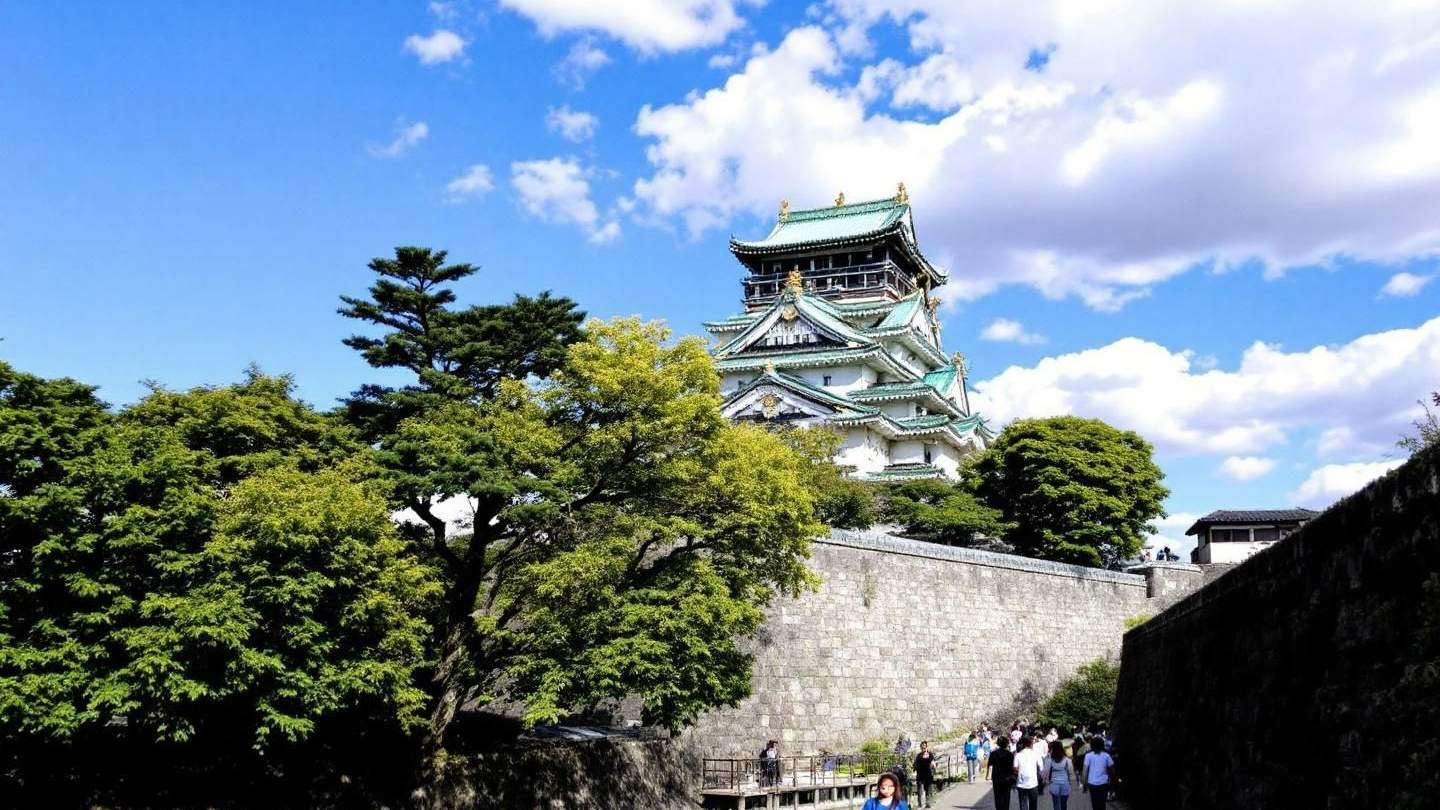
Nagoya Castle (名古屋城) is one of the finest surviving castle complexes in Japan — a peer of Osaka and Himeji in scale and historical significance, if less celebrated in international travel literature. The main castle tower (tenshukaku) was built in 1612 on the orders of Tokugawa Ieyasu as a stronghold for his son, Tokugawa Yoshinao, and remained the center of Owari Domain administration throughout the Edo period. The tower was destroyed by fire during the Second World War; the current concrete reconstruction dates to 1959 and houses a museum with original castle artifacts on its floors.
The twin golden shachi — mythical fish-tiger creatures — that crown the roof of the castle are among the most iconic castle roof ornaments in Japan. The originals are displayed inside the castle tower. The replicas on the roof are gilded bronze and visible from a considerable distance.
Honmaru Palace
The Honmaru Palace (本丸御殿) is Nagoya Castle’s most extraordinary feature and what distinguishes it from most other Japanese castle visits. The palace — the administrative and residential building adjacent to the main tower — was also destroyed in the war, but its pre-war photographs and detailed historical records allowed an unprecedented reconstruction project using traditional materials and techniques. Reconstruction was completed in 2018 after 10 years of work.
The result is genuinely breathtaking. The shoin-style rooms are covered in Kano School paintings — elaborate, gold-leaf-backed paintings of tigers, leopards, pine trees, and seasonal flora on sliding screen panels (fusuma). The craftsmanship of the carved transoms (ranma), coffered ceilings, and decorative hardware is extraordinary and represents one of the finest examples of Edo-period palace interior design accessible to the public anywhere in Japan.
Entry to the castle grounds (including Honmaru Palace and castle tower) costs 500 yen. Open daily 9am-4:30pm (last entry 4pm). Note: the castle tower interior may be closed for earthquake retrofitting work — check current status before visiting, as the Honmaru Palace alone justifies the visit regardless.
The castle grounds cover approximately 65 hectares with extensive gardens and stone walls. Cherry blossoms here in late March and early April are among Nagoya’s best.
Atsuta Shrine
Atsuta Shrine (熱田神宮) is one of the most important Shinto shrines in Japan, second only to Ise in significance for the Imperial family. It enshrines the Kusanagi-no-Tsurugi — one of the three Imperial Treasures of Japan (alongside the mirror and the jewel) — a legendary sword that according to mythology was discovered in the tail of an eight-headed serpent. The sword is never displayed publicly.
The shrine grounds are heavily forested — enormous camphor trees up to 1,000 years old create a dense, cathedral-like canopy that makes the walk through the grounds feel genuinely sacred even for non-religious visitors. The main shrine buildings are in the simple, unadorned style of the oldest Shinto architecture. The atmosphere is completely different from the ornate, lacquered style of Nikko or Ise.
Entry to the grounds is free. The inner shrine complex charges no entry fee. The Atsuta Shrine is located in the southern part of Nagoya, 8 minutes from Jingu-mae Station on the Meitetsu Nagoya Main Line (fare approximately 180 yen from central Nagoya). Allow 45-60 minutes for a full walk through the grounds. The shrine’s specialty food is hitsumabushi (grilled eel on rice), which is served at a famous restaurant directly adjacent to the shrine entrance — more on this in the food section below.
Osu Kannon and Osu Shopping District
Osu Kannon Temple (大須観音) is a Buddhist temple of the Tendai sect, originally founded in 1333 and relocated to its current location in the 17th century. The main hall — rebuilt in 1970 — houses the Hono Darani-kyo, one of Japan’s oldest woodblock-printed texts (from 1052). The temple is an active religious site with regular prayer sessions and a generally lively, unaffected atmosphere. Flea markets are held in the temple grounds on the 18th and 28th of each month.
The real reason to come to Osu is the Osu Shopping District that surrounds the temple — a network of covered arcades extending in multiple directions, containing over 1,200 shops and restaurants in a compressed area. This is not the high-end fashion of Omotesando or the electronics density of Akihabara — Osu is something more varied and more interesting: vintage clothing shops next to Buddhist goods stores next to anime merchandise shops next to old-school Japanese candy stores next to Korean cosmetics outlets next to excellent cheap food stalls.
Osu has the most authentic mixed-use shopping district feel of any comparable area in central Japan. The food courts and individual stalls throughout the arcades offer excellent cheap eating — takoyaki, taiyaki, yakitori, Taiwanese sweet potato balls, and numerous small restaurants serving teishoku (set meals) from 700-1,200 yen.
Osu is 10 minutes from Nagoya Station by the Tsurumai Line (Osu Kannon Station, fare 210 yen). Allow at least two hours to wander properly.
Sakae Entertainment District
Sakae (栄) is Nagoya’s central entertainment district, the equivalent of Osaka’s Namba or Tokyo’s Shinjuku. The area around Hisaya Odori Park and the circular Nagoya TV Tower has department stores (Mitsukoshi, Matsuzakaya), underground shopping malls, and a concentration of restaurants, bars, and clubs.
The TV Tower (180 meters, observation deck at 100 meters; 800 yen admission) was Japan’s first broadcast tower and a symbol of post-war Nagoya recovery, completed in 1954. The views from the top are informative for orientating yourself in the city.
The central underground shopping network (Chika Machi, Sakae-chika, and connected passages) is vast — over 400 shops and restaurants accessible without going above ground, useful in summer heat or winter cold.
Sakae’s nightlife is concentrated along the Nishiki (锦) entertainment area immediately east, where dozens of izakaya, craft beer bars, jazz clubs, and hostess establishments operate until 3am or later.
Toyota Commemorative Museum of Industry and Technology
Toyota (トヨタ産業技術記念館) has an excellent industrial heritage museum in the Norita district of Nagoya — the original Toyota site where Sakichi Toyoda invented his revolutionary automatic loom in 1896 before his son Kiichiro Toyoda founded Toyota Motor Company in 1937. The museum occupies the original brick factory buildings and covers both the textile machinery history and the automotive history of the company with working demonstrations, hands-on exhibits, and superbly maintained machinery.
Adult admission 500 yen. Open Tuesday-Sunday 9:30am-5pm. Located near Sako Station on the Meitetsu Nagoya Main Line (8 minutes from Nagoya Station). This is one of the best industrial museums in Japan and particularly rewarding for anyone with an interest in manufacturing, technology history, or design. Allow 2-3 hours.
SCMAGLEV and Railway Park
The SCMAGLEV and Railway Park (リニア・鉄道館) in the Kinjo Futo waterfront area is a Tokai JR railway museum housing 39 vehicles including the CJR 955 Shinkansen test train (the fastest conventional steel-wheel train on record) and MLX01 maglev test vehicle, alongside a full history of bullet train development. The linear motor maglev simulator is the highlight — a realistic 45-second ride simulation that is usually packed on weekends (arrive early to queue).
Adult admission 1,000 yen. Open Wednesday-Monday 10am-5:30pm. Located at Kinjo Futo Station, accessible by the Aonami Line from Nagoya Station (about 24 minutes, 350 yen).
Legoland Nagoya
Legoland Japan Resort (レゴランド・ジャパン) in the Kinjo Futo waterfront area is one of only two Legoland parks in Japan (the other is in Osaka). It is primarily targeted at children aged 2-12. The park features 40 rides, shows, and attractions across nine themed zones. Entry costs approximately 6,500-8,000 yen per person (prices vary by date). Combined tickets with Sea Life Nagoya aquarium are available. A full day is sufficient for most families.
Nagoya Food Culture — The Complete Guide
Nagoya’s food culture (Nagoya meshi, 名古屋めし) is Japan’s most clearly defined regional cuisine and the element that most surprises first-time visitors. The defining ingredient running through most dishes is hatcho miso (八丁味噌) — a dark, intense, sweet-savory red miso made from soybean paste aged for a minimum of two years in large cedar barrels. It has a depth and sweetness entirely different from the pale miso used in Tokyo or Osaka cooking.
Hitsumabushi
Hitsumabushi (ひつまぶし) is the definitive Nagoya dish — and, arguably, the finest way to eat eel (unagi) in Japan. The dish begins with grilled eel (kabayaki style: basted with sweet tare sauce and grilled until lacquered) served over a wooden rice container (ohitsu). You eat it in three stages:
First, divide the eel and rice into quarters and eat the first quarter simply, as it comes. Second quarter: mix in the condiments provided — wasabi, nori, chopped green onion. Third quarter: pour the provided hot dashi broth over the eel and rice and eat as a fragrant soup (this style is called ochazuke). The fourth quarter: eat in whichever of the three ways you enjoyed most.
The experience of eating the same dish three different ways and having three different flavor experiences is remarkable. Hitsumabushi in a good Nagoya restaurant costs 4,000-7,000 yen per person. Atsuta Horaiken, directly at Atsuta Shrine (open for lunch only, queue from around 11am) and its Kanayama branch, is the most celebrated address. Yabaton also has an excellent version.
Miso Katsu
Miso katsu (味噌カツ) is a pork tonkatsu (breaded, deep-fried pork cutlet) served with hatcho miso sauce instead of the standard Worcestershire-based sauce used throughout Japan. The dark, thick, intensely savory-sweet miso sauce transforms the dish — what was already excellent (crispy fried pork) becomes something with real depth and complexity. Yabaton (矢場とん) is the most respected miso katsu chain, founded in Nagoya in 1947 and operating multiple branches in the city. A full miso katsu set with rice, pickles, and miso soup costs around 1,500-2,000 yen.
Miso Nikomi Udon
Miso nikomi udon (味噌煮込みうどん) is udon noodles simmered directly in a clay pot in a hatcho miso-based broth with chicken, egg, fish cakes, and green onion. The dish arrives at your table still boiling in the sealed clay pot. The noodles are raw-dough firm — deliberately undercooked compared to standard udon — because they are expected to continue cooking in the hot broth as you eat. The combination of the dark, rich miso broth and the slightly chewy, doughy noodles is intensely satisfying on a cold day.
Yamamotoya Honten (山本屋本店) in Sakae is the most respected miso nikomi udon establishment in the city, operating since 1907. A basic pot costs around 1,500-2,000 yen. Other respected options include Yamamotoya Souhonke (a different establishment from a split in the original family).
Kishimen
Kishimen (きしめん) are wide, flat wheat noodles unique to Nagoya — similar to udon in composition but pressed into ribbons about 3cm wide and 2mm thick. They cook faster than udon and have a silkier, more delicate texture. Kishimen are served in a clear dashi broth with soy and mirin, topped with bonito flakes, green onion, and a piece of aburaage (fried tofu). Extremely simple, completely satisfying.
The best place to eat kishimen in Nagoya is on the platforms of Nagoya Station itself — the Ebisu platform kisoba restaurant (standing noodle bar style) has been serving platform kishimen for decades and is one of Japan’s great fast-food experiences. A bowl costs around 500-650 yen. Open from 7am.
Tebasaki Chicken Wings
Tebasaki (手羽先) are chicken wings deep-fried without batter and coated in a sweet-soy glaze, then sprinkled with white sesame seeds and black pepper. They are crispier and more intensely flavored than Western-style wings and make extraordinary drinking food — every izakaya in Nagoya serves them. Furaibo and Sekai no Yamachan (世界の山ちゃん) are the two main Nagoya chains that popularized tebasaki, each with multiple city locations. Five wings (a typical serving) costs around 600-800 yen.
Taiwan Ramen
Taiwan ramen (台湾ラーメン) is a Nagoya invention with no historical connection to Taiwan — it was created in the 1970s by a Taiwanese chef at a Nagoya restaurant who put his home-country chili mince on top of Japanese ramen. The result is a bowl of thin noodles in a clear chicken broth topped with spicy ground pork, chives, and sometimes raw garlic. The spice level can be intense. Misen (味仙) in Imaike is the original restaurant, still operating and still serving the bowl that started the style. Cost around 700-900 yen per bowl.
Ogura Toast and Morning Culture
Nagoya’s “morning service” (モーニング文化) is a famous local custom: coffee shops throughout the city offer a free or very low-cost breakfast set with any coffee order. The quintessential Nagoya morning breakfast is ogura toast (小倉トースト) — thick slices of white shokupan toast topped generously with sweet azuki red bean paste and often a pat of butter. The combination is unexpectedly good: the slightly salty, creamy butter balances the sweet paste, and the toast adds crunch to the soft bean filling.
Ogura toast morning sets are available throughout Nagoya from 7am. The system — pay 400-500 yen for a coffee and the food arrives free — is so well established that Nagoya residents make no distinction between “having breakfast” and “going for a coffee.” Coffee chains like Komeda Coffee (コメダ珈琲) originated in Nagoya and serve excellent morning sets that continue until 11am.
Day Trips from Nagoya
Takayama
Takayama (高山) in the Hida mountains is one of Japan’s finest preserved historic towns and one of the best day trips in central Japan. The old town (Sanmachi Suji) has three streets of beautifully maintained Edo-era merchant buildings, sake breweries (eight operating breweries; small sake cups available for tasting throughout the street), craft shops, and excellent food.
From Nagoya: JR Wide View Hida limited express, 2 hours 20 minutes, around 5,700 yen one way. Covered by the JR Pass. Departs Nagoya approximately every 1-2 hours. Book the limited express reservation in advance. A day trip is feasible (depart 7am, return 9pm); overnight makes the experience richer.
Ise
Ise Jingu (伊勢神宮) is the most sacred Shinto shrine in Japan and the home of the sun goddess Amaterasu. The Inner Shrine (Naiku) is rebuilt every 20 years in the hinoki cypress-and-thatch style of ancient Shinto architecture, an extraordinary act of ritual renewal that has continued for 1,300 years. The approach through ancient cedar forests to the plain, severe shrine buildings is profoundly atmospheric.
From Nagoya: JR Rapid Mie to Iseshi Station, approximately 1 hour 30 minutes, around 1,500-1,900 yen. Alternatively Kintetsu Limited Express from Kintetsu Nagoya to Ujiyamada, around 1 hour 40 minutes, 2,590 yen.
The Oharai-machi shopping street near the Inner Shrine has excellent food stalls — akafuku mochi (soft mochi with sweet red bean paste) and Ise udon (thick, very soft noodles in a dark sweet soy broth) are the local specialties.
Inuyama
Inuyama (犬山) is a small castle town 30 minutes north of Nagoya by Meitetsu Line (570 yen). Inuyama Castle (犬山城) is one of Japan’s twelve original surviving castle towers (not a reconstruction), dating to 1537 and perched dramatically on a cliff above the Kiso River. From the top floor, the view down the winding river to the mountains beyond is exceptional. Admission 550 yen; open daily 9am-5pm.
The old town streets below the castle have preserved machiya townhouses now operating as cafes, restaurants, and craft shops. Ukai — traditional cormorant fishing performed on the Kiso River by night in summer (July-August) — can be observed from boats. Tickets from 2,800 yen; book through the Inuyama tourism office.
Getting to Nagoya
By Shinkansen from Tokyo: The Nozomi Shinkansen takes approximately 1 hour 40 minutes from Tokyo to Nagoya (14,720 yen, JR Pass applicable). Convenient and fast — most travelers combine Nagoya with a Tokyo-Kyoto itinerary by stopping here en route.
By Shinkansen from Osaka/Kyoto: Approximately 35-50 minutes from Kyoto (7,560 yen) or 50-55 minutes from Shin-Osaka (11,090 yen). Nozomi and Hikari services both stop at Nagoya.
By Air: Chubu Centrair International Airport (NGO) on an artificial island in Ise Bay is accessible from Nagoya Station by the Meitetsu Airport Express (30 minutes, 870 yen). International connections include direct flights from multiple Asian cities. Domestic connections from Sapporo, Okinawa, and Fukuoka are practical alternatives to Shinkansen travel for those starting from those cities.
By Highway Bus (Nightbus): Budget travelers from Tokyo can take overnight highway buses (around 4,000-6,000 yen) arriving at Nagoya early morning, saving a night’s accommodation.
Getting Around Nagoya
Nagoya’s subway system (the Nagoya Municipal Subway) is extensive, clean, and logical — six lines covering all major tourist destinations including the castle, Sakae, Kanayama, Atsuta Shrine, and Osu. Single fares run 210-320 yen. A one-day pass costs 760 yen and is good value if making four or more journeys.
The City Bus network supplements the subway and is useful for destinations like the Toyota Museum (Sako-kita stop). The basic flat-fare city bus zone costs 210 yen.
Meitetsu and Kintetsu private rail lines connect Nagoya Station to day trip destinations — Inuyama (Meitetsu Inuyama Line), Ise (Kintetsu Nagoya Line), and Gifu. Check the relevant private rail operator for fares and timetables.
Nagoya Station itself is one of Japan’s largest station complexes, topped by the twin JR Central Towers (department stores and hotels above the station tracks). Getting oriented within the station takes a few minutes on first arrival; the Sakura-dori exit faces south toward Atsuta and the Taiko-dori exit faces north.
Best Time to Visit
Spring (March to early May) is Nagoya’s best season. Cherry blossoms within Nagoya Castle’s grounds in late March and early April are among the finest in the Chubu region. Temperatures (12-20°C) are comfortable for walking. The city is less crowded than Golden Week.
Autumn (mid-October to late November) brings cool, stable weather (14-22°C) and autumn foliage in the castle grounds and at the Inuyama castle area. Good conditions for day trips to Takayama where autumn colors are exceptional.
Summer (June to August) is hot and humid (30-35°C) but Nagoya’s covered arcades, underground malls, and department stores make the heat manageable. The Nagoya Matsuri in October (the city’s main festival, featuring historical processions) and the Atsuta Shrine summer festival in late June are worth timing around.
Winter (December to February) is cold (4-10°C) but low on tourists. Good for castle visits without crowds and for maximizing time inside the Honmaru Palace. Hatcho miso nikomi udon and other warming Nagoya dishes taste exactly right in the cold.
Practical Tips
Nagoya Station navigation: The central station connects JR Shinkansen, JR local lines, Meitetsu private line, Kintetsu private line, Aonami Line, and two subway lines. Large navigational boards in Japanese and English are at each exit. The Shinkansen platforms (JR Central) are at the upper level; the Meitetsu and Kintetsu stations adjoin the JR station building but are separate entities with their own ticket gates.
Miso-flavored everything: When in Nagoya, default to ordering any dish that says “miso” in front of it. Miso katsu, miso nikomi udon, miso soup made with hatcho miso, miso-grilled oysters — the local ingredient genuinely improves most things it touches.
Food pacing: Nagoya’s food specialties are relatively rich and filling. If you want to try multiple dishes in one day, order half-portions (han-nin mae, available at some restaurants) or split dishes between travel companions.
Toyota Museum opening hours: Closed on Mondays (and Tuesdays if Monday is a public holiday). Check before visiting.
Nagoya as stopover vs. destination: The city works excellently as a one-night stopover between Tokyo and Kyoto on a 14-day Japan itinerary — arrive at dinner time, eat miso katsu and tebasaki wings, see the castle and Honmaru Palace in the morning, eat hitsumabushi for lunch, then take the afternoon Shinkansen to Kyoto. If adding day trips, extend to two nights.
Nagoya will not give you the postcard Japan of Kyoto’s geisha streets or Tokyo’s neon canyons. What it gives you instead is a different, entirely authentic Japan — industrial, proudly provincial, fierce about its food, and always quietly confident that those travelers hurrying past at 285 kilometers per hour are missing something genuinely worth stopping for.