Best Day Trips from Kyoto
Last updated: March 2026
Kyoto’s central position in the Kansai region makes it one of the best bases for day trips anywhere in Japan. Within an hour’s train ride you can reach the ancient capital of Nara with its free-roaming deer, the neon-lit food city of Osaka, the matcha fields and temple trails of Uji, one of Japan’s greatest castles at Himeji, and mountain temple complexes that have stood for over a thousand years. The infrastructure is fast, reliable, and comparatively affordable.
This guide covers the seven best day trips from Kyoto in detail — with precise transport information, itinerary suggestions, and an honest assessment of how much time each destination genuinely deserves.
Nara
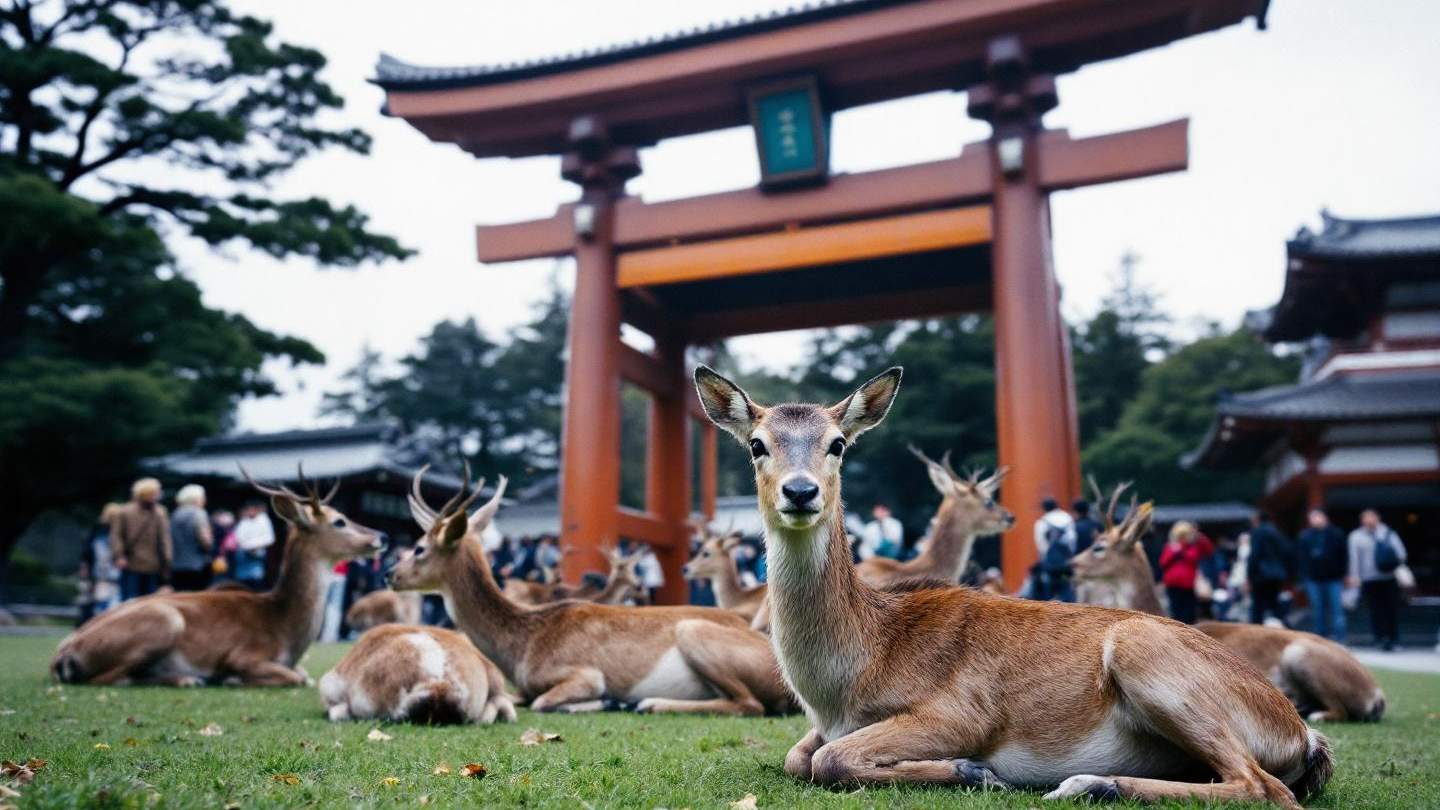
Nara was Japan’s capital before Kyoto, and the evidence remains overwhelming. Todai-ji’s Great Buddha Hall is the largest wooden building in the world. Kasuga Taisha’s stone and bronze lanterns number over three thousand. And wandering through all of it, entirely uncaged, are over 1,200 sika deer that have been considered sacred messengers of the gods since the 8th century and show absolutely no fear of people.
The deer are the first thing visitors encounter and the experience never fully loses its surreal quality. They bow (in anticipation of the shika senbei deer crackers sold by vendors for 200 yen a pack) and follow you through the park with mild persistence. They are genuinely wild animals — not aggressive but not timid either. Keep food out of sight if you do not want attention.
What to See in Nara
Todai-ji is the priority. The Great Buddha Hall contains a bronze Buddha statue 15 meters tall that has sat in this hall since 752 CE. Admission is 600 yen. The scale is genuinely staggering — the building is enormous and the statue inside it more so. A wooden pillar near the rear has a small hole at its base said to be the same size as the Buddha’s nostril; locals believe squeezing through it brings enlightenment. The queue to try is constant.
Kasuga Taisha is a 20-minute walk through the deer park from Todai-ji. The shrine complex dates to 768 CE and the lanterns that line the approaches are lit twice a year during the Setsubun Mantorou and Obon festivals. Regular admission is free; the inner sanctuary costs 500 yen.
Naramachi is the preserved merchant district south of the park, with machiya townhouses, small museums, craft shops, and sake breweries. Spend an hour here in the afternoon and you will leave the tourist circuit entirely.
Isuien Garden (admission 1,200 yen) is one of the finest Japanese gardens in the country, with Todai-ji’s great roof visible as borrowed scenery over the garden walls — one of the most compositionally perfect views in Japan.
Transport from Kyoto
Two options, both excellent. The Kintetsu Limited Express from Kintetsu Kyoto Station to Kintetsu Nara Station runs every 30 minutes, takes 35 minutes, and costs 1,160 yen one way. The JR Miyakoji Rapid from Kyoto Station to Nara Station takes 44 minutes and costs 720 yen — slower but covered by the JR Pass. Nara is compact enough that you can reach all major sights on foot from either station.
Recommended time: Full day (6–8 hours). Half a day is possible if you focus on Todai-ji and the deer park only.
Osaka
Osaka is the antithesis of Kyoto — loud, neon-bright, obsessively food-focused, and entirely comfortable with its reputation as Japan’s most hedonistic city. The contrast makes it an excellent day trip from Kyoto: you can spend the morning in temple silence and the evening eating your way through Dotonbori.
The practical reality is that Osaka is so close and so large that a day trip only scratches the surface. Many travelers choose to base themselves in Osaka instead of or in addition to Kyoto, but for those staying in Kyoto, the connection is fast enough to make regular excursions.
What to Do in Osaka on a Day Trip
Dotonbori is the essential experience: the canal district with its towering mechanical crab signs, takoyaki stalls, and dense crowds of people eating at all hours. Walk the full length of the canal on both sides, then go up a level to the Dotonbori arcade. Try takoyaki (around 500–700 yen for six pieces), kushikatsu (deep-fried skewers, around 130–200 yen each), and fresh ramen from one of the competing shops along the main strip.
Shinsekai is the older entertainment district around the Tsutenkaku Tower, with a distinctly different character from Dotonbori — older, grittier, with kushikatsu restaurants that operate under the famous local rule: no double-dipping the sauce. The Tsutenkaku Tower observation deck (admission 800 yen) offers good views but the neighborhood itself is the real attraction.
Osaka Castle (admission 600 yen to the museum inside) sits in a large park north of Dotonbori and is worth a 90-minute visit. The current tenshu (main tower) is a 1931 concrete reconstruction of the 16th-century original, but the stone walls and surrounding moat are genuine and impressive.
For more Osaka, see the dedicated Osaka guide.
Transport from Kyoto
The JR Shinkaisoku (Special Rapid) from Kyoto Station to Osaka Station takes 29 minutes and costs 580 yen — one of the best-value train connections in Japan. This is covered by the JR Pass. Alternatively, the Hankyu Kyoto Line from Kawaramachi Station to Osaka Umeda takes 47 minutes and costs 430 yen, connecting more directly to Shinsaibashi and the central Osaka entertainment areas.
Recommended time: Half day minimum; full day for a proper food and sightseeing experience.
Uji
Uji sits between Kyoto and Nara and is best known as the matcha capital of Japan. The Uji River, fed by snowmelt from surrounding mountains, provides the perfect combination of morning mist, temperature fluctuation, and filtered light that produces Japan’s highest-quality green tea leaves. The area has cultivated tea since the 9th century.
The town is small, manageable in 3–4 hours, and dramatically undervisited relative to its quality. This makes it an excellent half-day trip that can be combined with Fushimi Inari (on the same JR Nara Line) or an afternoon in Nara.
What to See and Taste in Uji
Byodoin Temple is the main historic attraction — the Phoenix Hall depicted on the 10-yen coin, set against a reflecting pond in a garden that has barely changed since 1053 CE. The combination of the hall, its reflection, and the sounds of the river nearby is one of the most serene scenes in Japan. Admission to the garden is 600 yen; the interior of the Phoenix Hall requires a separate timed ticket (300 yen) available from the on-site office.
Ujigami Shrine across the river is Japan’s oldest surviving Shinto shrine, dating to the late Heian period. Admission is free and the building itself is modest, but the weight of age — and the quiet of the surrounding forest — makes it worth the short walk across the Uji Bridge.
The main street from the station to Byodoin is lined with matcha specialists. Try soft-serve matcha ice cream (around 400–600 yen) from Nakanishi Ippoen or Kanbayashi Sannyu Honten, both of which have been operating for decades. Sit down for a full matcha parfait — matcha ice cream, matcha jelly, red bean, and mochi in a tall glass — for around 1,200–1,500 yen. For savory matcha, look for matcha soba noodles at the restaurants around the temple approach.
Uji tea farms on the hillsides above the town are visitable during harvest season (roughly May and October). Several farms offer picking experiences booked in advance, where you participate in the harvest and then have tea prepared from the leaves you picked.
Transport from Kyoto
JR Nara Line from Kyoto Station to Uji Station takes 17 minutes and costs 240 yen. The Keihan Uji Line from Chushojima Station (2 stops from Kyoto on the Keihan Main Line) to Keihan Uji Station takes 20 minutes and arrives slightly closer to Byodoin. Both options are simple and fast.
Recommended time: Half day (3–4 hours). Can be combined with Fushimi Inari in the morning.
Himeji Castle
Himeji Castle is the finest surviving feudal castle in Japan — a white six-story tower complex that has never been destroyed, burned, or bombed since its construction in the early 1600s. It is also the only Japanese castle consistently included in lists of the world’s most beautiful buildings. The UNESCO World Heritage designation is entirely deserved.
The castle complex covers a large area. The main tower (admission 1,050 yen, includes the Koko-en garden next door) takes about 60–90 minutes to climb through all six floors, with original defensive features intact: narrow arrow slits, trapdoors for dropping stones on attackers, and the gradual narrowing of each floor as you ascend. The views of the city and surrounding plain from the top floor are excellent.
Himeji is a full-day trip from Kyoto. The journey takes 1 hour each way, and the castle and its grounds alone require 3–4 hours. Combine with the Koko-en Garden (included in admission) and a brief walk through the Himeji city center shopping street for a full day.
Transport from Kyoto
JR Shinkansen (Nozomi or Hikari) from Kyoto Station to Himeji Station takes 30–40 minutes and costs 5,170 yen one way. Note: Nozomi trains are not covered by the JR Pass; use Hikari or Sakura trains if you have a pass, which take 50 minutes. The castle is a 15-minute walk or short bus ride from Himeji Station.
Recommended time: Full day (7–8 hours round trip including travel time).
Fushimi Sake District
Most visitors combine Fushimi with Fushimi Inari Shrine, but the two are actually separate areas about 20 minutes apart. Fushimi the sake district lies around Fushimi-Momoyama Station, while Fushimi Inari Shrine has its own dedicated station.
The sake town is one of Japan’s most pleasant and authentic brewery districts. The Horikawa canal runs through the neighborhood, lined with willow trees and old kura (brewery storehouses) with white plaster walls and dark timber details. The area produces around 15% of Japan’s total sake output from the exceptionally pure underground water that flows beneath the district.
Sake Tasting in Fushimi
Gekkeikan Okura Sake Museum (admission 600 yen, includes two cups of premium sake and a cup of shochu to taste) is the most organized introduction to the area. The museum traces Gekkeikan’s 380-year history with English exhibits explaining the fermentation process and seasonal production methods. The tasting room at the end provides generous pours.
Kizakura Kappa Country is a brewery complex with a restaurant, beer garden, and sake tasting bar. The Kizakura Beer (brewed on site) and Kizakura sake are both excellent. Lunch sets with multiple sake tastings run around 2,000–3,000 yen.
Several smaller breweries along the main canal street open their shop fronts with tasting counters. A 90-minute walk covering 4–5 tastings at different breweries (100–200 yen per small pour) is one of the most enjoyable afternoons you can have in the Kyoto area.
Transport from Kyoto
Kintetsu Kyoto Line from Kintetsu Kyoto Station to Fushimi-Momoyama Station takes 12 minutes and costs 270 yen. JR Kintetsu Line from Kyoto Station to Momoyama Station is also available. Do not confuse with Fushimi Inari Station on the JR Nara Line.
Recommended time: Half day (3–4 hours). Can be combined with Fushimi Inari on the same day.
Mount Hiei and Enryaku-ji
Mount Hiei rises to 848 meters on the northeastern border of Kyoto and has been a center of Buddhist practice since Saicho founded Enryaku-ji in 788 CE. For over a thousand years the mountain temple complex wielded enormous political and military power in Japanese society — at its peak, Enryaku-ji housed over 3,000 sub-temples and commanded an army of warrior monks. Oda Nobunaga burned the entire complex to the ground in 1571; the buildings you visit today are reconstructions from the late 16th century onward.
The mountain is divided into three precincts (Todo, Saito, and Yokawa) spread across several kilometers of forested ridgeline. A full exploration of all three areas takes 5–6 hours. Most visitors focus on the Todo and Saito precincts, which contain the most impressive buildings including the Kompon Chudo (the central hall, always lit by the “undying flame” that has burned for 1,200 years) and the Jodo-in, a small serene compound where the grave of Saicho is maintained.
The mountain is also home to the Kaihogyo practice — a marathon training in which certain monks walk circuits of 40–60 kilometers per day for hundreds of consecutive days over a seven-year period. The practice is ongoing and the monks who complete it are considered living Buddhas.
Transport from Kyoto
The combination route is most efficient: take the Eizan Railway from Demachiyanagi Station (north of central Kyoto, accessible via the Keihan Line) to Yase-Hieizanguchi Station, then the Hiei Ropeway and Shuttle Bus to the summit area. Alternatively, the Sakamoto Cable Car on the Shiga Prefecture side is the longest cable car in Japan. A day pass covering the ropeway and buses on the mountain costs around 3,300 yen. Enryaku-ji admission is 1,000 yen separately.
Recommended time: Full day (6–7 hours including travel). Bring layers — the mountain is significantly cooler than Kyoto city.
Kurama and Kibune
Kurama and Kibune are two mountain villages connected by a hiking trail in the northern Kyoto mountains, collectively offering one of the best half-day nature escapes in the region. The combination of forest trail, mountain temples, and riverside restaurant dining makes this a distinctly different experience from the temple circuits of central Kyoto.
Kurama-dera Temple clings to the forested hillside above Kurama village. The approach by mountain trail takes about 45 minutes and passes through cedar forest, small sub-shrines, and increasingly dramatic scenery. The main hall at the summit has views over the valley below. Admission is 500 yen.
The mountain trail connects Kurama to Kibune on the other side (about 1.5 hours of walking through forest). Kibune is famous for its kawadoko — restaurants that set tables directly over the Kibune River on platforms so close to the water surface that you can hear it rushing below during the summer months (roughly May to September). A lunch or dinner of kaiseki or tofu-based cuisine at one of the kawadoko restaurants costs 4,000–10,000 yen per person and is one of the most memorable meals in the Kyoto area.
Transport from Kyoto
The Eizan Railway runs from Demachiyanagi Station to both Kurama (northern terminus) and Kibune-guchi (get off here and walk 30 minutes or take a bus to Kibune village). The journey to Kurama takes 32 minutes and costs 420 yen. The standard approach is to take the train to Kurama, hike over to Kibune, have lunch at a kawadoko restaurant, then return by bus to Kibune-guchi Station.
Recommended time: Half day to full day. Best in summer for kawadoko dining, beautiful in autumn for foliage.
Planning Your Day Trips
Rank by interest, not by popularity. Nara is often treated as obligatory but it genuinely is excellent. Uji is consistently underrated. Himeji requires the longest journey but rewards it.
Combine strategically. Uji and Fushimi are both on or near the JR Nara Line and can be combined in a single day if you start early. Kurama and Kibune are naturally paired. Osaka can absorb an unlimited number of days so go when you have energy for a completely different city character. Kobe is also reachable in under an hour and pairs well with an afternoon in Osaka on the same day.
Transport passes. The JR Kansai Area Pass (1-day to 4-day options, from 2,400 yen per day) covers JR trains between Kyoto, Osaka, and Himeji and represents good value if you are making multiple regional trips. The Kintetsu Rail Pass covers trips to Nara and Fushimi-Momoyama. A regular ICOCA or Suica IC card is sufficient and flexible for individual trips.
Start early. Nara and Himeji get crowded in the mid-morning as day trip groups from Osaka and Kyoto arrive simultaneously. An 8am departure from Kyoto gets you to most destinations before the crowds build.