Best Things to Do in Kamakura
Last updated: March 2026
Kamakura was Japan’s de facto capital for 150 years, from 1185 to 1333, when the warrior government of the Kamakura shogunate ruled the country from this coastal city south of Tokyo. The legacy of that era — dozens of Zen temples, samurai-era shrines, and the famous open-air Great Buddha — remains extraordinarily well preserved in a compact area backed by forested hills and fronted by a Pacific Ocean beach. On weekends, the crowds of day-tripping Tokyoites reflect the city’s enduring pull.
Kamakura is manageable in a single day and genuinely excellent for it. The things to do in Kamakura span ancient religious architecture, quiet forested hiking trails, the retro coastal tram called the Enoden, surf beaches, and an excellent cafe culture that has grown up around the tourist district. This guide tells you exactly where to spend your time.
Quick Reference
| Activity | Time Needed | Cost | Best For |
|---|---|---|---|
| Kotoku-in Great Buddha (Kamakura Daibutsu) | 45–60 minutes | 300 yen | All visitors |
| Tsurugaoka Hachimangu Shrine | 45–60 minutes | Free (grounds) | History, architecture |
| Engaku-ji Temple | 45–60 minutes | 500 yen | Zen, atmosphere |
| Enoshima Island | 2–3 hours | 500 yen (cave) | Coastal scenery |
| Hasedera Temple | 45–60 minutes | 400 yen | Gardens, sea views |
| Hokoku-ji Bamboo Temple | 30–45 minutes | 300 yen + 600 yen matcha | Bamboo, tranquility |
| Enoden tram ride | 30 minutes (end to end) | 310 yen one way | Atmosphere, views |
| Daibutsu Hiking Course | 2–3 hours | Free | Hiking, forest |
| Komachi-dori Street | 45–60 minutes | Free (browsing) | Shopping, snacks |
| Zushi or Yuigahama Beach | 1–3 hours | Free | Summer swimming |
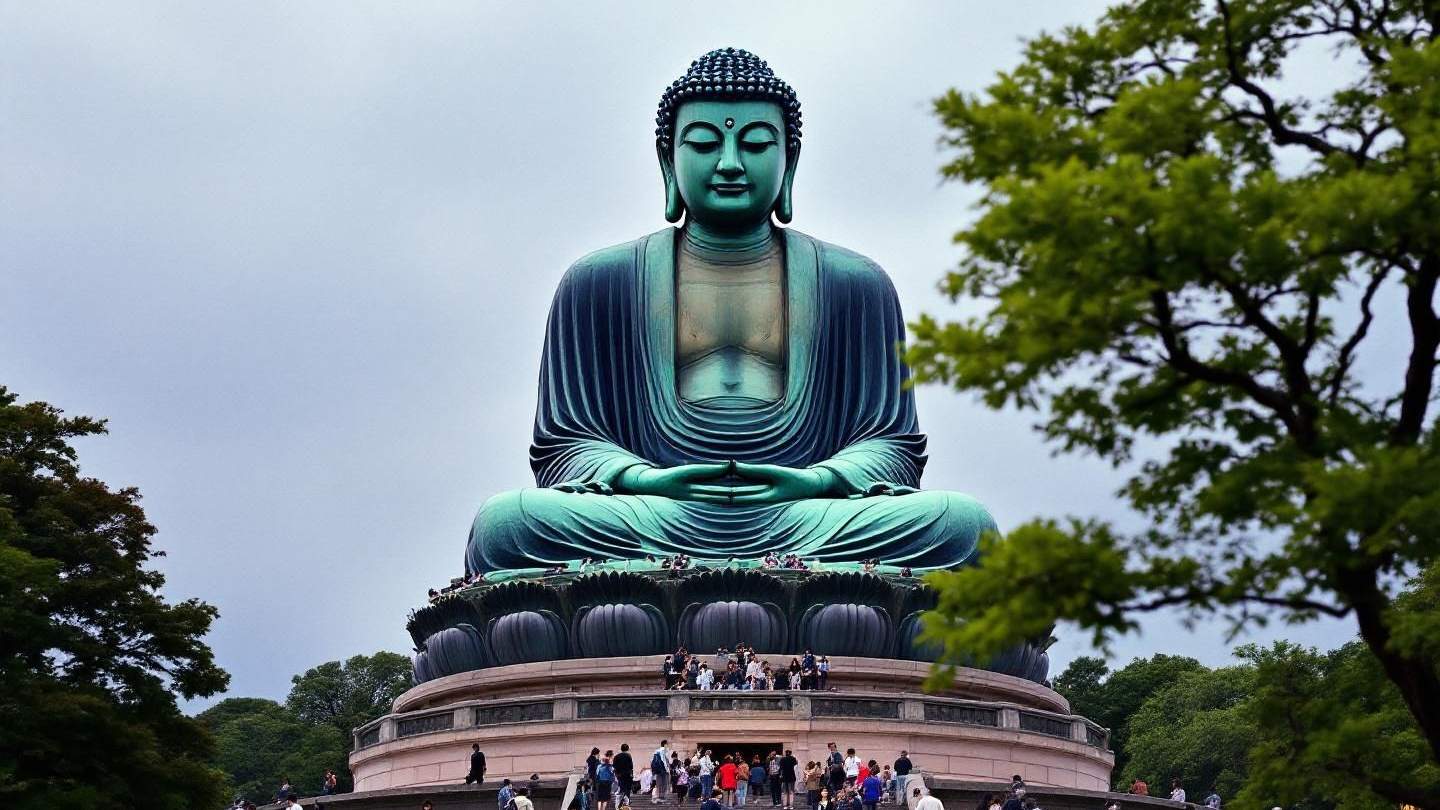
The Great Buddha (Kamakura Daibutsu)
The Kotoku-in Great Buddha (admission 300 yen) is Japan’s second-tallest bronze Buddha statue at 11.3 meters, and arguably its most memorable — not because of the size (Nara’s Great Buddha is taller) but because of where it sits. The Daibutsu is outdoors, surrounded by a modest temple garden, seated in the open air on a stone platform with the forested hills of Kamakura rising behind it. It was originally housed inside a large wooden hall, but the hall was destroyed by a typhoon and tsunami in the 15th century, and the statue has sat in the open air ever since.
The Buddha’s expression — a serene, half-lidded downward gaze — is one of the finest examples of Kamakura-period sculpture, dating to 1252. The interior of the statue is accessible (an additional 20 yen, cash only) via two small windows in the statue’s flanks; you can stand inside the hollow bronze shell and look up into the statue’s torso.
The site is busy but never feels overwhelmed — the open garden absorbs visitor volume well. Arrive by 9am to experience the early morning light falling on the statue before the tour groups arrive.
Tsurugaoka Hachimangu Shrine
Tsurugaoka Hachimangu (grounds free; museum 200 yen) is Kamakura’s most important shrine, founded in 1063 and expanded by the first Kamakura shogun Minamoto no Yoritomo into a vast ceremonial complex. The main approach — a broad tree-lined boulevard (Wakamiya-oji) stretching from the sea to the shrine — was designed as a processional route and gives Kamakura its central spine.
The shrine complex includes the main hall on a raised earthen platform, flanking ponds (Genpei Ponds) planted with iris and lotus, a stage where traditional dance performances are held, and the Kamakura National Treasure Museum housing medieval Buddhist art. The shrine is particularly atmospheric during the Yabusame equestrian archery festival in September, when archers in Heian period dress shoot targets from galloping horses along a straight track within the shrine grounds.
The approach street Wakamiya-oji and the parallel shopping street Komachi-dori are the commercial heart of Kamakura, lined with souvenir shops and restaurants. Komachi-dori in particular has good street food including kuzu-mochi (arrowroot cake), shirasu-don (tiny whitefish rice bowl from local fishermen), and specialty coffee from several roasters that have opened along the street.
Enoshima Island
Enoshima is a small island connected to the mainland by a bridge, located at the southern end of the Enoden tram line from Kamakura. The island packs extraordinary variety into a small area: a winding commercial street (Benzaiten-dori) leading uphill through souvenir shops to a Shinto shrine, a botanical garden, a lighthouse-observatory tower, and sea caves carved by the Pacific.
The Iwaya Caves (admission 500 yen) at the island’s western tip are sea caves extending about 150 meters into the rock, lit by candles. The effect is atmospheric in a way that photographs do not quite capture. The walk from the bridge to the caves and back takes about two hours, not counting time at the shrine or garden.
The Enoshima Sea Candle observation tower (500 yen elevator access) offers views over the Pacific, the Enoshima coastline, and on clear days the silhouette of Mount Fuji to the northwest.
Enoshima’s seafood is a secondary attraction worth making time for: shirasu (whitebait) is the local specialty, served fresh (raw shirasu don) from spring to autumn and cooked year-round. Several restaurants along the approach street serve it in multiple forms. Fresh shirasu don typically costs 1,200–1,500 yen.
Hasedera Temple
Hasedera (admission 400 yen) is one of Kamakura’s most beautiful temple complexes — a hillside garden leading to a main hall housing a 9-meter gilded wooden Kannon statue (the goddess of mercy) dating to the 8th century, one of Japan’s largest wooden sculptures.
The temple grounds include a Japanese garden, a lotus pond, a cave containing small stone Jizo statues (the guardian deity of children and travelers), and most importantly: an observation terrace on the hillside with a sweeping view across Kamakura’s rooftops to Sagami Bay and the Pacific Ocean. This is one of the best views in Kamakura and the temple is significantly less crowded than the Great Buddha site despite being of comparable importance.
Ajisai (hydrangea) season in June transforms the hillside path at Hasedera into a cascade of purple and blue flowers. The early morning light on the view terrace is exceptional.
Engaku-ji and the Kita-Kamakura Temple Walk
Kita-Kamakura (North Kamakura) is the station one stop north of Kamakura on the JR Yokosuka Line, and the starting point for a temple walk through several of Kamakura’s finest Zen institutions.
Engaku-ji (admission 500 yen) is one of Japan’s most important Zen temples, founded in 1282 to commemorate soldiers killed in the Mongol invasions. The grounds extend up a wooded valley and include a large meditation hall, the oldest existing belfry in Kamakura (with an enormous bell that can be seen but not rung by visitors), and multiple sub-temples. The atmosphere — particularly in the early morning before 9am — is one of the quietest and most genuinely contemplative in the Kamakura area.
Tokei-ji (admission 200 yen), a short walk from Engaku-ji, was historically known as the “Divorce Temple” — women who entered the convent could, after three years of residence, be legally freed from an unwanted marriage, at a time when divorce was otherwise impossible for women. Today it is a quiet temple known for its seasonal flowers: plum in February, iris in June, autumn leaves in November.
Kencho-ji (admission 500 yen), further south toward central Kamakura, is the largest and most officially prominent of Kamakura’s Zen temples — the first temple in the official ranking of Kamakura’s five great Zen temples. The juniper trees in the main garden are said to have been grown from seeds brought from China by the temple’s founding monk in 1253.
Hokoku-ji Bamboo Temple
Hokoku-ji (admission 300 yen, plus 600 yen for matcha tea) is a Zen temple in the quiet eastern hills of Kamakura whose claim to fame is a bamboo grove maintained within the temple grounds — approximately 2,000 culms of Mousou bamboo creating an enclosed, vertical, filtered-light space behind the main hall. It is smaller than Arashiyama’s famous bamboo grove in Kyoto but significantly quieter, and the option to sit with a bowl of matcha looking into the bamboo is exactly as peaceful as it sounds.
The walk to Hokoku-ji from central Kamakura takes about 20–25 minutes or 10 minutes by taxi.
The Enoden Tram
The Enoden (Enoshima Electric Railway) is a single-track tram line running along the coast between Kamakura and Fujisawa, passing through residential streets narrow enough that the tram occasionally passes within arm’s reach of houses, running directly along the Pacific seashore, and connecting the Great Buddha area to Enoshima. A single-ride fare is 310 yen (Kamakura to Enoshima); a day pass is 800 yen.
Even if you do not have specific destinations along the route, the tram itself is an attraction — the coastal section between Inamuragasaki and Kamakura-Koko-mae stations runs along the cliff edge with ocean views that are genuinely spectacular. The view looking back toward the mountains from the sea section is one of Kamakura’s best.
The anime Slam Dunk famously featured the crossing at Kamakura-Koko-mae station, and the resulting pilgrimage of fans from across East Asia creates a now-permanent crowd at the crossing gate. This is either charming or baffling depending on your perspective.
Hiking the Daibutsu Course
Kamakura’s forested hills contain a network of hiking trails connecting the temples. The Daibutsu Course (roughly 2.5 kilometers, 2–3 hours including stops) is the most popular, running from Kita-Kamakura through the forested ridgeline to Zeniarai Benzaiten Shrine (a cave shrine where coins washed in the spring water are said to multiply) and down to the Great Buddha. The trail is unpaved and requires some care after rain but is accessible to any reasonably fit adult.
Zeniarai Benzaiten Shrine (free) is reached through a low tunnel in the hillside and consists of a cave complex with stone altars, incense smoke, and hundreds of visitors washing coins and bank notes in the spring water inside the cave. It has the quality of a secret place despite being busy — the cave setting makes it feel genuinely apart from the regular tourist circuit.
Best Time to Visit Kamakura
| Season | Conditions | Highlights | Crowds |
|---|---|---|---|
| Spring (Mar–May) | 10–22°C | Cherry blossoms at Tsurugaoka and Kencho-ji, spring plum at Tokei-ji | Very high in late March–April |
| Summer (Jun–Aug) | 22–32°C, humid | Hydrangeas at Hasedera (June), beach season at Yuigahama | Very high; beaches packed July–August |
| Autumn (Sep–Nov) | 14–24°C, pleasant | Autumn foliage at Engaku-ji and Kencho-ji, Yabusame archery (September) | High in November |
| Winter (Dec–Feb) | 4–12°C | Quiet temples, plum blossoms in February, uncrowded Enoden | Low; best for temples without crowds |
Weekdays are dramatically preferable to weekends throughout the year. The Enoden in particular becomes uncomfortably crowded on summer and autumn weekends and a slow, pleasant experience on weekdays.
How to Get to Kamakura
| Route | Travel Time | Cost | Notes |
|---|---|---|---|
| JR Yokosuka Line from Tokyo Station | 56 minutes | 940 yen | Direct, comfortable, JR Pass valid |
| JR Shonan-Shinjuku Line from Shinjuku or Shibuya | 55–60 minutes | 940 yen | JR Pass valid; convenient from west Tokyo |
| Odakyu + Enoden from Shinjuku to Fujisawa to Kamakura | 80–90 minutes | ~900 yen | Passes through Enoshima; good for a loop |
Kamakura is well covered in the full Day Trips from Tokyo guide, which includes combined itineraries for Kamakura and Enoshima as a single day trip, as well as options combining Kamakura with Yokohama.
Practical Tips
Kamakura is small and walkable. The distance from Kamakura Station to the Great Buddha is about 2 kilometers (25 minutes walking through the temple district). Renting a bicycle (1,000–1,500 yen per day from shops near the station) is an excellent way to cover more ground.
Shirasu season runs roughly from March through October. Spring shirasu (April to mid-June) is considered the finest — small, fresh, and sweet. This is the best season for the local seafood specialty.
Weekend crowds at the Great Buddha begin building around 10am. Arrive at opening (8am) for the best experience, or accept the crowds and arrive at lunch when many tour groups depart.
The Kamakura Museum of National Treasures (admission 700 yen, open Tue–Sun) behind Tsurugaoka Hachimangu houses rotating exhibitions of Kamakura-period sculpture and paintings from local temples — an excellent indoor alternative during rain.
See the full Kamakura Travel Guide for accommodation options, neighborhood details, and a deeper itinerary for overnight visitors.
Kamakura Food and Drink
Kamakura’s food scene has developed significantly beyond the standard day-trip snack circuit. The city has an established cafe culture, several serious restaurants, and unique local specialties tied to its coastal and forested environment.
Shirasu (whitebait) is the non-negotiable Kamakura food experience. These tiny fish are caught just offshore and served in two forms: nama-shirasu (raw, available from spring through autumn when fishing is open — check seasonal availability) and kama-age shirasu (lightly blanched). Shirasu-don — a bowl of rice topped with one or both types — is available at numerous restaurants along Komachi-dori and near the beach for 1,200–1,800 yen. The raw version has a delicate, sweet flavor that is genuinely excellent.
Kamakura craft coffee has become a genuine scene. The area around Komachi-dori and particularly the quieter lanes off the main street have multiple serious specialty coffee roasters. Cafe Reverie (near Tsurugaoka Hachimangu) and several other small roasters serve single-origin pour-over coffee at 700–900 yen per cup.
Kuzu-mochi (arrowroot cake) is a Kamakura specialty sold at Kuzumochiya Fujimiya, a small shop near the Great Buddha, where arrowroot is pressed into cakes and served chilled with black sugar syrup and kinako (roasted soybean flour). Light, unusual, and good.
Craft sake: Several izakayas near Kamakura Station and along the Enoshima Road serve local and Kanagawa-prefecture sake alongside excellent grilled fish and vegetables. The evenings in Kamakura are significantly less crowded than the days — staying for dinner and taking the last train back gives a very different experience from the tourist rush.
Kamakura’s Beach Neighborhoods
Kamakura sits on the Pacific coast and has several beaches accessible directly from the Enoden tram. Yuigahama Beach is the main beach, about 1 kilometer from Kamakura Station, with lifeguards, beach shacks serving food and drinks, and board rental during the summer season (July–August). It is a working local beach rather than a designed resort, and significantly less crowded than the famous beaches of Shonan to the west.
Inamuragasaki — the rocky headland accessible from the Enoden tram stop of the same name — has no beach but excellent coastal views and a park on the cliff edge that is one of the best sunset spots in the Kamakura area. On clear days, Mount Fuji is visible to the west over the Pacific.
The Shonan coastline (Chigasaki, Hiratsuka, Oiso) stretches west of Kamakura and is Japan’s original surf culture heartland. Even for non-surfers, the coastal road along this stretch during summer is worth a bicycle or walk — the Pacific light, seafood restaurants, and casual beach culture are a distinct contrast to the temples that occupy most Kamakura itineraries.
Kamakura Itinerary Options
Half-day from Tokyo: Komachi-dori, Tsurugaoka Hachimangu, and the Great Buddha via bicycle. Allow 4–5 hours total including travel from Tokyo.
Full day from Tokyo: Add the Enoden tram to Hasedera, Enoshima, and either a hike (Daibutsu Course) or a sit-down shirasu lunch. Allow 8–9 hours.
Full day + evening: Stay for a seafood dinner in central Kamakura before the last train. The crowds thin significantly after 4pm and the temples take on a different quality.
Overnight: Adds the Kita-Kamakura temple walk (Engaku-ji, Tokei-ji, Kencho-ji), the bamboo temple at Hokoku-ji, and unhurried exploration of Naramachi’s equivalent in Kamakura — the hillside lanes near Hase.
For the full logistics of combining Kamakura with a Tokyo day-trip, the Day Trips from Tokyo guide has Kamakura covered with timing options and combination suggestions including Enoshima and Yokohama.