Japan Luggage Forwarding and Storage Guide
Last updated: March 2026
Can I send my luggage ahead in Japan?
Yes. Japan has an excellent luggage forwarding service called takkyubin (宅急便). For about 2,000-3,000 yen per bag, companies like Yamato Transport will deliver your suitcase to your next hotel by the next day. You can arrange this at any convenience store, hotel front desk, or airport counter.
The Luggage Problem in Japan
Japan is one of the world’s most train-dependent countries, which creates a specific challenge for travelers with large suitcases. The stations are often large and multilevel. The trains run frequently but platforms are crowded. Escalators exist but are not always placed conveniently. Walking from a station to a temple, hotel, or restaurant through narrow streets with a 25-kilogram rolling suitcase is possible but exhausting and inconsiderate to other pedestrians.
The good news: Japan has developed outstanding infrastructure specifically to solve this problem. Coin lockers at stations let you store luggage for hours. Luggage forwarding services (takkyubin) will transport your suitcase to your next hotel by the following morning, usually for less than 3,000 yen. Airport transfer delivery means you can send your bags from your first hotel to the airport before departure day, letting you spend your last day in the city without dragging suitcases.
This guide explains every option in full. For packing advice that makes the whole question simpler, see the what to pack for Japan guide. For understanding the train system that makes these services so useful, read the how to use trains in Japan guide.
Coin Lockers — Day Storage at Stations
Coin lockers (コインロッカー) are available at virtually every train station in Japan, from tiny rural stations to massive urban hubs. They allow you to store luggage for a day while you explore — useful when you arrive at a destination before hotel check-in time, or want to spend a day sightseeing before catching an evening train.
Locker Sizes
| Size | Dimensions (approx.) | Best For | Daily Cost |
|---|---|---|---|
| Small | 35 × 57 × 34 cm | Day bag, small backpack | 300–400 yen |
| Medium | 57 × 57 × 34 cm | Carry-on bag, laptop bag | 400–500 yen |
| Large | 82 × 57 × 34 cm | Standard cabin suitcase | 500–700 yen |
| Extra Large | 117 × 57 × 34 cm | Large checked suitcase | 700–900 yen |
Dimensions vary by manufacturer and station. When in doubt about fit, most stations have lockers of multiple sizes and you can check before paying.
How to Use Coin Lockers
Step 1: Find the locker bank. In major stations, look for yellow Yamato Transport lockers, green JR lockers, or other branded units. They are usually near the main exits, near ticket gates, or along main corridors.
Step 2: Choose a locker size that fits your bag. Open an empty locker (most have a handle or press a button to check availability — green light means empty, red means occupied).
Step 3: Place your bag inside and close the door. The locker is not yet locked.
Step 4: Insert coins or use an IC card (Suica/Pasmo) to pay. Most modern lockers accept IC card payment — tap the card reader and the door locks automatically. For coin payment, insert coins first, then the door locks when you close it.
Step 5: Take your key (for older coin-operated lockers) or note your locker number (for digital/IC card lockers). For IC card lockers, the payment is linked to your card — just tap the same card to unlock later.
Step 6: To retrieve, insert your key or tap your IC card.
Payment Period and Overnight Storage
Coin lockers are charged per calendar day, not per 24 hours. A locker rented at 3 pm on Monday and retrieved at 10 am on Tuesday costs two days’ fees. The day resets at midnight.
Most coin lockers allow storage for 2–3 days maximum before the contents are removed. The station manages this to prevent lockers being used as long-term storage.
Overnight coin locker storage is possible at most stations, but check the station’s rules — some stations lock the locker area overnight. Tokyo Station, Kyoto Station, and Osaka Station lockers are accessible 24 hours.
Finding Empty Lockers
Large stations like Kyoto Station, Shinjuku, and Osaka can have all lockers occupied during peak periods (Golden Week, spring and autumn holidays, summer weekends). Strategies:
- Arrive early: Most lockers empty overnight as travelers collect bags from the previous day. Morning availability (7–9 am) is usually the best.
- Try multiple locker banks: Major stations have lockers in several locations. If one set is full, look for another on the opposite side of the station or at a different exit.
- Use a luggage storage service: If all lockers are full, dedicated luggage storage counters (discussed below) are an alternative.
- Check Kyoto Station’s 1F Nishinotoin exit: This section consistently has a larger locker bank and is less used than the Karasuma Central exit area.
IC Card Payment — The Smart Choice
Modern coin lockers at major stations support payment by Suica, Pasmo, or other IC cards. This is more convenient than carrying coins:
- No need to have exact change
- Unlocking is done by tapping the same card
- Receipts can be checked digitally
If you have a Suica card (the standard IC card for Japan), use it for locker payment. It works at JR East lockers, most private rail company lockers, and the Yamato locker system at convenience stores.
Takkyubin — Luggage Forwarding Between Hotels
Takkyubin (宅急便) is Japan’s door-to-door luggage delivery service, and it is one of the best things about traveling in Japan. The word “takkyubin” is technically a brand name of Yamato Transport (yamato-hd.co.jp), but it is used generically (like “Hoover” for vacuum cleaner) to describe any luggage forwarding service.
The concept: you drop off your suitcase at an authorized location (convenience store, hotel front desk, or airport counter), fill in a simple form with your destination hotel’s address, pay the fee, and your bag is delivered to that hotel by the following day (usually by mid-afternoon). You travel by train or bus carrying only a light daypack, and your luggage is waiting at reception when you check in.
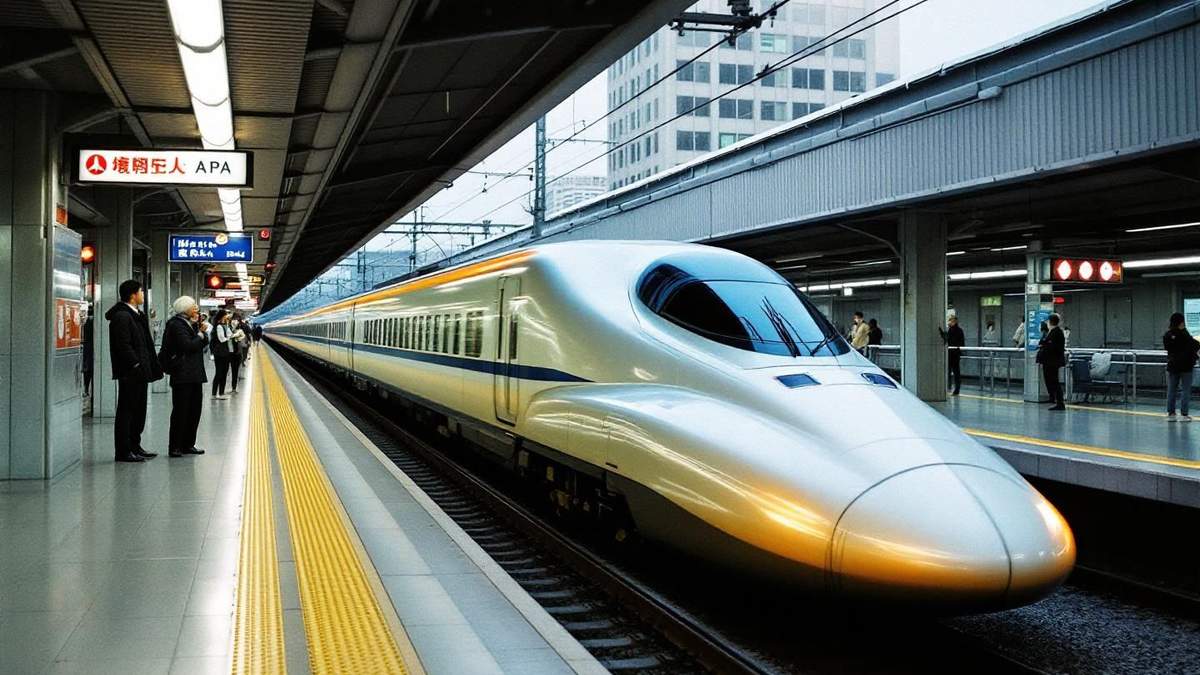
This transforms your Japan travel experience if you are moving between cities. Tokyo to Kyoto by Shinkansen with only a daypack is a completely different (and better) experience than dragging suitcases.
The Two Main Operators
Yamato Transport (クロネコヤマト): The largest and most well-known service. Their delivery vehicles display a black cat logo — hence the nickname “Black Cat” or Kuroneko. Available at 7-Eleven, FamilyMart, Lawson, hotel front desks, Yamato Service Centers, and airports. English-language support at major tourist areas.
Sagawa Express (佐川急便): The second major operator. Less ubiquitous at convenience stores than Yamato but available at FamilyMart locations and dedicated service points. Generally comparable prices and reliability.
Costs
Prices are calculated by size (three dimensions added together, in centimeters) and distance zone. Bags are measured by the total of length + width + height in centimeters.
| Bag Size | Within Same Prefecture | Between Adjacent Regions | Cross-Country (e.g., Tokyo to Kyoto) |
|---|---|---|---|
| 60cm (small carry-on) | 930 yen | 1,200 yen | 1,500–1,700 yen |
| 80cm (standard carry-on) | 1,050 yen | 1,400 yen | 1,700–2,000 yen |
| 100cm (medium suitcase) | 1,200 yen | 1,600 yen | 2,000–2,300 yen |
| 120cm (large suitcase) | 1,350 yen | 1,800 yen | 2,300–2,600 yen |
| 140cm (very large suitcase) | 1,550 yen | 2,000 yen | 2,700–3,000 yen |
| 160cm (maximum standard) | 1,750 yen | 2,200 yen | 3,000–3,400 yen |
Prices shown are approximate and vary by season — surcharges apply during Obon (mid-August) and New Year holiday periods. Oversized bags (over 160cm total) are subject to additional charges.
To measure your bag: add length + width + height in centimeters. A common large checked suitcase (75cm × 50cm × 30cm) = 155cm — within the standard 160cm limit.
How to Send Your Bag from a Convenience Store
This is the most convenient method for most travelers.
Step 1: Go to a 7-Eleven, FamilyMart, or Lawson with your bag and destination hotel’s address (in Japanese, or clearly printed in English for staff to read).
Step 2: Ask for a takkyubin form at the cashier desk. In tourist areas, staff may proactively offer English forms or point to the touch-screen system.
Step 3: Fill in the form: your name and current address (hotel), destination name and address, phone number of destination, delivery date.
Step 4: Pay the fee. You receive a tracking number/receipt.
Step 5: Leave the bag at the store. The courier collects it from the store later that day.
Delivery timing: Bags sent by approximately 2–3 pm typically arrive at the destination by noon the following day. You can select an afternoon delivery window (2 pm – 4 pm or later) if you are doing an early-morning check-in. Most hotels will hold the bag at reception if you have not yet arrived.
Delivery date selection: You can choose a delivery date up to a few days ahead if you want to pace the forwarding. This is useful for multi-city trips: send bags from Tokyo two days ahead, explore Tokyo unburdened, then have bags waiting in Kyoto on arrival day.
How to Send from Your Hotel
Simply bring your bag to the front desk and ask to arrange takkyubin. The hotel staff complete the form (they know the process well) and the courier collects from the hotel. This is slightly less DIY than the convenience store method but easier if you have language concerns.
Most ryokan and hotels in tourist areas have standard practice for this and can often arrange delivery to your next accommodation for a convenience fee of 100–300 yen above the base cost.
Airport Luggage Services
Sending Bags from the Airport to Your Hotel (Arrival Day)
Yamato Transport, Sagawa, and JAL ABC operate counters in the arrival halls of all major airports in Japan. When you land and clear customs, you can send your suitcase directly to your hotel before boarding the train.
Why this is worth doing on arrival: Navigating Narita to Tokyo or the Haneda to Tokyo journey is much more comfortable without large bags. You board the train with just a daypack, your hotel bags arrive by afternoon or the following morning.
Counter locations:
- Narita Airport: Terminal 1 Arrivals B1 (Yamato Transport counter), Terminal 2 Arrivals
- Haneda Airport: Terminal 3 Arrivals Hall
Cost: Same takkyubin pricing as convenience stores, roughly 1,500–3,000 yen per bag for Tokyo hotels depending on size.
Timing: Bags sent from the airport arrive at central Tokyo hotels by approximately early afternoon the same day if you send them before 11 am. After noon, next-day delivery is more reliable to count on.
Sending Bags to the Airport Before Departure
On your last day in Japan, rather than dragging suitcases to the airport on departure day, you can send them 1–2 days ahead.
From your final hotel: Ask the front desk to arrange airport forwarding (空港宅配 — kuukou takuhai). Yamato and JAL ABC offer “Airport Delivery” service that brings bags directly to the airport’s departure floor check-in area by appointment.
Timing: Send bags 2 days before your flight. You can request a delivery time window — most travelers ask for delivery the morning of their flight, or the day before.
Cost: Approximately 2,500–4,000 yen per bag to Narita or Haneda. You retrieve the bags at the designated forwarding counter in the departure terminal (not check-in — the bags are stored by Yamato, you pick them up and check them in yourself).
Note: This does not replace airline check-in — you still check the bag at the airline counter. The airport delivery service merely transports your physical bag to the terminal so you do not carry it on the final train journey.
Left Luggage Storage Services (Staffed Counters)
In addition to coin lockers, major tourist destinations have staffed left luggage counters (手荷物一時預かり — nimotsu ichiji azukari) where a person stores your bag and gives you a ticket.
Advantages over coin lockers:
- Can accommodate oversized bags that don’t fit in standard lockers
- No size limits
- Often cheaper per day for very large bags
- Staff can assist if you have questions
Common locations:
- All major Shinkansen stations (Tokyo, Kyoto, Osaka, Hiroshima, etc.)
- Major tourist areas (Asakusa, Arashiyama, Nara)
- Theme parks and major attractions
Cost: Approximately 400–700 yen per bag per day, similar to coin lockers.
Hours: Staffed counters typically operate 7 am–8 pm or 8 am–9 pm. Unlike coin lockers, they close overnight, so you cannot retrieve a bag outside operating hours.
Traveling Light — The Best Luggage Strategy
The most effective luggage strategy in Japan is the simplest: bring less.
One-bag travel: Many experienced Japan travelers use a single carry-on size bag (under 50cm × 35cm × 25cm) for trips of 1–2 weeks. Japan has excellent pharmacies and convenience stores where you can buy toiletries, so there is no need to pack full-size products. Coin laundry (コインランドリー) is available in most neighborhoods and at most accommodation. A full wash-and-dry cycle costs 600–1,000 yen.
Shipping purchases home: If you buy things in Japan (clothing, ceramics, electronics, sake), ship them home using EMS (international postal service) or Yamato’s TA-Q-BIN international forwarding service rather than overpacking your bag for the flight home. Department stores (depato) and major electronics chains like Yodobashi Camera often offer tax-free shipping services.
Packing cubes and compression: For unavoidable large bags, organize with packing cubes — finding items in your suitcase quickly means you can pack the essentials into a small daypack for each day’s walking without unpacking everything.
The what to pack for Japan guide has a detailed packing list organized by trip length and season. Travelers heading between the major cities should also read the Tokyo to Kyoto guide and Narita to Tokyo guide for context on the train journeys where luggage logistics matter most.
Practical Summary
| Service | Best For | Cost | Available |
|---|---|---|---|
| Coin locker (small) | Half-day bag storage | 300–400 yen | All major stations |
| Coin locker (large) | Full-day suitcase storage | 500–700 yen | All major stations |
| Staffed left luggage | Oversized bags, short term | 400–700 yen | Tourist stations, attractions |
| Takkyubin (hotel-to-hotel) | Moving between cities | 1,500–3,400 yen | Convenience stores, hotels |
| Airport arrival delivery | First-day arrival, bag to hotel | 1,500–3,000 yen | Airport arrival counters |
| Airport departure delivery | Last-day departure, hotel to airport | 2,500–4,000 yen | Hotel front desk |
Tips You Will Thank Yourself For
Send bags before you need to: On the day you leave Tokyo for Kyoto, send bags the evening before or first thing in the morning. Do not leave it to the last minute at the station.
Keep your phone charger and one change of clothes in your daypack: On forwarding days, your big bag will arrive at the hotel while you are out. You want your essentials on your person.
Photograph the address on the form: Take a photo of the completed takkyubin slip in case there is a delivery query.
English at convenience stores: In tourist-heavy cities (Tokyo, Kyoto, Osaka, Hiroshima), 7-Eleven staff at major tourist-area stores are generally experienced with the takkyubin tourist process. Outside major cities, bring the address written in Japanese.
Hotels with 24-hour desks: When forwarding bags, confirm your destination hotel has a front desk that accepts deliveries. Budget hotels and guesthouses may not. Most mid-range and above hotels in Japan have 24-hour reception and are fully equipped to accept and store forwarded luggage.
For broader planning, the plan a trip to Japan guide covers building an itinerary that accounts for luggage logistics across multi-city routes. New arrivals can also review the Japan visa guide to understand what to expect at Japanese customs when you first land.