Japan for Families
Last updated: March 2026
Japan with kids is one of travel’s great underrated combinations. The country that looks complicated on the surface — unfamiliar writing, complex transport, cultural rules — turns out to be extraordinarily family-friendly in practice. Japan family trip planning rewards a slightly different approach than a couple’s or solo trip, but the payoff is enormous: children who experience Japan tend to be genuinely transformed by the encounter with a culture so different from their own, and parents who have made the trip almost universally describe it as their best family holiday.
This is the practical guide to family-friendly Japan that covers the logistics honestly, the activities that actually work with children, the food question, and the age-specific considerations that determine whether a Japan trip is exciting or exhausting for your particular family.
Is Japan Family-Friendly?
The answer is a firm yes, with some important caveats. Japan is exceptionally safe, clean, and well-organised — all qualities that make it easier to travel with children. Japanese society is broadly accepting of children in public spaces. Convenience stores, train stations, and shopping complexes all have clean baby-changing facilities.
The main challenge is the physical one: Japan requires significant walking, often on uneven surfaces (ancient stone paths, narrow temple approaches, hilly terrain). Families with very young children (under 2 years) face stroller logistics that require planning. Families with children aged 4–14 typically find Japan one of the most engaging destinations they have ever visited.
Age by age:
- Under 2: Manageable but physically demanding. Baby food available in convenience stores. Carrying backpack preferable to stroller on temple routes.
- 2–4 years: Toddler energy plus Japan’s walking demands is challenging. Focus on parks, zoos, and short activity windows.
- 5–10 years: Excellent. Children this age find Japan magical — deer parks, robot restaurants, anime everything, incredible food, interactive museums.
- 11–15 years: Outstanding. Teenagers engage deeply with gaming, technology, fashion, food culture, and pop culture — all of which Japan delivers at world-class level.
Top 15 Family Activities in Japan by City
| Activity | City | Age Range | Cost | Notes |
|---|---|---|---|---|
| Nara deer park | Nara | 3+ | Free (deer crackers ¥200) | Children feed wild deer; unforgettable |
| teamLab Borderless | Tokyo (Odaiba) | 4+ | ¥3,200 adult, ¥1,000 child | Immersive digital art |
| DisneySea / Disneyland | Tokyo (Urayasu) | 3+ | ¥9,400–¥10,900 | Best Disney parks in Asia |
| Osaka Aquarium Kaiyukan | Osaka | 2+ | ¥2,700 adult, ¥1,400 child (4-11) | World’s largest whale shark tank |
| Dotonbori street food tour | Osaka | 5+ | ¥2,000–¥5,000 | Octopus balls, giant crab signs |
| Hiroshima Children’s Museum | Hiroshima | 3+ | ¥50 | Interactive science hands-on |
| Ueno Zoo | Tokyo | 2+ | ¥600 adult, free under 12 | Oldest zoo in Japan; giant pandas |
| Ramen museum | Yokohama | 4+ | ¥380 entry | Retro alley with 8 regional ramen |
| Shinkansen ride | Any route | Any | Varies | Bullet train experience itself |
| Odaiba Robot Restaurant | Tokyo | 6+ | ¥8,000 | Sensory overload in the best way |
| Mario Kart street tour | Tokyo/Osaka | 16+ (drivers) | ¥7,000–¥10,000 | Legally drive Mario Karts on real roads |
| Capcom Bar / anime cafes | Tokyo/Osaka | 8+ | ¥1,500–¥4,000 | Gaming and anime themed experiences |
| Shibuya Sky observation | Tokyo | 4+ | ¥2,000 adult, ¥1,000 child | Tokyo from 230 m; kids love the height |
| Kyoto kimono rental | Kyoto | 4+ | ¥3,000–¥5,000 per person | Walk in kimono through Gion; popular |
| Universal Studios Japan | Osaka | 4+ | ¥10,400–¥15,000 | Super Nintendo World; excellent |
Universal Studios Japan (USJ) in Osaka is consistently rated the best theme park in Japan for families with older children and teenagers. The Super Nintendo World area — a fully realised interactive Mario universe — is unique to Osaka and worth the price of admission alone.
Stroller Logistics in Japan
Japan with kids in strollers requires specific planning. The country’s train system has lifts (elevators) at most major stations, but smaller suburban stations may be stairs-only. Ancient temple approaches and traditional towns (Gion, Shirakawa-go, Naramachi) are often paved with stone or gravel — manageable but bumpy.
Practical stroller advice:
- Use a lightweight, foldable stroller. Bulky travel strollers are very difficult on Japanese trains where space is limited.
- Check lift availability at key stations using the Google Maps “wheelchair accessible” routing option — it will route through lift-equipped stations.
- Baby-wearing carriers are often more practical than strollers in crowded temple areas and on hill paths.
- All major airports (Narita, Haneda, Kansai) have full stroller facilities.
- Convenience stores stock emergency nappy (diaper) supplies, baby wipes, and basic formula.
Transport with Kids
| Transport Type | Family Friendly? | Cost for Kids | Notes |
|---|---|---|---|
| Shinkansen | Very friendly | Children under 6 free; 6–11 half price | Reserve seats together; green car for space |
| Tokyo Metro / Subway | Moderate | Under 6 free; 6–11 half price | Lifts at major stations; can be crowded |
| Buses | Varies | Under 6 free; 6–11 half price | Usually fine; rural buses may be infrequent |
| Taxis | Family-friendly | Metered; no child discount | Can request large vehicle; clean and safe |
| IC Card (Suica) | Easy | Child Suica card at reduced rate | Buy at station for children |
| Rental car | Very family-friendly | Full adult fare | Best for rural areas; left-hand drive |
The Shinkansen is itself a highlight for children — riding the bullet train at 320 km/h is an experience that most children remember for years. The Nozomi (fastest class) does not accept JR Pass but Hikari does. Seats have fold-down tables and reasonable space. Buy obento (bento box meals) from station vendors to eat on board — this is a Japanese travel ritual that children love.
See our JR Pass guide for family pass options, including child pricing.
Kid-Approved Food in Japan
The common fear about Japanese food being too unfamiliar for children is largely unfounded. Japanese cuisine offers a wide range of mild, familiar-textured foods that children typically take to readily:
- Ramen: Noodle soup is universally child-friendly. Tokyo shoyu (soy) ramen and miso ramen from Hokkaido are good starting points. Most ramen shops allow no-topping bowls on request.
- Karaage (fried chicken): Juicy Japanese fried chicken available everywhere. Identical in concept to chicken nuggets; far superior in execution.
- Gyoza: Pan-fried dumplings; almost universally popular with children.
- Yakitori: Grilled chicken skewers from street stalls and izakayas; easily portable.
- Sushi (conveyor belt): Kaiten-zushi (conveyor belt sushi) restaurants are ideal for families — children choose what they want, everything arrives promptly, and the novelty factor is high. Budget ¥1,500–¥3,000 per person.
- Onigiri: Rice triangles from convenience stores in multiple fillings; the ideal snack-on-the-go.
- Curry (karē): Japanese curry — thick, mild, served over rice — is beloved by children. Available everywhere from convenience stores to dedicated curry restaurants.
- Pancakes: Japanese soufflé pancakes (fluffy, thick, served with maple syrup) are one of the great modern Japanese food phenomena and a universal child-pleaser.
Allergy note: Japanese cuisine uses soy, sesame, wheat, shellfish, and egg extensively. If your child has food allergies, carry a translation card in Japanese specifying the allergens — allergen translation cards can be printed from the Japan Tourism Agency website.
Age-Specific Recommendations
| Age Group | Top Priorities | What to Skip | Daily Pace |
|---|---|---|---|
| Under 3 | Parks, aquariums, short walks, naps at hotel | Long temple routes, evening activities | Max 2 activities/day |
| 3–6 | Deer park (Nara), trains, playgrounds, zoos | Multi-hour museum tours, crowded festivals | 3 activities with rest |
| 7–11 | teamLab, USJ, DisneySea, Shinkansen, food tours | Very long hiking routes | 4–5 activities with breaks |
| 12–16 | Anime districts (Akihabara), USJ Nintendo World, gaming | Overly structured tour days | Self-directed exploration |
| 16+ | Full teen Japan experience | Nothing | Full days work well |
Rainy Day Activities for Families
Japan’s rainy season and typhoon weather create days when outdoor sightseeing is impractical. Family-friendly indoor alternatives:
- Teamlab museums (Tokyo, Osaka, Kyoto) — fully indoor, highly engaging at any age
- Pokemon Center — official merchandise stores in major cities; brand-new experience for Western children
- Department store basement food halls — Japanese department store food floors (depachika) are fascinating for children and adults alike; sampling is often available
- Manga/anime museums — dedicated museums in Tokyo, Kyoto (International Manga Museum), and Osaka
- Ramen making class — multiple operators in Tokyo and Kyoto offer family-friendly ramen making workshops; ¥3,000–¥5,000 per person
- National museums — Tokyo National Museum (Ueno) and Osaka Museum of History have family-oriented sections
Family Accommodation
For families with children, accommodation considerations differ from solo or couple travel:
- Business hotels with twin beds in Japan are sized for Japanese business travellers — small by Western standards. Request a family room (ファミリールーム) or connecting rooms when booking.
- Serviced apartments in major cities offer kitchen access, laundry facilities, and more space — increasingly available through Booking.com and direct operators.
- Ryokan for families: Tatami rooms in ryokan are inherently family-friendly — the futon sleeping arrangements work well for children, there is space on the floor, and family bathing in a private onsen is a memorable experience. Book family rooms (at least 2 bedrooms or a large suite).
- Airbnb-style rentals are available in Japan but subject to the Minpaku law — verify the listing is legally registered.
Family Packing List for Japan
- Compact umbrella per person (essential; rain comes suddenly)
- Lightweight foldable stroller if needed (not bulky travel stroller)
- Baby carrier / front carrier for temple walks
- Snacks from home for the first day (before you discover Japanese convenience stores)
- Small backpack per child (they will want to carry their own onigiri and Pikachu)
- Portable charger (essential for a day of Google Maps and translation)
- Kids’ IC cards (buy at arrival airport station)
- Any prescription medication in original packaging with prescription note
- Motion sickness tablets if children are prone (useful on mountain bus routes)
See our complete what to pack for Japan guide for a full seasonal list including weather-specific additions.
Planning a Japan Family Trip: The Recommended Route
7 days with children (first Japan trip):
- Days 1–2: Tokyo — DisneySea or teamLab Borderless; Ueno Zoo; Akihabara for older children
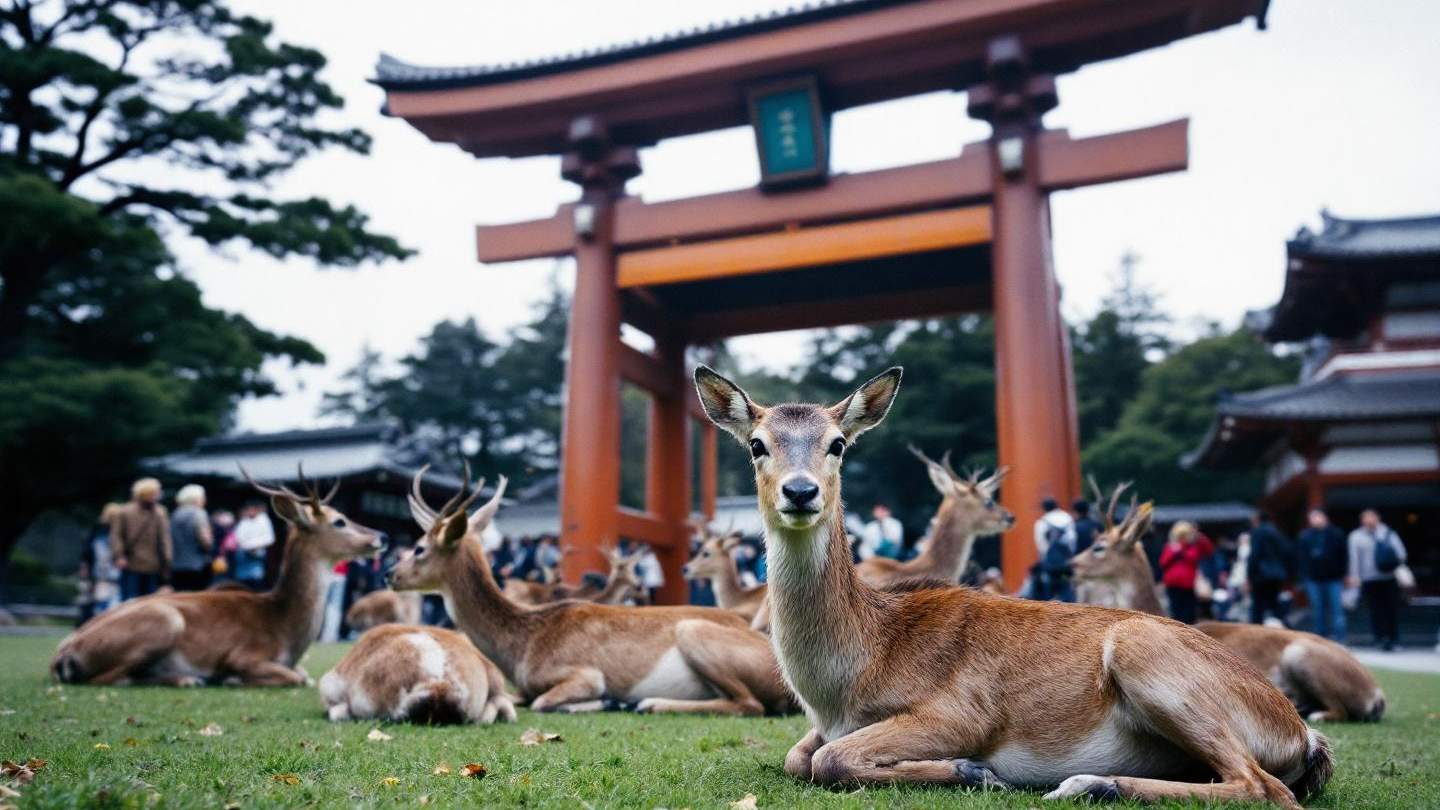
- Day 3: Nara day trip from Osaka or Kyoto — deer park is the single best activity for children in Japan
- Days 4–5: Osaka — Universal Studios Japan (full day); Dotonbori food evening
- Day 6: Kyoto — Fushimi Inari (early morning), Arashiyama by afternoon
- Day 7: Return travel; last morning at convenience store
The non-negotiable: If travelling with children aged 5–14, Nara’s deer park is the single most powerful Japan experience for that age group. Wild deer approach, bow for biscuits, and accept hand-feeding from children. The combination of wildlife, temple architecture, and open space is perfectly calibrated for families.
Japan with kids rewards preparation and a willingness to slow down relative to your usual travel pace. Build rest time into every day, eat at child-friendly hours (Japan’s restaurants open for dinner at 5:30–6:00 PM), and embrace convenience stores as your ally. The result is a trip that your children will reference for the rest of their lives.
Japanese Culture Through a Child’s Eyes
Family-friendly Japan is not just logistically manageable — it is genuinely transformative for children. The encounter with a culture where everything is different — writing, food, behaviour, transport — expands children’s sense of what the world can be.
The moments that stick: Most families who travel to Japan with children report that specific moments — not monuments — become the defining memories. The deer at Nara bowing for crackers. The first time the Shinkansen accelerates and the countryside blurs past the window at 300 km/h. The 100-yen conveyor belt sushi restaurant where children choose their own plates. A capsule machine dispensing a surprise toy. These experiences are unique to Japan and impossible to replicate elsewhere.
Manga and anime culture: For children aged 8 and above who have any exposure to anime or manga — and most children globally have via Pokemon, My Neighbor Totoro, Spirited Away, or Dragon Ball — Japan is extraordinarily exciting. The Pokemon Center in Shibuya (Tokyo) and Osaka is a flagship store unlike any abroad. The Ghibli Museum in Mitaka (Tokyo) brings the films of Studio Ghibli to life in a building designed by Hayao Miyazaki himself (advance booking essential: ¥1,000 adult, ¥700 child). Akihabara’s seven-storey electronics and anime stores are genuinely overwhelming in the best possible way.
The convenience store ritual: Japanese convenience stores are unlike anywhere else, and children typically become completely fascinated. The hot food counter (steamed meat buns, fried chicken, corn dogs), the fresh sweets (mochi, purin, strawberry shortcake), the shelves of drinks from green tea to melon soda, and the specific Japan-only Kit Kat flavours (matcha, sake, strawberry) create an experience that children want to replicate every day.
Best Cities for Families
Tokyo for families offers almost unlimited child-oriented activities. Beyond DisneySea and teamLab, the city has:
- Pokemon Center Shibuya — official merchandise; children’s reactions are extraordinary
- Hamleys Tokyo — multi-storey toy store in Ginza
- Odaiba — waterfront area with teamLab, a replica Statue of Liberty, the digital art teamLab museum, and Legoland Discovery Center
- Ueno — combines the National Museum, Ueno Zoo, a large park with paddle boats, and Ameyoko market in one compact area
Osaka for families:
- Universal Studios Japan — the best theme park in Japan; Super Nintendo World is unique globally
- Osaka Aquarium Kaiyukan — ranks in the world’s top 5 aquariums; whale shark feeding is spectacular
- Namba and Dotonbori — the giant mechanical crab, running Glico Man sign, and street food are endlessly engaging for children
Kyoto for families requires slightly more effort to make child-friendly but rewards it:
- Toei Uzumasa Eigamura — a working film studio and theme park where children can dress as samurai or ninja and watch live samurai sword demonstrations
- Kyoto Railway Museum — outstanding for train-obsessed children (¥1,200 adult, ¥200 child 3–12)
- Fushimi Inari — the gate tunnels feel like a game world to children; the 2–4 km circuit through the gates is manageable for most children over 5
Health and Safety for Family Japan Travel
Medical care: Japan has an excellent healthcare system. International Clinic Tokyo, St. Luke’s International Hospital, and the International Medical Information Center (IMIC) all have English-speaking staff. For non-emergency situations, the pharmacy system is extensive — drugstores stock children’s fever medication, rehydration salts, antiseptic, bandages, and most common ailments.
Child medications: Bring a 1-week supply of any child-specific medications you rely on (exact-brand children’s paracetamol, specific allergy medication). Japanese pharmacists can advise on equivalents but matching exact brands is difficult.
Sun and heat (summer): Japan’s summer heat is serious for children. Keep children out of direct sun from 11 AM–3 PM, hydrate frequently (Japanese sports drinks like Pocari Sweat are isotonic and child-friendly), and plan air-conditioned rest periods into summer days. Children overheat faster than adults.
Food allergies and dietary needs: Japan’s food labeling is detailed, but the cultural emphasis on soy, sesame, wheat, and seafood means significant allergen presence in many dishes. Carry laminated allergy cards in Japanese — the Japan Tourism Agency provides templates at jnto.go.jp.
Family Budget Guide
A realistic Japan family trip budget for 7 days (2 adults + 2 children aged 7 and 11):
| Category | Amount | Notes |
|---|---|---|
| Flights (4 return tickets) | ¥400,000–¥800,000 | Economy class; varies by origin |
| Accommodation (7 nights) | ¥140,000–¥280,000 | ¥20,000–¥40,000/night for family room |
| Transport (2x adult JR Pass + 2x child) | ¥125,000 | Child JR Pass is half adult price |
| Local IC cards (Suica) | ¥15,000 | ¥3,000–¥4,000 per person loaded |
| Food (all meals, 4 persons, 7 days) | ¥80,000–¥140,000 | Mixing restaurants, konbini, and ramen |
| Attractions (USJ, DisneySea, teamLab, etc.) | ¥80,000–¥120,000 | 2 major theme parks + smaller activities |
| Shopping and miscellaneous | ¥30,000–¥60,000 | Pokemon Center damage is real |
| Total | ¥870,000–¥1,520,000 | ~£4,500–£7,800 / $5,500–$9,500 |
Money-saving tips for families:
- Children under 6 travel free on Japanese trains and pay half at most attractions
- The JR Pass child price is exactly half the adult price
- Department store restaurants (depachika) offer excellent children’s sets for ¥800–¥1,500
- Convenience store meals for lunch (¥500–¥800 per person) save significantly versus restaurant lunches
- Many top attractions (Nara deer park, Fushimi Inari, most shrine grounds, many public parks and gardens) are free
Japan with kids is an investment that delivers extraordinary returns in expanded worldview, shared memories, and genuine cultural encounter. The country meets families more than halfway — it is safe, organised, food-generous, and full of experiences that are genuinely better with children present.