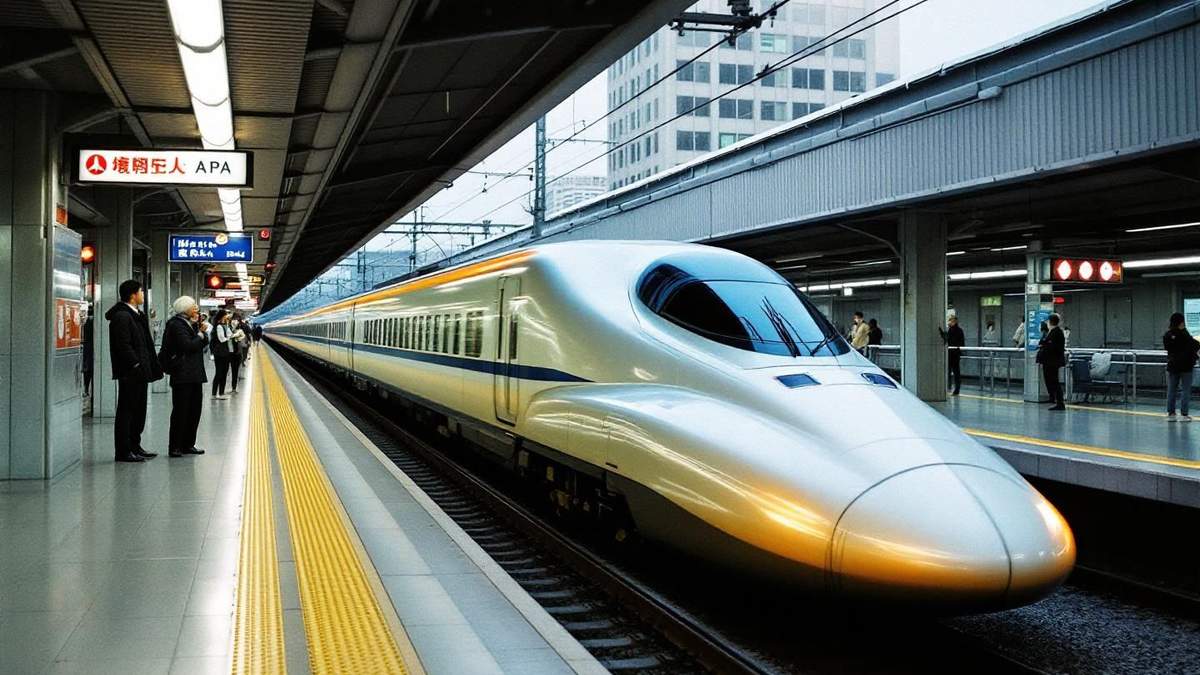
How to Use Trains in Japan
Last updated: March 2026
Is it hard to use trains in Japan?
No. Japanese trains are very foreigner-friendly. Signs are in English, announcements are bilingual, Google Maps works perfectly for route planning, and IC cards (Suica/Pasmo) make payment simple — just tap and go.
Japan’s train network is one of the finest in the world. Trains run to the second. The network is comprehensive enough that almost anywhere you want to reach in Japan can be accessed by train — from remote onsen towns in the mountains to island-connected bridges with rail lines over open sea. For the traveler arriving in Japan for the first time, the system can look overwhelming: dozens of overlapping lines, multiple operators, complex fare structures.
The reality is much simpler. Once you understand three things — how to use an IC card, how to read a platform sign, and how to use Google Maps for routes — you can navigate Japan’s trains with complete confidence. This guide pairs well with our JR Pass guide (for intercity travel) and our Narita to Tokyo guide (for your first journey from the airport). Cities covered in depth: Tokyo, Kyoto, and Osaka.
Types of Trains in Japan
Understanding the hierarchy of train services prevents you from accidentally taking the slow train for a journey that has a fast option.
Train Types Comparison
| Train Type | Japanese Name | Stops | Surcharge? | Best Used For |
|---|---|---|---|---|
| Local | Kakueki-teisha | Every station | None | Short hops within a city |
| Rapid | Kaisoku | Skips minor stations | None | Medium-distance urban travel |
| Express | Kyuko | Fewer stops | Sometimes | Faster city-to-suburb runs |
| Limited Express | Tokkyu | Major stops only | Yes (tokkyu-ken) | Airport trains, resort routes (e.g., Romancecar to Hakone) |
| Shinkansen | — | High-speed stations only | Yes (separate ticket) | Intercity — Tokyo, Kyoto, Osaka, Hiroshima |
Local Trains (Kakueki-teisha)
Stop at every station on the line. Used for short distances within cities or between nearby towns. Cheapest option, slowest. If you board a local train and notice it stopping at every tiny station while a faster express overtakes you, this is why.
Rapid Trains (Kaisoku)
Skip minor stations. On JR lines, rapid trains often use the same tracks as local trains but stop less frequently. No surcharge over the base fare. A good default for medium-distance urban travel.
Express Trains (Kyuko)
Faster than rapid, fewer stops. Usually no surcharge on private lines; some JR express trains require an additional fee. Read the pricing when buying your ticket.
Limited Express Trains (Tokkyu)
Significant service with specific stops, often requiring a surcharge (tokkyu-ken) in addition to the base fare. These are the workhorses for medium-long distance travel: the Romance Car from Shinjuku to Hakone, the Thunderbird between Osaka and Kanazawa, the Haruka from Kansai Airport to Kyoto. Always involves an extra ticket or seat reservation.
Shinkansen (Bullet Train)
Japan’s high-speed rail network. Separate platforms at stations (or entirely separate stations in smaller cities). Always requires a shinkansen ticket in addition to the basic fare. Multiple service types within the shinkansen network — see the Shinkansen section below.
IC Cards: The Foundation of Daily Travel
An IC card is a prepaid contactless smart card used for all train and subway travel in Japan. You tap in at the entry gate, tap out at the exit gate, and the correct fare is deducted automatically. You never need to calculate fares or buy individual tickets for local and subway travel.
IC Card Comparison
| Card Name | Home Region | Works Nationally? | Get It At |
|---|---|---|---|
| Suica | Tokyo / JR East | Yes | Airport vending machines, Apple/Google Wallet |
| Pasmo | Tokyo Metro & private lines | Yes | Station vending machines |
| ICOCA | Kyoto / Osaka / JR West | Yes | Kansai station vending machines |
| Toica | Nagoya / JR Central | Yes | Nagoya-area stations |
| Nimoca / Hayakaken | Fukuoka / Kyushu | Yes | Kyushu station vending machines |
Key fact: All major IC cards are interchangeable across Japan’s main urban rail networks. A Suica bought in Tokyo works in Osaka and Kyoto with no setup needed.
Which IC Card to Get
The main IC cards are:
- Suica (JR East, works in Tokyo and the east of Japan)
- Pasmo (Tokyo metro and private lines)
- ICOCA (JR West, centered on Kansai)
- Toica, Manaca, Nimoca, Hayakaken (regional cards elsewhere)
All major IC cards are interchangeable across Japan’s main urban rail networks. A Suica bought in Tokyo works in Osaka and Kyoto. An ICOCA works in Tokyo. For practical purposes, get whichever card is available when you arrive and use it throughout the country.
Mobile Suica — The Best Option in 2026
You can add a Suica card to Apple Wallet (iPhone 7 or newer) or Google Wallet (compatible Android phones) before or on arrival. This is the smoothest option: no physical card to lose, easy top-up via your phone, works at all transit gates, vending machines, and stores.
To set up mobile Suica before travel: open Apple Wallet, tap the plus sign, look for Transit Card, and select Suica. Add money via the app (credit card or Apple Pay balance).
Getting a Physical IC Card
Available from any ticket machine at major JR stations and many private rail stations. A 500 yen deposit is required; this is returned when you surrender the card. Top up at any ticket machine or convenience store (7-Eleven, Lawson, FamilyMart).
Where IC Cards Work
- All JR local trains and rapid trains (not shinkansen and not limited express surcharges)
- All Tokyo Metro and Toei Subway lines
- Osaka Metro
- Most private rail lines (Hankyu, Kintetsu, Odakyu, Tokyu, Keio, etc.)
- City buses nationwide
- Purchases at convenience stores, vending machines, some restaurants and lockers
Buying Tickets
When You Need a Separate Ticket
IC cards handle standard fare train travel. You need to buy a separate ticket for:
- Shinkansen (bullet train)
- Limited express trains (tokkyu) — the surcharge, though base fare can use IC card
- JR Pass holders exchanging for reserved seats
Ticket Machines
All major stations have ticket machines with English-language options (look for the “English” button, usually top right). The process:
- Select English
- Select your destination or enter the fare amount
- Choose ticket type (non-reserved, reserved, unreserved)
- Insert cash or tap IC card to pay
- Collect ticket
For stations where you are unsure of the fare, you can buy a minimum fare ticket and pay the difference at a “fare adjustment machine” (seisan-ki) at your destination before exiting.
Ticket Windows (Midori no Madoguchi)
JR staffed ticket counters, marked with green signage, are available at most major stations. Staff speak at least basic English. Use these for:
- Shinkansen tickets with seat reservations
- Complex itineraries
- JR Pass exchanges and activations
- Solving any problem
Smartphone Apps for Purchasing
The JR East Shinkansen booking app (EX Service) allows advance purchase and reserved-seat booking for Tokaido and Sanyo Shinkansen with digital ticket access. Private operators like Tokyu and Keio have their own apps for season tickets but not typically needed for tourists.
How to Navigate Stations
Entry and Exit Gates
All JR and most private rail stations use automatic gates. Insert your paper ticket (it comes out the other side — retrieve it) or tap your IC card on the sensor. The gate opens. At your destination, insert your ticket in the exit gate (it is retained) or tap out with your IC card.
If you tap in with an IC card and do not have enough balance, the gate will allow exit but prompt you to top up at a nearby machine before leaving the station.
Reading Platform Signs
Japanese station signs follow a consistent format:
- Station name in Japanese, romaji (romanized), and often additional scripts
- Line name color-coded by line
- Next station shown to the left and right
- Station number used on most subway and some JR lines (e.g., G14 for a Ginza Line station)
The station number system is extremely helpful for counting stops. If you are on the Ginza Line heading from G07 and need G14, you simply count off seven stops.
Platform Numbers
Platforms are numbered. When your ticket or Google Maps says “Platform 3,” follow the signs — they are clear and in English. On shinkansen platforms, look for the car position markers painted on the platform: if you have a reserved seat in Car 5, Row 8, stand at the Car 5 marker and Row 8 position on the platform. Passengers queue in neat lines.
Transfer Between Lines
Transferring between lines at a major hub station (Shinjuku, Osaka, Nagoya) can seem complex. Trust the signs. Colored line indicators and arrows at major interchanges are consistent and lead you where you need to go. Google Maps gives you a transfer walk time estimate that is usually accurate.
At stations operated by multiple companies (e.g., exiting JR to transfer to private Hankyu), you must exit the JR gate and re-enter the Hankyu gate — two separate fare zones. This is when carrying an IC card simplifies things enormously; you simply tap out and tap back in.
Google Maps for Train Navigation
Google Maps is the single best tool for navigating Japan’s trains. Open Google Maps, enter your destination, select “Transit,” and it returns:
- Exact route with line names and colors
- Station names in both English and Japanese
- Platform numbers
- Walk times for transfers
- Total journey time
- Fare (approximate — sometimes slightly off from actual IC card deduction)
- Whether you need to transfer and where
This works offline if you have downloaded offline maps for Japan. It also shows whether you will need to pay an express surcharge.
For routes involving the shinkansen, Google Maps shows the journey and fare but cannot book the ticket. Use it for information; buy tickets separately.
The Shinkansen in Detail
Service Types on the Tokaido/Sanyo Shinkansen (Tokyo-Osaka-Hiroshima)
| Service | Tokyo → Shin-Osaka | JR Pass? | Notes |
|---|---|---|---|
| Nozomi | 2 hours 20 min | Not covered | Fastest; requires separate ticket for pass holders |
| Hikari | 2 hours 45 min | Covered | Recommended for pass holders; negligibly slower |
| Kodama | ~4 hours | Covered | Stops everywhere; for short hops only |
For JR Pass holders, the Hikari is your default service between Tokyo and Kansai. It is only 20–25 minutes slower than the Nozomi and the difference is negligible in practical planning. See our full JR Pass guide to understand which trains are covered.
Service Types on the Tohoku/Hokkaido Shinkansen (Tokyo-Sendai-Aomori-Hokkaido)
- Hayabusa/Komachi: Fastest services north. The Hayabusa runs to Shin-Hakodate-Hokuto (Hokkaido connection). JR Pass covers these.
- Yamabiko/Nasuno: Slower, more stops.
Reserved vs Unreserved Seats
Most shinkansen trains have both:
- Unreserved seats (jiyu-seki): No reservation required. Board any available seat in unreserved cars (usually cars 1-3 or specific cars marked). During busy periods (Golden Week, cherry blossom, summer O-bon), unreserved cars can be completely full and you stand in the aisle for the entire journey.
- Reserved seats (shitei-seki): A specific seat assigned to you. Highly recommended for peak periods and for long journeys. JR Pass holders can make free reserved seat bookings at any green window or JR Pass-compatible ticket machine.
- Green Car (First Class): Wider seats, more legroom, quieter. Requires a separate Green Car ticket or the Green JR Pass.
Shinkansen Etiquette
- Recline your seat only if it will not disturb the person behind
- Eating on the shinkansen is fine and culturally normal — ekiben (station boxed lunches) are specifically designed for this
- Keep phone calls quiet or avoid them in the passenger car
- Loud conversation is acceptable at a moderate level
- Do not occupy luggage racks above seats with oversized bags — there are end-of-car luggage areas
Tokyo Metro System
Tokyo has three overlapping urban rail systems:
JR East (JR Yamanote Line and other city lines): The green Yamanote Line loop connects all major hubs (Tokyo, Shinjuku, Shibuya, Harajuku, Ikebukuro, Ueno, Akihabara). Basic fares from 150 yen.
Tokyo Metro (9 lines): Private company operating 9 subway lines across the city. Color-coded and numbered. 24-hour, 48-hour, and 72-hour unlimited passes available (¥800/¥1,200/¥1,500) — worth purchasing if you plan multiple rides per day.
Toei (4 lines + trams): City-operated subway and surface lines. Separate from Tokyo Metro — you can transfer but it costs extra unless using an IC card (which handles it seamlessly).
For most travelers using an IC card, the distinction between operators is invisible — you tap in, tap out, and the correct multi-operator fare is calculated automatically.
Osaka and Kansai Rail
Osaka Metro is a single operator covering most useful routes within the city. A 1-day pass costs ¥820 and is worth it for full sightseeing days. An Osaka day pass also unlocks the JR Loop Line within the city.
JR Osaka Loop Line circles the city similarly to Tokyo’s Yamanote and is JR Pass-valid.
Hankyu, Hanshin, and Kintetsu are major private rail lines that connect Osaka to Kyoto, Kobe, and Nara respectively. These are not covered by the national JR Pass but are often faster and more convenient for these specific routes than JR alternatives.
- Osaka (Umeda) to Kyoto: Hankyu Kyoto Line in 43 minutes for ¥400 — cheaper and more central than the JR Biwako Line
- Osaka (Namba) to Nara: Kintetsu Nara Line in 35 minutes for ¥680 — faster than JR
Also connect via eSIM or pocket Wi-Fi so Google Maps can navigate these overlapping networks for you in real time.
Rush Hour
Tokyo and Osaka train rush hours (7:30-9:00 AM and 5:30-7:30 PM) are famously intense. Trains run at over 200% capacity. This is not an exaggeration — white-gloved platform staff physically assist packing passengers into carriages at major stations during morning rush.
Tips for rush hour:
- Avoid these windows if your schedule allows
- Board toward the front or rear of the train where crowds are slightly thinner
- Have your IC card or ticket ready before reaching the gate
- Stand clear of the doors and be prepared to move
Last Trains
Japan’s trains stop running late at night. Last trains are typically between 11:30 PM and 12:30 AM depending on the line and direction. After last train, taxis are the only option — and demand at stations after midnight on weekends means significant waiting and surge pricing.
Build your evening around train times. Most Japanese residents check “last train time” before heading out for the night — it is a normal part of social planning, not an inconvenience. Taxis from Shinjuku to central Tokyo at 2 AM can cost 3,000-6,000 yen.
Train Etiquette
Mobile phones: Keep calls to a minimum or avoid them in passenger cars. Set your phone to silent/vibrate. Typing on your phone is fine.
Noise: Quiet is the default. Conversations at normal volume are acceptable; loud or extended conversations are not.
Priority seating (silver seats): Marked with colored markings near each door. Give these up for elderly passengers, pregnant women, or anyone with visible mobility needs.
Boarding and exiting: Allow passengers to exit before boarding. Queuing marks are painted on the platform — stand in line.
Eating and drinking: Generally avoided on local trains and subways. Acceptable on shinkansen and longer-distance limited express services.
Women-Only Cars
Many Tokyo and Osaka trains designate certain cars as women-only during peak morning hours (typically 7:30-9:30 AM on weekdays). These are clearly marked on the platform and inside the car. Male passengers should not use these cars during designated times. Outside of these hours, the cars are open to everyone.
Station Facilities
Major stations in Japan are large commercial complexes as much as transport hubs.
Coin lockers (coin rokka): Available at virtually every station. Sizes range from small (300-400 yen for half-day) to large enough for full luggage (700-800 yen). IC card-operated lockers are common — no coins needed. Extremely useful for day trips when you do not want to carry luggage.
Convenience stores and kiosks: Station convenience stores (often NewDays in JR East stations, or familiar 7-Eleven, FamilyMart) sell drinks, snacks, prepared food, and travel necessities. Larger stations have food halls.
Toilets: Clean, free, and available at virtually every station. Many are Western-style with heated seats and integrated bidet functions. Signs mark male (男 otoko) and female (女 onna) facilities.
Station restaurants: Major stations have entire restaurant floors, often underground. Some (like the underground dining floors at Tokyo Station and Shinjuku Station) are destinations in themselves.
Luggage forwarding desks: At major stations, you can arrange takuhaibin (luggage delivery) to send bags ahead to your next destination for 1,500-2,500 yen per bag. This takes one business day and is enormously convenient.
Luggage on Trains
Shinkansen trains have overhead racks and end-of-car luggage areas. In 2020, JR introduced a rule that passengers with luggage over a certain size (three dimensions totaling over 160cm) must make a “large baggage” reservation for the end-of-car storage area (free with shinkansen ticket, just needs prior reservation). Practically, this rule is loosely enforced but worth being aware of on busy trains.
For local trains and subways, there is no formal luggage restriction but common courtesy suggests keeping large bags in hand rather than occupying seats or blocking aisles.
Accessibility
Japan’s train network has improved accessibility significantly over the past decade, driven by preparations for the Tokyo Olympics and ongoing investment.
Elevators: All major stations now have elevators or escalators. Older smaller stations in rural areas may not. If mobility assistance is a concern, check the station facilities on the JR or subway operator website before travel.
Priority boarding areas: Some platforms have designated areas for wheelchair users, which staff can assist with boarding. Station staff are consistently helpful for travelers who need assistance — approach the staffed gate rather than the automated one.
Accessible restrooms: Large station toilets have accessible facilities with space for wheelchairs and often with ostomate (stoma user) facilities.
Tactile paving: Yellow tactile paving lines run through stations guiding visually impaired travelers. Do not stand on these lines or place luggage on them.
Getting to and From Airports
Narita Airport to Tokyo
For a full comparison of every Narita transfer option, see our dedicated Narita to Tokyo guide.
Narita Express (N’EX): The most convenient option. Runs directly from Narita Airport Terminal 1 and 2/3 to Tokyo Station, Shinjuku, Shibuya, Ikebukuro, and Yokohama. Journey time approximately 60–80 minutes to Tokyo Station. Fare: ¥3,070 to central Tokyo. N’EX is covered by the JR Pass (activate it at the airport and take the train for free).
Keisei Skyliner: Runs to Ueno (41 minutes) and Nippori (36 minutes). Fare: ¥2,520. Does not go to Shinjuku, Shibuya, or Tokyo Station directly — requires a transfer. Faster and slightly cheaper than N’EX if your hotel is in the Ueno area or northern Tokyo.
Keisei Limited Express (Access Express): Slower than the Skyliner, stopping at more stations. Runs to Ueno and connects to Asakusa and central Tokyo. Fare: around ¥1,200. Takes about 75–80 minutes. Best value option if you are on a tight budget.
Airport Limousine Bus: Direct buses to major hotels and districts across Tokyo. Takes longer due to traffic (90-120+ minutes depending on conditions) but convenient if your hotel is on the route. Fare: 2,700-3,200 yen.
Haneda Airport to Tokyo
Much more convenient than Narita for central Tokyo access.
Tokyo Monorail: From Haneda Terminal 1/2 to Hamamatsucho Station on the Yamanote Line. About 20 minutes. Fare: 600 yen. Transfer at Hamamatsucho for the Yamanote Line.
Keikyu Airport Line: Runs directly to Shinagawa (13 minutes, 310 yen) and continues on to Asakusa, Ueno, Yokohama, and other points. Usually the best option for central Tokyo hotels.
Taxi: Expensive but possible. Tokyo Station area approximately 8,000-9,000 yen. Shibuya/Shinjuku area approximately 7,000-8,000 yen.
Kansai International Airport (KIX) to Osaka/Kyoto
Haruka Limited Express (JR): The airport express to Kyoto (75 minutes, 3,640 yen) and Shin-Osaka (50 minutes, 2,380 yen). JR Pass covers this train — a significant benefit for pass holders arriving in Osaka.
Nankai Airport Express: To Osaka Namba in 38 minutes for 1,210 yen. Best for staying in southern Osaka or heading to Kansai Airport from Namba.
Limousine Bus: To Kyoto directly (approximately 85-105 minutes). Fare: 2,800 yen. Good for hotels in central Kyoto.
Practical Scenarios: Common Journeys Explained
Scenario 1: Airport to Your First Hotel
Arriving at Narita, staying in Shinjuku: Take the N’EX directly to Shinjuku Station (about 80 minutes, 3,070 yen). If you have a JR Pass, this is free and you use it from day one.
Arriving at Haneda, staying near Tokyo Station: Take the Keikyu Airport Line to Shinagawa (13 minutes, 310 yen), then transfer to the JR Yamanote Line north to Tokyo Station (6 minutes, 160 yen). Total: about 470 yen.
Scenario 2: Tokyo to Kyoto
At Tokyo Station, go to the Shinkansen entrance (follow signs to Tokaido Shinkansen). Buy a Hikari ticket at the green ticket window or automated machine (13,080 yen unreserved, or free with JR Pass). Platform 14-19 typically serve the Tokaido Shinkansen — the exact platform for your train is shown on the departure board. Board your reserved car or any unreserved car. Arrive at Kyoto Station in approximately 2 hours 45 minutes.
Scenario 3: Day Trip from Kyoto to Nara
Two options: The JR Nara Line from Kyoto Station to Nara (45-50 minutes, 720 yen, rapid service) or the Kintetsu Nara Line from Kintetsu Kyoto Station (35 minutes, 680 yen, faster and more frequent). The Kintetsu deposits you closer to the main attractions at Nara Park. The JR option is covered by the JR Pass.
Scenario 4: Getting Around Tokyo
Use the Yamanote Line for the ring of major stations (Shinjuku, Shibuya, Harajuku, Ebisu, Shinagawa, Tokyo, Akihabara, Ueno, Ikebukuro). Add Tokyo Metro or Toei Subway for neighborhoods off the main JR ring. Google Maps in transit mode with your starting point and destination will give you the exact route, line transfers, and journey time for any combination. Trust it completely.