Best Things to Do in Hiroshima
Last updated: March 2026
Hiroshima carries a weight that no other city in Japan — or arguably the world — quite matches. On August 6, 1945, the first atomic bomb used in warfare destroyed the city in a single moment. Today, Hiroshima has rebuilt itself into a prosperous, forward-looking city with excellent food, a lively nightlife district, a proud regional identity, and an international responsibility it takes seriously. The Peace Memorial is the reason most visitors come. It is also, genuinely, one of the most important places a person can stand in the twenty-first century. But Hiroshima is far more than a single monument. This guide covers the full range of things to do in Hiroshima — from the haunting to the joyful.
Quick Reference
| Activity | Time Needed | Cost | Best For |
|---|---|---|---|
| Peace Memorial Park and Museum | 2–3 hours | 200 yen (museum) | All visitors |
| Miyajima Island and Itsukushima Shrine | Half day or full day | Ferry 200 yen + 300 yen shrine | All visitors |
| Hiroshima Castle | 1–1.5 hours | 370 yen | History lovers |
| Okonomiyaki at Okonomi-mura | 1–2 hours | 1,000–1,500 yen | Food lovers |
| Shukkei-en Garden | 45–60 minutes | 260 yen | Garden enthusiasts |
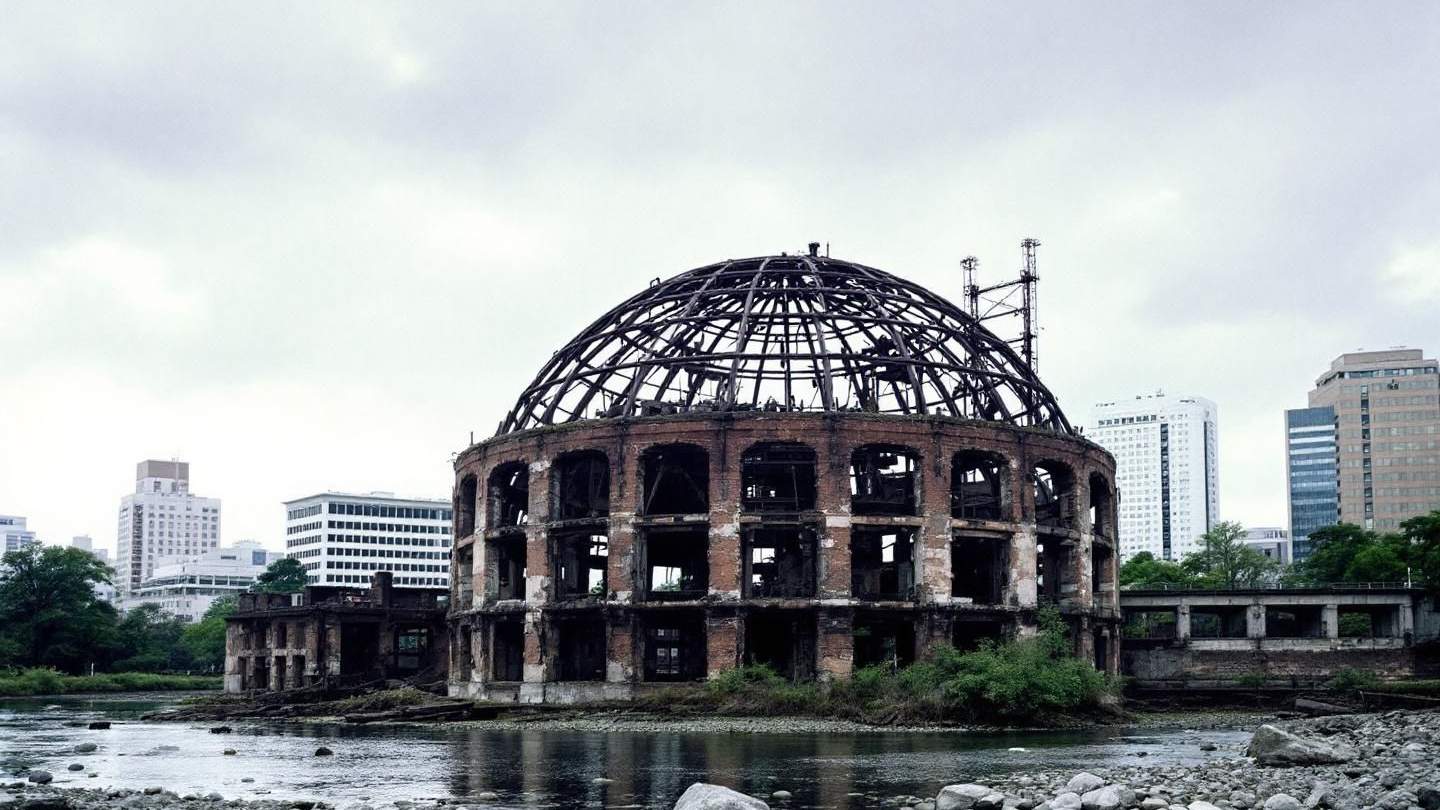
| Atomic Bomb Dome (Genbaku Dome) | 30–60 minutes | Free | All visitors |
| Hiroshima Museum of Art | 1–2 hours | 1,000 yen | Art lovers |
| Sake Tasting in Saijo | Half day | From 200 yen per tasting | Sake enthusiasts |
| Torii Gate at High Tide, Miyajima | 1 hour | Ferry included | Photographers |
| Mount Misen Hike | 3–4 hours round trip | Ropeway 2,000 yen or free hike | Hikers |
Peace Memorial Park and Museum
The Peace Memorial Park is the single most visited site in Hiroshima and one of the most visited places in Japan. It sits on the delta island at the center of the city, precisely where the hypocenter of the bomb was located. The park is free to enter and open at all hours.
The Hiroshima Peace Memorial Museum (admission 200 yen) is the core experience. The exhibits present the history of World War II’s Pacific Theater, the decision to drop the bomb, and the immediate and long-term human consequences with extraordinary care and restraint. Personal items recovered from victims — a child’s melted lunchbox, a watch stopped at 8:15am, a shadow burned into stone steps — communicate what statistics cannot. Allow a minimum of 90 minutes; many visitors stay longer. It is not easy viewing, but it is essential.
The park contains dozens of memorials and monuments. The Children’s Peace Monument (inspired by Sadako Sasaki, a girl who died from radiation-induced leukemia and folded paper cranes seeking recovery) is perpetually surrounded by thousands of colorful origami cranes donated by visitors worldwide. The Flame of Peace has burned continuously since 1964 and will be extinguished only when all nuclear weapons in the world are eliminated. The Cenotaph for the A-bomb Victims frames the Genbaku Dome perfectly through its archway — one of the most deliberately composed views in Japan.
The park is particularly moving at dawn and in the early evening when the crowds thin.
The Atomic Bomb Dome (Genbaku Dome)
The Genbaku Dome is the skeletal shell of the former Hiroshima Prefectural Industrial Promotion Hall — the only structure left standing near the hypocenter of the explosion, and deliberately preserved in its destroyed state as a permanent memorial. It is a UNESCO World Heritage Site.
Standing across the river from the Peace Memorial Park, the dome is visible from many angles in central Hiroshima and provides a constant, quiet counterpoint to the rebuilt city around it. The structure is never open for internal access — its preservation includes structural stabilization but no restoration — and visiting it means walking around its perimeter and viewing it from the riverbank. Entry is free.
The surrounding Motoyasu River embankment is a pleasant walking route connecting the dome to the Peace Memorial Park bridge, particularly at dusk when the dome is lit from below.
Miyajima Island
Miyajima (officially Itsukushima) is consistently ranked among Japan’s top three views and is one of Hiroshima’s essential experiences. The island is accessible by ferry from the Miyajimaguchi terminal (200 yen each way on JR ferries, included with a JR Pass) and takes about 10 minutes to reach.
The most famous sight is the O-torii gate of Itsukushima Shrine — a massive vermilion torii that appears to float on the water at high tide. At low tide you can walk out to it across the exposed mudflat. The shrine itself (admission 300 yen) was built over the water in the 6th century, with the current structure dating to the 12th century. Its orange corridors and pavilions extending over the tidal flats with forested mountains behind constitute one of Japan’s great visual experiences.
Beyond the shrine, the Senjokaku Pavilion (admission 100 yen) is a huge unfinished hall commissioned by Toyotomi Hideyoshi in 1587 — he died before its completion and it was never finished or decorated, leaving a vast wooden interior of extraordinary atmosphere. The adjacent Five-Story Pagoda is one of Japan’s finest surviving examples.
The island is famous for its tame deer, which wander the streets and will politely but persistently attempt to eat your map, tickets, and shopping. They are protected and should not be fed, though they will try.
Mount Misen is the island’s highest point (535 meters) and the site where Kobo Daishi, the founder of Shingon Buddhism, meditated in 806 AD. The ropeway (round trip 2,000 yen) gets you most of the way; a 30-minute walk reaches the summit with panoramic views over the Seto Inland Sea. Hikers can reach the summit via three trails (each roughly 90 minutes from the base) without the ropeway.
Allow a full day for Miyajima if you want to hike or linger. A half-day visit covers the shrine, the gate, and the main village.
Hiroshima Castle
Hiroshima Castle (admission 370 yen) was originally built in 1589 by feudal lord Mori Terumoto and destroyed by the atomic bomb in 1945. The current five-story tenshu is a 1958 reconstruction housing a museum of Hiroshima’s feudal history. The interior covers samurai culture, weapons, armor, and the castle’s history across its five floors with decent English signage.
The castle’s moat and stone walls are original and survived the bombing. Walking the perimeter of the moat is free and gives a good sense of the original fortification’s scale. The castle grounds contain several restored historical structures including a turret and gates. Combine with Shukkei-en Garden (a 15-minute walk away) for an efficient half-day itinerary.
Shukkei-en Garden
Shukkei-en (admission 260 yen) is a classical Japanese garden originally created in 1620 and painstakingly restored after the bombing. The name means “shrunken scenery” — the garden uses a central pond and carefully arranged hills, bridges, islands, and plantings to evoke natural landscapes at a compressed scale.
Unlike many Japanese gardens, Shukkei-en has a slightly informal, exploratory quality — the paths wind rather than process. It is excellent in spring during cherry blossoms and in autumn when the maple trees turn. The garden is adjacent to the Hiroshima Prefectural Art Museum, which allows combined entry.
Hiroshima Okonomiyaki
Hiroshima-style okonomiyaki is one of Japan’s great regional food debates. Where Osaka-style okonomiyaki mixes all ingredients into the batter before cooking, Hiroshima-style layers them — crepe-style batter, then cabbage, pork, noodles (udon or soba), and egg — building a dish with distinct textures in each layer, finished with Worcestershire-based sauce and Japanese mayonnaise.
Okonomi-mura (roughly translated as “okonomiyaki village”) is a three-story building in central Hiroshima housing around 25 okonomiyaki vendors, each with their own counter and specialty variations. Prices run 1,000–1,500 yen per okonomiyaki. The building is deliberately unpretentious — plastic seating, open kitchens, smoke from the griddles. It has operated since 1945 and is considered the best concentration of the dish in the city.
For a single iconic address, Micchan (multiple locations across the city) claims to be the original inventor of Hiroshima-style okonomiyaki. The debate about origins is ongoing and entirely beside the point when eating.
Sake Tasting in Saijo
Saijo, a 40-minute train ride east of Hiroshima, is one of Japan’s three great sake brewing towns (alongside Nada in Kobe and Fushimi in Kyoto). The main brewing street — lined with red-brick kura (brewhouses) with tall white chimneys — is a 10-minute walk from JR Saijo Station and clusters nine breweries within easy walking distance.
Most breweries offer free or low-cost tastings (200–500 yen) with the option to buy bottles. Kamotsuru, Fukubijin, and Hakubotan are among the most established. The annual Saijo Sake Festival in October draws massive crowds for outdoor drinking sessions among the breweries.
This makes an excellent half-day side trip from Hiroshima, particularly combined with a morning at the Peace Memorial and an afternoon in Saijo.
Best Time to Visit Hiroshima
| Season | Conditions | Highlights | Crowds |
|---|---|---|---|
| Spring (Mar–May) | 12–22°C, warm and pleasant | Cherry blossoms in Peace Park and Miyajima | Very high in late March–April |
| Summer (Jun–Aug) | 25–35°C, humid, typhoon season | August 6 Peace Memorial Ceremony | High; August 6 is extremely busy |
| Autumn (Sep–Nov) | 15–25°C, ideal temperatures | Autumn foliage on Miyajima’s Mount Misen | Moderate to high in October–November |
| Winter (Dec–Feb) | 4–12°C, occasional snow | Quiet temples, uncrowded Peace Park | Low; good for independent travel |
The August 6 Peace Memorial Ceremony is Hiroshima’s most significant annual event, drawing thousands of visitors to the park for the dawn ceremony at 8:15am. Plan well in advance if visiting on this date — accommodation books out months ahead.
Cherry blossom season along the Motoyasu River facing the Genbaku Dome and throughout the Peace Memorial Park is one of Japan’s more quietly moving seasonal experiences. The combination of blossoms and the dome’s skeleton creates an image unlike anywhere else.
How to Get to Hiroshima
| Route | Travel Time | Cost | Notes |
|---|---|---|---|
| Shinkansen from Tokyo | 4 hours (Nozomi) | ~22,000 yen one way | Nozomi not covered by JR Pass; Hikari is |
| Shinkansen from Osaka | 85 minutes (Nozomi) | ~9,500 yen one way | Fast and easy; use Hikari with JR Pass |
| Shinkansen from Kyoto | 100 minutes (Hikari) | ~10,500 yen one way | Fully covered by JR Pass on Hikari/Sakura |
| Highway bus from Tokyo | 11–12 hours | 5,000–8,000 yen | Overnight buses available; budget option |
| Flight from Tokyo (Haneda) | 1.5 hours flying | From 8,000 yen | Plus transfer time; rarely faster door-to-door |
Within Hiroshima, trams (streetcars) cost a flat 180 yen per ride and cover most central attractions. A one-day tram pass costs 700 yen and is worth buying if you plan to take more than four rides. Trams also run directly to the Miyajimaguchi ferry terminal.
Hiroshima Neighborhood Overview
Peace Memorial Park area is the logical starting point for any visit — spend your first morning here and at the Genbaku Dome. Hondori and Parco areas (the main shopping streets) are the commercial and dining center of the city. Nagarekawa is the nightlife district, with dozens of bars and restaurants open late into the evening. Ujina is the port area from which ferries depart for Miyajima.
For accommodation, staying within walking distance of the Peace Memorial Park area or the Hondori shopping district gives easy access to the main attractions and the tram network. Read more on planning your time in the Hiroshima Travel Guide.
Day Trips from Hiroshima
Miyajima is the obvious and essential day trip, covered above. Beyond Miyajima, Onomichi — a hillside port city east of Hiroshima with a famous temple walk, an excellent ramen style of its own, and the starting point of the Shimanami Kaido cycling route — is reachable in 45 minutes by shinkansen and makes an excellent half-day excursion.
Iwakuni (20 minutes by train) has the famous Kintai Bridge, a five-arch wooden bridge over the Nishiki River first built in 1673. The surrounding area includes a small castle, a samurai district, and a white snake shrine. A half-day is sufficient.
Hiroshima Castle District and City Center
The area between the Peace Memorial Park and Hiroshima Castle — roughly a 15-minute walk — contains several sites worth building into a full-day itinerary. Nakajima-cho was the area leveled closest to the hypocenter, and the scale of destruction is put into context by the handful of surviving buildings that still stand nearby, including the Hiroshima Bank Building (not open to the public but visible from the street), whose reinforced concrete shell partially survived the blast.
Hondori and Shinsaibashi (Hiroshima’s main shopping arcades) run east from the tram network’s central interchange and are worth an evening walk — the density of restaurants, department stores, and small specialty shops is similar to any major Japanese city’s covered shopping district, with Hiroshima-specific food options including multiple momiji manju (maple leaf-shaped cakes filled with red bean paste or cream cheese, the city’s signature souvenir confectionery, 120–150 yen each) available fresh from several bakeries.
Nagarekawa, Hiroshima’s entertainment district, is a grid of small bars and restaurants operating from early evening until well after midnight. The izakayas here serve the full range of Hiroshima food including oysters (kaki) — Hiroshima produces around 70% of Japan’s farmed oysters, and the local preparations (grilled on the shell, deep-fried, or in stews) are excellent and very affordable. Oysters grilled on a charcoal brazier outside the market stalls on the approach to the Peace Park at Eba Oyster Festival (January–March) cost around 500 yen for three on the half-shell.
Hiroshima Food and Drink
Beyond okonomiyaki and oysters, Hiroshima has a regional food identity worth engaging with. Anago (saltwater eel, distinct from freshwater unagi) is the other signature local seafood — particularly the version sold in Miyajima’s market street, grilled and served in small boxes. Hiroshima tsukemen (dipping ramen, served with a concentrated cold broth for dipping rather than a soup bowl) has become a regional specialty in its own right, with multiple dedicated shops near the station.
Saijo sake (from the brewing town 40 minutes east, described in detail above) uses water from the same mineral-rich aquifer that made the area famous for brewing — soft water with a particular mineral composition that produces lighter, more delicate sake styles than the hard water sake of Kobe and Nada. Hiroshima’s sake shops (including those in the station building) stock Saijo breweries’ full range.
The Hiroshima oyster season runs from October through April, with February considered the peak of flavor. Multiple restaurants near the Peace Park and in the Nagarekawa area serve oyster sets (1,500–3,000 yen for a range of preparations).
Practical Tips
Hiroshima’s IC card (Suica, ICOCA, or Hiroshima’s own PASPY) works on trams, JR trains, and ferries to Miyajima. Tap-on, tap-off is easier than buying individual tickets.
The Hiroshima Visitors Guide app (available free on iOS and Android) includes offline maps and English information for the Peace Memorial Park that is significantly more detailed than the printed materials.
Most Peace Memorial Museum exhibitions have thorough English text, but the audio guide (300 yen) adds depth to specific exhibits including the personal testimonies of hibakusha (atomic bomb survivors).
The area around Peace Memorial Park is quiet at night and entirely safe for evening walks. The Motoyasu River promenade is pleasant after dark and the illuminated Genbaku Dome is best experienced when the tourist crowds have gone.
For visitors combining Hiroshima with a broader Japan itinerary, see the 10 Days in Japan itinerary, which includes a structured Hiroshima and Miyajima stop within a full circuit of the country’s main destinations.