Hakone in 1 Day
Is 1 day enough for Hakone?
One day is enough to complete the full Hakone Loop — cable car, ropeway over Owakudani, Lake Ashi cruise, and onsen. It is a long day (leave Shinjuku by 8 am, return by 9 pm), but the routing is efficient. Two days allows you to slow down at ryokan with private onsen — that is a completely different experience.
Hakone in one day is exactly what it sounds like: an ambitious but doable circuit through volcanic valleys, mountain ropeway, a lake cruise, and an onsen soak before the train back. Leave Shinjuku by 8 am and you have a full day.
At a Glance
| Where | Fuji-Hakone-Izu National Park, about 80km southwest of Tokyo |
| Time needed | A full day, 8am–9pm round trip from Shinjuku |
| Cost | Around 4,600 yen for the Hakone Free Pass, covering transport and the Loop |
| Getting there | Odakyu Romancecar from Shinjuku, 85 minutes to Hakone-Yumoto |
| Best time | Autumn to winter for the clearest Mount Fuji views; avoid rushing on rainy days |
Getting to Hakone
The Romancecar (8:00 departure from Shinjuku)
The Odakyu Romancecar is the correct way to start this trip. It is a private limited express train with forward-facing observation seats at the front and rear — genuinely comfortable, genuinely scenic once you clear the Tokyo suburbs. Journey time is 85 minutes to Hakone-Yumoto. Cost: 2,470 yen + 910 yen Romancecar surcharge.
The Hakone Free Pass (4,600 yen from Shinjuku) is the smarter purchase — it covers the Romancecar surcharge, unlimited use of all Hakone Loop transport (Tozan Railway, cable car, ropeway, boat, buses), and discounts at many attractions and onsen. Buy it at the Odakyu counter in Shinjuku Station before boarding. The 2-day pass is the only option (no 1-day pass exists) but is valid from the day of purchase.
Book the Romancecar seat in advance at the Odakyu counter or online — the front observation seats go quickly, especially on weekends.
Morning: Hakone-Yumoto to Owakudani (10:00–13:00)
Hakone-Tozan Railway (10:00)
At Hakone-Yumoto, transfer to the Hakone-Tozan Railway — a narrow-gauge mountain train that switchbacks up the steep valley through dense cedar forest. The views through the train windows are excellent. Journey to Gora takes about 40 minutes.
If time allows, the Hakone Open Air Museum (1,600 yen, covered by some pass discount) sits on the Tozan line at Chokoku-no-Mori Station. The sculpture park contains works by Picasso, Rodin, and Henry Moore set in an outdoor landscape with mountain views behind them. Allow 90 minutes. Skip it if you are on a tight schedule or if sculpture is not your thing.
Cable Car and Ropeway (11:30–13:00)
From Gora, take the cable car up to Sounzan (10 minutes, covered by pass). Then board the Hakone Ropeway — a gondola that travels across the active volcanic area of Owakudani in a 25-minute run to Togendai on Lake Ashi.
Owakudani is the highlight of the ropeway section. The mid-station here sits above a steaming volcanic landscape — sulfur vents, boiling pools, and the geological reality that Hakone is an active caldera. Buy kuro-tamago (black eggs hard-boiled in the volcanic springs, 600 yen for five) at the stall. They look wrong, taste like normal hard-boiled eggs, and are delicious.
On a clear day, Mount Fuji is directly ahead as the gondola descends from Owakudani toward Lake Ashi. The framing of the snow-capped cone against the volcanic landscape is one of Hakone’s defining images.
Ropeway closure note: Check conditions before departure. High winds close the ropeway and it can also close for maintenance. The Hakone Ropeway website (English available) shows real-time status.
Midday: Lake Ashi and the Torii Gate (13:00–15:30)
Lake Ashi Cruise
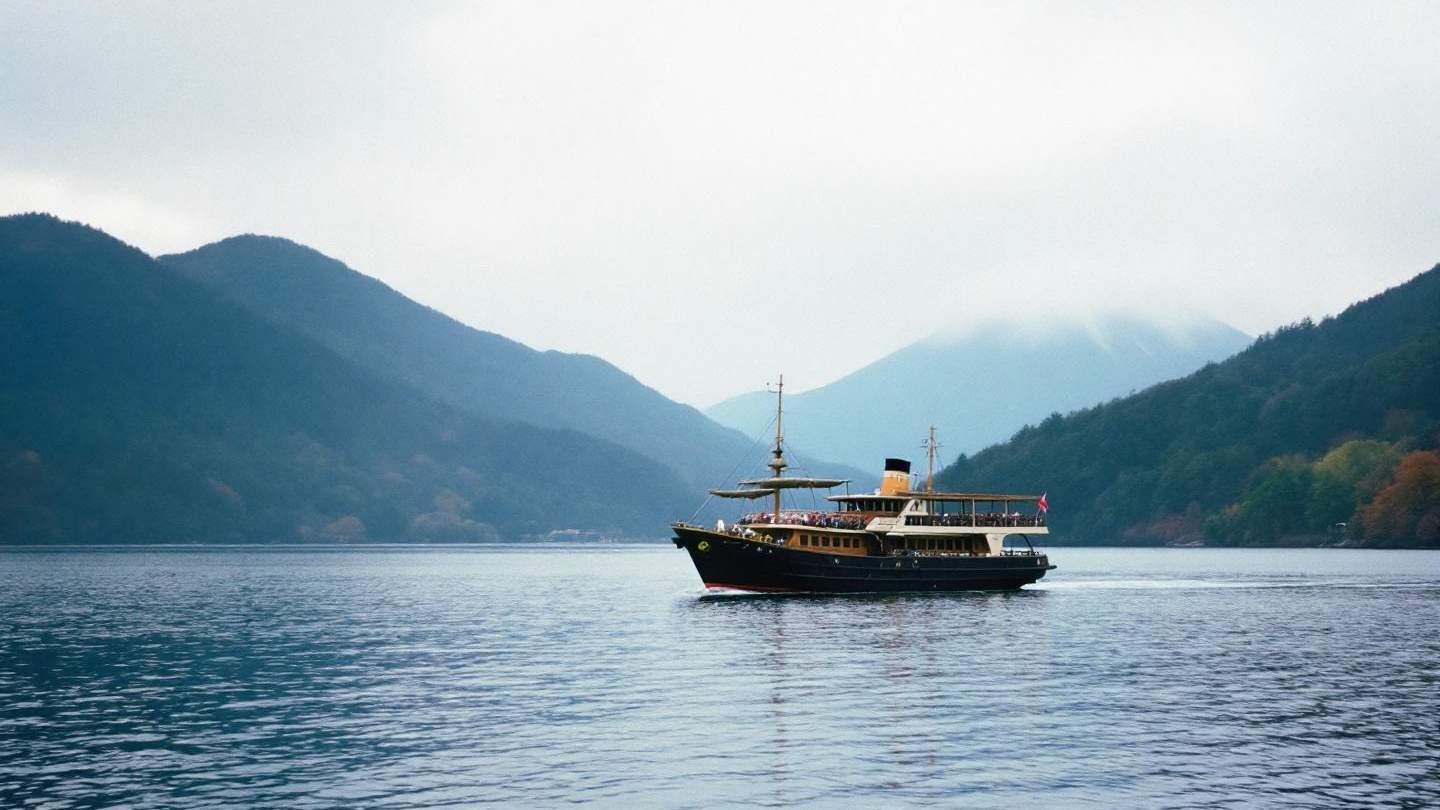
From Togendai pier, board the Lake Ashi pleasure boat to Moto-Hakone or Hakone-machi (about 30 minutes). The boats look like pirate ships — intentional and slightly absurd. The view back toward Owakudani with Fuji behind it is the classic Hakone photograph.
Hakone Lake Ashi Cruise with Onsen and Fuji Views
Guided Hakone day trip from Tokyo covering the Lake Ashi cruise, Hakone Shrine, and Mount Fuji viewpoints — all transport included and English guide throughout.
Hakone Shrine and the Red Torii Gate
From the Moto-Hakone or Hakone-machi pier, walk to Hakone Shrine — a 5-minute walk through a cedar forest path. The famous red torii gate stands in the lake itself, visible from the shore and from the boat. The shrine complex is free, atmospheric, and far less crowded than similar spots at Fushimi Inari in Kyoto. Allow 30–40 minutes.
Lunch: there are several restaurants near the Moto-Hakone pier area serving soba noodles and Hakone-style dishes. Budget 1,000–1,800 yen.
Afternoon: Return and Onsen (15:30–19:00)
Return to Hakone-Yumoto
From Moto-Hakone pier, take the bus back to Hakone-Yumoto (included in Free Pass, about 35 minutes). This completes the Loop.
Onsen (16:30–18:00)
Hakone is one of the premier onsen destinations in Japan. After the Loop, soak before returning to Tokyo. Day-use facilities near Hakone-Yumoto accept visitors without accommodation bookings for 1,000–1,500 yen.
Tenzan Toji-kyo: A well-regarded outdoor hot spring facility near Hakone-Yumoto. Multiple indoor and outdoor baths, all fed by genuine volcanic spring water. Allow 90 minutes. Note: tattoos are prohibited at most onsen facilities (a common rule throughout Japan).
Hakone and Mount Fuji Full Day Trip from Tokyo
Guided day trip covering the Hakone Loop, Owakudani volcanic valley, Lake Ashi cruise, and Mount Fuji viewpoints — bus, ropeway, and boat all included. Return to Tokyo by evening.
Return Train to Shinjuku (19:00–20:30)
The last Romancecar from Hakone-Yumoto runs around 8:30 pm. Check the Odakyu schedule before leaving Hakone in case of earlier cutoffs. You arrive back at Shinjuku around 20:30.
Getting Around Hakone
The Hakone Free Pass is the only transport document you need once you arrive at Hakone-Yumoto. It covers:
- Hakone-Tozan Railway (Hakone-Yumoto to Gora)
- Hakone-Tozan Cable Car (Gora to Sounzan)
- Hakone Ropeway (Sounzan to Togendai)
- Lake Ashi Pleasure Boats (all routes)
- All Hakone-registered buses
Without the pass, you buy tickets at each step — add about 3,000 yen in separate fares for the full Loop, making the pass marginally better value and considerably more convenient.
Taxis are available in Hakone but expensive and rarely necessary on the Loop route.
What to Skip in 1 Day
The Hakone Open Air Museum unless sculpture genuinely interests you. On a tight 1-day schedule, it costs 90 minutes that could be spent at Owakudani or the lake.
The full mountain summit hike. Hakone as a day trip is the Loop — not a hiking destination. Save mountain walking for Nikko or the Japan Alps.
Multiple onsen facilities. One soak before the train home is enough. Do not spend 3 hours in onsen on a day when the ropeway is in front of you.
Restaurants in the tourist trap zone near Hakone-machi. They are mediocre and expensive. Eat soba at the station area or bring a packed lunch from a convenience store.
Tips for a 1-Day Hakone Trip
- Leave Shinjuku no later than 8:00 am. The Loop takes 6–7 hours with stops and you want time for the onsen at the end.
- Check the ropeway status the night before at the Hakone Ropeway official website. High wind days close it, and there is no backup plan that matches the experience.
- Check the Mount Fuji weather forecast. On a cloudy day, the Owakudani and Lake Ashi views are still excellent, but the Fuji backdrop disappears. Go anyway — the volcanic landscape is worth it regardless.
- Buy the Hakone Free Pass at the Odakyu counter in Shinjuku Station (Level B1, west side). You can also buy online via the Odakyu English website.
- Bring cash. Some onsen facilities and smaller restaurants near the lake do not accept cards.
- Book the Romancecar seat at least a day ahead on weekends. The observation seats at the front go first.
- Hakone in autumn (mid-October to November) has spectacular foliage along the Tozan Railway line — some of the best autumn color near Tokyo.
Should You Do Hakone as a Day Trip or Stay Overnight?
A single day covers the full Loop and gives you the headline sights — Owakudani, Lake Ashi, the torii gate, one onsen soak. What it does not give you is the slower, defining Hakone experience: an evening kaiseki dinner at a ryokan, a private open-air bath at night and again in the morning, and a second look at Owakudani or the Open Air Museum without a train to catch. The full Hakone things to do guide covers the case for staying, ryokan pricing, and what changes with an extra night.
If your Japan itinerary is short — say a Tokyo in 3 days trip with one day free — the day-trip version described above is the right call and genuinely satisfying on its own. If Hakone is a dedicated leg of a longer trip, even one extra night changes the experience considerably.
For travelers deciding between Hakone and other Tokyo day trips, the Tokyo day trips guide compares Hakone against Kamakura and Nikko on time, cost, and what each destination is actually good for.
More tours on Viator
Top-rated experiences with verified reviews, bookable on Viator (a Tripadvisor company).
 Viator
Hakone 6 hour Private Tour with Government-Licensed Guide
FromUSD 169Check availability → Viator
Custom Private Tour in Hakone with a Certified Local Guide
FromUSD 300Check availability → Viator
Private Hakone Half-day Car Tour with Hotel Pickup - Local Guide
FromUSD 281Check availability → Viator
Private Tour - Hakone Day Trip! A Tour to Explore All Must-Sees!
FromUSD 176Check availability →ViatorHakone 8 hour Private Tour with Government-Licensed Guide
FromUSD 185Check availability → Viator