Autumn Foliage in Kyoto
Last updated: August 2026
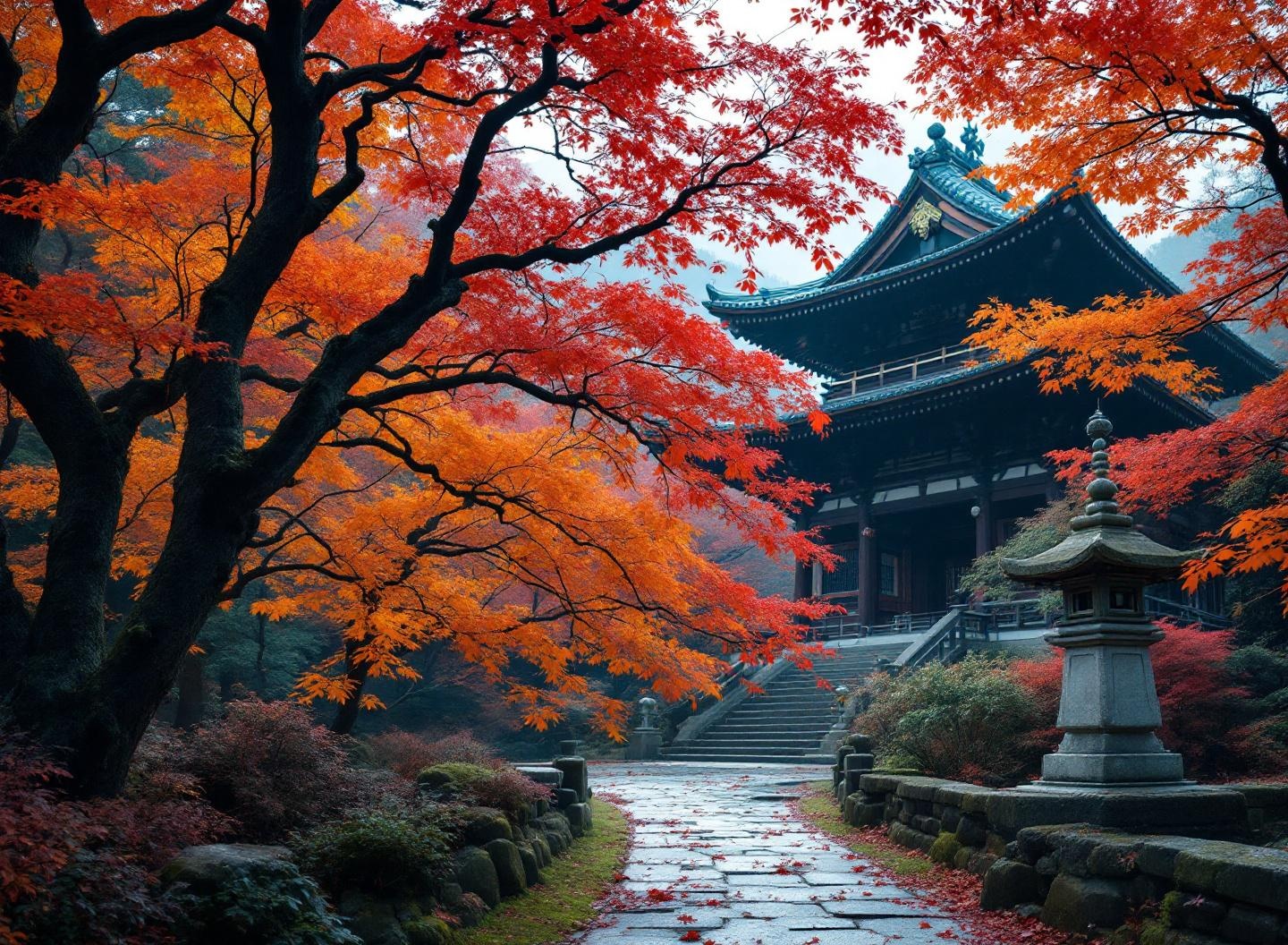
Autumn in Kyoto is many visitors’ first choice for timing a Japan trip, and for defensible reasons. The ancient temples and forested mountains that define the city spend much of the year as a monochrome of green and gray. In November, they briefly become red, orange, yellow, and amber — the same compositions that appear on scroll paintings and ukiyo-e woodblocks, now rendered in vivid color in three dimensions.
This guide covers when to visit for peak koyo (autumn foliage), the best spots ranked by quality, the night illumination calendar, and practical strategies for managing what is Kyoto’s most heavily visited season.
At a glance
| Where | Temples and paths across Kyoto, concentrated in Higashiyama and Arashiyama |
| Cost | Free to walk most paths; individual temple gardens typically 500–1,000 yen, more during night illuminations |
| Time needed | A full week ideally; a focused 3–4 day visit covers the highlights |
| Getting there | Kyoto Station by Shinkansen from Tokyo (around 2h15) or Osaka (around 15 minutes) |
| Best time | Mid-to-late November for the city center; late October to early November for mountain areas |
For a national view of timing beyond Kyoto, see Japan in Autumn; for broader Kyoto planning, see Best Things to Do in Kyoto and Kyoto in 3 Days.
When Does Autumn Foliage Peak in Kyoto?
Peak foliage in Kyoto typically falls in mid-to-late November, with full color (manzome) usually occurring between November 15 and December 5. The Japan Meteorological Corporation publishes annual koyo forecasts alongside its spring cherry blossom predictions; the forecasts are released in September and are generally accurate to within a few days.
The color sequence in Kyoto follows elevation and species. Higher mountain areas (Kurama, Ohara, Kibune) peak roughly one to two weeks before the city valley floor. Japanese maples (momiji) turn before ginkgo trees. In a typical year:
- Early November: Mountains north of Kyoto (Kurama, Kibune) reach peak; city maples begin turning
- Mid-November: Tofuku-ji, Eikan-do, and most of the major temple gardens reach full color
- Late November: City-wide peak; ginkgo avenues at their brightest
- Early December: Late-season color at Arashiyama, Nanzen-ji, Philosopher’s Path; lingering foliage after crowds thin
Unlike cherry blossoms, which last only about a week, autumn foliage in Kyoto holds for two to three weeks, giving visitors a more forgiving window.
Accommodation note: Book 3 to 6 months in advance for any November dates. Kyoto hotel prices increase by 50–100% during peak foliage and sell out across all categories.
Tofuku-ji
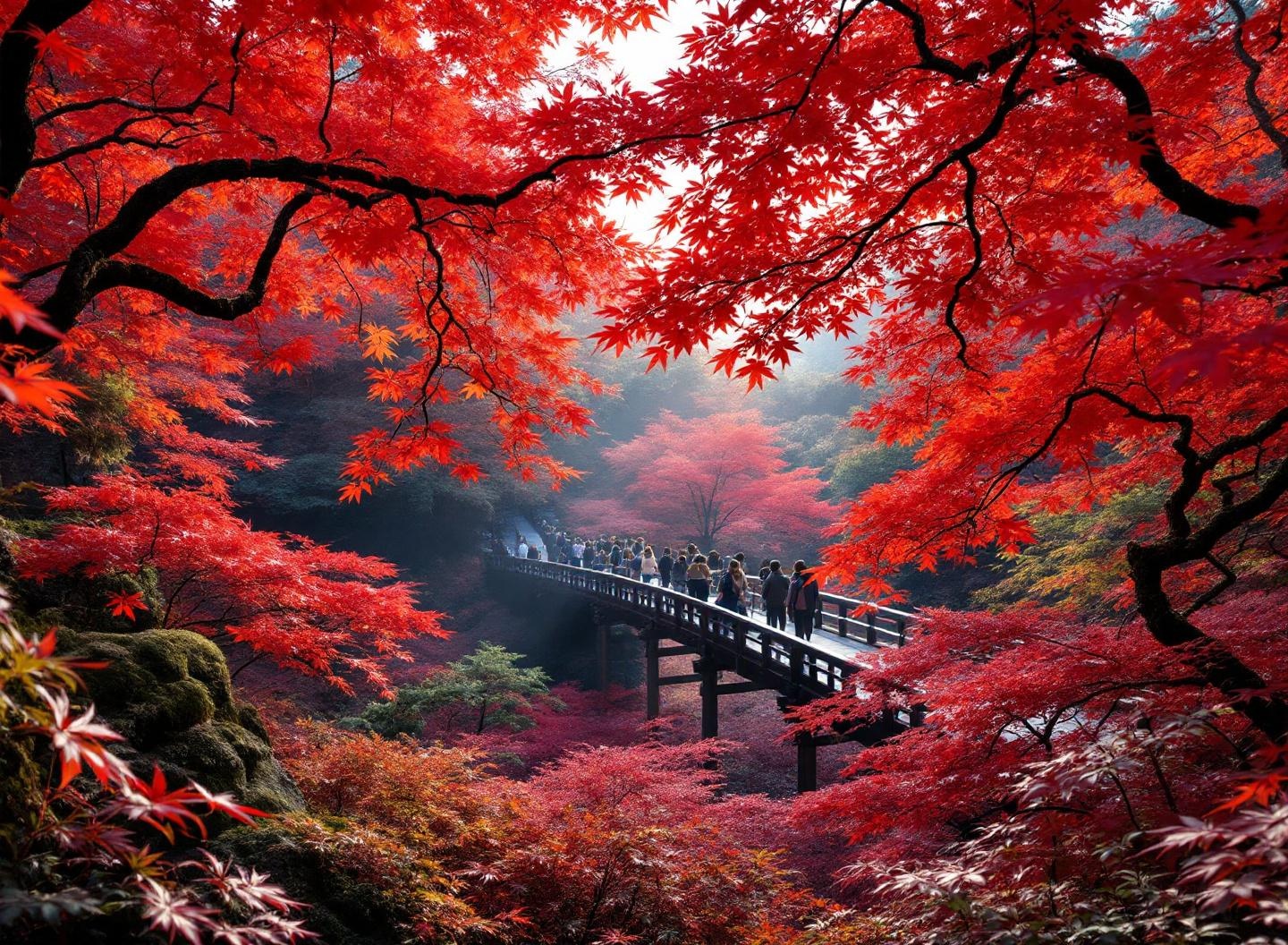
Tofuku-ji is the most famous autumn foliage destination in Kyoto and among the most celebrated in Japan. The temple complex is built across a narrow valley, and three historic wooden bridges — Tsutenkyo, Gazan, and Sengyoku — span the gorge at different heights. Beneath each bridge, maple trees planted over centuries create a canopy of red and orange that, at peak, becomes the defining image of the Kyoto autumn.
The Tsutenkyo bridge is the primary viewing point. During peak foliage, the line to cross it and photograph from the center can be 30–45 minutes long. The walk around the valley floor offers similar (and often better) views without the wait. Come on a weekday before 8:30am to see the bridges and gorge with significantly smaller crowds.
Beyond the famous bridges, Tofuku-ji contains four extraordinary dry landscape gardens designed by Mirei Shigemori in 1939 — geometric, modern in sensibility, and completely undervisited because visitors tend to rush through them toward the maple gorge. The north garden, with its moss-covered checker pattern, and the west garden, with its rectangular stone columns, are worth 20 minutes regardless of the foliage outside.
Entry fee: 600 yen (additional 500 yen for the Tsutenkyo bridge viewing area during autumn) Opening hours: 9am–4pm (extended to 4:30pm in autumn) Best time: Weekday mornings before 9am; also beautiful in light rain Getting there: JR Nara Line from Kyoto Station to Tofukuji Station (5 minutes, 150 yen). 10-minute walk to the temple.
Eikan-do
Eikan-do (formally Zenrin-ji) is Kyoto’s second most celebrated autumn foliage temple and, to many visitors, the more beautiful of the two. The complex climbs a steep hillside with buildings at different elevations connected by covered wooden walkways and open stairways. Maple trees of various species surround every structure, with the best color typically one to two weeks after Tofuku-ji peaks.
The famous figure of Mikaeri Amida — the Buddha looking back over his left shoulder in an attitude of compassion — is housed in the Amida-do hall near the top of the hill. The view from the two-story pagoda over the treetops toward Nanzen-ji and the city below is one of the better panoramas in eastern Kyoto.
Eikan-do’s autumn night illuminations, held every November (typically November 6–30) from 5:30pm to 9pm, are among the most acclaimed in the city. The garden ponds reflect the illuminated maples from below; the covered walkways are lit from above; the pagoda glows against the dark mountain. Tickets sell out for the most popular evenings — book in advance or arrive early in the evening queue.
Entry fee: 600 yen (1,000 yen during illumination events) Night illumination hours: 5:30pm–9pm (specific dates vary annually, typically November 6–30) Best time: Early morning or evening illuminations during peak foliage Getting there: Bus 5 to Nanzenji-Eikando-michi stop. Or walk 15 minutes from Heian Shrine.
Arashiyama
Arashiyama’s forested mountains form a backdrop visible from much of western Kyoto, and in autumn they turn a spectrum of red, orange, and gold that frames the Togetsukyo bridge and the Oi River below it in one of the most photographed seasonal compositions in Japan.
The most dramatic foliage is on the steep hillsides above Tenryu-ji garden. The Arashiyama Monkey Park trail, which climbs the mountain above the river, passes through particularly concentrated maple stands. The garden at Tenryu-ji frames borrowed scenery from these same hillsides, making peak foliage the finest time to visit the garden. The Sagano Romantic Train — a tourist railway running along the river gorge through Sagano — offers outstanding foliage views from its open cars in November.
Best combination in Arashiyama: Arrive early, walk the riverbank before entering Tenryu-ji at opening (8:30am), then take the Romantic Train through the gorge (reservation recommended in November, departs from Sagano-Arashiyama Station).
Sagano Romantic Train: 880 yen one way; reservation strongly advised in November. Getting there: JR Sagano Line to Saga-Arashiyama Station (15 minutes from Kyoto, 240 yen).
Kiyomizu-dera
Kiyomizu-dera’s main hall stage, suspended over the Higashiyama hillside on massive timber pillars, offers sweeping views over the treetops toward the city. In autumn, the view from the stage frames maple and ginkgo trees turning in shades of red, orange, and yellow — the same view depicted in hundreds of woodblock prints.
The path through Sannenzaka and Ninenzaka below the temple is also spectacular in autumn, with maples overhanging the stone-paved lanes and the old machiya shopfronts providing a traditional streetscape backdrop.
Kiyomizu-dera holds autumn illumination events (typically mid-November to December 2) with evening viewing from 6:30pm to 9:30pm. The illuminated view from the main stage over the glowing treetops is significantly more atmospheric than the daytime version.
Entry fee: 500 yen Night illuminations: 400 yen (separate ticket, specific dates announced annually) Getting there: Bus 100 or 206 to Gojo-zaka stop, 15-minute uphill walk.
Nanzen-ji and the Aqueduct
Nanzen-ji’s extensive temple grounds — spread across the lower slope of the Higashiyama mountains — contain several exceptional foliage viewing contexts. The 19th-century brick aqueduct that runs through the main precinct is surrounded by maples that frame the weathered red brick in striking contrast. The sub-temple of Nanzen-in, accessible for an additional 300 yen, has one of the most tranquil pond gardens in Kyoto, ringed by maples that reflect in the still water.
Nanzen-ji is also the starting point of the Philosopher’s Path, which runs north through maple-lined canal banks toward Ginkaku-ji. The path in autumn becomes a compressed corridor of yellow and red, less concentrated than the major temple gardens but free and accessible at any hour.
Entry fee: Grounds free; main buildings 500 yen; Nanzen-in 300 yen Getting there: Tozai subway line to Keage Station (5-minute walk).
Kitano Tenmangu
Kitano Tenmangu shrine in northwestern Kyoto holds a specific autumn event worth knowing about: the Momiji-en (maple garden) opens for a limited season from October 25 to December 9, with approximately 350 maple trees at various stages of color. The garden is enclosed within the shrine complex and accessible separately from the main shrine precincts.
The garden contains a covered walkway overlooking a stream lined with maples on both banks, creating a viewing experience that is more intimate than the major temple gardens. Weekday mornings are significantly less crowded than weekends.
Entry fee: 1,000 yen (garden; shrine grounds free) Garden open: October 25 to December 9, 9am–4pm Getting there: Randen Kitano Line to Kitano-Hakubaicho Station (3-minute walk).
Philosopher’s Path
The 2-kilometer canal-side footpath between Ginkaku-ji and Nanzen-ji is famous in spring for cherry blossoms, but its autumn transformation is equally rewarding and considerably less crowded. The maple trees overhanging the path and canal turn in late November, with yellow and orange reflections in the water below.
Walk the path from south to north (Ginkaku-ji to Nanzen-ji) in the morning light, when the low sun angles through the trees from the east. The small cafes along the path serve excellent matcha and seasonal wagashi (Japanese sweets) — stop for 20 minutes and let the pace of the neighborhood set your rhythm.
Entry fee: Free Best time: Late November mornings on a clear day
Bishamon-do
Bishamon-do in the Yamashina district east of central Kyoto is one of Kyoto’s finest autumn secrets. The temple is accessible only by a steep stone staircase lined with maple trees that, at peak, form a completely enclosed canopy of red. The view looking up the staircase during full foliage is among the most photographed autumn images in the Kansai region, yet the temple sees a fraction of the visitors that crowd Tofuku-ji.
The temple interior contains outstanding Edo-period screen paintings and a celebrated painted ceiling. The autumn garden surrounding the main hall is beautifully maintained and almost always accessible without crowds.
Entry fee: 500 yen Getting there: JR Biwako Line from Kyoto Station to Yamashina Station (5 minutes, 180 yen), then 20-minute walk or short taxi.
Rurikoin — Reservation Required
Rurikoin in the Yamashiro-Ohara area opens for two limited periods per year: spring (approximately April 15 to May 15) and autumn (approximately October 15 to December 10). The temple contains what is considered the most photogenic single room in Kyoto’s autumn calendar: a polished black lacquer table in the second-floor study hall that reflects the maple tree outside the window, creating a perfect double image of red foliage.
Access requires advance reservation through the temple’s official website or affiliated travel agents. Visitor numbers are strictly controlled, which means the experience is genuinely uncrowded — a rarity in Kyoto’s autumn season. Reservations open in September for the autumn period and fill within days.
Entry fee: 2,000 yen Booking: Official temple website (Japanese) or through Kyoto-based tour operators Getting there: Eizan Railway from Demachiyanagi to Yase-Hieizanguchi Station (15 minutes), then taxi or 20-minute walk.
Ohara
The rural hamlet of Ohara, 30 minutes north of central Kyoto by bus, sits in a mountain valley surrounded by cryptomeria cedar forests and rice paddies. The temples here — primarily Sanzen-in, Jakkoin, and Hosenin — are surrounded by gardens and forested hillsides that peak slightly earlier than the city floor, typically in early-to-mid November.
Ohara rewards visitors who make the early bus and arrive before the day-trippers from Kyoto city arrive around 11am. Sanzen-in’s moss garden, studded with small stone Jizo figures and ringed by maples, is in a different register of beauty from the famous city temples. Hosenin’s garden frames an 700-year-old pine that fills the view from the veranda like a living ink painting, surrounded in autumn by maple color.
Sanzen-in entry fee: 700 yen Hosenin entry fee: 800 yen (includes matcha) Getting there: Bus 17 or 19 from Demachiyanagi Station to Ohara terminus (approximately 50 minutes, 550 yen).
Kurama and Kibune
The mountain villages of Kurama and Kibune, accessible by the narrow-gauge Eizan Railway 30 minutes north of Kyoto, sit at higher elevation than the city and peak for autumn foliage in late October to early November — two weeks before the city floor. The steep cedar and maple forests on both sides of the mountain trail connecting Kurama to Kibune turn deep red before anywhere else in the Kyoto area.
The combination of the Kurama-dera mountain temple, a hike through ancient forest, descent to the Kibune river valley, and return by train makes a complete half-day excursion. Kibune’s riverside restaurants (kawadoko dining on platforms built over the stream) close for winter in late September, but the mountain atmosphere in October and November is reward enough.
Kurama-dera entry: 300 yen mountain entry Getting there: Eizan Railway from Demachiyanagi to Kurama terminus (30 minutes, 430 yen).
Night Illumination Calendar
Kyoto’s major temples hold ticketed evening illumination events throughout November and into early December. Specific dates change annually and are announced in October. In a typical year:
- Tofuku-ji: November 8–December 1 (note: this is a daytime extension only, not night illumination)
- Eikan-do: November 6–30, 5:30pm–9pm (tickets 1,000 yen)
- Kiyomizu-dera: Mid-November to early December, 6:30pm–9:30pm (tickets 400 yen)
- Kodai-ji: Early November to late November, 5pm–9:30pm (tickets 600 yen)
- Nijo Castle: November 1–30, 6pm–9:30pm during select weeks (tickets 1,200 yen)
- Kitano Tenmangu: November garden is open evenings during peak foliage (included in garden fee)
Book tickets for Eikan-do and Kiyomizu-dera illuminations in advance if possible — the most popular evenings (weekends during mid-November peak) sell out.
Practical Tips for Kyoto Autumn Foliage
Timing your visit: Mid-November is the single best week in the year for Kyoto. It is also the most crowded. If you have flexibility, the first week of November (for mountain areas) or the last week of November (after the peak crowd dissipates) offer excellent foliage with more manageable visitor numbers.
Getting around: The Kyoto City Bus is reliable but extremely crowded in November. The Tozai subway line connects the eastern foliage sites (Keage, Tofuku-ji via Kujo) efficiently and without the bus crowding. Cycling is effective for the Philosopher’s Path and Eikan-do circuit.
Photography: Morning light from the east illuminates the Higashiyama temples most favorably. Overcast days diffuse the light evenly and allow longer shooting times without harsh shadows. Light rain often produces the most atmospheric images.
Combination days: East Kyoto (Eikan-do, Nanzen-ji, Philosopher’s Path, Kiyomizu-dera) can be walked in a full day starting at 8am. Tofuku-ji is best visited alone in the morning. Arashiyama requires half a day. Ohara and Kurama each require a separate half-day excursion.
Autumn Foliage Timing by Elevation and Area
Because color moves from higher, cooler areas down to the city floor, the “peak” is really a rolling sequence rather than a single week. Understanding this lets you extend a foliage-focused trip by moving between areas as they turn.
| Area | Typical peak | Crowd level | Notes |
|---|---|---|---|
| Kurama and Kibune (mountains) | Late October–early November | Moderate | Peaks up to two weeks before the city |
| Ohara | Early-to-mid November | Light | Rural, rewards an early bus departure |
| Tofuku-ji, Eikan-do (city temples) | Mid-November | Very heavy | The core “peak week” of the season |
| Kiyomizu-dera, Nanzen-ji, Philosopher’s Path | Mid-to-late November | Heavy | Combine into one Higashiyama day |
| Arashiyama, late-season pockets | Late November–early December | Moderate, thins after peak | Good option once the mid-November crowds ease |
Where to Stay for an Autumn Foliage Trip
Higashiyama (near Gion, Kiyomizu-dera, and the Philosopher’s Path) puts you within walking distance of Kyoto’s densest cluster of foliage temples, which matters most on the early mornings when arriving before 8am makes the biggest difference to crowd levels. Staying near Kyoto Station is more practical if you also plan day trips to Nara or Osaka, since it sits directly on the Shinkansen and JR lines. Either way, book well before September, since accommodation across the city fills for the full November window.
See our full Japan in autumn guide for national foliage timing, and the best things to do in Kyoto for broader planning.
More tours on Viator
Top-rated experiences with verified reviews, bookable on Viator (a Tripadvisor company).
 Viator
Peaceful Hiroshima & Miyajima UNESCO 1 Day Bus Tour
FromUSD 124Check availability → Viator
World Heritage Shirakawa-go and Experience Tours from Kanazawa
FromUSD 118Check availability → Viator
World Heritage Kyoto & Nara Uji Authentic Matcha Experience
FromUSD 124Check availability → Viator
Nara Half Day Trip Walking Tour (Private Option Available)
FromUSD 101Check availability → Viator
Hiroshima Peace (Heiwa) Walking Tour at World Heritage Sites
FromUSD 91Check availability → Viator