Best Things to Do in Fukuoka
Last updated: March 2026
Fukuoka is Japan’s sixth-largest city and the country’s youngest major metropolis — its population is growing while Tokyo’s stagnates, its food culture has a quality-to-price ratio that surprises visitors expecting Tokyo-level expense, and its location on the Hakata Bay and proximity to Korea and China have given it a character distinctly different from the rest of Japan. It is also, quietly, one of the best cities in East Asia to eat well and cheaply.
Most visitors to Japan do not make it to Fukuoka, which is part of why its advocates are so enthusiastic about it. The things to do in Fukuoka span world-class ramen, the unique yatai open-air food stall culture, historic temples and shrines, beaches, and a compact, walkable city center that rewards exploratory walking. Fukuoka is also the natural gateway city for exploring Kyushu — Japan’s southernmost main island.
Quick Reference
| Activity | Time Needed | Cost | Best For |
|---|---|---|---|
| Yatai stalls at Nakasu or Tenjin | 2–3 hours (evening) | 2,000–4,000 yen per person | Food culture, atmosphere |
| Tonkotsu ramen (Ichiran or Shin-Shin) | 30–45 minutes | 800–1,200 yen | Ramen enthusiasts |
| Ohori Park | 45–60 minutes | Free | Walking, scenery |
| Fukuoka Castle ruins | 30–45 minutes | Free | History, views |
| Kushida Shrine | 30–45 minutes | Free | Culture, Hakata Gion float |
| Canal City Hakata | 1–2 hours | Free (browsing) | Shopping, architecture |
| Fukuoka Tower | 30–45 minutes | 800 yen | City views |
| Dazaifu Tenmangu Shrine | 1.5–2 hours | Free (grounds) | Day trip, culture |
| Yanagawa river punting | 1–2 hours | 1,500–2,000 yen | Scenic canals, relaxation |
| Hakata-za theater (live performance) | 2–3 hours | 4,000–8,000 yen | Traditional performing arts |
Yatai: Fukuoka’s Open-Air Food Stalls
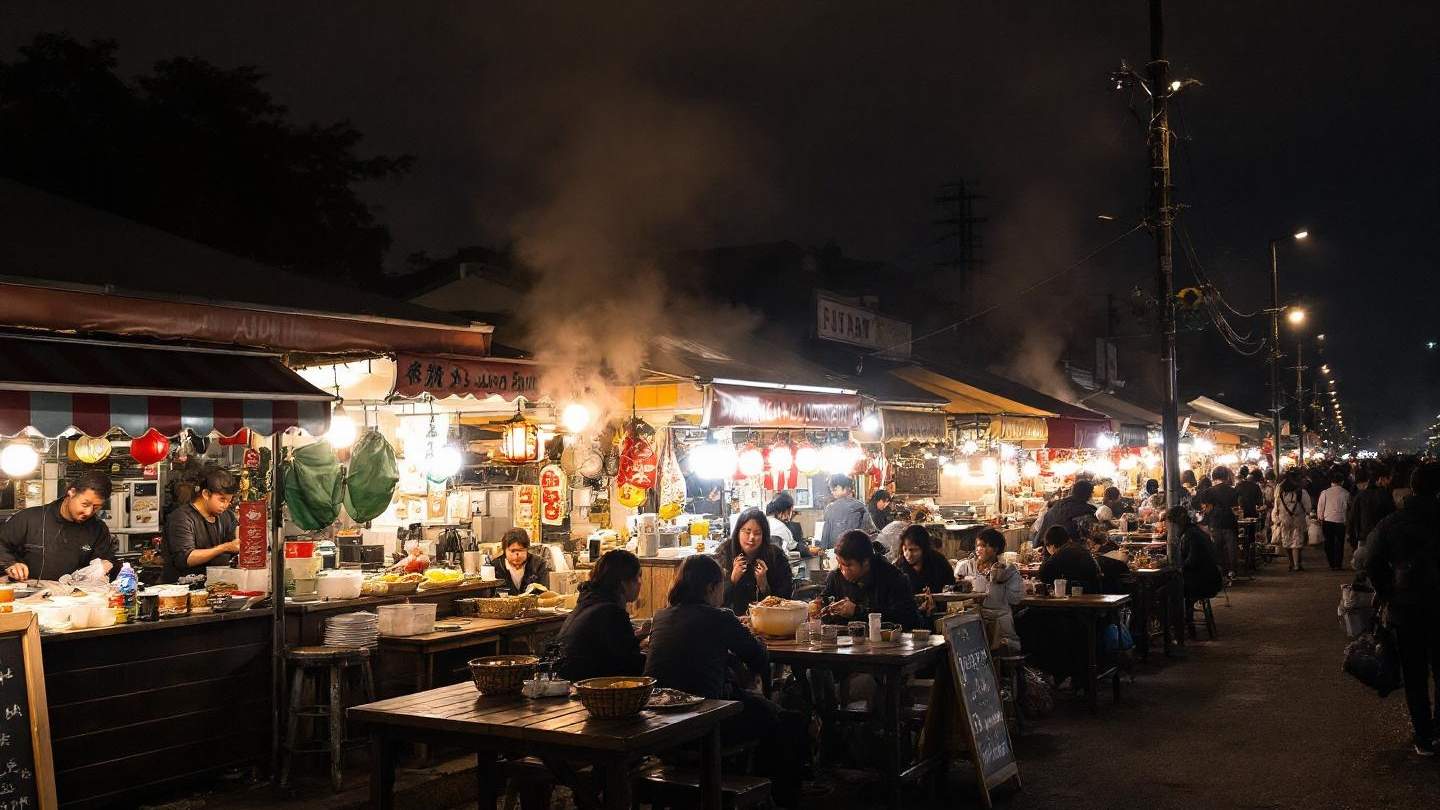
Yatai (open-air food stalls) are the defining experience of Fukuoka and one of the things that makes the city irreplaceable in Japan. Approximately 150 yatai operate throughout the city, primarily concentrated along the Nakasu riverside and in the Tenjin area, setting up in the early evening and running until midnight or later.
Each yatai is a tiny, temporary kitchen with a canvas awning and a counter seating around six to eight people. The menu at most stalls includes tonkotsu ramen, yakitori (grilled chicken skewers), oden (simmered vegetables and fish cakes), gyoza, and various seasonal dishes. A full meal with two or three dishes and a beer costs typically 2,000–3,500 yen — exceptional value by Japan standards.
The experience is social in a way that restaurants rarely are. You sit at the counter close to strangers, the cook is an arm’s reach away, and the intimacy of the space creates conversations that do not happen in normal dining. Many yatai owners speak minimal English but are hospitable; pointing at dishes being eaten by neighbors works well.
The Nakasu yatai strip along the Naka River is the largest concentration. Tenjin yatai (around Showa-dori Avenue) tends to attract a more local crowd and slightly lower prices. Both areas are worth experiencing — many visitors do one on a first night and the other on a second.
Yatai operate only in dry weather and some are closed on certain days. Arrive by 6:30–7pm for the best chance of immediate seating; popular stalls fill quickly on weekends.
Tonkotsu Ramen
Fukuoka is the birthplace of Hakata-style tonkotsu ramen — the ultra-rich, cloudy pork bone broth that has become Japan’s most internationally recognized ramen style. The local version is notable for its thin, straight noodles (thinner and firmer than other regional styles), intense broth, and the concept of kaedama (noodle refill): when you finish your noodles, you can order a fresh serving dropped into your remaining broth for around 100–200 yen.
Ichiran is the national chain most associated with Hakata ramen and has its origin here — the single-booth dining concept (each diner eats alone facing a small bamboo curtain, with orders placed on a paper form) was invented in Fukuoka. The ramen (890 yen base price) allows customization of broth intensity, noodle firmness, scallion quantity, and other variables. It is a genuine and excellent product regardless of the chain’s tourist-magnet status.
Shin-Shin (multiple locations in central Fukuoka) is the local’s choice — less internationally famous than Ichiran, generally considered to have cleaner, more balanced broth, and with a more traditional counter-dining atmosphere. A bowl is typically 800–900 yen.
Ramen Stadiums (ramen specialist food courts) exist inside several Fukuoka shopping centers including Canal City Hakata, where multiple ramen styles from across Japan are served side by side.
Ohori Park and Fukuoka Castle
Ohori Park is a large urban park built around a former tidal inlet — now a freshwater lake — in the Tenjin area of central Fukuoka. The park is free to enter and excellent for morning walks, cycling (rental available at the park, 200 yen per hour), and picnicking. A traditional Japanese garden within the park (admission 250 yen) features a teahouse and lantern-lit stone path.
Adjacent to the park, Fukuoka Castle ruins (free) occupy a hilltop where the original castle was built by Kuroda Nagamasa in 1607. The castle itself was dismantled in the Meiji period, but the stone walls, turrets, and main tower foundations remain. The view from the castle tower foundation over Ohori Park and Hakata Bay is one of the best free views in the city. Cherry blossoms in the castle grounds in late March and early April are excellent.
Kushida Shrine and Hakata Culture
Kushida Shrine (free) is Fukuoka’s main Shinto shrine, founded in the 8th century and the guardian of Hakata district. The shrine is home to the enormous Yamakasa festival float displayed year-round in a purpose-built pavilion next to the main shrine — a seven-story decorated structure weighing over a tonne, used in the Hakata Gion Yamakasa Festival (July 1–15), when teams of men race through the streets carrying similar floats at speed in a festival considered one of Japan’s three great summer festivals.
The Hakata Machiya Folk Museum adjacent to Kushida Shrine (admission 200 yen) occupies a beautifully restored Meiji-era merchant house and tells the history of the Hakata area’s silk weaving industry (Hakata ori, a traditional textile still produced and sold throughout the city) and the development of the local festival culture.
Canal City Hakata
Canal City Hakata is a large indoor-outdoor shopping and entertainment complex in the Sumiyoshi area, designed around a canal that runs through the center of the building with fountains and light shows. It houses over 250 shops, restaurants, a cinema, and the Canal City Ramen Stadium on the fifth floor.
The building is architecturally unusual enough to be worth a look even for visitors not interested in shopping — the curved, colorful facade and the canal running through the atrium are genuinely distinctive. The fountain shows run several times daily and are specifically designed to be photographed from the upper walkways.
Dazaifu Tenmangu Shrine (Day Trip)
Dazaifu is a small city 15 kilometers south of Fukuoka, accessible in about 40 minutes by private Nishitetsu Railway (400 yen each way). It was the ancient administrative capital of Kyushu and one of Japan’s most important historical sites.
Dazaifu Tenmangu Shrine (free; inner shrine 500 yen) is one of Japan’s most visited shrines — the main sanctuary dedicated to Sugawara no Michizane, the deified patron of scholarship and learning. Students visit in enormous numbers before university entrance exams to pray for success. The approach is lined with umegaebochi stalls — round rice cakes with sweet red bean filling, the local specialty sold hot from griddles for 150–200 yen each.
The shrine’s plum orchard (1,500 trees) blooms in late February, making it one of the Kyushu region’s most popular early spring destinations. The adjacent Kyushu National Museum (admission 700 yen) is one of Japan’s four national museums and focuses on Asia-Pacific cultural exchange — an excellent museum with superior English signage.
Yanagawa Canal Punting
Yanagawa (1 hour from Fukuoka by Nishitetsu Railway, 1,060 yen each way) is a historic castle town built on an elaborate canal network — over 470 kilometers of canals originally constructed for irrigation and castle defense. Today the canals are traversed by flat-bottomed boats punted by standing boatmen, a system called donko boat tours (1,500 yen for the 1-hour main course).
The experience is leisurely and genuinely picturesque — low stone bridges, weeping willows, old machiya townhouses, and ducks sleeping on the canal banks. The boatmen sing traditional Yanagawa folk songs during the cruise.
Yanagawa is also known for unagi (freshwater eel) — the local preparation called seiro-mushi (steamed eel over rice in a wooden box) is considered the best in the Kyushu region. Several restaurants along the canal serve it for around 2,000–3,500 yen.
Best Time to Visit Fukuoka
| Season | Conditions | Highlights | Crowds |
|---|---|---|---|
| Spring (Mar–May) | 12–22°C, pleasant | Cherry blossoms at Ohori Park and castle, plum in Dazaifu | Moderate in April |
| Summer (Jun–Aug) | 25–35°C, very humid | Hakata Gion Yamakasa Festival (July 1–15), lively yatai season | High during festival; otherwise moderate |
| Autumn (Sep–Nov) | 15–25°C, excellent | Comfortable temperatures, Yanagawa boat tours, food festivals | Moderate |
| Winter (Dec–Feb) | 6–14°C, mild by Japan standards | Quietest season, warm tonkotsu ramen, relaxed yatai evenings | Low; very pleasant for food-focused travel |
Hakata Gion Yamakasa (July 1–15, culminating in the racing event on July 15) is one of Japan’s most energetic and unusual festivals — worth planning a visit around if the timing works. The final Oiyama race (July 15, starting at 4:59am) draws enormous crowds but can be experienced from street-level positions throughout the race route.
Winter is underrated in Fukuoka: mild enough to enjoy yatai and ramen without summer humidity, and the quietest period for the city’s attractions.
How to Get to Fukuoka
| Route | Travel Time | Cost | Notes |
|---|---|---|---|
| Shinkansen from Osaka (Hakata Station) | 2.5 hours (Nozomi) | ~15,000 yen | Hikari and Sakura covered by JR Pass |
| Shinkansen from Tokyo (Hakata Station) | 5 hours (Nozomi) | ~23,000 yen | Very long; flying often makes more sense |
| Flight from Tokyo (Haneda/Narita) | 1.5 hours + transfer | From 8,000 yen | Often faster door-to-door than shinkansen |
| Flight from Osaka (Itami/KIX) | 1 hour | From 5,000 yen | Competitive on speed and price |
| Fukuoka–Busan Ferry | 3–6 hours | From 7,000 yen | Via JR Kyushu; connects to South Korea |
Fukuoka’s Hakata Station is the main arrival point for shinkansen and connects directly to the city subway system. Fukuoka Airport is extraordinarily convenient — only two subway stops (5 minutes) from Hakata Station, making it one of the most accessible airports in Japan.
Practical Tips
Fukuoka has two historic names in active use: Fukuoka (the western, samurai-class side of the city) and Hakata (the eastern, merchant-class side where most tourist activity concentrates). Train stations, ramen styles, and traditional crafts are typically labeled “Hakata.” The city is officially “Fukuoka.”
Budget travel is genuinely feasible in Fukuoka in a way it is not in Tokyo or Kyoto. Yatai meals, ramen, and Hakata specialties are priced for local diners rather than tourists. A full day of excellent eating is possible for 2,000–3,000 yen per person.
Hakata-ori textiles (traditional woven silk with dense geometric patterns, originally developed in the 13th century) are the signature local craft. Shops near Kushida Shrine sell belts, accessories, and fabric by established weavers at a wide range of price points.
The Nishitetsu Railway (private railway, not covered by JR Pass) is the most convenient way to reach Dazaifu and Yanagawa from central Fukuoka.
Full accommodation options, neighborhood guides, and extended Kyushu itinerary planning are in the Fukuoka Travel Guide.
Fukuoka Food Beyond Ramen
Fukuoka’s food reputation is built on tonkotsu ramen and yatai culture, but the city has a far broader culinary identity that rewards deeper engagement.
Mentaiko (spicy marinated pollack roe) was invented in Fukuoka in the 1940s, adapted from a Korean pickled roe tradition by a Hakata merchant. Today it is one of Japan’s most popular food products, exported nationwide, but the fresh and most complex versions are found only at specialist shops in Fukuoka. Fukuya and Yamaichi Mentai are the two foundational brands. Mentaiko is served on rice, in pasta, in onigiri, and on grilled bread at various spots throughout the city.
Hakata wagyu beef from the Itoshima Peninsula west of Fukuoka is increasingly recognized alongside the more famous Kobe and Matsusaka beef. Yakiniku (grilled beef) restaurants in the Tenjin area serve it at prices significantly below Tokyo equivalents.
Mizutaki is a Hakata-style hot pot — chicken simmered in kombu and chicken-bone broth until the broth turns milky, served with ponzu dipping sauce and finished with ramen noodles in the remaining broth. It is a communal, leisurely meal best experienced at a specialty mizutaki restaurant in the Nakasu or Tenjin areas. Set courses run 4,000–8,000 yen per person.
Itoshima seafood market: The Itoshima Peninsula, 40 minutes from Fukuoka by train or car, has local seafood markets, oyster farms (open for self-shucking oyster BBQ from November through March, typically 1,000–1,500 yen for a set), and a small but excellent craft brewery district that has grown over the last decade.
Fukuoka Nightlife and Entertainment Districts
Nakasu is one of Japan’s largest entertainment districts — a small island in the Naka River in central Fukuoka, densely packed with bars, clubs, cabarets, and restaurants. It functions as both a tourist area (the yatai are here) and a genuine local nightlife district with several thousand venues operating simultaneously on busy evenings.
Tenjin is the other major entertainment area, slightly more mainstream and commercial, with department stores and chain restaurants in the daytime transforming into bar districts after dark.
Keya no Oto area west of the city has a craft bar and live music culture that draws a younger local crowd rather than tourists.
Hakata-za Theater is Fukuoka’s traditional performing arts venue, staging kabuki, hakata-ningyo (traditional Hakata doll) puppet performances, and contemporary entertainment. Checking the current program for English-accessible shows is worthwhile — some programs include simultaneous translation receivers.
Fukuoka as a Kyushu Base
Fukuoka’s geography makes it an excellent base for exploring the rest of Kyushu — Japan’s southernmost and most volcanically active main island. Several worthwhile destinations are within easy day-trip range:
Beppu (2 hours by limited express, around 3,600 yen) is Japan’s most famous onsen resort town, with erupting mud pools, steaming streets, and the theatrical “Hells” — eight dramatically colored hot spring ponds including a blood-red iron spring, a blue cobalt pool, and a grey mud bubbling pool (admission 2,200 yen for all eight hells combined).
Mount Aso (2.5 hours by train and bus) is one of the world’s largest active calderas — a volcanic massif with an accessible caldera rim and the opportunity, when gas levels permit, to look into an active crater from the rim road. The surrounding caldera floor is farmed and grazed by cattle, creating a surreal pastoral landscape within a volcano.
Nagasaki (2 hours by express train, ~5,000 yen) shares Hiroshima’s atomic bomb history and has additional layers of cultural significance — it was Japan’s primary international trading port for three centuries of isolation, producing a unique blend of Dutch, Chinese, and Portuguese influences still visible in the city’s churches, temples, and food (Nagasaki champon, a noodle dish with Chinese and Japanese elements, originated here).
See the Fukuoka Travel Guide for full Kyushu itinerary options and the logistics of using Fukuoka as a regional base.