Fukuoka
Complete Fukuoka travel guide. Famous for tonkotsu ramen, yatai food stalls, beaches, temples, and a relaxed southern Japanese atmosphere.
Quick Facts
- Best For
- Ramen, Yatai, Beaches
- Days Needed
- 2-3 days
- Best Season
- Spring and Autumn
- Airport
- Fukuoka Airport (FUK)
- Getting There
- 5h from Tokyo by Shinkansen
- Budget (per day)
- 5,000-15,000 yen
Why Visit Fukuoka
Fukuoka is the kind of city that gets under your skin. It makes a great stop on a 14-day Japan itinerary. Japan’s sixth-largest city sits on the northern tip of Kyushu, facing the Korean Peninsula across the Genkai Sea, and that geographical position has shaped its entire character — open, cosmopolitan, relaxed, and obsessively focused on food. Locals will tell you, with complete sincerity, that Fukuoka has the best food in Japan. After a few days here, you will find it difficult to argue.
What makes Fukuoka particularly special for travelers is the combination of big-city convenience with a human scale that Tokyo and Osaka simply cannot offer. The airport is embedded within the city — a 10-minute subway ride from the center — public transport is clean and logical, and the compact layout means you can walk between the city’s key districts in under 30 minutes. There is no sprawl fatigue here.
The food scene is the headline act. Tonkotsu ramen was born in this region, and the city takes its ramen with absolute seriousness. The yatai — open-air food stalls that line the riverbanks and park edges at night — are found almost nowhere else in Japan at this scale. Fukuoka has preserved this street-food culture with pride, and sitting at a yatai on a warm evening, eating grilled skewers and drinking cold Asahi while the city hums around you, is one of the great travel experiences in Asia.
Beyond food, Fukuoka offers genuine history at Kushida Shrine and the ancient capital at Dazaifu, the green calm of Ohori Park, a beach within the city limits, and a nightlife district in Nakasu that rivals any in Japan. It is a city that rewards slow, curious exploration.
Yatai Food Stalls — Fukuoka’s Greatest Treasure
What Are Yatai?
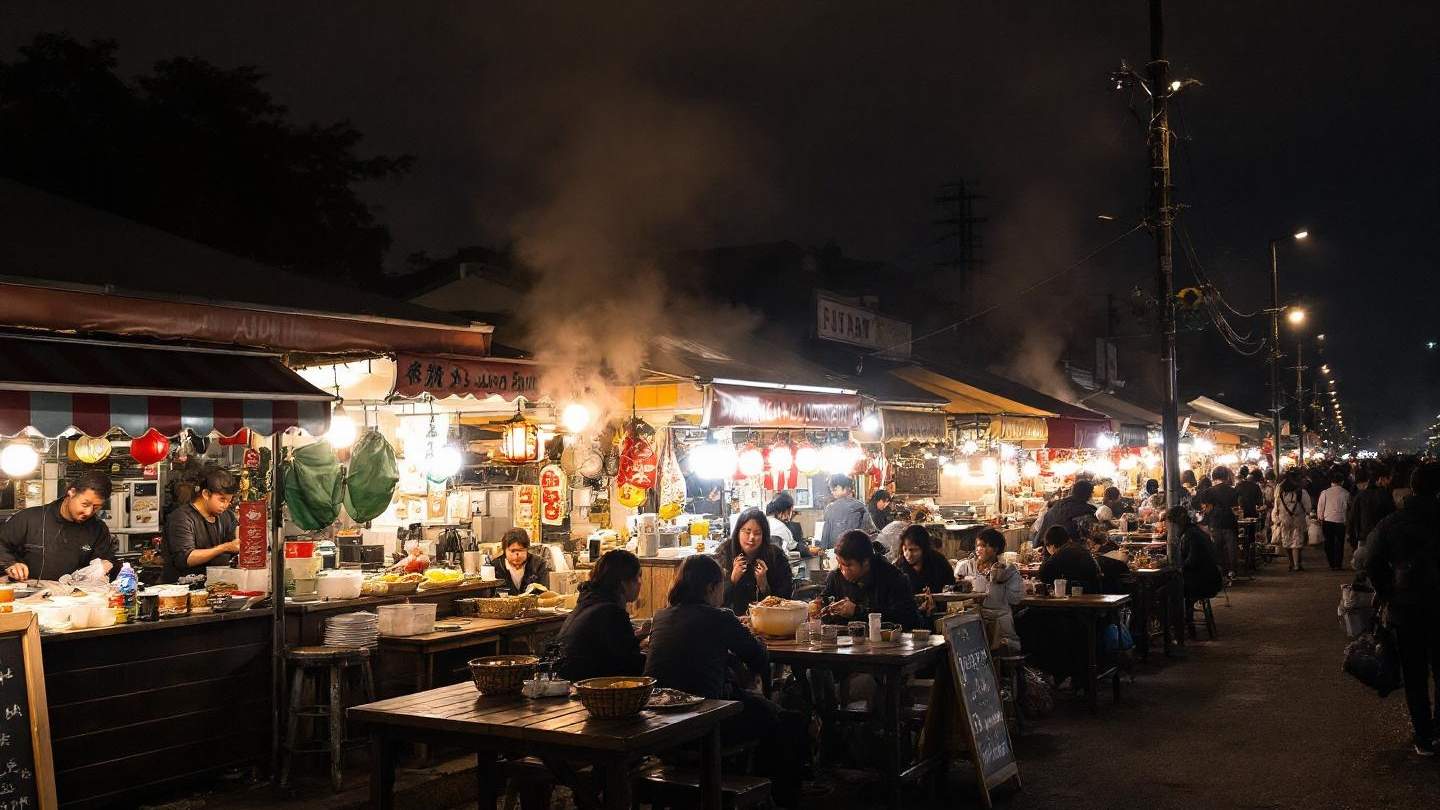
Yatai (屋台) are portable, covered food stalls that set up along the streets and riverbanks of Fukuoka every evening from around 6pm and stay open until midnight or later. They are a direct throwback to the post-war food culture that once existed across Japan — improvised, intimate, and communal. While most Japanese cities phased out their yatai decades ago due to hygiene regulations and land pressure, Fukuoka fought to keep them, and today roughly 100 licensed stalls operate across the city.
Each yatai is a tiny world. A canvas awning, eight to twelve seats arranged around a counter, a proprietor (usually the owner) cooking everything to order on a small gas stove, a plastic curtain keeping out the night chill. Conversation between strangers at neighboring seats is not just accepted — it is expected and actively encouraged. Salarymen sit beside tourists beside young couples. The yatai has no pretension and no reservation system.
Where to Find the Best Yatai
Nakasu Island is the most famous yatai zone and the easiest to find. Around 20 stalls line the western bank of the Naka River on Nakashima-dori, glowing with red lanterns from dusk onward. The atmosphere here is festive and slightly chaotic — this is the version of yatai culture that appears in every travel magazine. Stalls along Nakasu tend to be slightly more tourist-aware, with some English menus, but the food quality is consistently high.
Tenjin area has a second concentration of yatai along the covered arcade near Watanabe-dori, particularly on the stretch near Showa-dori. These stalls attract more local office workers and feel slightly more authentic in atmosphere. Arrive between 7pm and 9pm when they are busiest.
Nagahama district, near the fish market on the western waterfront, has a handful of yatai that attract serious food enthusiasts and late-night fishermen finishing their shifts. Less touristic, stronger atmosphere.
What to Order
The core yatai menu revolves around a handful of dishes that have barely changed in 70 years:
Ramen — most yatai serve tonkotsu ramen (see below for full detail), and the bowl you eat at 11pm on a plastic stool, slightly damp from the night air, will taste better than it has any right to.
Oden — a long-simmered broth containing daikon radish, fish cakes, boiled eggs, konjac, and tofu. Japanese comfort food at its most elemental. A full bowl with four to five items costs around 600-900 yen.
Yakitori — skewered chicken grilled over charcoal. Order tare (sweet soy glaze) or shio (salt). A single skewer costs 150-250 yen.
Gyoza — pan-fried pork dumplings, thinner-skinned than the Osaka style. A plate of six runs 400-600 yen.
Mentaiko dishes — Fukuoka is the home of mentaiko (spicy pollock roe), and many yatai serve it as a topping, mixed into noodles, or alongside rice.
Motsu nabe — offal hot pot (see Local Food section below).
Yatai Etiquette and Practical Tips
Arriving at a yatai, you simply find an open seat and sit down. The proprietor will bring you a small towel and an oshibori, then ask what you want to drink. Order a beer first — this is non-negotiable in spirit if not in rule. Most yatai have a picture menu or will point at items; some now have basic English menus.
Budget 1,500-3,500 yen per person for a full yatai meal with two or three drinks. Cash is almost universally required — carry small bills. Most yatai open around 6pm and the best ones fill up by 7:30pm on weekends, so arrive early or be prepared to wait briefly. Yatai do not operate in heavy rain; check the weather forecast before planning your evening around them.
Do not rush. The culture of yatai is to linger, order slowly, and let the night develop.
Tonkotsu Ramen — The Full Guide
Understanding the Style
Tonkotsu ramen (豚骨ラーメン) originated in Kurume, a city south of Fukuoka, but it was refined and popularized in Fukuoka over decades to become the style the world now recognizes. The broth is made by boiling pork bones — trotters, femurs, back bones — at a rolling boil for 12 to 18 hours or more. The vigorous boiling emulsifies the collagen and marrow into a thick, milky-white broth that is intensely savory, slightly sweet, and rich with umami without being as heavy as it looks.
Fukuoka tonkotsu is characterized by its thin, straight, low-hydration noodles — dramatically different from the thick wavy noodles found in other ramen styles. These noodles cook in under a minute and have a satisfying firm bite. The standard toppings are simple: two or three slices of chashu pork belly, green onions, menma (bamboo shoots), nori (dried seaweed), and a knob of fragrant garlic paste on the side.
One unique Fukuoka ramen culture point: kaedama (替玉), the custom of ordering extra noodles added to your remaining broth for around 100-150 yen. When your bowl is almost finished, call out “kaedama kudasai” and fresh noodles will arrive within 60 seconds.
Best Ramen Shops in Fukuoka
Shin-Shin (しんしん) in Tenjin is widely considered the best tonkotsu ramen shop in the city among locals. The broth is slightly lighter than average with an extraordinary depth of flavor, the noodles perfectly calibrated, the shop clean and professional. Expect a queue of 15-30 minutes at peak hours. A basic bowl costs around 750-900 yen. Multiple locations; the Tenjin honten (main store) is the one to visit.
Ichiran — you will know this chain from its individual booths and solo-dining format. It was founded in Fukuoka in 1960, and the original concept was developed here. While it is now a global brand, eating at the Fukuoka locations feels appropriate and the broth maintains a high standard. Good option for solo travelers or those who want a controlled, customizable experience. Budget around 1,000-1,300 yen.
Ippudo is another Fukuoka-born chain that went global. The Hakata Ippudo flagship store serves the akamaru modern bowl (with additional flavor concentrate) alongside the classic shiromaru. The flagship store has two-hour queues on weekends — either arrive at opening (11am) or try a branch. Bowl from 900 yen.
Nagahama Ramen shops clustered around the Nagahama fish market area are the original late-night, no-frills version. These are tiny, often cash-only, open until 4am or even 24 hours. The clientele is market workers, taxi drivers, and people on their way home from the bars. The ramen is fast, cheap (700-850 yen), and excellent.
Hakata Issou (博多一双) in Hakata has developed a cult following for its kotteri (rich) broth style, which is thicker and more intensely flavored than the Tenjin-style shops. The queue can be 45 minutes on weekends but moves quickly. Bowl from 780 yen.
Key Attractions
Canal City Hakata
Canal City is a vast, curved shopping and entertainment complex completed in 1996, bisected by an artificial canal with regular water fountain shows. It contains over 250 shops, restaurants on multiple levels, a Ramen Stadium floor with eight ramen restaurants from across Japan, a theater, and a cinema. The architecture by Jon Jerde is genuinely interesting — all curves, levels, and theatrical lighting. It is primarily a shopping center but a well-designed one worth an hour of your time, particularly the ramen floor. Open daily 10am-9pm; restaurants until 11pm.
Ohori Park
Ohori Park (大濠公園) sits 15 minutes from Tenjin by subway and is Fukuoka’s green lung — a large, placid lake surrounded by walking paths, pine trees, and some of the most pleasant parkland in Kyushu. The park was developed on the site of the outer moat of Fukuoka Castle, and ruins of the castle walls remain on the northern edge. Rental rowboats and paddleboats are available on the lake (600-800 yen for 30 minutes). On weekday mornings the park fills with runners; on weekend afternoons, families and couples. The adjacent Fukuoka Art Museum holds a modest permanent collection with some Dali and Warhol works alongside Japanese pieces. Admission around 200 yen. The park itself is free.
Kushida Shrine
Kushida Shrine (櫛田神社) is the spiritual heart of Fukuoka and home to the Hakata Gion Yamakasa festival, one of Japan’s most energetic summer festivals (held every July). Within the shrine compound you will find the massive festival float (kazariyama) on permanent display — an extraordinary construction of carved wood, colored fabric, and lacquered figurines standing six meters tall. The shrine itself dates to 757 CE and has a welcoming, unpretentious atmosphere that many of Kyoto’s more touristed shrines have lost. Entry is free. Located in the Hakata area, a short walk from Hakata Station.
Fukuoka Tower and Momochi Beach
Fukuoka Tower (福岡タワー) is Japan’s tallest seaside tower at 234 meters, located in the Momochi district on the western side of the city. The observation deck at 123 meters offers panoramic views across Hakata Bay, the city, and on clear days the mountains of Kyushu inland. Admission 800 yen; open 9:30am-10pm. Directly adjacent is Momochi Beach, a sandy urban beach on the bay — clean, free, and popular with locals in summer. The beach runs for about 700 meters and the flat water makes it safe for families. Combined with the Fukuoka City Museum (free or low entry for permanent exhibitions) next door, this area fills a half-day comfortably.
Dazaifu Tenmangu — Essential Day Trip
Dazaifu (太宰府) is a small city 15 kilometers southeast of Fukuoka, accessible in 40 minutes by the Nishitetsu rail line from Tenjin (430 yen each way, no reservation needed). It was the administrative capital of Kyushu during the Nara and Heian periods and retains a solemn, historical weight that Fukuoka city lacks.
Dazaifu Tenmangu (太宰府天満宮) is the primary attraction — a sprawling Shinto shrine dedicated to Sugawara no Michizane, the 9th-century scholar and statesman who died in exile here and was subsequently deified as the patron of learning and scholarship. The shrine is one of the most important in Japan, receiving over two million visitors during New Year alone. Students come from across the country to pray for exam success.
The approach to the shrine is lined with shops selling umegae mochi — a small, soft mochi rice cake filled with sweet red bean paste and stamped with a plum blossom motif. This is the signature food of Dazaifu, made fresh in front of you on small iron presses. They cost around 150-200 yen each and are best eaten hot.
The shrine itself — rebuilt in 1591 — features a distinctive curved karaho style architecture surrounded by plum trees (over 6,000 of them, which bloom spectacularly in late February). The inner gardens include a museum of shrine treasures and a tea house. Budget two hours minimum for Dazaifu, three if you explore the smaller temples and the Kyushu National Museum (400 yen), which sits adjacent to the shrine and has excellent rotating exhibitions of Asian antiquities.
Nakasu Nightlife
Nakasu (中洲) is a slender island in the middle of the Naka River, bordered by two bridges and crammed with bars, clubs, hostess establishments, restaurants, izakaya, and the yatai stalls along its western bank. It is one of Japan’s three great nightlife districts — alongside Tokyo’s Kabukicho and Osaka’s Dotonbori — but retains a more intimate, navigable scale.
The main street running through Nakasu is dense but not overwhelming. Izakaya here are excellent — look for places displaying fresh fish counters and handwritten menus on boards rather than laminated picture menus. Budget 2,000-4,000 yen per person for food and three drinks at a decent izakaya.
Jazz bars are a Fukuoka specialty with a disproportionate number per capita compared to any other Japanese city. The Blue Note Fukuoka and smaller venues near Nakasu host live jazz most evenings from around 8pm.
The most stress-free approach to a Nakasu night: start at the yatai at 6:30pm, move to an izakaya around 8:30pm, then finish at a jazz bar or a late-night ramen shop. This arc covers the best of what the city offers after dark.
Tenjin Shopping
Tenjin (天神) is Fukuoka’s primary commercial and shopping district, centered on Tenjin Station and the underground Tenjin Chikagai shopping arcade — one of Japan’s largest underground commercial spaces, with over 150 shops. Above ground, the Daimaru, Mitsukoshi, and Iwataya department stores occupy the main blocks.
For independent retail, the area around Yakuin and Daimyo, just south of central Tenjin, has Fukuoka’s most interesting boutiques, vintage clothing stores, coffee shops, and design studios. This is where the city’s younger creative class shops and gathers. Prices are reasonable compared to Tokyo equivalents.
Getting to Fukuoka
By Shinkansen from Tokyo: The Tokaido-Sanyo Shinkansen runs Tokyo to Hakata (Fukuoka’s main station) in approximately 5 hours on the Nozomi service, costing around 23,000 yen one way. This is covered by the Japan Rail Pass with a seat reservation fee.
By Plane: Fukuoka Airport (FUK) receives direct flights from Tokyo Haneda and Narita (approximately 1 hour 40 minutes, from around 6,000-12,000 yen with budget carriers). The airport is extraordinarily convenient — two stops on the subway from Hakata Station, under 10 minutes, 260 yen.
From Osaka: The Shinkansen takes approximately 2 hours 20 minutes from Shin-Osaka to Hakata (around 15,000 yen, JR Pass applicable).
Getting Around Fukuoka
The Fukuoka City Subway operates three lines covering all major tourist areas. A single ride within the city costs 210-340 yen. The one-day subway pass (640 yen) is good value if you make three or more journeys. The subway connects Fukuoka Airport with Hakata Station and Tenjin quickly and reliably.
Walking between Hakata and Tenjin is about 20 minutes through covered shopping arcades — an enjoyable route in any weather. The Momochi/Beach area is 15 minutes from Tenjin by subway (Nishijin or Fujisaki stations).
Taxis are widely available but rarely necessary given the subway coverage. Ride-hailing apps (Uber, DiDi) operate here and can be more convenient for late-night returns from Nakasu.
Best Time to Visit
Spring (March to May) brings mild temperatures (14-22°C), cherry blossom in Ohori Park and along the Naka River, and comfortable conditions for walking. This is the most popular season.
Autumn (September to November) is arguably better: the summer humidity has broken, temperatures drop to 15-25°C, and the city enters the relaxed, golden mood that suits its character. October is particularly reliable.
Summer (June to August) is hot and extremely humid (30-35°C with high humidity) but the city keeps going — beach season at Momochi, and the Hakata Gion Yamakasa festival in July is spectacular if you can tolerate the heat.
Winter (December to February) is mild by Japanese standards (7-14°C) and largely free of tourists. The yatai continue operating; the warm soup and ramen taste even better in the cold.
Local Food Deep Dive
Mentaiko
Mentaiko (明太子) — spicy marinated pollock roe — is Fukuoka’s most famous export. The ingredient originated from Korean myeongnan-jeot and was commercialized in Fukuoka in the 1950s. Today Fukuoka produces the majority of Japan’s mentaiko supply. You will find it on pasta, on rice, inside onigiri, as a pizza topping, and eaten straight with sake. The Ameyoko shopping area near Hakata Station has multiple mentaiko specialist shops where you can taste different varieties and buy vacuum-packed portions to take home (from around 800 yen for a small pack). Fukushin and Yamagoto Mentaiko are respected established producers.
Motsu Nabe
Motsu nabe (もつ鍋) is an offal hot pot — beef or pork intestines cooked in a large iron pot with garlic, ginger, chili, cabbage, and chives, in either a soy-based or miso-based broth. The resulting broth is extraordinary: deeply porky, slightly funky, intensely savory, with the collagen from the offal turning the broth silky toward the end of the meal. A full motsu nabe dinner for two, including side dishes and drinks, costs around 3,000-5,000 yen per person at a dedicated restaurant. Rakutenchi and Hakata Matsuri in Nakasu are reliable choices.
Hakata Ramen vs. Other Regional Styles
Hakata ramen (the local name for Fukuoka tonkotsu) uses the thinnest noodles, the thickest broth, and the most aggressive umami profile of any major ramen style. It is deliberately designed to be eaten fast — noodles are cooked to order in under a minute. Eating it slowly means the noodles overcook in the hot broth; this is why the kaedama system exists. Order extra noodles rather than eating slow.
Practical Tips
Language: Fukuoka is more accustomed to non-Japanese visitors than most Japanese cities, partly due to its proximity to Korea and China. Younger restaurant staff often have basic English. However, learning the phonetic pronunciation of key menu items (tonsoku, mentaiko, kaedama) will improve your experience significantly.
Cash: While card acceptance is growing, many yatai and small ramen shops are cash-only. Keep at least 3,000-5,000 yen in cash at all times. 7-Eleven and Family Mart ATMs in Fukuoka accept international cards reliably.
IC Card: Get a Suica, Pasmo, or the local Hayakaken IC card topped up for seamless subway and bus travel. Available and loadable at airport and station machines.
Hakata vs. Fukuoka: Officially the city is Fukuoka, but the central station is Hakata, the local dialect is Hakata-ben, and locals often distinguish between the Hakata (eastern, commercial) and Fukuoka (western, historically samurai) sides of the city. When booking hotels, “near Hakata Station” means excellent transport access; “Tenjin area” means closer to shopping and nightlife.
Day trip timing: Dazaifu can be done in half a day. If combining with other Kyushu exploration — Beppu’s hot springs (2 hours), Nagasaki (1.5 hours by JR express) — Fukuoka serves as a perfect base. The Japanese food guide covers the regional ramen styles in depth.
Accommodation: Hotels near Hakata Station offer the best transport access. The area between Hakata and Nakasu has a concentration of business hotels (Dormy Inn Hakata Gion, APA Hotel Hakata Ekimae, Vessel Inn) running 7,000-14,000 yen per night for single rooms. Tenjin area hotels cost similar rates with slightly easier access to nightlife. Book ahead during Golden Week (late April/early May) and the Yamakasa festival period (July).
Fukuoka does not demand your time the way Kyoto does — it simply rewards those who slow down and eat well.