25 Things I Wish I Knew Before Visiting Japan
Last updated: March 2026
Most Japan travel guides tell you what to see. This one tells you what to know — the things that only become obvious once you are actually there, the things that change how you experience the country. These are the observations that experienced Japan travelers share with each other, the insights that recalibrate your expectations and make your time there significantly better.
Some are practical. Some are cultural. Some are simply delightful. All of them are things I wish someone had told me before my first visit. For a full pre-trip checklist, see our plan a trip to Japan guide.
1. Convenience Stores Are Genuinely Excellent
This deserves to be first because it surprises virtually every first-time visitor and because it changes your day-to-day experience of Japan significantly. Japanese convenience stores — 7-Eleven, FamilyMart, and Lawson — are not emergency food stops. They are legitimate food destinations.
The onigiri (rice balls) are freshly made, seasoned with care, and wrapped in clever dual-layer packaging that keeps the nori crisp until you open it. The egg salad sandwiches are rich and pillowy on soft milk bread. The steamed nikuman (pork buns) kept warm near the register are satisfying and delicious. The prepared meals, fresh pastries, soft-serve ice cream, and seasonal desserts (mont blanc tarts, elaborate parfaits, cream puffs) are genuinely impressive.
Beyond food: you can pay bills here, use ATMs (more on that shortly), print documents, ship luggage, pick up travel tickets, and buy quality umbrellas for 500 yen. Convenience stores in Japan function as a community infrastructure. Visit one on your first day and recalibrate your assumptions.
2. You Will Walk 20,000 Steps Per Day (Plan For It)
This is not an exaggeration. Tokyo, Kyoto, and Osaka are walkable cities with endless things to discover, and the natural pace of sightseeing — walking from station to temple to market to restaurant — accumulates distance fast. A typical day of moderate sightseeing covers 12–20 kilometers.
The practical implication: bring comfortable, broken-in walking shoes. Not fashion shoes. Not shoes that looked fine for 2-hour city walks at home. Proper walking shoes that you have worn extensively before arriving. Blisters at day two of a 14-day trip are a genuine problem.
Compression socks help. A small blister kit (moleskin or compeed patches) in your bag helps more. And pace yourself in the first two days — your body needs to adapt to the daily distance before you commit to a marathon itinerary.
3. Coin Lockers Are Everywhere and They Are Life-Changing
Every significant train station in Japan has coin lockers of multiple sizes, ranging from small (for a backpack or handbag) to large (for a full suitcase). Prices typically run 300–700 yen per day. Payment is by cash or IC card.
This changes your entire experience of transit days and layovers. Instead of dragging luggage to a temple, you leave it at the station locker and walk freely for the day. Arriving in Kyoto at 10:00 AM when your hotel check-in is 15:00? Lockers solve this completely — store bags, explore, collect bags after check-in.
For multi-city trips, lockers allow you to travel light. Send big bags ahead by takkyubin (luggage forwarding) and use a day locker for the small bag you actually need. Tokyo’s major stations (Shinjuku, Shibuya, Tokyo Station) have hundreds of lockers at multiple locations within the station. If the lockers at the main spot are full (they can fill up during peak season), walk to another exit — there are usually more.
4. Japanese Toilets Are Far Beyond What You Imagined
The washlet toilet — with its heated seat, bidet function, air dryer, and often a noise-masking sound button — is standard in most hotels, restaurants, and public facilities in Japan. It is one of the country’s most iconic exports, and it takes about three days before you cannot imagine life without one.
The seat is warm when you sit down. The water pressure and temperature are adjustable. There is a “flushing sound” button that plays recorded water noise, originally designed to preserve the modesty of users embarrassed by natural sounds. There is an air dryer. Some models have deodorizers. Toto, the dominant manufacturer, makes toilets that cost more than 3,000 USD and are worth it.
Public toilets in Japan are remarkably clean, well-maintained, and widely available — in stations, parks, convenience stores, and shopping centers. Running out of toilet paper in Japan is not a common problem. The contrast with public facilities in most other countries is significant.
5. The Trains Really Are Always On Time
Japanese trains are so reliably punctual that when a train is delayed by more than a few minutes, the operator issues formal written apology certificates (chien shoumeisho) that passengers can show to employers as proof of tardiness. Major delays lasting more than five minutes make national news. For a full guide to the system, see how to use trains in Japan.
This is important for planning: you can build tight connections into your itinerary with a confidence that is impossible in most countries. If the Shinkansen to Kyoto departs at 10:43 and your next connection leaves at 13:17, you will make it. If you have an 8-minute transfer time between platforms, it is achievable.
The flip side: be on time yourself. Trains do not wait. If the board says departure at 14:02, that is when it departs — not 14:04, not “roughly 2 PM.” This is a country where precision is not a suggestion.
6. Google Maps Works Perfectly
Japan has a reputation for being navigationally complex, and the underlying reality (overlapping rail systems operated by different companies, exits numbered into the triple digits, neighborhood addresses that work on a block system rather than sequential street numbers) is genuinely complex.
But Google Maps handles all of it. Input your destination and it provides accurate, real-time routing with specific exit numbers, platform numbers, transfer instructions, and walking directions at the street level. It accounts for the IC card fares and gives you accurate cost estimates. The walking directions function at city-block level with remarkable accuracy.
Download offline maps for your main cities before you arrive in case of poor signal. But in practice, Japan has excellent mobile data coverage and you will rarely need the offline version except in very rural areas or on mountain hikes.
7. Vending Machines Are Everywhere — Really, Everywhere
Japan has approximately one vending machine for every 23 people. They appear on city sidewalks, in train station corridors, at temple approaches, in rural hiking trails, in office building lobbies, and outside individual homes. You are never more than a few minutes’ walk from a cold drink, hot coffee, or snack.
Hot and cold options exist in the same machine, clearly labelled — a red strip means warm/hot, a blue strip means cold. Hot canned coffee (Georgia brand, Boss brand) is excellent and a peculiarly Japanese pleasure: a slightly sweet, milky black coffee in a can, warm in your hand on a cold morning.
Vending machines now accept IC cards as well as cash, which makes them even more convenient. In winter, warm vending machine coffee outside a shrine before an early morning temple visit is one of Japan’s small perfect moments.
8. You Can Drink the Tap Water
Japan’s tap water is safe to drink throughout the country. It is clean, treated, and good-tasting. You do not need to buy bottled water unless you prefer it or are in a remote location.
Carry a refillable bottle — most train stations and department stores have water fountains. Many convenience stores and fast food restaurants provide free water. This is a significant daily saving for those used to buying bottled water in countries where tap water is not reliably safe.
9. 7-Eleven ATMs Accept Your Foreign Card
Finding a working ATM that accepts international debit and credit cards is one of the practical challenges of travel in Japan for those who did not know where to look. Many Japanese bank ATMs flatly reject foreign cards — this is not a temporary error but a feature.
The solution is simple and reliable: 7-Eleven Bank ATMs (inside every 7-Eleven convenience store) accept virtually all international Visa, Mastercard, Maestro, Cirrus, and Plus cards. Japan Post ATMs are also reliable. Citibank ATMs work but are rarer.
Go to a 7-Eleven ATM, select English, insert your card, and withdraw cash. Transactions typically have a 220-yen flat fee from 7-Eleven plus whatever your home bank charges. To minimize fees, withdraw larger amounts less frequently rather than smaller amounts frequently. Wise and Revolut cards typically have the best fee structures for Japan withdrawals.
10. People Will Help You Even Without a Common Language
The language barrier in Japan is real. Outside of major tourist areas and hotels, English speakers are less common than in, say, the Netherlands or Scandinavia. But this does not translate into the cold shoulder that language barriers can produce in some countries.
Japanese people will make extraordinary efforts to help a confused-looking tourist. They will draw maps by hand. They will walk you to your destination. They will use their own translation apps. They will call someone who speaks English. They will mime, point, and gesture until the information has been communicated. The cultural instinct to be helpful (a component of the broader concept of omotenashi) overrides the awkwardness of language limitation.
If you are lost, approach someone with a friendly “sumimasen” (excuse me), show them your phone with the destination in Japanese characters (Google Translate can help you generate this), and ask “doko desu ka?” (where is it?). The response will be more helpful than you expect.
11. Temples and Shrines Close Earlier Than You Think
Many of Japan’s most famous cultural sites — temples, shrine inner compounds, museum buildings within temple grounds — close at 17:00 or 17:30. Some close as early as 16:30. The iconic Fushimi Inari (the thousands of torii gates in Kyoto) is technically open around the clock for the main gate path, but the inner shrine closes in the evening. See the Kyoto things to do guide for site-specific hours.
The popular Arashiyama bamboo grove, while not formally gated, becomes extremely crowded during daylight hours. Many visitors do not know that arriving at 06:00–07:00 gives you the grove nearly to yourself in a way that the midday crowd cannot match.
The fix: Check closing times specifically for every major site you plan to visit. Plan your itinerary so that time-sensitive cultural sites are visited in the morning or afternoon, leaving evenings for dinners, walking neighborhoods, markets, and outdoor spaces that have no closing time.
12. Restaurants Are Often Very Small
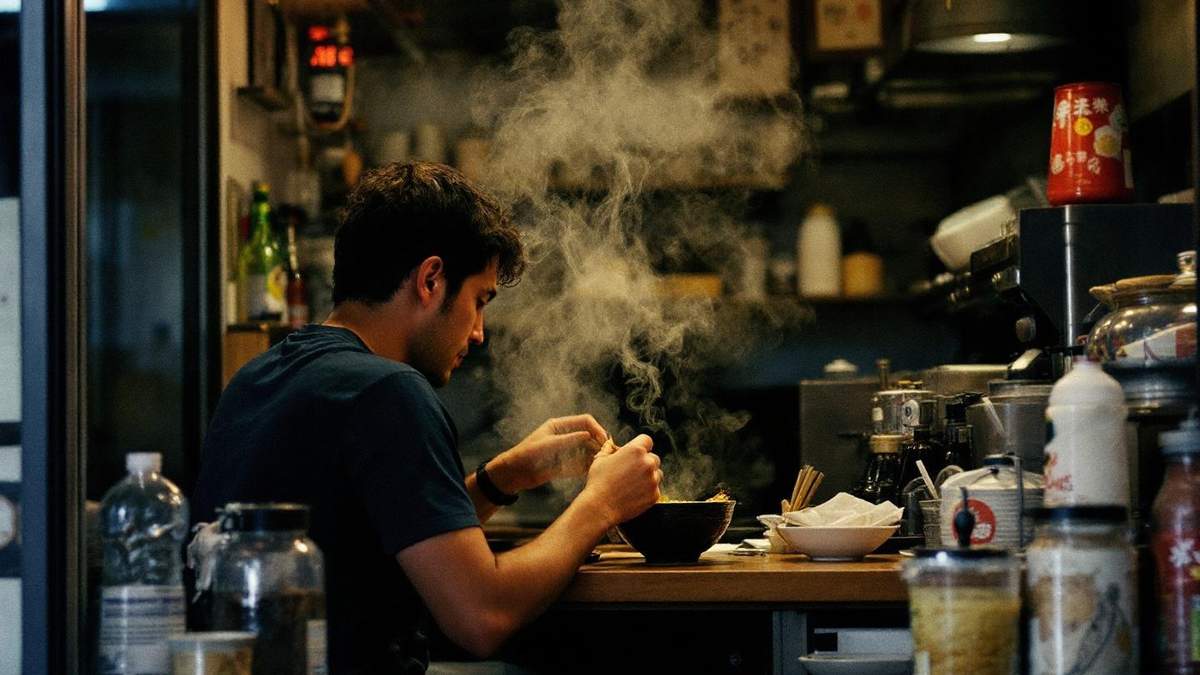
Prepare yourself for this: many of Japan’s best restaurants have 6–12 seats. Some have 4. A famous ramen shop might have eight counter seats and nothing else. A legendary sushi master might seat 10 people at a counter at a time. A beloved tonkatsu restaurant might have two tables and one counter.
This is not a sign of a lesser establishment — often the opposite. Small size allows the chef to control every aspect of every dish. The intimacy of counter seating in front of a skilled chef is one of the distinctive pleasures of eating in Japan.
The practical implication: you often cannot make large group reservations at the most interesting places, solo and couple dining is extremely well-catered-for, and some places may not be able to seat a group of five or more together. Research ahead for groups.
13. There Are No Rubbish Bins on the Street
Japan has very few public rubbish bins. This is a deliberate decision — a response to a 1995 sarin gas attack in Tokyo that used a rubbish bin as a placement device. Most public spaces, streets, and parks simply do not have bins.
The result, remarkably, is that Japan is extraordinarily clean. Rather than producing chaos, the absence of bins has produced a culture where people carry their rubbish home or to appropriate bins (convenience stores have bins outside or inside, station cafes have them, etc.). Nobody drops litter.
When you eat a convenience store snack on the street, hold the wrapper until you find a bin — at a convenience store, a vending machine collection box (they often have attached bins for cans and bottles), or your hotel. This adjustment takes about half a day to become natural.
14. Japan Runs on Different Seasonal Menus
Japanese cuisine is deeply seasonal in a way that most Western food culture is not. Menus change with the seasons — not just at fine dining establishments, but at convenience stores, fast food chains, and supermarkets. Spring brings sakura-flavored everything (cherry blossom lattes, sakura mochi, sakura Kit-Kats). Autumn brings sweet potato and chestnut desserts, persimmons, and mushroom dishes. Winter brings nabe (hot pot), warming oden, and seasonal noodle preparations.
This is worth knowing because it shapes what you should seek out during your specific travel window. If you visit in late autumn, the matsutake mushrooms (an extraordinarily expensive fungus) are at their peak. If you visit in summer, you should eat kakigori (shaved ice with elaborate toppings). If you visit in winter, find a nabe restaurant.
Convenience stores reflect the seasons with remarkable speed — seasonal flavors appear and disappear within days of the seasonal shift. They are a real-time indicator of what Japan is eating right now.
15. Most Queues Are Orderly and Fast
Japan’s queue culture is one of the most striking immediate impressions for many visitors. People form orderly, single-file lines for everything: trains (on the platform, painted markers show exactly where to stand for each door), popular restaurants, temple entry, taxis, elevators.
The lines move efficiently. Cutting in line is essentially unthinkable. The system works because everyone complies with it reflexively.
The practical implication: a queue of 30 people outside a restaurant is not as daunting as it looks. At a popular ramen shop with quick service (eat in 20 minutes, seat 8 people), 30 people means a wait of perhaps 40 minutes — not two hours. And the culture of waiting means you will not lose your place or be jumped by someone who “just needs to ask a quick question.”
16. You Can Send Your Luggage Ahead Between Cities
Japan’s takkyubin (door-to-door luggage delivery) service is one of the most underrated conveniences in the country. For approximately 1,500–2,500 yen per bag, you can have your suitcase collected from your hotel and delivered to your next hotel by the following day. This is particularly valuable on a Tokyo to Kyoto leg — you can explore Tokyo’s final morning unburdened and walk straight into your Kyoto hotel that evening.
Your hotel front desk can arrange it. Fill out the slip with your destination hotel name and address, leave the bag before checkout, and travel freely by shinkansen or bus with only a day pack. Your luggage will be at your next hotel when you check in.
Yamato Transport (the “black cat” Kuro Neko) is the dominant service and is entirely reliable. This service is particularly valuable for the Kyoto to Tokyo leg, where hauling large bags onto crowded shinkansen trains is a significant inconvenience. It also means you can explore a city for several hours after checkout without dragging bags — a simple improvement that makes a real difference.
17. Bowing Is Easy — and Instinctively Contagious
Bowing in Japan is a form of greeting, thanks, and acknowledgment that operates constantly in daily life. Shopkeepers bow when you enter. Staff bow when you leave. People bow to each other on the street when they part ways. Cashiers bow as you walk away.
You do not need to bow deeply or formally as a foreigner — a small, forward nod of the head is sufficient and always appreciated. What most visitors discover after a few days is that bowing becomes reflexive. You find yourself bowing back instinctively, bowing at people on the phone who cannot see you, bowing at automatic doors. This is a known effect and entirely normal.
There is no real risk of bowing incorrectly as a tourist. Any genuine attempt at respect is understood and appreciated. The main thing to know: deeper bows signal greater respect and are appropriate in formal situations. A brief nod works for everyday interactions.
18. IC Cards Work for Much More Than Just Trains
The Suica or Pasmo IC card loaded on your phone or as a physical card is not just a transit card — it is a contactless payment card that works at an enormous range of places: convenience stores, vending machines, supermarkets, pharmacies, many taxis, airport limousine buses, certain restaurants, and more. The trains in Japan guide explains how to load one onto your phone before you even land.
Tap to pay with your phone or card rather than handling cash for small purchases. The balance never expires. You can top up at any ticket machine or service counter. Many visitors end their trip with leftover Suica balance, which can be used at any future visit or refunded at the station (minus 210 yen administrative fee for physical cards).
19. The Pharmacies Are Fascinating
Japanese pharmacies (drugstores like Matsumoto Kiyoshi, Tsuruha, and Ainz and Tulpe) are worth exploring as a tourist destination in their own right. They stock Japanese skincare products (some of which have cult status internationally and are significantly cheaper in Japan than abroad), snacks, drinks, cosmetics, and everyday goods at competitive prices.
Specific things worth looking for: Japanese sunscreen (formulations are lighter and more cosmetically elegant than Western equivalents), Hada Labo hyaluronic acid skincare (inexpensive and effective), Japanese pain patches (Salonpas), and the extraordinary range of vitamin and supplement drinks near the register.
Many pharmacies in tourist areas have English-labelled products and staff who can help with basic translation. They are also a good backup for forgotten medications, first aid supplies, and the inevitable need for cold medicine.
20. The Country Is Extraordinarily Safe
Japan’s crime rate is among the lowest in the developed world. Violent crime against tourists is essentially unheard of. You can walk back to your hotel alone at 02:00 through a city you do not know and feel entirely safe. Women traveling solo report a level of ease that is markedly different from most other destinations.
Lost wallets are regularly returned with the cash intact. Train staff regularly chase passengers to return forgotten items. The lost-and-found system (at stations and police boxes called koban) is extraordinarily effective — items handed in are almost always retrievable for days afterward.
This safety changes how you travel. You do not need to guard your bag constantly on trains. You do not need to avoid certain neighborhoods. You do not need to keep your camera hidden. The cognitive load of vigilance that is constant in many travel destinations is largely absent in Japan, and the cumulative effect of this over a two-week trip is significant.
21. Japan Has Its Own Internet and App Ecosystem
While Google Maps works perfectly and most major international apps function normally in Japan, there are Japanese apps and services that are significantly better for specific tasks:
Tabelog is Japan’s dominant restaurant review platform — more granular and reliable than international alternatives for finding good local restaurants. The app has a basic English version, but the Japanese version has much more data. Use Google Translate on the Japanese app.
Hyperdia is the traditional go-to for train routing (particularly for complex multi-operator journeys and shinkansen fare calculations), though Google Maps has largely caught up.
Yahoo! Weather Japan is more accurate for Japanese weather forecasts than international weather apps, particularly for typhoon tracking and rainy season predictions.
Line is the dominant messaging app in Japan. If you are meeting locals or coordinating with tour guides, they will likely contact you through Line rather than WhatsApp or SMS.
22. Umbrellas Are a Core Piece of Infrastructure
Japan is rainy — not constantly, but meaningfully. And the country has adapted to this with a thoroughness that visitors find charming. Every convenience store sells quality umbrellas for 500–700 yen. Most department stores and many restaurants have umbrella stands at the entrance where you leave your umbrella when you go in. Plastic umbrella bags are provided at store entrances so you do not drip on the floor.
The umbrellas sold at convenience stores are better than the emergency tourist umbrellas sold in most countries — they are sturdy, properly sized, and last for years. Many visitors buy one on their first rainy day and bring it home.
Do not bother bringing a large travel umbrella from home unless it is unusually lightweight. The local options are plentiful and cheap.
23. There Are Rules About Tattoos at Onsen
Traditional onsen (hot spring bath) facilities in Japan have a longstanding policy of prohibiting tattooed guests, due to the historical association between tattoos and yakuza (organized crime). This policy is followed strictly at many public onsen, particularly traditional ones. See our dedicated guide to onsen and tattoos in Japan for a full breakdown of which facilities allow tattoos and how to plan around the restriction.
The situation is evolving — tattoo policies have relaxed at many facilities in response to international tourism, and many newer onsen resorts now either allow tattoos or have private baths available for those with tattoos (for an additional fee). But it is still common enough that it requires specific research before your trip if you have tattoos.
The fix: If you have tattoos and want to use onsen, specifically look for facilities that are “tattoo-friendly” (tatuu ok, sometimes written in English on the facility website) or book a ryokan with a private in-room bath (kashikiriburo). Many high-end ryokan offer private baths as standard. The onsen experience is one of Japan’s great pleasures — plan around this restriction rather than miss it.
24. Tipping Is Not Just Unnecessary — It Creates Awkwardness
Many travelers know intellectually that Japan does not have a tipping culture, but some still attempt to leave a tip as a gesture of appreciation. In most cases, this creates genuine awkwardness.
Restaurant staff will chase you down to return cash you left on the table, assuming you forgot it. Taxi drivers may hand it back politely. Hotel staff may feel uncomfortable accepting it. The reason: service in Japan is considered part of the professional obligation, not a performance that needs to be financially rewarded above and beyond the agreed price. Tipping implies the base service was insufficient, which can be read as an insult.
The correct way to express appreciation is verbally: “Oishikatta desu” (it was delicious) to a restaurant, “Arigatou gozaimashita” said with genuine warmth, or for exceptional hotel service, a thank-you note. These are understood and valued far more than cash.
25. Japan Will Make You Feel Like Your Own Country Is Doing Infrastructure Wrong
This one is less a practical tip and more an honest warning. After two weeks in Japan, you will return home and notice things you never did before. The trains that do not run on time. The potholed roads. The dirty public toilets with no warm seats. The ATMs that charge three different fees. The convenience stores with stale, mediocre food. The uncollected rubbish on the streets. The escalators that break.
Japan’s quality of everyday infrastructure — its public transport, its convenience stores, its toilets, its food at every price point, its safety, its postal system, its customer service culture — sets a standard that is genuinely difficult to encounter anywhere else.
This recalibration is one of the enduring effects of visiting Japan. You leave understanding that things can simply work better than you were used to. That a subway can be clean and on time. That a 900-yen lunch can be excellent. That public space can be maintained as a commons that everyone contributes to.
It does not make you dislike your home. It makes you want to go back to Japan.
Final Note
None of these things are in the standard itinerary guides. They are the residue of actually being in Japan — the accumulated texture of experience that changes how you move through the country. The visitors who have the best time in Japan are almost always those who arrived with accurate expectations, who slowed down enough to notice these things, and who let the country’s rhythms become their own.
Before you go, also read our Japan etiquette guide for cultural dos and don’ts, and check the best time to visit Japan to align your trip with the right season. Our Japanese food guide pairs well with tips 1, 7, and 14 above. And if this is your first trip, the mistakes to avoid article covers the planning errors that catch most first-timers.
Read these. Remember them. Then go and discover the 25 more that we could not fit in.