15 Mistakes to Avoid on Your First Trip to Japan
Last updated: March 2026
Japan is one of the most rewarding travel destinations in the world, but it operates on its own rules. Most of those rules are either never stated or buried in the fine print of guidebooks. First-time visitors routinely make the same set of mistakes — not from carelessness, but from a simple lack of information.
This guide covers the 15 most common and most costly mistakes made on a first trip to Japan. Fix these before you travel and you will have a dramatically smoother, richer experience.
Mistake 1: Trying to See Too Much Too Fast
This is the number one mistake, and it derails more Japan trips than any other. First-timers look at the map, see Tokyo, Kyoto, Osaka, Hiroshima, Nara, Hakone, Kanazawa, and possibly Okinawa, and think: “I have 14 days. I can do all of these.”
You cannot. Not well. Japan’s transport system is excellent, but transit takes time. Every shinkansen ride is 2–4 hours minimum. Every new city requires finding your hotel, reorienting, and discovering where things actually are versus where they appear on the map. Most importantly, the best experiences in Japan come from slowing down — from wandering a neighborhood, from following a side street out of curiosity, from sitting at a ramen counter and chatting with the person next to you.
The fix: For a 10-day trip, pick three cities or regions maximum. For 14 days, four regions. A sample realistic 14-day itinerary: Tokyo (4 nights), day trip to Nikko or Kamakura (from Tokyo base), Kyoto (3 nights), Osaka (2 nights), Hiroshima and Miyajima (1 night), back to Tokyo (1 night for departure). That feels like a lot, and it is — but it is achievable. Adding Hakone, Kanazawa, Nara, AND Osaka on top of Tokyo and Kyoto is not.
Give each place enough time to surprise you. The best moments in Japan are rarely the ones you planned.
Mistake 2: Not Carrying Enough Cash
Japan is still largely a cash society. In 2026, the situation has improved — IC cards (more on those shortly) work on trains and at many convenience stores, and card acceptance has expanded in tourist areas. But a surprising number of restaurants, temples, small shops, local markets, and traditional inns remain cash-only.
Running out of cash in Japan is not a disaster — 7-Eleven ATMs reliably accept international cards and are everywhere — but running out of cash when you want to pay for a ramen dinner or a temple entry fee in a rural area creates avoidable stress.
The fix: Withdraw enough cash when you arrive. A reasonable daily cash budget for mid-range travelers is 5,000–10,000 yen. For a 10-day trip, arriving with 70,000–100,000 yen in cash is sensible. 7-Eleven Bank ATMs (inside every 7-Eleven convenience store) and Japan Post ATMs accept most international Visa, Mastercard, and Cirrus/Plus cards. Your home bank may charge foreign transaction fees and ATM fees — check before you leave and consider opening a Wise, Revolut, or Charles Schwab account that waives these fees.
Always carry at least 5,000–10,000 yen in cash. The day you do not is the day you find the most beautiful tiny restaurant that only takes cash.
Mistake 3: Ignoring the JR Pass Math
The Japan Rail Pass is marketed heavily and many first-time visitors buy it automatically, assuming it is always the best value. It is not. Whether the JR Pass saves you money depends entirely on your itinerary.
The 7-day JR Pass costs approximately 50,000 yen in 2026. A round-trip shinkansen between Tokyo and Kyoto alone costs approximately 28,000 yen. So if you are doing Tokyo–Kyoto–Osaka–Tokyo with some local JR trains, the Pass works out. But if you are staying primarily in Tokyo or taking only one or two long-distance trips, it does not.
The fix: Before purchasing, cost out your planned train trips individually using the Hyperdia or Google Maps fare calculator. Add up the fares. Then compare to the Pass price. See our complete JR Pass guide for a route-by-route breakdown of when it pays off. If the Pass saves money, buy it. If not, do not.
Important nuances: The JR Pass covers the Shinkansen (except Nozomi and Mizuho, the fastest services), most JR local and express trains, the Narita Express (N’EX) from Narita Airport, and various JR buses and ferries. It does not cover Tokyo Metro, private railways (like Kintetsu in Kansai), or Tokyo subway lines. Many visitors buy the Pass and then spend three days on the Tokyo subway (not covered) before taking one trip to Kyoto.
For the Kansai region specifically, the Kansai Area Pass may be better value than the national pass if you are not travelling beyond Hiroshima.
Mistake 4: Only Visiting Tokyo and Kyoto
Tokyo and Kyoto are magnificent. They are also the two most visited destinations in Japan and are increasingly crowded, particularly during peak seasons. More significantly, they represent only a fraction of what Japan has to offer.
What you miss by skipping elsewhere:
- Osaka: Japan’s most food-obsessed city, with an energy completely different from Tokyo
- Hiroshima and Miyajima: Deeply moving history and one of Japan’s most iconic landscapes (the floating torii gate)
- Kanazawa: Called “little Kyoto,” it has traditional arts, superb seafood, and far fewer crowds than actual Kyoto
- Hakone: The classic Mt. Fuji view, onsen, and mountain scenery within 90 minutes of Tokyo
- Nara: 1,200-year-old temples and genuinely free-roaming deer that will eat your map
- Hokkaido: Wild nature, ski resorts, incredible seafood (especially crab and sea urchin), and a completely different pace
- Okinawa: Subtropical islands with coral reefs, a distinct culture, and some of Japan’s best beaches
The fix: Deliberately include at least one destination beyond the Tokyo–Kyoto corridor. Even a single night in Kanazawa or Hiroshima will add enormous depth to your understanding of Japan.
Mistake 5: Not Learning Even Basic Japanese Phrases
English signage in Japan has improved dramatically — major train stations, airports, and tourist areas are well-signed in English. Google Translate’s camera function handles menus and signs with good accuracy. You can absolutely navigate Japan without any Japanese.
But knowing even 10–15 words completely transforms your interactions with people. Japanese people appreciate the effort enormously — more so than in most countries — and even stumbling through “sumimasen, kore wa nan desu ka” (excuse me, what is this?) is met with warmth and delight.
The fix: Learn these before you go:
- Sumimasen — Excuse me (use this to get attention, to apologize, to signal you need help)
- Arigatou gozaimasu — Thank you (formal)
- Onegaishimasu — Please (when ordering or requesting something)
- Kore wa ikura desu ka — How much is this?
- Doko desu ka — Where is it? (with a map or the name of a place, you can get directions)
- Eigo ga hanasemasu ka — Do you speak English?
- Wakarimasen — I don’t understand
- Itadakimasu — Said before eating (always a winner)
- Gochisousama deshita — Said after eating (restaurants staff always appreciate this)
These ten phrases will open more doors than any app.
Mistake 6: Wearing Shoes That Are Difficult to Remove
Japan requires you to remove your shoes constantly. At traditional restaurants with tatami seating, at temples, at ryokan, at some museums, at many local homes if you are invited — you will be removing and replacing your shoes multiple times per day.
Visitors who wear boots with complicated lacing systems, or shoes that require sitting down to remove, create awkward bottlenecks in doorways while everyone waits. It also signals a lack of cultural awareness.
The fix: Bring shoes that slip on and off easily — loafers, slip-ons, or shoes with simple velcro. If you cannot avoid lace-up shoes, practice quick removal. Ensure your socks are in good condition (you will be walking in them in front of people). Bring a small bag if you are doing significant temple-hopping in a place like Kyoto — some temples have individual shrines where you remove shoes at each building.
Mistake 7: Not Trying Convenience Store Food
The single most persistent misconception among first-time Japan visitors is that convenience stores (7-Eleven, FamilyMart, Lawson) are for emergency snacks and bottled water. This is completely wrong.
Japanese convenience stores are genuinely excellent food destinations. The onigiri (rice balls) are freshly made and skillfully seasoned. The egg salad sandwiches are pillowy and rich. The oden (winter simmered dishes) are warming and delicious. The karaage chicken is crispy and well-seasoned. The desserts — seasonal parfaits, cream puffs, mont blanc cakes — regularly surprise visitors expecting standard convenience store quality.
The reason is competition: Japanese convenience stores compete intensely on food quality. A poor onigiri or a mediocre nikuman (steamed pork bun) would lose customers to the next store, so standards have ratcheted up across the board.
The fix: On your first day, walk into a 7-Eleven and spend 700–800 yen on an assortment: one onigiri, one sandwich, and something from the dessert section. Eat them. You will understand immediately. And you will never walk past a convenience store in Japan without considering a stop.
Mistake 8: Skipping Smaller Cities and Towns
Related to Mistake 4 but more specific: even within the standard tourist corridor, most visitors skip the genuinely extraordinary smaller towns and villages.
Naoshima (Seto Inland Sea): A tiny island that is one of the world’s great art destinations — outdoor sculptures, the Chichu Art Museum designed by Tadao Ando, and an entire fishing village repurposed as contemporary art installations.
Takayama (Gifu prefecture): A beautifully preserved Edo-era merchant town in the Japanese Alps, with morning markets, sake breweries, and one of Japan’s finest old town districts.
Nikko (Tochigi prefecture): 90 minutes from Tokyo, with the most ornate and spectacular shrine complex in Japan, deep in cedar forests.
Yakushima (Kagoshima prefecture): A World Heritage island covered in ancient cedar forests, some of the trees over 2,000 years old — the inspiration for the forests in Studio Ghibli’s Princess Mononoke.
The fix: Research one off-the-beaten-path destination and build it into your itinerary. Even a single day trip from a major city to a smaller town will provide some of your most vivid travel memories.
Mistake 9: Not Booking Popular Restaurants in Advance
For casual eating in Japan, you generally do not need reservations. Ramen shops, conveyor belt sushi, izakayas, tonkatsu restaurants — these operate on a walk-in basis.
However, for any restaurant with a strong reputation, a Michelin star or listing, or significant word-of-mouth following, advance booking is essential. The most famous ramen shops have hour-long queues. High-end sushi counters, kaiseki restaurants, and popular yakiniku spots book out weeks in advance. The famous Sukiyabashi Jiro (the sushi restaurant from the film Jiro Dreams of Sushi) requires booking through the hotel concierge months ahead.
The fix: Identify 3–5 restaurants you specifically want to eat at and book them before you arrive. Use Tableall, Tablecheck, or the restaurant’s own reservation system. For very high-end restaurants, contact your hotel concierge — they often have connections and can make reservations that are unavailable through public booking channels.
For walk-in popular spots, arrive at opening time (most restaurants open at 11:00 or 11:30 for lunch, 17:30 or 18:00 for dinner) to minimize queue time.
Mistake 10: Forgetting About Luggage Forwarding
Japan has a remarkable service called takkyubin (door-to-door courier delivery) — specifically the option of sending your luggage ahead to your next destination for around 1,500–2,000 yen per bag. You drop off your bags at your hotel, convenience store, or post office, and they arrive at your next hotel by the following day.
Many visitors drag heavy suitcases onto packed Shinkansen trains, up and down station stairs, and through crowded streets when they could be travelling completely unburdened.
The fix: Use Yamato Transport (Kuro Neko), Sagawa Express, or Japan Post. Most hotels can arrange it on your behalf. Send your large bags ahead and carry only a day pack. This is particularly valuable for the Kyoto–Tokyo leg of any trip, where you might want to do a day trip with all your luggage handled.
Coin lockers at major train stations (200–800 yen per day depending on size) are also invaluable for shorter periods — leaving bags for the day while you explore before catching a night train, for instance.
Mistake 11: Not Getting an IC Card at the Airport
IC cards (Suica, Pasmo, ICOCA) are rechargeable contactless cards that work on trains, buses, subways, and taxis throughout Japan, and can also be used for payment at convenience stores, vending machines, and many restaurants.
You can now add Suica to Apple Wallet or Google Pay before you arrive, but even having a physical card issued at the airport is preferable to paying cash for every single train ride and fumbling with ticket machines.
Without an IC card, every single subway journey requires you to: look at the fare map, identify your destination fare, find the correct ticket machine, buy the right ticket, and then remember to use it. With an IC card, you tap in and tap out. End of process.
The fix: At Narita, Haneda, Itami, or Kansai International Airport, go immediately to the JR or Tokyo Metro counter and get a Suica or Pasmo card. Initial issue costs 500 yen (refundable). Load 3,000–5,000 yen to start. You can top up at any ticket machine or convenience store throughout Japan. Read our guide to using trains in Japan for full IC card setup instructions.
If you have an iPhone or Android, set up Suica via Apple Wallet or Google Pay before you fly. This is even more convenient — your phone is your transit card.
Mistake 12: Visiting Only During Cherry Blossom Season
Cherry blossom season (late March to early April) is, objectively, one of the most beautiful times to visit Japan. It is also extremely crowded and significantly more expensive than any other time of year. Hotels around peak bloom dates can cost 2–3 times their normal rates. Popular viewing spots are genuinely packed — Ueno Park during peak hanami looks like a music festival. Our cherry blossom guide has everything you need to plan around it effectively.
Japan is stunning throughout the year. Each season has specific and distinct beauty.
Summer (June–August): Verdant green landscapes, matsuri (festivals), bon odori dancing, fireworks displays (hanabi). Hot and humid, but with its own rhythm.
Autumn (October–November): The autumn foliage (koyo) is arguably more spectacular than cherry blossoms — deep crimson and gold maples, often more dramatic than the pale pink of sakura. Crowds are significant but less extreme than cherry blossom season.
Winter (December–February): Snow-covered temples in Kyoto, world-class skiing in Hokkaido (Niseko), peaceful off-peak temple visits, and some of the best food seasons (nabe hot pot, warming ramen, fresh crab in Hokkaido).
The fix: If you can be flexible, consider October–November or early December for autumn foliage. If cherry blossoms are your priority, book accommodation 4–6 months in advance and accept the crowds as part of the experience. Avoid the most famous viewing spots during peak bloom in favor of neighborhood parks and rivers that locals prefer.
Mistake 13: Not Respecting Quiet Zones on Trains
Japan’s trains have an unspoken culture of silence that becomes explicit in the designated quiet cars. On shinkansen, Car 7 is always the designated quiet car where phone calls and loud conversation are prohibited. On many commuter trains and long-distance services, the expectation of quiet applies throughout.
Visitors who take phone calls on trains, play audio without earphones, or have loud conversations draw visible discomfort from Japanese passengers who will not say anything but will be quietly mortified.
The fix: When boarding any train in Japan, switch your phone to silent. Take phone calls in the station, not the carriage. Keep conversations to a low murmur. Observe what the people around you are doing — most will be looking at their phones silently or sleeping. Match the energy. This single adjustment makes you a significantly more considerate traveler and is noticed and appreciated.
Mistake 14: Expecting to Use Credit Cards Everywhere
While credit card acceptance in Japan has improved substantially in recent years, particularly in Tokyo and at larger businesses, cash remains king for a significant portion of daily transactions. Many ramen shops, local izakayas, small shrines, street food vendors, and rural businesses remain cash-only.
The specific situations where you most often need cash: small restaurants and noodle shops, temple and shrine entry fees, coin lockers, local buses, traditional markets, neighborhood onsen, and many vending machines (though most now accept IC cards).
American Express has notably lower acceptance than Visa or Mastercard. JCB (a Japanese card) has the broadest acceptance.
The fix: Carry cash. Always have at least 5,000–10,000 yen on your person. Use 7-Eleven ATMs (genuinely the most reliable for foreign cards) when you need to top up. Do not rely on Amex for payment. The situation is improving year by year, but Japan in 2026 still requires cash far more than Western Europe or North America.
Mistake 15: Not Allowing Buffer Time for Getting Lost — and That Is Fine
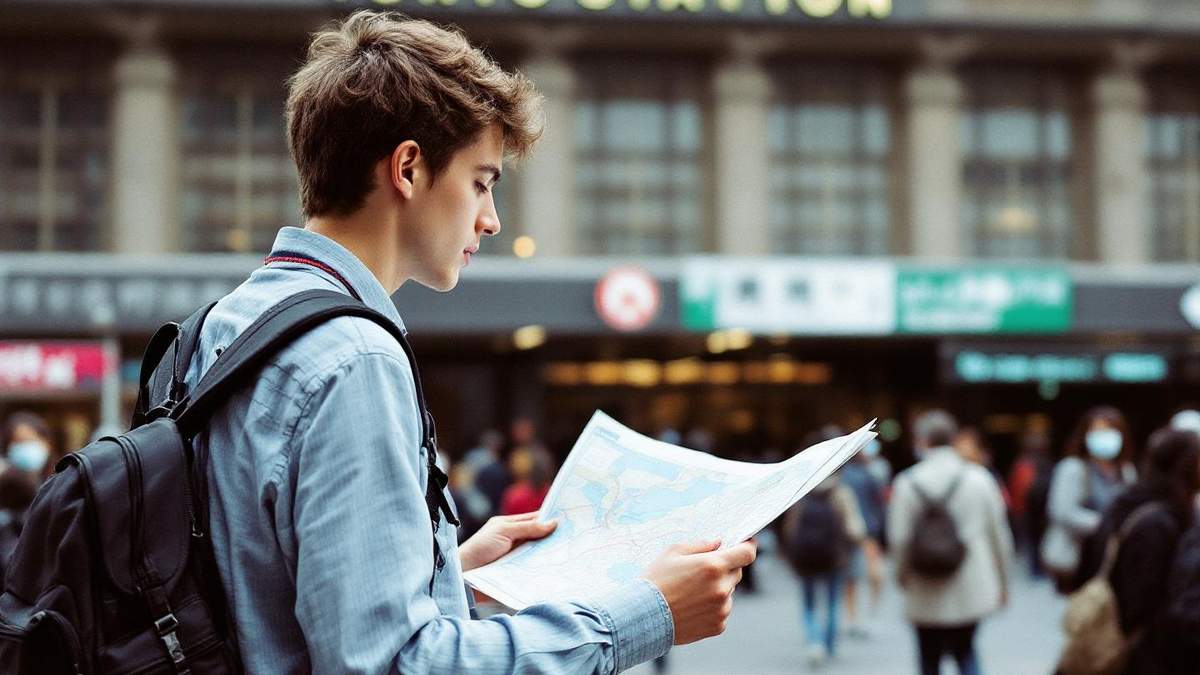
First-time visitors underestimate how much time is consumed by navigation in Japan, particularly in cities like Tokyo and Osaka where subway systems are vast and overlapping. Shinjuku Station has over 200 exits. Finding the right one — and then the right exit onto the right street — is a legitimate cognitive challenge.
The mistake is scheduling so tightly that there is no margin for this reality. When your itinerary has you at Senso-ji Temple at 9:00, on the subway at 10:30, at Tsukiji by 11:00, at TeamLab by 13:00, and at the Shibuya crossing by 17:00, a single navigation error collapses the entire day.
The fix: Build buffer time. Plan fewer things per day. Accept that on the first two days of any trip to Japan, you will spend more time navigating than you expect. Once you have the geography in your head, movement becomes fast and intuitive — but give yourself space to figure that out.
More practically: download Google Maps for offline use before you leave (it works excellently in Japan). Search for station exit numbers when looking up directions — Google Maps will tell you “take Exit A3” which makes finding the right exit much easier. When in doubt, surface-level exits labelled with street names are often more useful than numbered exits.
And when you do get lost? You will often find the best restaurant, the most beautiful temple gate, or the most interesting shotengai street that you never would have found otherwise. The margin for error in Japan is also the margin for discovery.
Final Thoughts
Before you go, also review our Japan etiquette guide and the complete trip planning guide to cover everything from visas to packing. The Japan travel budget guide will help you understand what things actually cost.
Japan is forgiving of mistakes in ways that many countries are not. Nobody is going to scream at you for getting on the wrong train. Nobody will be rude when you mispronounce something. The staff at your hotel will go to remarkable lengths to help you fix a booking error or find a solution to an unexpected problem.
But the mistakes above are the ones that quietly diminish a trip: that add unnecessary stress, that limit what you experience, that leave you feeling like Japan was great but slightly exhausting. Avoid them, and you will have a trip that converts you into the kind of person who starts planning the return before the flight home has landed.
That is the real Japan travel mistake to avoid: only going once.