20 Japanese Foods You Absolutely Must Try
Last updated: March 2026
Japanese cuisine is one of the world’s great food cultures — refined, regional, seasonal, and profoundly varied. Our Japanese food guide covers all the essential details. From meticulously crafted sushi to messy street food eaten over the sink at a convenience store, Japan offers an almost incomprehensible range of flavours and textures. If you are visiting for the first time, here are the twenty foods you should prioritise.
1. Ramen
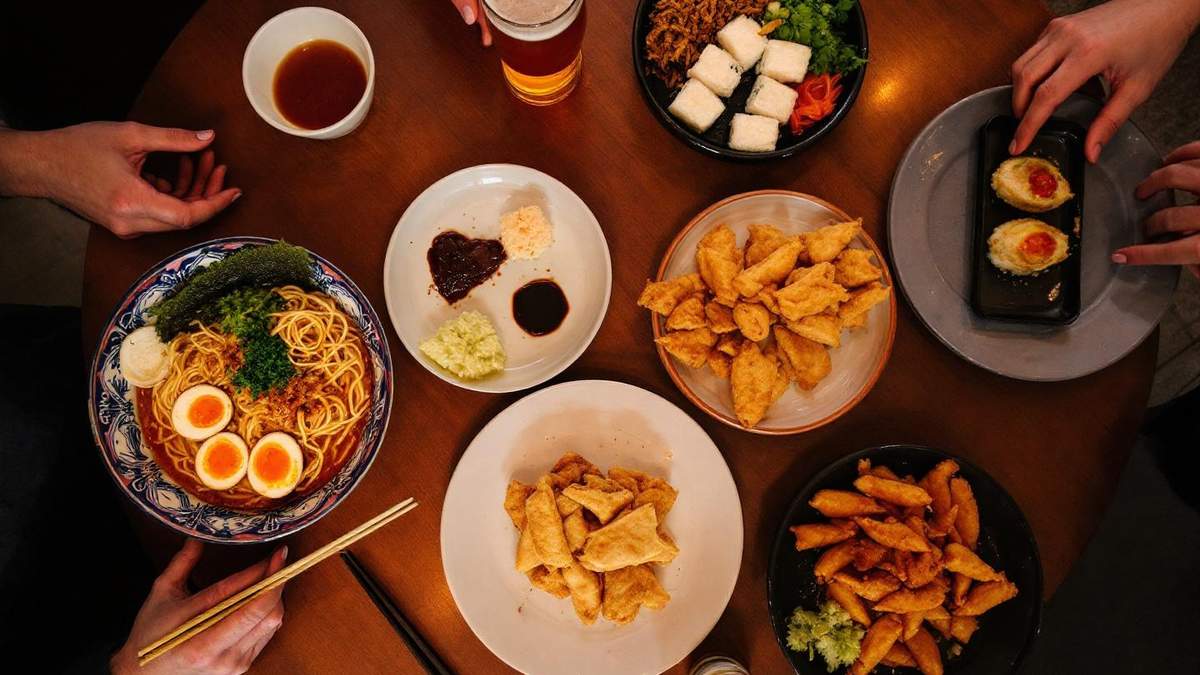
Ramen deserves to be first. This wheat noodle soup has evolved into one of Japan’s most beloved and regionally diverse foods. The four canonical styles are shoyu (soy-based, clear brown broth), shio (salt-based, delicate and pale), miso (fermented soybean paste, rich and thick), and tonkotsu (pork bone, creamy white, intensely porky). Beyond these four, there are hundreds of regional variations — Sapporo’s butter corn ramen, Hakata’s thin straight noodles, Kitakata’s flat wavy noodles.
Where to eat it: Dedicated ramen shops are everywhere. Look for lines at lunchtime — a queue is a reliable sign of quality. Tokyo has thousands of ramen shops. For regional styles, eat them in their home regions.
2. Sushi
Sushi encompasses far more than the California rolls most Westerners grew up with. At its finest, sushi is a minimalist art form: the best fish, optimal rice temperature, precisely calibrated vinegar and seasoning, and a chef who has practised for decades. Nigiri sushi — a slice of fish pressed onto seasoned rice — is the form to seek out at proper sushi restaurants.
Where to eat it: Tsukiji outer market in Tokyo for breakfast sushi. The Toyosu market area for tuna auctions (advance reservation required). High-end omakase restaurants for the full experience. Conveyor belt kaiten sushi chains like Sushiro and Kura Sushi for affordable, high-quality everyday sushi.
3. Tonkatsu
A thick cut of pork, coated in panko breadcrumbs and deep-fried to a shattering golden crust, served with shredded cabbage, Japanese mustard, and a sweet-savory tonkatsu sauce. Tonkatsu is one of Japan’s most satisfying comfort foods. The best versions use high-grade pork — Kurobuta (Berkshire) or Kagoshima brand — with a layer of fat that melts into the meat during frying.
Where to eat it: Dedicated tonkatsu restaurants nationwide. In Tokyo, Maisen in Omotesando and Suzuki in Shibuya are benchmarks.
4. Yakitori
Chicken skewers grilled over binchotan white charcoal, seasoned simply with tare (a sweet soy glaze) or shio (salt). Every part of the chicken appears on a yakitori menu: thigh, breast, skin, liver, heart, gizzard, cartilage, and the tail (bonjiri), which is pure crispy fat. Ordering a range gives you an education in flavour and texture.
Where to eat it: Yakitori alleys (yokocho) under train tracks, particularly Yurakucho in Tokyo. Standing bars near train stations throughout Japan.
5. Okonomiyaki
Often called “Japanese pancake” or “Japanese pizza,” okonomiyaki is neither. It is a thick savoury cake of shredded cabbage, egg, and a flour-based batter, mixed with your choice of additions — pork belly, seafood, cheese — cooked on a teppan griddle and dressed with okonomiyaki sauce, mayonnaise, dried bonito flakes, and aonori seaweed.
Hiroshima-style okonomiyaki differs substantially: the ingredients are layered rather than mixed, with yakisoba noodles sandwiched inside. Both styles are exceptional.
Where to eat it: Osaka (Mizuno in Dotonbori is legendary) and Hiroshima (Okonomi-mura, a building of okonomiyaki restaurants, is the destination).
6. Takoyaki
Osaka street food at its finest: balls of batter containing a piece of octopus, cooked in a special dimpled cast-iron pan until crispy outside and molten within, then dressed with sauce, mayonnaise, and bonito flakes that wave in the steam. Takoyaki is eaten from a paper tray with small toothpicks, burning your tongue on each one.
Where to eat it: Street stalls in Osaka’s Dotonbori and Shinsekai. Takoyaki stands at festivals nationwide.
7. Karaage
Japanese fried chicken that has colonised the world’s karaage bars and izakaya menus for excellent reason. Chicken thigh is marinated in soy sauce, ginger, and sake, coated in potato starch, and deep-fried until the exterior is crackly and the interior juicy. A squeeze of lemon and a blob of Kewpie mayonnaise for dipping.
Where to eat it: Any izakaya in Japan. Convenience store karaage is surprisingly excellent. Nakatsu in Oita Prefecture is considered the birthplace and takes karaage extremely seriously.
8. Udon
Thick, chewy wheat noodles served in a delicate dashi broth — udon is Japanese comfort food at its most fundamental. The udon of Sanuki (Kagawa Prefecture on Shikoku) is considered the nation’s finest: you eat it either cold (zaru udon) or hot in a simple broth, at cafeteria-style restaurants where bowls cost under 200 yen.
Where to eat it: Kagawa Prefecture for the full udon experience. Tsurumaru and Marugame Seimen chains for reliable quality nationwide.
9. Tempura
Seafood and vegetables coated in an ethereally light batter and fried in clean oil at precise temperatures. The batter should shatter at first bite. Good tempura is incomparably light; bad tempura is greasy. Tendon (tempura over rice) and tenzaru (tempura with cold soba) are the standard presentations.
Where to eat it: Kondo in Tokyo’s Ginza for high-end tempura. Tsunahachi in Shinjuku for accessible quality. Tendon Tenya for affordable everyday tempura throughout Japan.
10. Soba
Thin buckwheat noodles with an earthy, nutty flavour unlike anything else. Served cold on a bamboo mat (zaru soba) with dipping broth, or hot in a simple soup. The best soba is made fresh and served at specialist soba restaurants (sobaya). Nagano Prefecture and the Shinshu region are Japan’s soba heartland.
Where to eat it: Matsumoto and Nagano City for Shinshu soba. Tokyo’s Kanda Yabu Soba, open since 1880, is a historic institution.
11. Kaiseki
Kaiseki is Japanese haute cuisine — a multi-course meal built around seasonal ingredients, presented with extraordinary artistry. A full kaiseki meal might span twelve to fifteen courses: amuse-bouche, soup, sashimi, grilled dish, simmered dish, rice, and dessert, each served on carefully chosen ceramics. Kaiseki is not just eating; it is an experience of Japanese aesthetics.
Where to eat it: Kyoto is the kaiseki capital. Kikunoi and Mizai are benchmark Kyoto restaurants. Ryokan dinners typically offer kaiseki-style courses.
12. Gyoza
Japanese gyoza are dumplings, adapted from Chinese jiaozi and made distinctly Japanese in the process. The standard form is pan-fried (yaki gyoza): dumplings pressed flat-side down in an oiled pan until crispy on the bottom, then steamed in the same pan. Wrapped in thin skins around a pork, cabbage, and garlic filling, they are eaten dipped in soy sauce mixed with rice vinegar and chili oil.
Where to eat it: Utsunomiya in Tochigi Prefecture is the self-proclaimed gyoza capital. Hamazushi gyoza counters. Any izakaya.
13. Wagyu Beef
Japanese Wagyu cattle produce beef with intense intramuscular fat marbling that creates a richness unmatched by any other beef in the world. The most celebrated brands are Kobe, Matsusaka, and Omi, but high-quality wagyu comes from prefectures across Japan. The proper way to appreciate wagyu is simply grilled or as sukiyaki or shabu-shabu (hot pot), where the fat’s flavour is the star.
Where to eat it: Kobe for Kobe beef. Mie Prefecture for Matsusaka beef. Teppanyaki restaurants in major cities for accessible wagyu.
14. Matcha Sweets
Matcha (finely ground green tea powder) flavours one of Japan’s most beloved and versatile ingredient families. Matcha ice cream, matcha cake, matcha KitKats, matcha mochi, matcha tiramisu — the list is endless. In Kyoto, the matcha culture runs especially deep, and the best matcha desserts here bear no resemblance to the faint green-tinged confections sold abroad.
Where to eat it: Nakamura Tokichi in Uji (near Kyoto) for traditional matcha sweets. Itohkyuemon in Uji for the famous matcha parfait. Convenience stores everywhere for matcha snacks.
15. Onigiri
A rice ball wrapped in nori seaweed, filled with one of dozens of possible fillings — pickled plum (umeboshi), grilled salmon, tuna mayonnaise, pickled cod roe, seasoned kelp, or tempura shrimp. Onigiri are the original convenience food and appear in every convenience store in Japan. A perfectly made onigiri is one of the most satisfying things you can eat at 2am after a long night.
Where to eat it: Convenience stores (Lawson and Family Mart have excellent selections). Specialist onigiri shops like Onigiri Bongo in Tokyo.
16. Natto
Natto is fermented soybeans — stringy, pungent, and with a flavour that divides visitors sharply between converts and refusers. It is a Kanto breakfast staple, eaten over rice with mustard and soy sauce, its sticky threads stretching in long strands as you stir and lift. The smell is powerfully barnyard. The taste is earthy, nutty, and oddly addictive once you get past the texture. Many visitors dislike it on first encounter and love it by their second.
Where to eat it: Any hotel breakfast buffet in eastern Japan. Convenience stores nationwide.
17. Uni (Sea Urchin)
Fresh sea urchin roe is one of Japan’s luxury seafood experiences. The flavour is briny, oceanic, creamy, and intensely mineral — unlike anything else. Quality varies enormously; good uni is sweet and clean, bad uni is bitter and metallic. Hokkaido produces Japan’s finest uni, harvested during summer months.
Where to eat it: Hakodate and Otaru in Hokkaido for fresh uni over rice. High-end sushi restaurants throughout Japan.
18. Yakisoba
Stir-fried wheat noodles with pork, cabbage, and bean sprouts, seasoned with a tangy Worcestershire-style sauce and topped with dried seaweed and pickled ginger. Yakisoba is festival food par excellence — the smell of it cooking on a large iron griddle is the smell of Japanese summer matsuri.
Where to eat it: Summer festivals and food stalls throughout Japan. Convenience store versions are a guilty pleasure.
19. Mochi
Glutinous rice pounded into a smooth, stretchy, chewy confection that serves as the base for dozens of traditional sweets. Daifuku mochi is filled with sweet bean paste (anko). Sakura mochi is pink, leaf-wrapped, and seasonal to spring. Warabi mochi is a looser, jelly-like version dusted with kinako soybean flour. Mochi is also served as a savoury food — grilled, served in soup (ozoni) for New Year, or wrapped in nori with soy sauce.
Where to eat it: Wagashi (traditional sweets) shops throughout Japan. Famous mochi producers in Kyoto include Demachi Futaba.
20. Taiyaki
A fish-shaped waffle cookie filled with sweet red bean paste, custard, or chocolate, cooked in a cast-iron fish mould on a street stall. Taiyaki is an enduring Japanese snack that has changed little since it was invented in Tokyo in 1909. The best ones are golden, crispy at the edges, generously filled, and eaten hot from the pan.
Where to eat it: Street stalls near train stations and temple areas. Ningyocho Imahan is credited with the original recipe.
A Note on Eating in Japan
Approaching Japanese food requires only one attitude: openness. The unfamiliar textures of natto, the confrontational pungency of certain fermented condiments, the whole small fish served bones and all — these are not obstacles but invitations. Japanese cuisine rewards curiosity more than almost any other food culture on earth, and the full scope of what is available extends far beyond these twenty dishes.
Eat where the lines are longest. Eat what you cannot identify. Eat at 7-Eleven at midnight and at a counter with eight seats and a chef who has cooked one dish for forty years. Japan will not disappoint.
Practical Eating Tips
How to order without Japanese: Point at what looks good. Use Google Translate’s camera function on menus to read items in real time. Say “kore wo kudasai” (I would like this one) while pointing. Most Japanese restaurant staff are accustomed to non-Japanese customers and have established wordless ordering systems.
Ticket vending machines: Many ramen shops, gyudon chains, and katsu restaurants use a ticket machine at the entrance. You insert money, press the button for your desired item, receive a ticket, and hand it to the cook. No language required.
Allergies and dietary restrictions: Communicating allergies in Japan requires care. “Arerugii ga arimasu” (I have allergies) followed by the item — “ebi” (shrimp), “nattsu” (nuts), “gyunyu” (milk) — and “hairanai de kudasai” (please don’t include) is useful. Written allergy cards translated into Japanese are available from various travel resources online and are extremely helpful.
Vegetarians and vegans: Japan has a deeply meat-and-fish-based food culture, and dashi (stock made from dried fish) appears in many seemingly vegetarian dishes. Dedicated vegetarian and vegan restaurants have grown significantly in number in recent years, particularly in Tokyo, Kyoto, and Osaka. Search for “saishoku ryori” (vegetarian cuisine) or “vegan” restaurants in major cities, or look for Buddhist-style shojin ryori restaurants that are entirely plant-based by religious tradition.
Eating alone: Japan is exceptionally solo-diner-friendly. Counter seating is standard and designed for individual diners who want to focus on the food. There is no social pressure to order multiple courses, stay for a long time, or engage in conversation. You eat, you pay, you leave — and this is entirely accepted.
Peak eating times: Lunch in Japan is typically 11:30am to 1:30pm, and popular lunch spots fill up quickly. Arriving at 11:30am at the opening gets you a seat without queuing at most places. Dinner service typically begins at 5:30 to 6pm. Arriving early avoids the worst queues.
Japan’s food culture operates at every price point and in every format imaginable. The most expensive meal of your trip and the cheapest will both be memorable in their own ways. Eat widely, eat often, and eat without prejudice.