7 Cherry Blossom Season Mistakes Everyone Makes
Last updated: March 2026
Cherry blossom season — sakura season — is the most spectacular and the most punishing time to visit Japan. The country transforms into something genuinely extraordinary: parks carpeted in pink petals, castle moats ringed with blossoming trees, mountain villages wrapped in clouds of white flowers. It is also when Japan receives its largest influx of international tourists, prices surge, and popular parks become elbow-to-elbow with visitors photographing the same trees.
Here are the seven most common mistakes, and how to avoid them.
Mistake 1: Booking Based on Average Bloom Dates
The most critical error is treating average bloom dates as fixed dates. Cherry blossoms are biological organisms responding to temperature and sunlight. A warm winter means an early bloom. A cold spring delays everything. The national meteorological corporation and various blossom tracking organisations release forecasts in late January and February, but those forecasts are updated weekly and can shift by a week or more right up until the trees bloom.
If you book your flights six months in advance based on the five-year average, you are gambling on getting the timing right. Many visitors arrive to find bare branches (too early) or fallen petals (too late) because they locked in dates based on an average that did not match that particular year.
What to do instead: Book flights with flexibility if possible. Watch the JMC (Japan Meteorological Corporation) sakura forecast from January onward. If your dates are fixed, research multiple cities along the latitudinal gradient — Tokyo typically peaks a week before Kyoto, which peaks before Sendai. Plan to see cherry blossoms in multiple locations on different days rather than concentrating everything on one peak-date park visit.
Mistake 2: Seeing Only Tokyo and Kyoto
Tokyo’s Shinjuku Gyoen, Ueno Park, and Chidorigafuchi are beautiful. Kyoto’s Maruyama Park and the Philosopher’s Path are iconic. But the entire country of Japan has cherry blossom trees, and some of the most magnificent sakura experiences are in places that receive far fewer international visitors.
Hirosaki Castle in Aomori Prefecture has one of Japan’s most celebrated castle moat sakura scenes, with ancient gnarled trees over 100 years old — and it blooms two to three weeks after Tokyo. Kakunodate, a samurai town in Akita Prefecture, lines its historic streets with weeping cherry trees. Yoshino in Nara Prefecture has 30,000 cherry trees covering a mountainside, a scene that has been celebrated in Japanese poetry for a thousand years. Koriyama, Morioka, and hundreds of smaller towns have cherry trees that are spectacular by any standard and attract only local visitors.
What to do instead: Plan your itinerary to include at least one secondary cherry blossom destination outside the two main cities. Northern Japan (Tohoku) and Hokkaido bloom weeks later than Tokyo — if your trip starts in Tokyo during peak bloom, you can follow the blossoms northward.
Mistake 3: Concentrating Too Much in One Place at Peak Time
Even the most beautiful cherry blossom park becomes significantly less pleasurable when it contains twenty thousand people. Chidorigafuchi moat in Tokyo during peak bloom weekend is a controlled experience — a river of visitors moving in a single direction, phones raised above heads, limited scope for stopping and actually absorbing the scene.
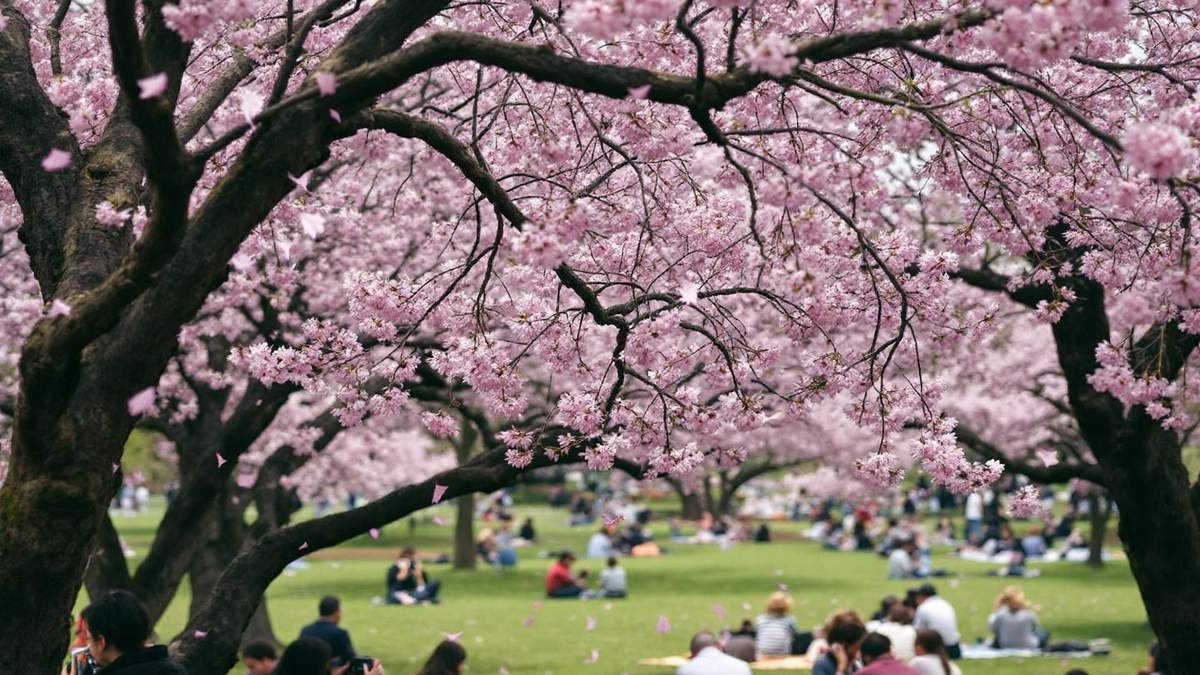
The experience of sakura in Japanese culture — hanami, literally “flower viewing” — is supposed to involve sitting under blossoms with food and drink, watching petals fall, and being present. That is genuinely possible at smaller parks, neighbourhood streets, and secondary spots even during peak season.
What to do instead: Visit the famous spots early in the morning. Ueno Park at 7am on a weekday during peak bloom is transformatively different from 11am on a Saturday. Then spend the rest of your day at neighbourhood parks, school playgrounds (which often have extraordinary trees), riverbanks, and the sakura trees you will find simply walking the back streets of any Japanese neighbourhood.
Mistake 4: Ignoring the Weather
Cherry blossoms and rain have a complicated relationship. Heavy rain and strong wind cause petals to fall — a phenomenon called hanafubuki (flower blizzard) — which is beautiful but short-lived. Rain during full bloom can strip the petals within two to three days. Light rain, on the other hand, can be atmospheric and actually reduces crowds significantly.
The mistake is either panicking when it rains (the blossoms are still beautiful in rain, and crowds thin dramatically) or failing to appreciate that a warm, windy day during peak bloom may signal the beginning of the end.
What to do instead: Watch weather forecasts closely during your trip. If a significant rain event is forecast during peak bloom, prioritise viewing on the day before rather than after. Bring a good umbrella regardless — spring weather in Japan is variable.
Mistake 5: Underestimating Accommodation and Transport Costs
Cherry blossom season is the most expensive time to visit Japan. Hotels in Tokyo and Kyoto can cost two to three times more than their off-season prices during the peak two-week window. Popular ryokan in blossom-viewing areas are booked out months — sometimes a year — in advance.
The JR trains that most visitors use also become significantly more crowded. The Shinkansen carries more passengers, seat reservations become essential for comfortable travel, and the reserved car seats that go fast under normal circumstances book out almost immediately for popular departure times.
What to do instead: Book accommodation at least three to four months in advance, and six months for ryokan in prime sakura areas. Secure Shinkansen seat reservations as soon as they open (usually one month before departure). Budget at least 30% more per day than you would for off-season travel.
Mistake 6: Missing the Pre-Bloom and Post-Bloom Stages
Cherry blossoms are most commonly photographed at full bloom (mankai), when trees are dense with flowers. But the stages before and after full bloom have their own particular beauty that photographs cannot fully convey.
Pre-bloom — when buds are swelling and perhaps 20 to 30 percent of flowers are open — has the freshest, most vivid colour of the entire season. The blossoms are a deeper, more intense pink before they fully open and fade. Post-bloom, when petals fall and cover the ground in a pale carpet while the remaining flowers cling to branches, is genuinely moving in a different way — it is the reason Japanese aesthetics developed the concept of mono no aware, the bittersweet awareness of impermanence.
What to do instead: Arrive a few days before predicted peak bloom rather than exactly at peak. You will see the progression and be more likely to catch multiple stages. If you arrive at full bloom, know that the experience continues to be beautiful for days after.
Mistake 7: Only Going to Famous Parks
Japan’s most-photographed sakura spots are famous because they are genuinely spectacular. But cherry blossom trees line urban streets throughout every Japanese city, grow in temple gardens, ring school playgrounds, and appear in places that no travel guide will ever mention.
Some of the most memorable sakura experiences come from turning a corner and finding a single enormous old tree in full bloom over a quiet neighbourhood street, or watching children run through falling petals at their school gate, or sitting on a bench in an ordinary riverside park while couples picnic under the trees.
What to do instead: Permit yourself to get slightly lost. Walk away from the main streets and the famous parks. Cherry blossom trees are everywhere in Japan. The serendipitous encounters with them — away from crowds, without a plan — are often what visitors remember most.
When to Book and When to Visit: A Practical Timeline
6-8 months before travel: Book accommodation. This is non-negotiable for spring visits to Japan to Tokyo and Kyoto.
3-4 months before: Purchase flights if not already done. Book any popular restaurants or experiences.
January-February: Begin monitoring bloom forecasts. The Japan Meteorological Corporation releases its first forecast in late January.
4-6 weeks before: As forecasts become more precise, adjust your itinerary to prioritise cities that will be at or near peak bloom during your visit.
1 month before: Reserve Shinkansen seats (reservations open exactly one month before travel date at JR offices and online through the JR website).
During your trip: Check daily forecasts. Be flexible. The blossoms do not follow your schedule, but Japan is full of beautiful things to see regardless of what stage the blossoms are at.
Cherry blossom season is worth every inconvenience. Japan during sakura is Japan at its most emotionally affecting. Knowing the best time to visit Japan will help you plan your trip. Just go in with realistic expectations, book early, and be willing to explore beyond the obvious.
The Best Cherry Blossom Spots Beyond the Obvious
Since we have discussed what not to do, here are the spots that consistently deliver extraordinary cherry blossom experiences with manageable crowds:
Hirosaki Castle, Aomori: The 2,600 cherry trees surrounding Hirosaki Castle’s moat include specimens over 100 years old with dramatically gnarled trunks. The oldest trees produce a density of blossoms that no young sapling can match. Because Hirosaki blooms two to three weeks after Tokyo, it is easy to incorporate into a late-April itinerary after Tokyo’s peak has passed.
Philosopher’s Path, Kyoto: The canal walk lined with cherry trees is significantly more pleasant in the early morning before tour groups arrive from the station. For a full overview of planning, see the cherry blossom guide. The path runs between Nanzen-ji and Ginkaku-ji (Silver Pavilion) — approximately 2 kilometres of canal-side walking — and at 7am with petals falling into the water, it is one of Kyoto’s finest experiences.
Maruyama Park, Kyoto: The giant weeping cherry (shidare-zakura) at the centre of Maruyama Park is lit at night during cherry blossom season and is one of Japan’s most celebrated individual trees — ancient, enormously drooping, and spectacular in the lantern light against the dark sky.
Chidorigafuchi Moat, Tokyo: Best experienced by renting a rowboat (reservations essential during peak) and rowing beneath the overhanging branches from water level. The perspective from the boat, with petals falling into the water around you, is dramatically different from the footpath above.
Yoshino, Nara: Thirty thousand cherry trees covering a mountain in four distinct elevation bands (each blooming at slightly different times) have made Yoshino a cherry blossom pilgrimage site since the seventh century. The mountain is genuinely crowded on peak weekends, but weekday visits and the upper areas beyond the cable car terminus thin the crowds considerably.
Kawazu, Shizuoka: Kawazu zakura is a specific variety of cherry tree that blooms pink and early — often from late January through February — making this coastal town on the Izu Peninsula the first major cherry blossom destination of the season. Visiting in early February means seeing cherry blossoms with almost no one else around.
The common thread through all these recommendations is simple: any cherry blossom tree in full bloom, in any location, is beautiful. The instinct to find the “best” spot should be balanced with the deeper practice of simply finding a tree, sitting underneath it, and letting the petals fall.
What to Bring to Hanami
Hanami — flower-viewing picnics under cherry trees — is one of Japan’s finest social traditions. If you have the opportunity to join or host one, here is what you need:
Blue plastic tarpaulins: Available at 100-yen shops and convenience stores, these are the traditional ground covering for hanami in parks. Lay one down early (very early — some people claim spots at dawn) to secure your space.
Bento from a convenience store or nearby market: Nishiki Market in Kyoto, the Tsukiji outer market area in Tokyo, and any well-stocked konbini supply excellent hanami food. Onigiri, karaage, tamagoyaki, and fruit are all standard hanami items.
Drinks: Canned beers and ciders, hot canned coffee for cold evenings, and juice cartons are all hanami standard. Canned sake is available at most konbini and provides seasonal authenticity.
Warm layers: Blossom-viewing weather is frequently warmer during the day than forecast, then surprisingly cold once the sun sets. Bring more layers than you think necessary.
A rubbish bag: Japanese hanami etiquette requires taking your rubbish with you when you leave. Most popular parks have limited public bins. Bring a rubbish bag and leave the spot exactly as you found it.
The act of sitting under blossoming trees and eating and drinking with friends while the petals fall around you is one of Japan’s oldest cultural pleasures. It requires no special skill, no particular knowledge, and no significant expense. It requires only a tree, some food, and the willingness to sit still for a while and let something beautiful happen around you.