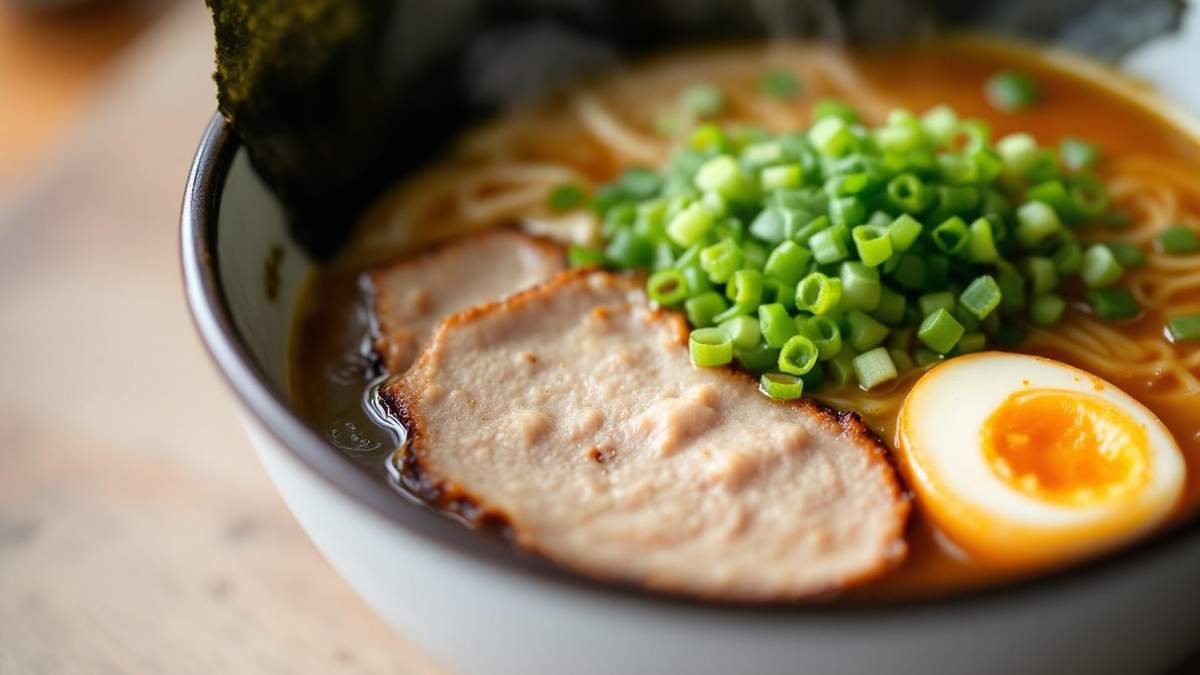
A Ramen Lover's Guide to Japan
Last updated: March 2026
Ramen is Japan’s most contentious and most beloved food. Our full Japanese food guide covers the broader food culture. In a country where food culture is already extraordinarily developed, ramen occupies a particular position: working-class food elevated to obsessive art form, studied with the same intensity applied to kaiseki and sushi. There are dedicated ramen museums. Food critics devote careers to ranking bowls. Chefs train for years at masters’ shops before opening their own.
The critical thing to understand before visiting Japan with ramen in mind is that ramen is not one dish. It is a family of dishes unified by wheat noodles and broth that has fractured into dozens of regional styles, each with its own noodle shape, broth base, temperature, toppings, and aesthetic. Ordering “ramen” in Japan without specifying what kind is like ordering “pasta” in Italy — a starting point, not a meal.
The Four Classical Styles
Shoyu (Soy Sauce)
Shoyu ramen is Tokyo’s contribution to the canon and among the oldest of the four major styles. The broth is clear, amber-brown, made from a chicken or pork stock seasoned with a tare (seasoning sauce) based on soy sauce. It is lighter and more delicate than tonkotsu, with a savoury depth that makes every sip meaningful. The noodles are typically wavy, medium-thickness curly noodles. Standard toppings are chashu pork (slow-braised pork belly or shoulder), a soft-boiled marinated egg (ajitsuke tamago), bamboo shoots (menma), nori seaweed, and spring onions.
Shoyu is the style that most reliably represents the Kanto region’s sensibility: restrained, balanced, technically considered. The broth should taste of multiple things without any single element dominating.
Shio (Salt)
Shio ramen is the most subtle and delicate of the four styles. The broth is typically clear — sometimes nearly transparent — and pale yellow or white, made from chicken, seafood, or pork with a salt-based tare rather than soy sauce. The flavour is clean, oceanic, and deeply savoury without heaviness. Shio ramen allows the base stock to show itself most clearly; there is nowhere for a poorly made broth to hide.
Hakodate in Hokkaido is considered the spiritual home of shio ramen. The Hakodate style uses a simple chicken and pork broth with straight noodles and restrained toppings, and the city takes its ramen seriously enough to have held a dedicated festival for decades.
Miso
Miso ramen originated in Sapporo in the 1950s when a shop called Aji no Sanpei is credited with first adding miso paste to ramen broth — initially as an experiment, ultimately as a revolution that transformed Hokkaido’s food identity. The broth is rich, thick, and aromatic, made by frying miso paste in lard before combining with pork stock. Standard toppings include corn, butter, bean sprouts, and ground pork. The noodles are thick, wavy, and robust enough to stand up to the intense broth.
Sapporo miso ramen is one of Japan’s most iconic regional foods. In Hokkaido, ramen is taken with a seriousness that even Tokyo cannot match, and Sapporo’s miso style has spawned endless regional variants across the island.
Tonkotsu
Tonkotsu ramen from Fukuoka’s Hakata district has perhaps the largest international following of all four styles. The broth is made by boiling pork bones at rolling-boil heat for many hours — sometimes eighteen hours or more — until the collagen breaks down completely and the liquid turns opaque white and intensely rich. The flavour is bold, fatty, and deeply satisfying. The noodles are thin, straight, and served firm (katamen) or very firm (barikata) by default. Signature toppings are chashu pork, kikurage wood-ear mushrooms, and sesame seeds; pickled ginger and crushed sesame seeds arrive as table condiments.
Hakata ramen has a unique custom called kaedama: when you finish your noodles but still have broth remaining, you order a replacement portion of noodles for approximately 100 yen. These cook in seconds and drop into your existing broth. It is a sign of a good bowl that the broth outlasts the noodles.
Regional Variations Worth Seeking Out
Kitakata Ramen (Fukushima Prefecture)
Kitakata is a small city in Fukushima Prefecture with more ramen shops per capita than almost anywhere in Japan. Its ramen uses a shoyu-based broth but is distinguished by flat, hand-made noodles (hirauchi) — wide, ribbon-like, with a silkier texture than standard ramen noodles. The broth is typically lighter than Tokyo shoyu, using pork and niboshi (dried sardine) stock. A longstanding local tradition has Kitakata residents eating ramen for breakfast — called asa-ra (morning ramen) — which says everything about how central this food is to the town’s identity.
Sapporo Butter Corn Ramen
Beyond the standard miso variant, Hokkaido ramen culture embraces dairy in ways unique to this island. Hokkaido’s dairy industry — the finest in Japan — produces butter that ends up melting into ramen bowls throughout the region. A disc of butter sliding slowly across the surface of a miso broth, with corn kernels and bean sprouts underneath, is a northern Japanese winter comfort food with no real equivalent elsewhere in the country.
Tsukemen (Dipping Ramen)
Tsukemen separates the noodles and broth into two bowls. You dip cold or room-temperature noodles into the thick, concentrated broth before eating. The broth for tsukemen must be far more intense than standard ramen broth — a highly reduced concentrate that can stand up to the dilution of wet noodles. This format, invented in Tokyo in the late 1950s, has spawned dedicated shops with near-cultish followings. After finishing the noodles, you can ask for hot broth (wari-soup) to dilute the remaining dipping broth into a sipping soup.
Onomichi Ramen (Hiroshima Prefecture)
Onomichi’s ramen is distinguished by a shoyu broth to which small pieces of pork back fat are added, floating as discs on the surface and dissolving gradually into the soup. Onomichi noodles are flat and medium-width. This coastal city on the Seto Inland Sea has a concentrated and intensely local ramen culture that has developed largely independently of the national mainstream.
Kagoshima Ramen (Kyushu)
Kagoshima ramen uses a pork and chicken broth that is lighter than full tonkotsu — closer to a shoyu character, with the porky depth present but not overwhelming. This represents a separate branch of Kyushu ramen development that never followed Hakata’s direction toward maximal richness. The local toppings typically include thin-sliced loin pork and spring onion.
Wakayama Ramen
Wakayama has two distinct ramen styles — one based on shoyu and one based on tonkotsu — and locals argue passionately about which is superior. The hayazushi shops that also serve ramen are a distinctive local phenomenon. The tonkotsu-shoyu hybrid style is the one most often recommended to visitors.
Best Ramen Shops by City
Tokyo
Tokyo is a shoyu-forward city but has excellent representation of every style.
Fuunji in Shinjuku is a celebrated tsukemen specialist with a queue that forms before opening. The dipping broth is exceptionally concentrated, with a fish-forward intensity. Nakiryu near Otsuka, a Michelin Bib Gourmand recipient, offers a tantanmen (spicy sesame) variant that is outstanding. Konjiki Hototogisu in Shinjuku is known for sophisticated broth layering incorporating shellfish and truffle oil at prices that remain reasonable.
Rokurinsha at Tokyo Station (in the ramen street below the station) is one of Tokyo’s most famous tsukemen shops — the queue is real and worth joining.
Sapporo
Sapporo is miso ramen territory, full stop.
Sumire in Susukino is the shop most often cited for the definitive Sapporo miso experience — the broth is thick, deeply savoury, with a film of lard that keeps it hot. Ebisoya is a strong alternative. For the butter-corn variant, order at any shop in the city and it will arrive correctly.
Sapporo Ramen Republic on the eighth floor of the ESTA building above Sapporo Station assembles eight of Hokkaido’s finest regional ramen shops in one installation — an excellent starting point.
Fukuoka
This is mandatory ramen territory. Eat tonkotsu in Fukuoka at least twice — once at a sit-down restaurant, once at a yatai (open-air food stall).
Shin-Shin near Tenjin serves clean, well-made tonkotsu with a lighter hand than many competitors. Ippudo (founded in Fukuoka) is the internationally recognised version, reliable and consistent. Ichiran, also from Fukuoka, offers the individual booth experience.
The Nakasu yatai stalls along the river at night are the essential Fukuoka ramen experience. Sitting on a low stool at a narrow counter while the city moves past, eating tonkotsu ramen with cold Asahi beer, is one of Japan’s finest food experiences.
Kyoto
Kyoto is not primarily a ramen city, but it has two distinct local styles worth seeking out.
Kyoto ramen tends toward a soy-sauce-based broth with a back-fat element (similar in some ways to Onomichi) and thick, straight noodles. Ippudo and many chains serve their standard versions here; for local character, look for independent shops in neighbourhood areas rather than tourist districts.
Osaka
Osaka is also not a primary ramen city — takoyaki and okonomiyaki are the local obsessions — but Kinryu Ramen near Dotonbori is the reliable late-night stop, serving tonkotsu-shoyu with negi (spring onion) and operating until the early hours.
Hiroshima
Hiroshima’s airport shuttle and the neighbourhood around the Shimizu area have good examples of the Hiroshima-style ramen with its oyster or seafood-influenced shoyu broth. Onomichi, a 45-minute train ride away, is worth a dedicated ramen pilgrimage for the back-fat shoyu style.
How to Order
Most ramen shops use a ticket vending machine at the entrance. Insert money, select your bowl, receive a ticket, find a seat, and hand the ticket to the counter staff. Many machines have basic English labelling; at others, pointing at menu photographs works perfectly.
Common customisation options, particularly at tonkotsu shops:
- Noodle firmness: kata (firm) is standard in Hakata; barikata (very firm) exists for purists
- Broth richness: assari (light) through kotteri (rich)
- Fat level: nuki (no extra fat) through oome (extra fat)
- Tare intensity: usuaji (light) through karai (intense)
At most Tokyo-style shoyu or shio shops, no customisation is offered — you receive the bowl as the chef intends it. This is the correct approach. Trust the chef.
Ramen Museums
The Shin-Yokohama Ramen Museum is a subterranean recreation of a 1958 Tokyo streetscape housing eight famous ramen shops from across Japan. You can order smaller portions at each shop and conduct an effective national ramen survey in an afternoon. Entry costs a small fee and is valid for multiple re-entries on the same day.
Sapporo Ramen Republic on the eighth floor of the ESTA building above Sapporo Station is the best starting point before exploring Sapporo’s independent shops.
A Practical Ramen Strategy
For visitors covering Tokyo, Kyoto, Osaka, and Fukuoka on a standard itinerary: in Tokyo, eat one classic shoyu bowl at an independent shop and one tsukemen at Fuunji. In Osaka, Kinryu near Dotonbori for late-night tonkotsu. In Fukuoka, tonkotsu twice — once at a restaurant, once at a yatai. If Sapporo is on your itinerary, eat miso ramen twice, the second time with butter and corn.
That schedule produces six to eight bowls of ramen across a standard trip. Serious ramen travellers would call this an appetiser.
The right approach to ramen in Japan is not to treat it as a single dish to be sampled once and moved on from. It is a living tradition with hundreds of distinct expressions, each one an argument about what a bowl of noodles should be. Engaging with that argument — comparing, reconsidering, ordering again — is one of Japan’s great intellectual and sensory pleasures.