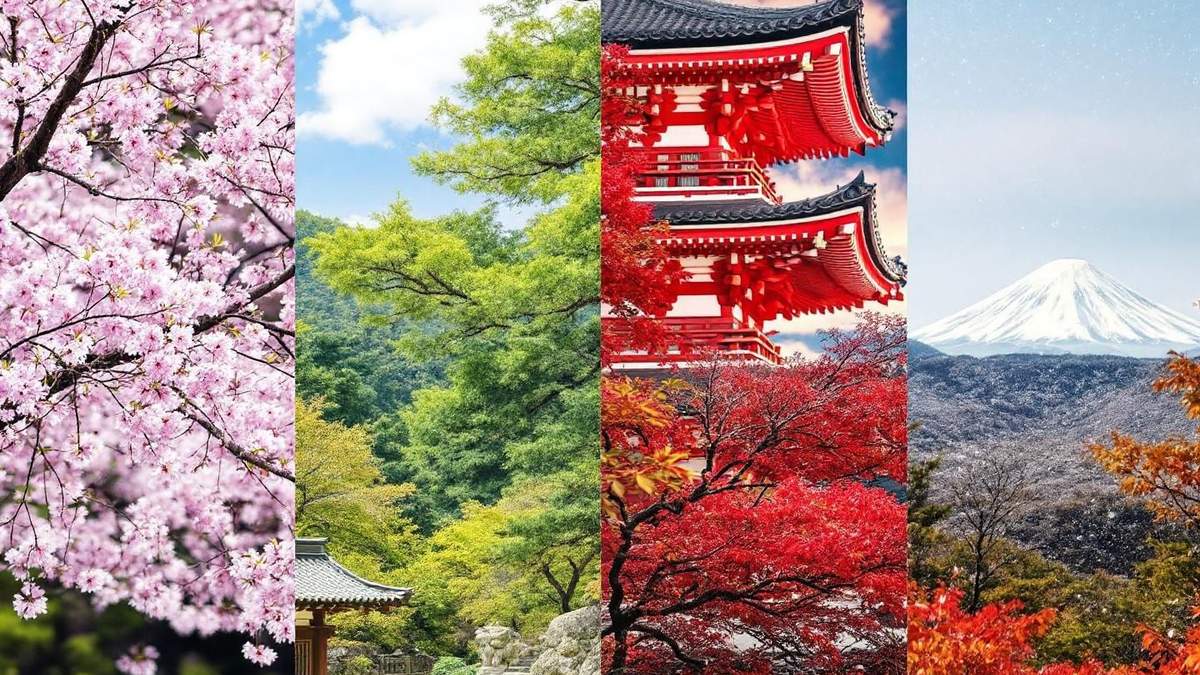
Best Time to Visit Japan
Last updated: March 2026
When is the best time to visit Japan?
The best times are spring (late March to May) for cherry blossoms and pleasant weather, or autumn (October to November) for stunning foliage and comfortable temperatures. Both offer mild weather and major natural beauty.
There is no single best time to visit Japan. The right answer depends on your priorities — whether you are chasing cherry blossoms or autumn foliage, trying to ski in Hokkaido or snorkel in Okinawa, avoiding crowds and peak prices, or specifically coming for one of Japan’s extraordinary festivals. Japan is genuinely appealing in every season, each one offering something distinct and worth experiencing.
What follows is a detailed month-by-month breakdown, followed by analysis of each major season and guidance for specific traveler types. Once you have chosen your travel window, use our plan a trip to Japan guide to build your itinerary.
Month-by-Month Summary
| Month | Avg Temp (Tokyo) | Crowds | Prices | Best For |
|---|---|---|---|---|
| January | 5–10°C | Low | Low | Skiing, budget travel, quiet temples |
| February | 4–9°C | Very Low | Very Low | Sapporo Snow Festival, photographers |
| March | 8–15°C | Rising | Rising | Early cherry blossoms (late March) |
| April | 14–19°C | Peak | Peak | Cherry blossoms, Golden Week |
| May (late) | 18–23°C | Moderate | Moderate | Best weather, thinning crowds |
| June | 22–27°C | Low | Low | Hydrangeas, Hokkaido summer |
| July | 27–33°C | High | High | Gion Matsuri, fireworks festivals |
| August | 28–34°C | High | High | O-bon, Tohoku festivals |
| September | 23–29°C | Moderate | Moderate | Cooling temps, typhoon risk |
| October | 18–22°C | Moderate | Moderate | Best all-round weather |
| November | 12–18°C | High (Kyoto) | High (Kyoto) | Autumn foliage at its peak |
| December (early) | 6–12°C | Low | Low | Winter illuminations, skiing begins |
Month-by-Month Detail
January
Weather: Cold across most of Honshu (Tokyo averages 5-10°C), frigid in Hokkaido (often -10°C or colder), mild in Okinawa (around 18°C).
Crowds: Low. January is one of the quietest months for international tourism.
Prices: Among the lowest of the year. Good deals on business hotels and even ryokan outside peak holiday windows.
Key dates: New Year (January 1-3) is a massive domestic holiday when most Japanese travel to their hometown for family gatherings. Temples and shrines are packed on January 1st for hatsumode (first shrine visit), but transport and accommodation prices spike in early January and then drop sharply from January 4th onward.
Highlights: Sapporo Snow Festival preparations begin. Excellent skiing in Hokkaido (Niseko, Furano, Rusutsu). Tokyo is quiet and navigable. Winter illuminations in many cities continue through early January.
Best for: Budget travelers, skiers, people who want to see Tokyo without the usual crowds.
February
Weather: Coldest month of the year for much of Japan. Tokyo 4-9°C. Sapporo heavily snowbound. Kyoto cold but beautiful, especially on snowy days.
Crowds: Very low. One of the best months to experience Japan without the tourist masses.
Prices: Very competitive except during Sapporo Snow Festival (early February) when Hokkaido accommodation fills up.
Key dates: Sapporo Snow Festival (usually first two weeks of February) — one of Japan’s most spectacular events, featuring enormous snow and ice sculptures. Setsubun (February 3rd) — bean-throwing ceremonies at temples and shrines nationwide.
Highlights: Snow in Kyoto’s temple gardens creates surreal scenery that rivals cherry blossom season for beauty. Plum blossoms (ume) begin to bloom — a quieter, less-crowded precursor to cherry blossom season.
Best for: Budget travelers, photographers, skiers, anyone wanting to experience Japan without crowds.
March
Weather: Warming up rapidly. Tokyo goes from around 8°C at the start of the month to 13-15°C by late March. Spring arrives noticeably.
Crowds: Building sharply from mid-month onward as cherry blossom forecasts attract visitors.
Prices: Rising steeply from mid-March as cherry blossom season approaches. Book everything early for late March.
Key dates: Cherry blossom season typically begins in Tokyo in mid-to-late March, reaching peak bloom around late March to early April depending on the year. Exact timing varies year to year based on winter temperatures.
Highlights: Early cherry blossoms in Kyushu (Fukuoka’s Maizuru Park) and southern Japan bloom a week or two ahead of Tokyo. The transition into spring is atmospheric across Japan.
Best for: Cherry blossom chasers who plan early and book far in advance. Extremely rewarding if you secure good accommodation.
April
Weather: Pleasant. Tokyo typically 14-19°C. Kyoto similar. Hokkaido still cold, with cherry blossoms not peaking until late April or early May.
Crowds: The busiest time of year. Particularly the period surrounding Golden Week (late April to early May) combines domestic and international tourism into a crush at popular sites.
Prices: Peak prices. Accommodation, particularly ryokan, may be fully booked at popular rates. Book ryokan 3-4 months ahead for this period.
Key dates: Cherry blossoms peak in Tokyo around late March to early April. Kyoto typically peaks a few days later than Tokyo. Yoshino mountain (Nara Prefecture) — one of Japan’s most celebrated cherry blossom sites — peaks around early to mid-April. Golden Week begins late April.
Highlights: Japan at its most visually spectacular. Hanami (flower viewing) picnics under blooming trees. Festivals and spring celebrations nationwide.
Best for: First-timers who specifically want cherry blossoms and are prepared for crowds and higher prices.
May
Weather: Excellent. Tokyo 18-23°C. Clear days, manageable humidity before the rainy season. One of the most comfortable months weather-wise.
Crowds: High during Golden Week (late April to early May), then drops noticeably from mid-May.
Prices: High during Golden Week, then easing toward normal from mid-May onward.
Key dates: Golden Week cluster of holidays runs late April through early May. Constitution Day, Children’s Day. Mid-May to late May is one of the most underrated windows — pleasant weather, crowds thinning, prices reasonable.
Highlights: Fresh green foliage (known as “shinryoku”) after the cherry blossoms. Hokkaido cherry blossoms and tulip fields in Hokkaido’s Kamiyubetsu bloom in May. Cormorant fishing (ukai) begins in some regions.
Best for: Travelers who want spring weather without the cherry blossom crowds. Late May is a hidden gem.
June
Weather: Rainy season (tsuyu) begins in Okinawa in late May and reaches Honshu (Tokyo, Kyoto, Osaka) in early to mid-June. Humidity rises. Overcast skies and regular rain. Hokkaido largely escapes the rainy season.
Crowds: Drops significantly from peak season. One of the quieter months for international visitors.
Prices: Noticeably cheaper. Good deals on accommodation.
Key dates: Rainy season varies — check forecasts as it can start earlier or later. Hydrangea (ajisai) bloom spectacularly during the rainy season — Kamakura’s Meigetsuin temple is famous for its blue hydrangea-lined paths.
Highlights: Hydrangea viewing throughout Japan. Hokkaido in full summer glory. Okinawa has already exited its rainy season by mid-June and is entering summer beach conditions.
Best for: Budget travelers, Hokkaido visitors, hydrangea enthusiasts, anyone wanting emptier temples in Kyoto.
July
Weather: Hot and humid across Honshu. Tokyo regularly 30-35°C with suffocating humidity. Kyoto, surrounded by mountains, can be even worse. Hokkaido is remarkably pleasant (22-26°C, low humidity).
Crowds: Domestic tourism rises sharply from late July through August (school summer holidays).
Prices: Rising through July.
Key dates: Gion Matsuri in Kyoto — one of Japan’s greatest festivals, running all month with two major parade days (July 17th and 24th). Tanabata (July 7th) celebrated across Japan with decorated bamboo branches. Tenjin Matsuri in Osaka (July 25th) — a large river procession festival.
Highlights: Major festival season. Fireworks festivals (hanabi taikai) begin — some of the world’s most spectacular fireworks displays, particularly in Sumida (Tokyo, late July). Hokkaido’s lavender fields in Furano at their peak (typically mid-July to early August).
Best for: Festival enthusiasts, Hokkaido summer travelers, anyone willing to handle heat for the cultural payoff.
August
Weather: Peak summer heat. Honshu oppressively hot and humid. Okinawa enters typhoon season. Hokkaido comfortable and at its greenest.
Crowds: Domestic O-bon holiday (mid-August) creates mass domestic travel. Popular destinations are busy with Japanese tourists.
Prices: Peak summer prices, particularly around O-bon.
Key dates: O-bon (around August 13-16) — ancestral memorial holiday with Bon Odori folk dances, lantern festivals, and cultural events across Japan. Nebuta Matsuri in Aomori (August 2-7) — one of Tohoku’s most spectacular festivals with illuminated float processions. Awa Odori in Tokushima (August 12-15) — Japan’s most exuberant dance festival.
Highlights: Lantern floating festivals, spectacular fireworks, Tohoku and Shikoku festivals. Beach season in Okinawa and the Izu Islands.
Best for: Domestic culture and festival immersion, Hokkaido summer, beach travelers to Okinawa (noting typhoon risk).
September
Weather: Still hot and humid in early September. Gradually cooling through the month. Typhoon season peaks in September — multiple typhoons can affect Japan, causing transport disruptions.
Crowds: Dropping from the August peak. Mid-September to late September can be relatively uncrowded.
Prices: Easing from summer peak.
Key dates: Typhoon watch essential throughout September. Autumn equinox holiday (around September 22-23).
Highlights: The heat starts to break by late September. Moon viewing (tsukimi) celebrations begin around the harvest moon. Rice harvest season in rural Japan.
Best for: Budget travelers willing to deal with heat and typhoon risk for lower prices and fewer crowds. Late September is increasingly pleasant.
October
Weather: Ideal. Tokyo 18-22°C, clear skies, low humidity. Kyoto similar. Comfortable for all-day sightseeing. One of the most pleasant months in Japan.
Crowds: Building toward peak autumn foliage season. Early October is still relatively manageable; late October starts getting busy.
Prices: Moderate, rising toward the end of the month.
Key dates: Autumn foliage season begins in Hokkaido and northern Tohoku in early October, gradually moving south through the month. Kurama Fire Festival near Kyoto (October 22nd). Tokyo International Film Festival (late October).
Highlights: Exceptionally clear weather. Festivals across Japan. Hokkaido autumn colors at Daisetsuzan National Park are extraordinary in early October. Many Japanese people consider this the best travel month.
Best for: Arguably the best all-around travel month. Suitable for every type of traveler.
November
Weather: Cooling further. Tokyo 12-18°C. Kyoto 10-17°C — ideal for walking temple gardens. Getting cold in Hokkaido (near freezing). Okinawa very pleasant.
Crowds: Autumn foliage peaks in Kyoto typically in late November, drawing enormous crowds particularly to famous gardens. Book accommodation 2-3 months ahead for late November in Kyoto.
Prices: Rising significantly in Kyoto during peak foliage. Other areas more moderate.
Key dates: Autumn foliage in Kyoto typically peaks late November to early December, though this varies by year. Special evening illuminations at Kyoto temples are held during peak foliage — advance reservation required for many.
Highlights: Kyoto at its most spectacular with crimson and gold maples. Nikko’s dramatic autumn colors. Shinjuku Gyoen, Korankei, and Tsurugaoka Hachimangu for foliage outside Kyoto. Autumn kaiseki cuisine.
Best for: Foliage enthusiasts, Kyoto lovers who do not mind paying premium prices. One of Japan’s most beautiful months despite the crowds.
December
Weather: Cold. Tokyo 6-12°C. Good skiing from mid-December onward in Hokkaido and Nagano. Okinawa mild at 18-20°C.
Crowds: Quiet internationally between mid-December and late December. Holiday period (Christmas/New Year) sees domestic travel surge and prices rise sharply December 28 through January 3.
Prices: Low in early December. High over the Christmas-New Year holiday window.
Key dates: Winter illuminations across Japan are spectacular throughout December — Nabana no Sato in Mie Prefecture is one of the most famous. Hagoita-ichi (paddle fair) at Senso-ji in mid-December. New Year preparations.
Highlights: Winter illuminations are genuinely impressive in Japan — scaled differently than Western light displays. Snow begins in Hokkaido, Tohoku, and the Japan Alps. Year-end rituals (toshi no se) on December 31st at major temples.
Best for: Budget travelers (early December), illumination lovers, skiers, people who want to experience Japanese New Year traditions.
Season Deep Dives
Cherry Blossom Season (Late March to Late April)
Cherry blossom (sakura) season is Japan’s most celebrated travel period, and for good reason. When thousands of trees bloom simultaneously, the visual effect is extraordinary — parks, rivers, castle grounds, and mountain paths transformed into tunnels of pink and white. Our dedicated cherry blossom guide covers every major viewing location, predicted bloom dates, and practical booking advice.
Understanding timing: Sakura blooms from south to north and from lower to higher elevations. Kyushu and western Honshu bloom first (mid-March), Tokyo follows (typically late March to early April), Tohoku and Hokkaido come last (late April to early May). The bloom window at any given location is roughly 10-14 days, with peak bloom lasting just 3-5 days.
Best cherry blossom spots:
- Chidorigafuchi (Tokyo) — moat walkway lined with trees, best viewed by rented rowboat
- Maruyama Park (Kyoto) — centered on a famous weeping cherry
- Philosopher’s Path (Kyoto) — canal walk lined with hundreds of trees
- Hirosaki Castle (Aomori) — Japan’s most spectacular castle cherry blossom setting, peaks in late April
- Takato Castle Park (Nagano) — renowned for pink-hued mountain cherry blossoms
- Yoshino Mountain (Nara) — 30,000 trees covering multiple elevations
Practical notes: Book accommodation 3-4 months in advance. Flights to Japan in this period are at annual high prices. Arrival mid-week rather than weekends reduces crowds at popular spots.
Autumn Foliage Season (Mid-October to Late November)
Koyo (autumn foliage) rivals cherry blossom for natural beauty and is less frenetic, though still draws substantial crowds. The gradual south-to-north movement in spring reverses — foliage starts in Hokkaido and moves south, arriving in Tokyo around mid-November and Kyoto in late November to early December.
Best foliage spots:
- Eikan-do and Tofuku-ji temples (Kyoto) — famous for maple carpets
- Korankei (Aichi) — one of Japan’s most celebrated non-Kyoto foliage spots
- Nikko (Tochigi) — mountain shrines surrounded by fiery maples
- Shinjuku Gyoen and Rikugien (Tokyo) — excellent city options
- Daisetsuzan National Park (Hokkaido) — alpine autumn colors arrive in late September
Summer Festivals
Despite the heat, summer offers Japan’s richest festival calendar. The combination of O-bon lantern rituals, fireworks festivals (hanabi taikai), Bon Odori dances, and specific regional matsuri makes July and August culturally unique.
The Sumida River Fireworks in Tokyo (late July) launches 20,000 fireworks from two sites simultaneously. Awa Odori in Tokushima draws over 1 million spectators. Gion Matsuri in Kyoto spans the entire month of July. These are participatory cultural experiences unlike any festival in Europe or North America.
Winter and Skiing
Hokkaido’s ski resorts receive some of the world’s driest powder snow. Niseko is internationally famous but also the most expensive; Furano and Rusutsu offer similar quality with fewer crowds and better value. The season typically runs late November through March.
Nagano (site of the 1998 Winter Olympics) has accessible resorts including Hakuba, Shiga Kogen, and Nozawa Onsen. Getting to Hokkaido involves a flight or the Hokkaido Shinkansen to Hakodate and onward transfer — factor this into planning.
Crowd and Price Summary by Month
- January (mid): Low crowds, low prices
- February: Low crowds, low prices (exception: Sapporo Snow Festival)
- March (early): Low-moderate crowds, rising prices
- March (late) to April: Peak crowds, peak prices
- Late April to early May (Golden Week): Very high domestic crowds, high prices
- Mid-May: Moderate crowds, moderate prices
- June: Low crowds, low prices
- July-August: High domestic crowds, high prices (festivals)
- September: Low-moderate crowds, moderate prices
- October: Moderate crowds, moderate prices
- November (late Kyoto): High crowds in Kyoto, high local prices
- December (early): Low crowds, low prices
- New Year window: High domestic crowds, high prices
Best Month by Traveler Type
First-time visitor wanting the “full Japan experience”: Late March to early April (cherry blossoms) or late October to mid-November (autumn foliage). See the 14-day Japan itinerary for a structured plan for either season.
Budget traveler: February, early December, or mid-May to early June. Read our Japan on a budget guide for money-saving strategies that apply year-round.
Festival enthusiast: July (Gion Matsuri, Tanabata) or August (O-bon, Nebuta, Awa Odori).
Hiker / nature traveler: May (fresh green), October (clear weather, autumn colors begin), or early September.
Skier: January to mid-March in Hokkaido or Nagano.
Beach / diving (Okinawa): April to June or September to October (avoiding peak summer heat and typhoon season).
Photographer: Late March to early April (sakura), late November (Kyoto autumn with special illuminations), or February in Hokkaido for snow landscapes.
Traveler wanting to avoid crowds entirely: February, early December, or early June. These months still offer excellent experiences with a fraction of the typical tourist density.
Regional Weather Guide: Japan Is Not One Climate
A common planning mistake is treating “Japan weather” as a single data point. Japan stretches roughly 3,000 kilometers from north to south — from Hokkaido at 45 degrees north latitude (similar to Montreal or Milan) to Okinawa at 26 degrees north (similar to Miami or Taipei). The regional variations are enormous.
Hokkaido
Japan’s northernmost main island operates on an almost entirely different seasonal schedule.
- Summer (June-August): Genuinely pleasant, 20-26°C, low humidity. This is the time to visit if you cannot handle Honshu’s summer heat. Furano’s lavender blooms in mid-July; the Tokachi and Daisetsuzan landscapes are at their greenest.
- Autumn (September-October): Early, vivid, and spectacular. Daisetsuzan National Park turns crimson by late September — weeks before Kyoto. One of Japan’s best-kept seasonal secrets.
- Winter (November-March): Heavy snowfall, sub-zero temperatures, world-class skiing at Niseko, Furano, and Rusutsu. The Sapporo Snow Festival in February is a major event.
- Spring: Late. Cherry blossoms in Sapporo typically bloom in late April, while Tokyo’s have already fallen.
Okinawa and the Southern Islands
Okinawa follows a subtropical pattern that sets it completely apart from Honshu.
- Spring (March-May): The best time. Comfortable temperatures (22-28°C), clear water for diving, minimal crowds compared to summer.
- Rainy season (May-June): Okinawa’s rainy season arrives before Honshu’s — typically late May to late June.
- Summer (July-September): Hot and humid, peak typhoon season. Typhoons can close airports and cancel ferries to the outer islands.
- Winter (December-February): Mild at 18-22°C. The sea is too cold for comfortable swimming but excellent for exploring the islands without crowds.
Kansai and Central Honshu (Kyoto, Osaka, Nagoya)
The Kansai region sits in a basin surrounded by mountains, making Kyoto and Osaka noticeably hotter in summer than Tokyo (which gets sea breezes) and colder in winter. Kyoto in August is regularly among the hottest places in Japan. This matters for planning: if you must visit Kyoto in summer, very early morning (before 9 AM) at the major temple gardens is the best strategy.
The autumn foliage in Kyoto’s mountain-backed temple gardens is more dramatic than almost anywhere else in Japan precisely because of this enclosed geography — the same factor that makes summer suffocating makes the autumn color rich and long-lasting.
The Japan Sea (San’in) Coast
The western coast of Honshu facing the Japan Sea (Tottori, Shimane, Yamaguchi prefectures) receives heavy snowfall in winter — more than the Pacific coast at the same latitude. This makes the region challenging to visit in deep winter but rewards summer and autumn travelers who go largely off the tourist trail.
Rainy Season Practical Guide
Japan’s rainy season (tsuyu) is not a reason to avoid Japan — it is a reason to plan carefully.
Timeline: Okinawa enters tsuyu in late May. Kyushu and western Honshu in early June. Tokyo and central Honshu in mid-June. Tohoku in late June. Hokkaido largely escapes it. The season ends region by region from late June through late July.
What rainy season actually looks like: Not constant rain, as many visitors expect. It is more accurately a period of frequent overcast skies, higher humidity, and irregular rain that ranges from brief showers to full-day downpours. Sunny days occur throughout.
Practical tips:
- Carry a compact umbrella at all times. Convenience stores sell good ones for 500-700 yen if you forget.
- Prioritize indoor attractions or covered sites on rainy days — Japan has outstanding museums, covered shopping arcades (shotengai), and indoor food markets.
- Early morning is often clearer than afternoon during rainy season.
- The famous hydrangea (ajisai) bloom during rainy season. Misty, overcast skies create beautiful conditions for photographing them.
Typhoon season (August-September): Typhoons are a real consideration for late summer and September travel. Most move quickly and clear within 24-48 hours. The main practical impact is potential day cancellations of ferry services to islands (Miyajima, Ishigaki, outer Okinawa islands), outdoor festivals, and occasionally shinkansen service on specific lines. Monitor forecasts in the week before travel if visiting in this window.
Japan’s Festivals by Season — A Highlights Calendar
Japan’s festival calendar is dense and rewarding. This is not exhaustive — Japan has tens of thousands of local matsuri — but covers the nationally significant events most relevant to travel planning.
Spring
- Cherry blossom festivals (hanami): Late March to mid-May, from south to north. Every park and river with sakura trees becomes a venue.
- Takayama Spring Festival (Sanno Matsuri): Mid-April. One of Japan’s three most beautiful festivals, with ornate floats in a mountain town.
- Kanamara Matsuri, Kawasaki: First Sunday of April. Famously unusual fertility festival that has become a major tourist attraction.
Summer
- Gion Matsuri, Kyoto: All of July, with major Yamaboko Junko parades on July 17th and 24th. Japan’s most famous festival.
- Tenjin Matsuri, Osaka: July 24-25. River procession with boats and fireworks.
- Tanabata, various cities: July 7th (or August 7th in some regions). Bamboo decorated with wishes.
- Sumida River Fireworks, Tokyo: Late July. 20,000 fireworks from two launch sites.
- Nebuta Matsuri, Aomori: August 2-7. Illuminated papier-mache floats paraded through the streets.
- Awa Odori, Tokushima: August 12-15. Mass participatory dance festival.
- O-bon: Mid-August. Nationwide ancestral memorial with Bon Odori dances and lantern floating ceremonies.
Autumn
- Takayama Autumn Festival (Hachiman Matsuri): October 9-10. The autumn counterpart to the spring festival, similarly ornate.
- Kurama Fire Festival, Kyoto: October 22nd. Night festival with torchlit processions on a mountain.
- Jidai Matsuri, Kyoto: October 22nd. Historical costume parade through the city.
Winter
- Sapporo Snow Festival: First two weeks of February. Enormous snow and ice sculptures in Odori Park and Susukino.
- Nara Wakakusa Yamayaki: Late January. The hillside of Wakakusa is set on fire at night — a spectacular sight.
- New Year (Shogatsu): December 31-January 3. Shrine visits, temple bell ringing, traditional foods. The most important Japanese cultural holiday period.